What is the strongest currencies in the world in 2026? The answer may not be the currency you use most often.
The Kuwaiti dinar currently has the highest value per unit against the US dollar, at around $3.25 for 1 KWD. But a currency’s exchange rate tells only part of the story. The US dollar, for example, is worth less than the Kuwaiti dinar per unit, yet it remains the world’s most widely traded currency and the leading currency in global foreign-exchange reserves.
So, what makes a currency “strong”? In this guide, we rank the top 10 strongest currencies in the world by their nominal value against the US dollar, then look at the economic and monetary factors behind their value. We also explain why the strongest currency is not necessarily the most powerful or the sign of the world’s strongest economy.
What does “Strongest currency” mean?
A currency is often called “strong” when one unit has a high exchange value compared with another currency, usually the US dollar.
For this ranking, currency strength means the nominal value of one unit of a currency in US dollars. Based on exchange rates checked on September 21, 2026, 1 Kuwaiti dinar was worth about $3.25, while 1 US dollar was worth $1.
When people search for the strongest currencies in the world, they are often referring to this per-unit exchange value rather than the currency’s influence in international finance.
However, a high exchange rate does not automatically mean a country has the largest or strongest economy. Currency value can be influenced by several factors, including:
| Exchange-rate policy | Some countries peg their currencies to the US dollar or manage them against a basket of currencies. |
| Inflation | Lower and more stable inflation can support a currency’s purchasing power. |
| Interest rates | Higher rates can attract foreign capital and increase demand for a currency. |
| Trade and exports | Strong export earnings can increase demand for a country’s currency. |
| Foreign reserves and financial assets | Large reserves can help support exchange-rate stability. |
| Economic and political stability | Confidence in a country’s institutions and financial system can affect international demand for its currency. |
It is also important to separate nominal currency value from other measures of currency strength. The US dollar is not the highest-valued currency per unit, but it remains dominant in global foreign exchange and official reserves. The euro also has a much larger global role than its simple per-unit ranking suggests.
This distinction matters when determining the world’s strongest currency, because a high exchange rate and global currency influence measure different things.
With that distinction in mind, here are the top 13 strongest currencies in the world in 2026, ranked by their approximate value against the US dollar.
Top 13 strongest currencies in the world in 2026
| Rank | Currency | Code | Approx. value of 1 unit in USD |
| 1 | Kuwaiti Dinar | KWD | $3.25 |
| 2 | Bahraini Dinar | BHD | $2.66 |
| 3 | Omani Rial | OMR | $2.60 |
| 4 | Jordanian Dinar | JOD | $1.41 |
| 5 | British Pound Sterling | GBP | $1.34 |
| 6 | Gibraltar Pound | GIP | $1.34 |
| 7 | Swiss Franc | CHF | $1.22 |
| 8 | Cayman Islands Dollar | KYD | $1.20 |
| 9 | Euro | EUR | $1.15 |
| 10 | US Dollar | USD | $1.00 |
| 11 | Brunei Dollar | BND | $0.78 |
| 12 | Singapore Dollar | SGD | $0.78 |
| 13 | Australian Dollar | AUD | $0.71 |
*Approximate INR values are calculated using the IMF’s September 21, 2026 USD/INR reference rate of ₹95.7991 per US dollar. Exchange rates can change throughout the day.
What makes a currency rise or fall? Understanding exchange-rate regimes
One reason the currencies at the top of this list maintain relatively high values is that not all currencies operate under the same exchange-rate system.
A floating currency is primarily determined by supply and demand in foreign-exchange markets. The British pound, euro, and Swiss franc are examples.
A pegged currency is maintained at a fixed or tightly managed exchange rate against another currency, usually the US dollar. The Bahraini dinar and Omani rial are examples.
Some currencies use a managed or basket-based arrangement. Kuwait, for example, manages the dinar against a basket of currencies rather than simply fixing it to the US dollar.
These systems matter because exchange-rate policy can influence the stability and movement of a currency.
A peg can reduce day-to-day exchange-rate fluctuations against the currency to which it is linked. A floating currency can move more freely as economic conditions, interest rates, inflation expectations, and capital flows change.
The exchange-rate regime, however, is only one part of the explanation for why a currency has a particular value. It is also one reason why identifying the strongest currencies in the world requires more context than simply looking at exchange rates.
1. Kuwaiti dinar (KWD)
- Approximate value: $3.25 per KWD
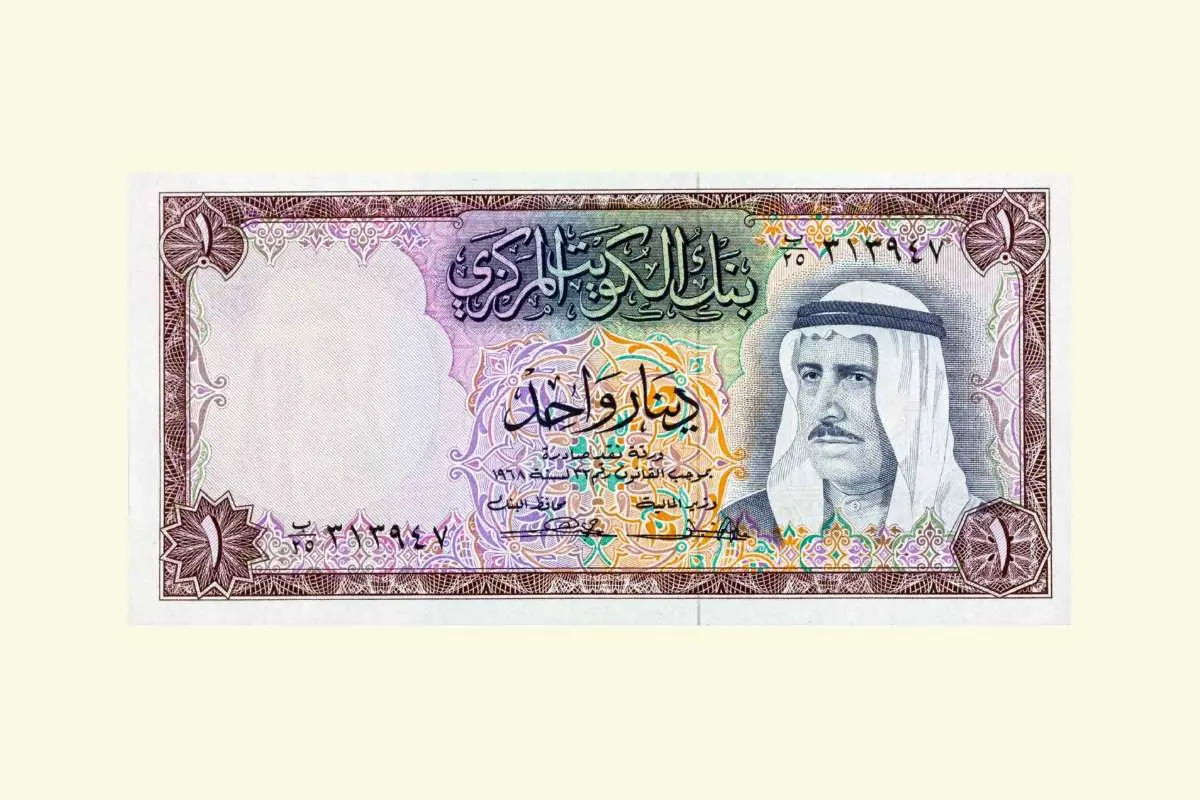
The Kuwaiti dinar is the highest-valued currency in this 2026 ranking. One Kuwaiti dinar is worth about $3.25. Kuwait manages the dinar against a basket of currencies to support exchange-rate stability. Oil and gas exports provide major foreign-exchange earnings. Kuwait’s sovereign wealth assets also strengthen its financial position. However, its high unit value does not mean Kuwait has the world’s strongest economy.
2. Bahraini dinar (BHD)
- Approximate value: $2.66 per BHD
The Bahraini dinar ranks second in the 2026 ranking. One Bahraini dinar is worth about $2.66. The currency is pegged to the US dollar at a fixed rate. This helps keep its value stable against the dollar. Bahrain has also developed its financial services sector beyond its traditional oil-based economy. The country’s exchange-rate policy and economic structure support the dinar’s high nominal value.
3. Omani rial (OMR)

- Approximate value: $2.60 per OMR
The Omani rial ranks third in the ranking. One Omani rial is worth about $2.60. The currency is pegged to the US dollar at a fixed rate. Oil and gas remain important sources of government revenue and foreign exchange for Oman. The country is also developing logistics, tourism, manufacturing, fisheries, and mining. The rial’s high value reflects both its exchange-rate system and Oman’s broader financial conditions.
4. Jordanian dinar (JOD)
- Approximate value: $1.41 per JOD
The Jordanian dinar ranks fourth in this ranking. One Jordanian dinar is worth about $1.41. Jordan maintains a long-standing peg between the dinar and the US dollar. This provides greater exchange-rate stability for businesses and consumers. Jordan’s economy is supported by tourism, services, manufacturing, pharmaceuticals, and remittances. Its high currency value is mainly linked to its exchange-rate system, monetary policy, and currency structure.
5. British pound sterling (GBP)
- Approximate value: $1.34 per GBP
The British pound ranks fifth in the 2026 ranking. One pound is worth about $1.34. Unlike the Gulf currencies above, the pound has a floating exchange rate. Its value changes with interest rates, inflation, economic data, market demand, and capital flows. The UK is also home to one of the world’s major financial centres. Sterling remains one of the most actively traded currencies globally.
6. Gibraltar pound (GIP)
- Approximate value: $1.34 per GIP
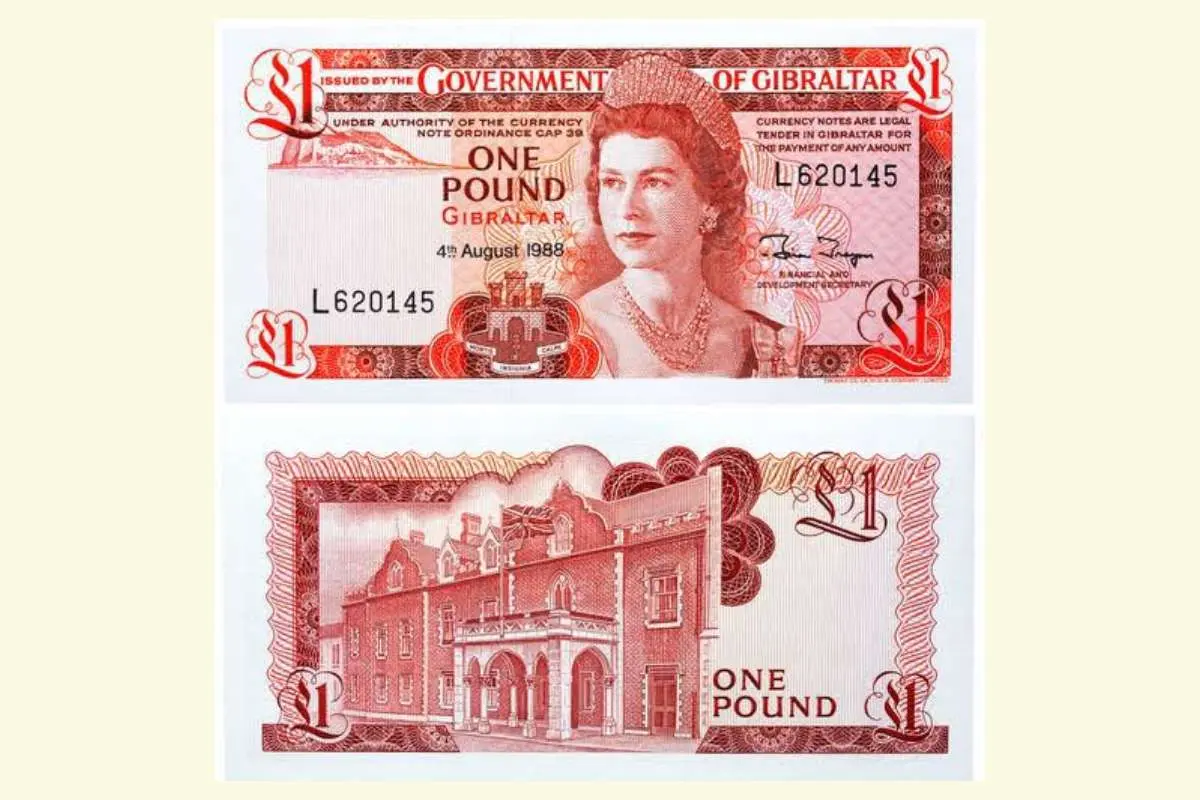
The Gibraltar pound ranks sixth in the list. One Gibraltar pound is worth about $1.34. The currency is maintained at the same value as the British pound. This means changes in sterling directly affect its value against the US dollar. British pounds are also widely accepted in Gibraltar. Its high nominal value is therefore closely linked to its relationship with sterling rather than independent global demand.
7. Swiss franc (CHF)
- Approximate value: $1.22 per CHF
The Swiss franc ranks seventh in the ranking. One Swiss franc is worth about $1.22. The currency has a floating exchange rate. Switzerland’s strong institutions, diversified economy, and financial sector support demand for the franc. The currency is also widely used in global foreign-exchange markets. Its global role is therefore much larger than its position in a simple nominal-value ranking suggests.
8. Cayman islands dollar (KYD)
- Approximate value: $1.20 per KYD
The Cayman Islands dollar ranks eighth in the ranking. One Cayman Islands dollar is worth about $1.20. The currency has a fixed relationship with the US dollar. This helps maintain exchange-rate stability. Financial services are a major part of the Cayman Islands economy, along with tourism. Its high nominal value reflects its exchange-rate system and monetary framework rather than the size of its economy.
9. Euro (EUR)
- Approximate value: $1.15 per EUR
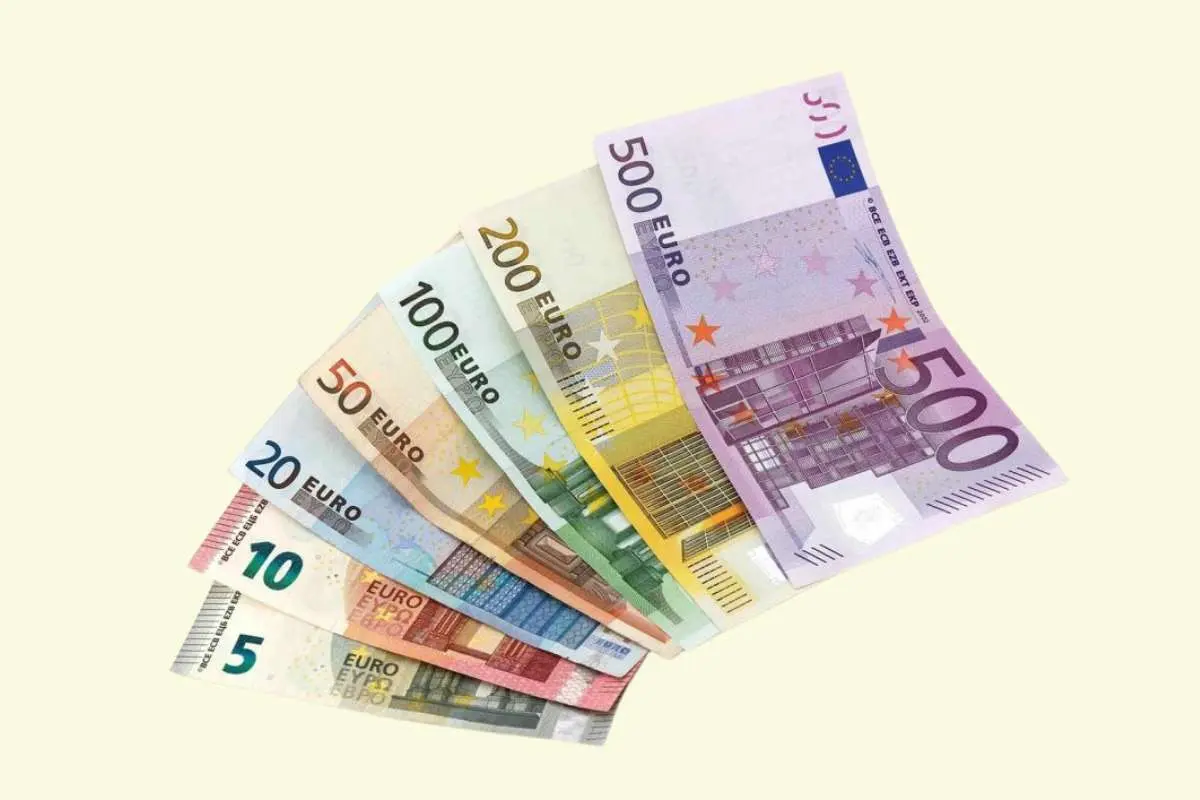
The euro ranks ninth by nominal value in this ranking. One euro is worth about $1.15. The currency is used by 21 EU member states. Its global importance is much greater than its ninth-place position suggests. The euro is the second-most traded currency in global foreign-exchange markets. It also accounts for a large share of global foreign-exchange reserves.
10. US dollar (USD)
- Approximate value: $1.00 per USD
The US dollar ranks tenth because this ranking measures each currency against the dollar itself. One US dollar is therefore equal to $1.00. This position does not reflect the dollar’s importance in the global economy. The dollar is the world’s most widely traded currency in foreign-exchange markets. It also holds the largest share of global foreign-exchange reserves. This shows that nominal currency value and global currency importance are two different measures.
Its tenth-place position in this strongest currencies in the world ranking reflects the methodology rather than the dollar’s global importance.
11. Brunei dollar (BND)
- Approximate value: $0.78 per BND
The Brunei dollar is worth about $0.78 against the US dollar. It ranks among the higher-valued currencies after the top 10. The currency is maintained at par with the Singapore dollar. This arrangement gives the Brunei dollar a stable relationship with Singapore’s currency. Brunei’s economy is supported by oil and gas, while the country is also working to diversify its economic base.
12. Singapore dollar (SGD)
- Approximate value: $0.78 per SGD
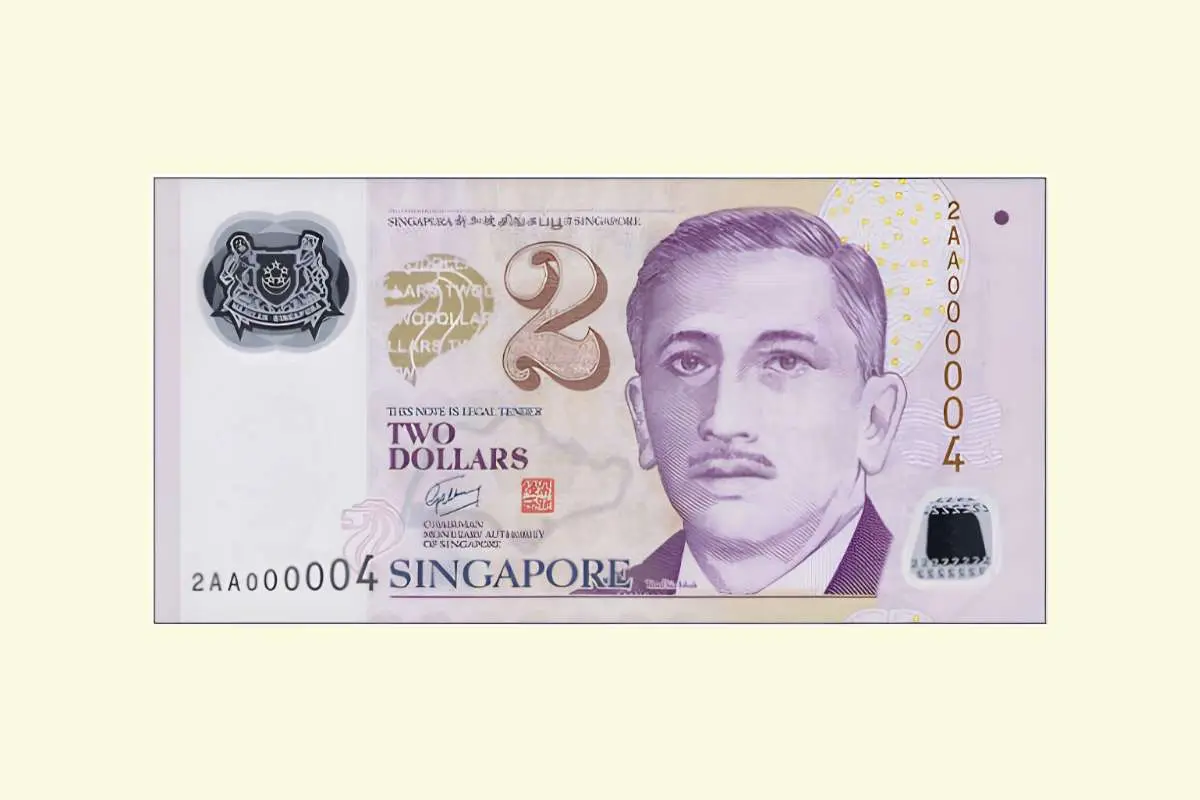
The Singapore dollar is worth about $0.78 per unit. Singapore uses a managed exchange-rate system rather than a simple fixed peg. The Monetary Authority of Singapore manages the currency against a trade-weighted basket. Singapore’s strong financial sector and open economy support the currency. Its exchange rate can change as global market and economic conditions change.
13. Australian dollar (AUD)
- Approximate value: $0.71 per AUD
The Australian dollar is worth about $0.71 per unit. It is a floating currency, so its value changes with market conditions. Interest rates, commodity prices, economic data, and global demand can affect its value. Australia has a large and diversified economy with strong links to global trade. The Australian dollar is also an important currency in international financial markets.
The world’s strongest currency isn’t always the most powerful. Here’s why
A currency’s value per unit and its global importance are not the same thing.
The strongest currencies by nominal exchange value in this ranking is the Kuwaiti dinar.
The most traded currency is the US dollar.
The largest reserve currency is also the US dollar.
The euro occupies the second position in both global FX trading and official reserve holdings.
When comparing the strongest currencies in the world with the most powerful or widely used currency, the measurement being used matters.
The distinction can be summarized as follows:
| Measure | Leading currency |
| Highest nominal value per unit | Kuwaiti Dinar |
| Most traded currency | US Dollar |
| Largest share of official reserves | US Dollar |
| Second-most traded | Euro |
| Second-largest reserve share | Euro |
This is why calling the US dollar “weak” simply because it ranks tenth on a nominal-value list would give readers the wrong impression.
Does a strong currency mean a strong economy?
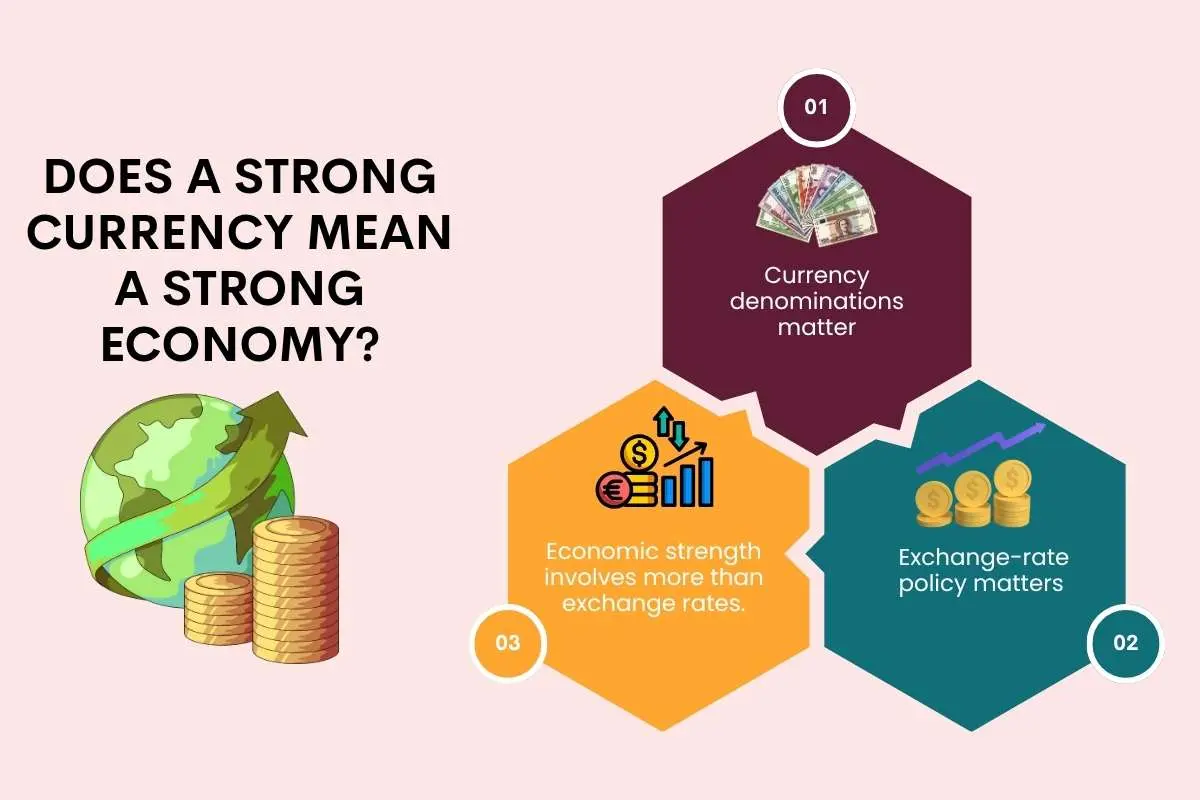
Not necessarily.
A high-valued currency can coexist with a small economy, while a major global economy can have a currency whose individual unit is worth less than one US dollar.
There are several reasons.
1. Currency denominations matter
The numerical value assigned to a currency unit is partly a result of monetary history and denomination choices. A currency could theoretically be redenominated without changing the underlying productive capacity of its economy.
2. Exchange-rate policy matters
Pegged currencies can maintain stable relationships with the US dollar even when broader economic conditions are changing.
3. Economic strength involves more than exchange rates.
A country’s economic position also depends on factors such as:
- GDP and productivity
- inflation
- employment
- government finances
- trade
- investment
- financial stability
- purchasing power
- institutional strength
Therefore, the exchange rate should be treated as one indicator, not a complete measure of economic strength.
The contrast between Kuwait and the United States makes this especially clear. The Kuwaiti dinar has a much higher nominal value per unit, while the US dollar has a vastly larger role in global trade, FX markets, and central-bank reserves.
This is why the strongest currencies in the world by exchange value should not automatically be described as belonging to the world’s strongest economy.
What can change a currency’s value?
Even when a currency has a stable long-term position, its exchange rate can change. Several factors influence floating currencies:
| Interest rates | Changes in central bank policy can alter demand for assets denominated in a currency. |
| Inflation | Persistent inflation can reduce purchasing power and influence currency demand. |
| Economic growth | Stronger economic expectations can attract capital, while weaker expectations can have the opposite effect. |
| Trade flows | Exports and imports influence demand for currencies. |
| Capital flows | Foreign investment can increase demand for a currency, while capital outflows can put downward pressure on it. |
| Political and financial stability | Investors consider the stability of institutions and financial markets when allocating capital. |
For pegged currencies, the central bank’s exchange-rate policy becomes especially important.
These factors can also change how individual currencies appear in a strongest currencies in the world ranking over time, particularly when exchange rates are allowed to float.
Conclusion:
The strongest currencies in the world depends on how strength is measured. By nominal value against the US dollar, the Kuwaiti dinar ranks first in 2026, followed by the Bahraini dinar, Omani rial, and Jordanian dinar.
But nominal value is not the same as global influence. The US dollar remains the world’s most traded currency and the leading reserve currency, while the euro has a much larger international role than its nominal exchange value suggests.
So, in this ranking, “strongest” means the highest value of one currency unit against the US dollar, not the strongest currency in the world or most influential currency. Exchange rates also change over time, so rankings depend on the date measured.
FAQs
What is the strongest currency in the world in 2026?
The Kuwaiti dinar is the highest-valued currency by nominal exchange value against the US dollar in this 2026 ranking. On September 21, 2026, one KWD was worth approximately $3.25.
Is the US dollar the strongest currencies in the world?
The US dollar is not the highest-valued currency per unit, but it is the world’s most traded currency and the largest component of official foreign-exchange reserves.
Why is the Kuwaiti dinar so strong?
The Kuwaiti dinar’s high nominal value reflects Kuwait’s exchange-rate framework, substantial hydrocarbon revenues, accumulated sovereign financial assets and monetary policy. Its high unit value should not be confused with overall economic size.
Does a strong currency mean a strong economy?
Not necessarily. Currency value is influenced by exchange-rate regimes, monetary policy and the historical denomination of a currency. Economic strength also depends on factors such as productivity, GDP, inflation, trade, investment and financial stability.
Can the ranking of the strongest currencies in the world change?
Yes. Floating currencies can change value daily as interest rates, inflation, economic expectations, and capital flows change. Pegged currencies tend to be more stable against the currency to which they are linked.