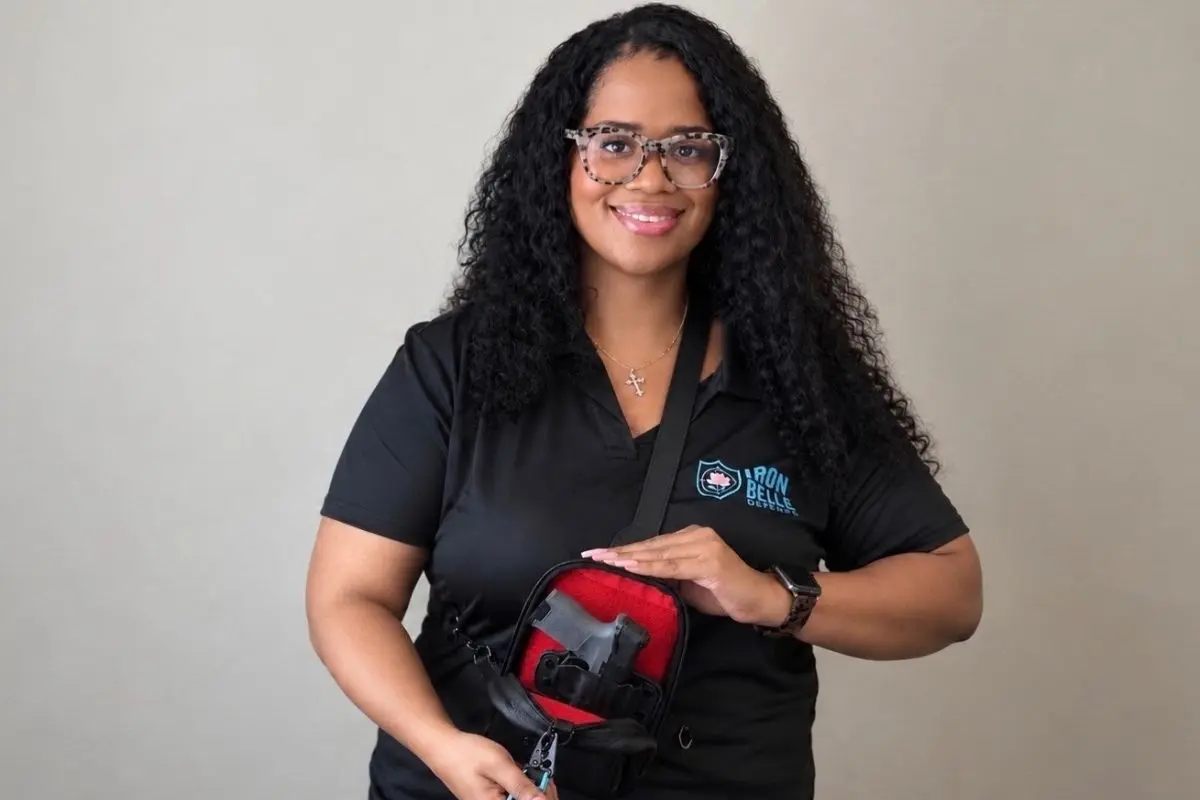
Purse carry gets a bad reputation, and a lot of that reputation is deserved, but not for the reasons people think.
Critics usually focus on the wrong things. They talk about draw speed, as if every defensive situation requires a sub-second holster draw. They talk about off-body carry as a category, as if the bag itself is the problem. What they rarely talk about is what actually makes purse carry dangerous or effective: the design of the bag.
Safe and effective purse carry needs to be taught and learned, just like any other carry method. So, let’s start with a few fundamentals. We need to remind ourselves that any carry scenario focuses first and foremost on the purpose of the gun. A carry-gun generally differs from a home-defense gun. A home-defense gun might be much bigger and can be shared by several users, whereas the carry-gun needs to be “fitted” to the person carrying it. It needs to be manageable and ergonomic, as well as concealable.
Someone with the body types of Shaquile O”Neil or Lady Gaga would likely make vastly different carry choices. Those choices not only include the type of gun, but also their carry
positions. In addition to body types, the dress code, and climate and time of year would also have an impact on available carry options. In colder climates where people wear additional cover garments such as coats and thick jackets we have much more opportunity to carry concealed than in climates where T-shirts and beach dresses are the appropriate choices.
When your clothes don’t offer many (or any) concealment options, off-body becomes the primary choice.
In a male dominated environment purse carry, though rapidly gaining popularity, is not yet very common, therefore a lot of falsehoods are perpetuated. Here are some persistent myths.
Myth #1: Purse-carry is inherently slower than holster carry.
This is true for a bad purse carry setup. It is not inherently true. A bag designed with a dedicated, accessible carry compartment, a reliable retention system, and a mechanism that allows one-hand access can be drawn from faster than many holster configurations, particularly for women wearing fitted clothing where holster options are genuinely limited. The problem isn’t purse carry. It’s purse-carry in a bag that wasn’t designed for it.
Myth #2: Any bag can work if you just add a holster insert.
No. A holster insert in a bag that wasn’t designed for carry creates a dangerous mess. The firearm isn’t properly retained. The compartment isn’t isolated from the rest of the bag’s contents. This creates hazardous conditions by increasing your risk of negligent discharges. There’s no reliable way to locate the grip under stress. And if the bag has multiple zippers or compartments, you’ve introduced a decision point at the worst possible moment. Design matters. You cannot retrofit a fashion bag into a carry bag by dropping a holster pouch inside it.
When you choose to carry off-body you need to do so in a purposely designed bag. Your other items will need their own space. This is similar for men. Men don’t stick a gun into the same pocket they have their keys, lighters, wallets and other items in. For both men and women there is a space that is exclusively dedicated for the gun and extra mags.
Myth #3: Purse carry means the bag is always in your hand.
This is the most legitimate safety concern with purse carry, and the one that actually deserves attention. A bag that leaves your possession, even for a moment, is a bag that someone else could access. This is why bag design has to include unauthorized access prevention, not just rapid authorized access. The two requirements are in tension with each other, and solving for both simultaneously is exactly what makes this a hard engineering problem.
Cakes addresses this by its purposeful design. The bag cannot be accessed without very deliberate action. Accidentally deploying your concealed firearm is quite difficult. Additionally the bag can easily be locked, similar to how you can disable a firearm with the use of a cable lock or other mechanism. The very deliberate and meticulous design of the bag acts as an additional
layer of gun-safety, in addition to the fundamental gun safety rules we all know and practice. Again, this underscores the importance of a dedicated bag that is made for a specific purpose.
Myth #4: Women choose purse carry because they don’t know better.
This one is the most condescending, and also the most common. Women choose purse carry because their clothing, their body type, their professional environment, or their personal preference makes on-body carry impractical or impossible for part or all of their day. Telling a woman in a fitted pencil skirt that she should “just” appendix carry is not helpful advice. It’s advice that ignores her reality.
The right conversation about purse carry isn’t whether to do it. It’s how to do it correctly, with a bag that was actually built for the purpose, in a carry configuration that gives you reliable access under stress, with consistent practice on the draw from that specific bag.
That’s the conversation worth having.
Tamkin Amin Collins is the Founder and CEO of Cakes Concealed Carry.
About The Author:
Matthias Quellenberg,
Writer and Founder of San Diego Firearms School