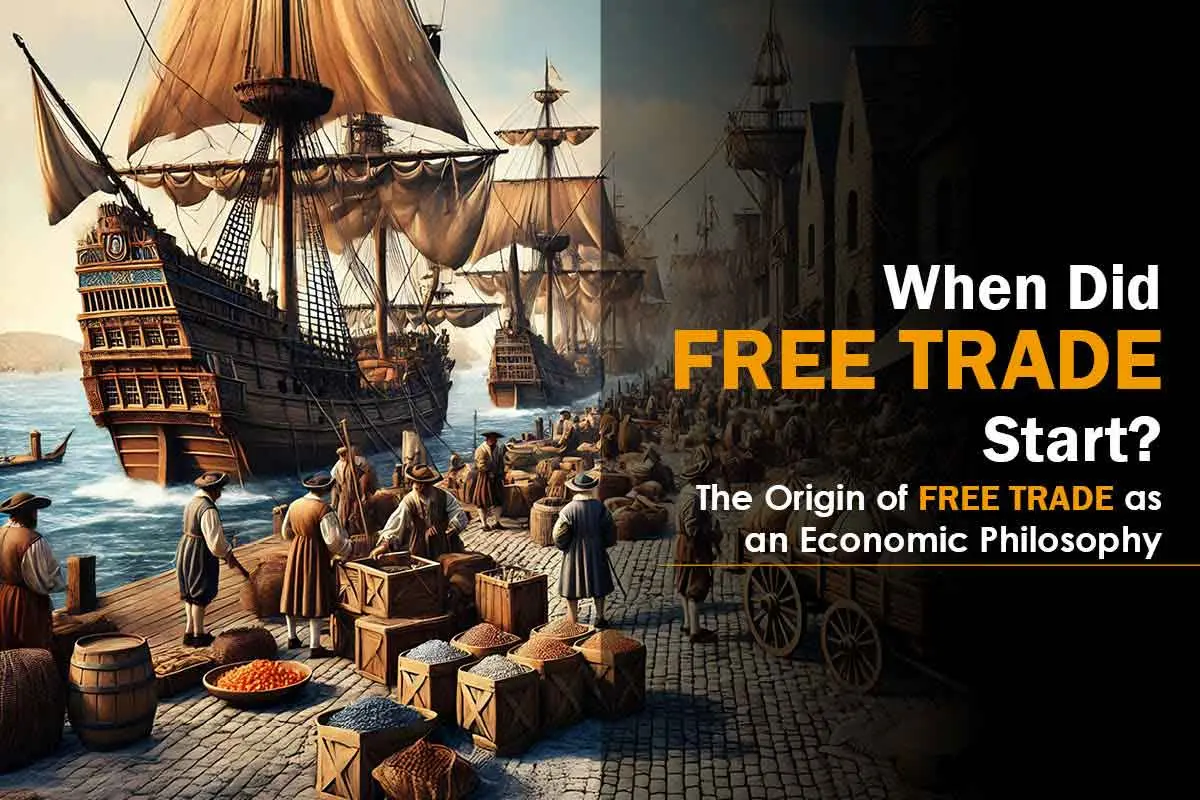
Trade is ancient. Free trade is an idea.
So, when did free trade start? There is no single year or event that marks its beginning. People had traded across borders for centuries, but the belief that countries could become more prosperous by allowing commerce to move with fewer government restrictions emerged much later.
As an economic philosophy, free trade is the belief that countries should be able to exchange goods with as few government-imposed barriers as possible, allowing competition, specialization, and voluntary exchange to shape economic activity. For much of European history, however, trade served a different purpose. Governments restricted imports, encouraged exports, protected domestic industries, and tightly controlled colonial commerce. This approach, broadly associated with mercantilism, shaped European economic thinking from the 16th through the 18th centuries.
Then the questions started changing.
What if countries could gain from exchanging goods instead of trying to control every transaction? What if competition and specialization created more wealth? And could two countries actually benefit from trading with each other?
The answers did not arrive in a single book or from a single thinker. The philosophy took shape gradually through the Physiocrats, Adam Smith, and David Ricardo before becoming a political force in 19th-century Britain.
Free trade began as an argument before it became a policy. Understanding its origins, therefore, means following the evolution of an idea.
Before Free Trade, There Was Mercantilism
To understand the rise of free trade, it helps to begin with the system it challenged.
From roughly the 16th to the 18th centuries, mercantilism shaped much of European economic thinking. Governments actively regulated commerce, encouraged exports, restricted imports, protected selected industries, and used colonial trading systems to strengthen national power.
The logic was simple enough: a strong trade position was seen as part of a strong state. Trade was therefore more than an economic activity. It was a strategic instrument.
Tariffs and restrictions were deliberate policy tools. They protected domestic producers, limited foreign competition, and influenced where wealth moved.
But every system creates the questions that eventually challenge it. What if economies could work better with fewer restrictions? That question opened the door to a different way of thinking about commerce.
DESIGN AS AN INFOGRAPHIC: From Mercantilism to Free Trade
Mercantilism
State control • Protected industries • Restricted imports
↓
Economic liberalization
Fewer restrictions • Greater commercial freedom
↓
Free-trade philosophy
Competition • Specialization • Exchange
The Physiocrats Make the First Break
The story becomes more interesting when we look beyond Adam Smith. So, when did free trade start as an economic philosophy? The answer takes us back to the thinkers who first began questioning mercantilist control.
In 18th-century France, the Physiocrats, led by François Quesnay, were already challenging important elements of mercantilist policy.
They believed economic activity followed a natural order and argued that excessive government interference could obstruct it. Their contribution went beyond supporting fewer trade restrictions: they questioned the larger assumption that governments needed to direct economic activity so closely.
Quesnay’s Tableau économique, published in 1758, became an important work in the development of economic thought.
The Physiocrats were not modern free-trade economists in every respect. Their system placed particular importance on agriculture, and later economists would revise many of their ideas. Their importance lies elsewhere.
They helped shift the question from how governments should control commerce to whether commerce needed such extensive control at all. That made them an important intellectual bridge between mercantilist control and economic liberty.
Free trade was not yet a complete theory. But the old assumptions were beginning to crack.
Adam Smith Gives Free Trade a Wider Framework
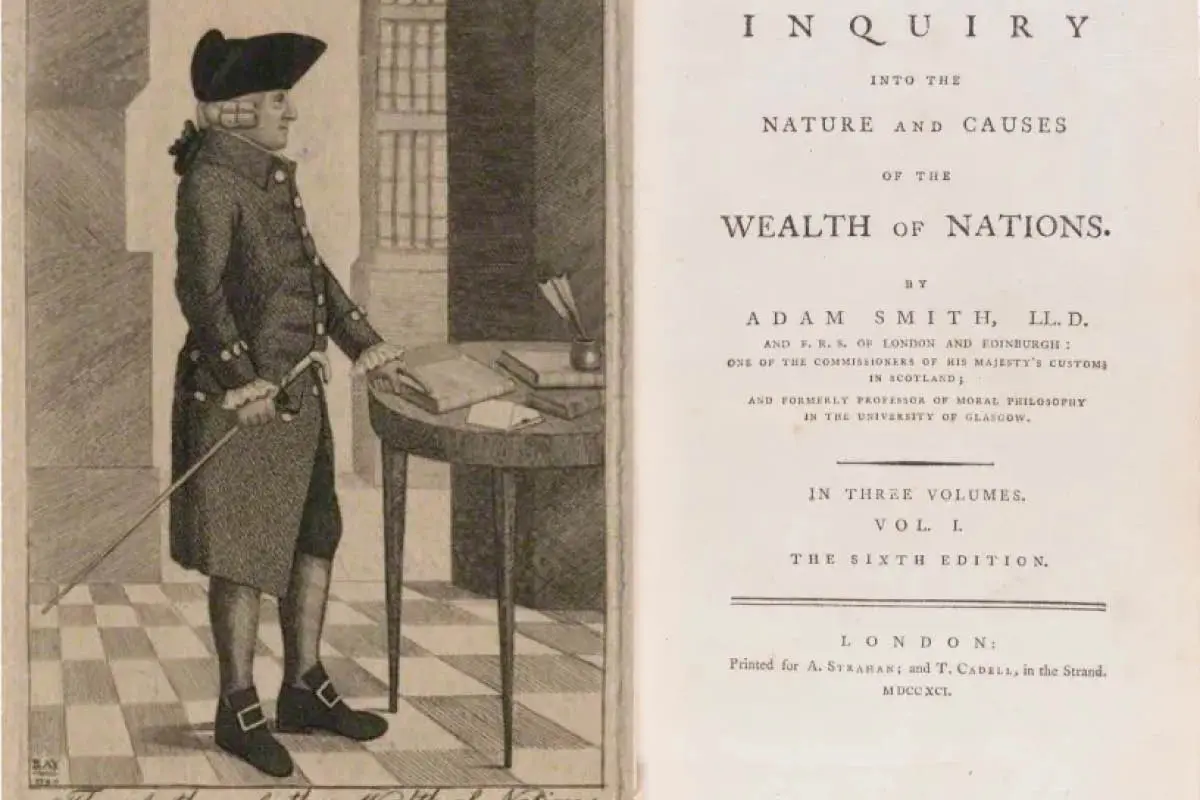
In 1776, Adam Smith published The Wealth of Nations and gave the emerging challenge to mercantilism a much wider intellectual framework.
Smith questioned the idea that national prosperity depended primarily on accumulating precious metals and restricting imports. Instead, he focused on productive activity, competition, specialization, and exchange as sources of wealth. His argument changed the question.
Trade did not have to be a contest in which one nation’s gain meant another’s loss. When people and businesses could specialize, produce, compete, and exchange, economic activity could become more productive.
That was a deeper philosophical shift. The purpose of economic activity was no longer simply to strengthen the state through controlled commerce; it was also to understand how freedom of production and exchange could create wealth.
Smith was not arguing for the removal of every restriction in every circumstance. He recognized limited exceptions, including matters involving national defense and taxation. That distinction matters.
Smith did not invent international trade, nor did he single-handedly invent economic liberty. His contribution was to give the case for freer commerce a systematic framework and connect it to a broader understanding of how economies create wealth.
Ricardo Turns the Argument into a Theory
But when did free trade start to become a developed economic argument? The next major step came with David Ricardo.
In 1817, Ricardo published On the Principles of Political Economy and Taxation, developing the theory of comparative advantage.
The idea addressed a deceptively simple objection: what if one country was better at producing almost everything?
Ricardo answered that trade could still benefit both countries.
What mattered was not simply who could produce something most efficiently, but the relative opportunity cost of producing different goods. Countries could specialize in areas where they had a comparative advantage and trade for the rest.
That gave the free-trade argument greater theoretical weight. Ricardo was not merely saying that governments should interfere less. He was explaining why specialization and exchange could create gains even between unequal economies.
The idea had moved from a challenge to government restrictions toward a more developed theory of international exchange.
DESIGN AS AN INFOGRAPHIC: How the Free-Trade Idea Evolved
Physiocrats
Questioned mercantilist controls
↓
Adam Smith — 1776
Critiqued mercantilism; emphasized specialization and exchange
↓
David Ricardo — 1817
Developed comparative advantage
When Free Trade Left the Books
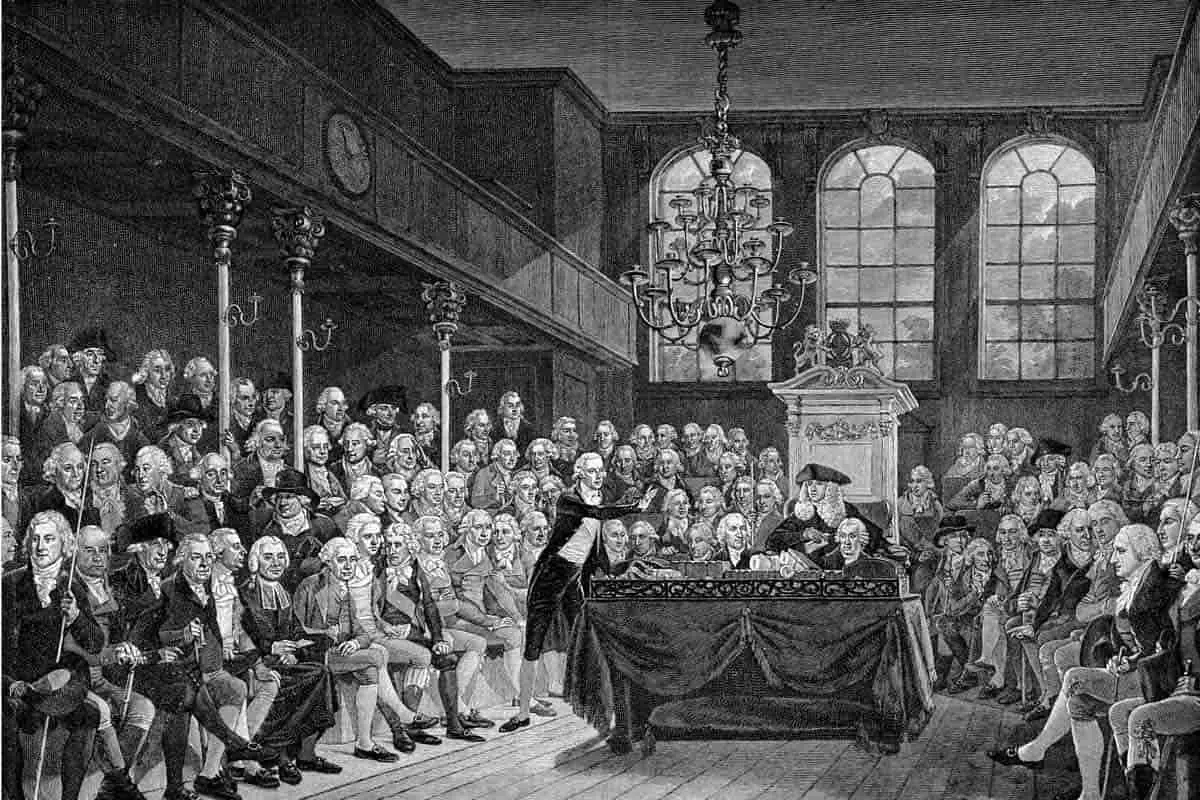
The philosophy had developed through economic thought. Now it faced a harder test: could those ideas change government policy?
Britain provided one of the clearest examples.
The Corn Laws restricted imported grain and protected domestic producers. As debates over food prices, protection, and the interests of landowners intensified, opposition grew.
In 1839, the Anti-Corn Law League was established. Led prominently by Richard Cobden, with John Bright among its important figures, the organization turned free trade into a major political campaign. The argument was no longer confined to economists.
Manufacturers, consumers, workers, landowners, and politicians were now part of the debate. Political circumstances added further pressure, particularly during the Irish potato crisis.
Prime Minister Robert Peel eventually moved toward repeal. In 1846, the Corn Laws were repealed.
The significance went beyond one law. An argument developed through decades of economic thought had become a political force capable of changing national policy. Free trade had left the books and entered government.
The Promise and the Pushback
The rise of free trade did not end the argument over protection. Fewer trade barriers could encourage specialization, expand markets, increase competition, and give consumers access to a wider range of goods. But openness could also create disruption.
Industries exposed to foreign competition could struggle. Some workers could lose as production patterns changed. Governments could also argue that certain industries needed protection for national or developmental reasons.
Britain moved toward greater trade liberalization in the 19th century, including the Anglo-French commercial treaty of 1860. Yet protectionist thinking strengthened again in later decades.
Thinkers such as Friedrich List argued that developing economies might need protection to build domestic industries.
The history revealed something important: free trade was never a settled destination. It remained an argument over how open an economy should be and when government intervention might be justified.
An Idea That Never Really Went Away

So, when did free trade start? Not in one year.
Its philosophy emerged gradually as thinkers challenged the assumptions of mercantilism. The Physiocrats questioned excessive economic controls. Adam Smith developed a broader case for economic liberty, productivity, specialization, and exchange in 1776. David Ricardo strengthened the argument through comparative advantage in 1817. And the repeal of the Corn Laws in 1846 demonstrated how those ideas could move from economic theory into political action.
That history still matters.
Today’s arguments over tariffs, domestic industries, strategic sectors, supply chains, and economic nationalism may look different from the debates of 18th– and 19th-century Europe, but they revolve around a familiar question:
Should governments protect economic activity, or give trade more room to work? The answer has changed across centuries. The question has not.
What began as an intellectual challenge to an established economic order became one of modern economics’ defining ideas, and one the world continues to debate.