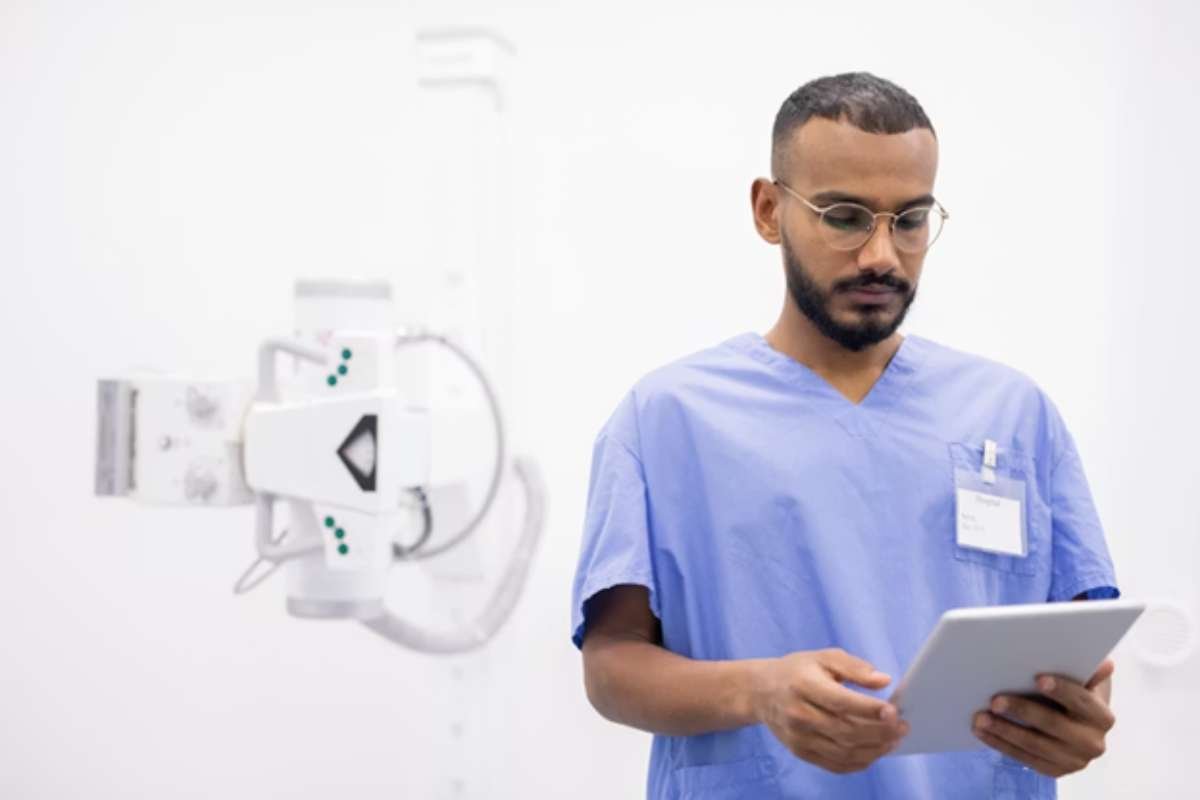
Technology is quietly reshaping how healthcare works every day. Clinics move faster, records stay connected, and communication between doctors and patients feels smoother than ever.
Modern care no longer stops at hospital walls. Digital systems handle details once buried in paperwork, freeing medical teams to focus on people, not process.
Every click, scan, and update strengthens how care is delivered. Stay with this piece to see how these tools are transforming the heart of healthcare operations.
Electronic Health Records Transform Care Coordination
Modern hospitals depend on electronic health records to keep every department aligned. Physicians can view test results as soon as they are available, nurses update charts without waiting for paperwork, and administrators check information for accuracy.
The shift replaces cluttered files with a connected system where data flows freely between care teams. Patients experience smoother treatment, fewer mistakes, and quicker decisions. Centralized records strengthen accountability, support better collaboration, and give healthcare providers a clearer picture of each patient’s ongoing care.
Digital Billing Systems Strengthen Financial Accuracy

As electronic records streamline patient data, digital billing systems keep the financial side just as precise. Automated coding software reduces manual errors and shortens claim cycles, allowing healthcare facilities to maintain steady revenue flow.
These systems depend on the vital roles for medical coding and billing specialists, whose expertise ensures that each diagnosis and treatment aligns with complex insurance rules. Their accuracy supports hospital budgets, prevents costly denials, and frees staff to focus more on patient care rather than on paperwork delays.
Telemedicine Expands Access to Quality Care
Telemedicine redefines how patients reach healthcare providers, especially in remote areas. Through secure video calls and mobile platforms, people can now consult doctors without the stress of travel or long wait times.
Physicians diagnose conditions, issue prescriptions, and monitor recovery digitally, allowing care to continue beyond the clinic walls. Most hospitals link telehealth platforms to patient databases, ensuring accurate, synchronized records. This approach delivers flexible scheduling, consistent follow-ups, and broader access to quality medical support for every community.
Artificial Intelligence Elevates Diagnostic Precision

Artificial intelligence supports clinicians in identifying diseases earlier and more accurately. Algorithms analyze scans, lab results, and patient histories within seconds, helping doctors confirm diagnoses with greater confidence. AI systems learn from thousands of medical images, improving with every case reviewed.
Hospitals use these tools to detect conditions such as cancer and heart disease at stages when treatment is most effective. This combination of human expertise and machine learning reduces diagnostic delays, improves outcomes, and raises the overall standard of medical decision-making.
Predictive Analytics Improves Hospital Management
Healthcare facilities use predictive analytics to forecast patient admissions, resource needs, and staffing levels with remarkable accuracy. These data models study patterns from past operations, identifying when demand will rise or when supplies might run short.
Administrators plan ahead rather than react to last-minute pressure. Emergency departments balance workloads, and supply chains stay stocked without waste. Predictive tools turn hospital management from guesswork into strategic planning, saving both time and cost while ensuring patients receive timely, uninterrupted care.
Wearable Devices Strengthen Preventive Care

Smartwatches, glucose monitors, and heart rate trackers now play an active role in healthcare operations. These devices collect continuous data, giving doctors real-time insights into patient health between visits. Patients monitor their own progress, spotting issues before they become emergencies.
Hospitals integrate wearable data into electronic health records, improving accuracy and care coordination. Preventive care becomes proactive, not reactive. When people and providers share data seamlessly, chronic conditions stay controlled, hospital readmissions drop, and overall community health steadily improves.
Cloud-Based Collaboration Shapes the Future of Care
In the final shift in redefining healthcare operations, cloud platforms bring together every aspect of patient care into one, accessible space. Doctors, pharmacists, and specialists can securely share files from anywhere and review treatment plans together in real time.
This connectivity shortens decision cycles and improves coordination across networks. Cloud storage also supports large-scale data analysis, uncovering patterns that guide better clinical strategies. With information centralized and protected, healthcare teams operate more efficiently, delivering precise, connected, and reliable care across every point of service.
Final Words
Technology keeps reshaping how healthcare operations work, and the pace continues to accelerate. What once took weeks now happens in moments, supported by smart systems and skilled professionals.
Every digital improvement pushes care toward greater precision and empathy. The future of medicine belongs to collaboration between human insight and intelligent tools, creating a system that heals faster, communicates clearly, and never stops learning.