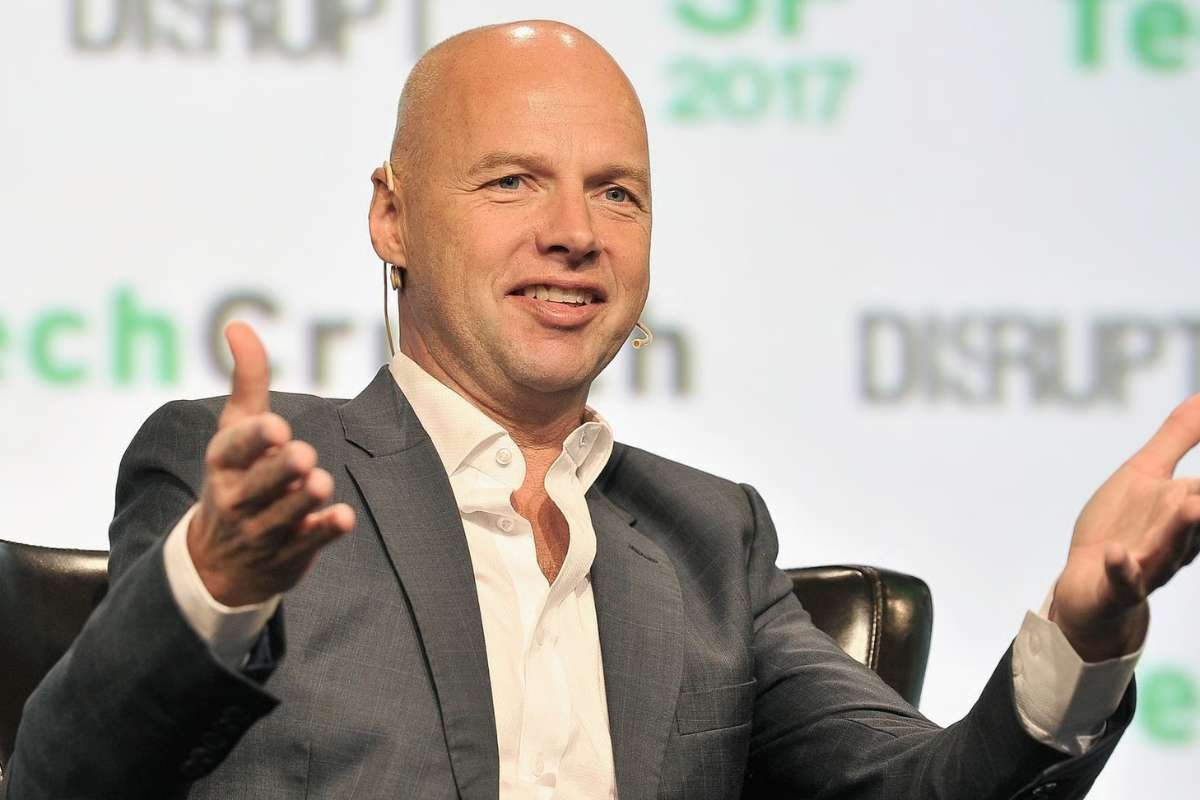
When discussing the contributors who shaped 21st-century technology, keynote speaker Sebastian Thrun is consistently part of the conversation. A pioneer of autonomous driving and an early force in large-scale online education, Thrun has built a career around one recurring idea: use intelligent systems to expand human potential, whether that means safer mobility, broader access to learning, or better ways for people and institutions to make decisions in a fast-changing world.
Across robotics, education, and AI, his work reflects a practical optimism: technology is most valuable when it reduces friction in real life, lowers barriers to opportunity, and helps societies solve problems at scale.
The road to autonomous driving
Sebastian Thrun’s rise into the public spotlight began with a race. In 2005, he led Stanford’s team behind “Stanley,” a robotic Volkswagen Touareg that won the DARPA Grand Challenge by completing a 132-mile desert course without human intervention. At the time, the idea of a car driving itself reliably outside a lab still felt like science fiction. Stanley made it tangible.
That success helped set the stage for what came next. Thrun joined Google and went on to lead the self-driving car effort inside Google X, the company’s “moonshot” lab. The initiative that started as the Google Self-Driving Car Project later became Waymo, one of the best-known names in autonomous mobility.
For Thrun, the motivation was never just novelty. Road crashes remain one of the world’s largest public safety problems, killing around 1.19 million people each year globally. If autonomy can measurably reduce that toll, the impact is hard to overstate.
From roads to the sky
Another long-running interest for Thrun has been aviation. He founded the electric aircraft startup Kittyhawk (backed by Larry Page), exploring personal flight and the potential of vertical take-off and landing aircraft. While Kittyhawk later wound down operations, the broader idea remains compelling: adding a “third dimension” to transportation could reduce congestion and unlock time and productivity in dense urban regions.

Sebastian Thrun has often framed this as an engineering and safety challenge, not a lifestyle fantasy. If autonomous driving can scale into a reliable service, the same service logic could eventually apply to aerial mobility, though the path is longer, the regulation is heavier, and the technical constraints are different.
Future of work and lifelong learning
The other major thread in Thrun’s career is education and workforce transformation. He co-founded Udacity after helping bring early large-scale online learning into the mainstream. Udacity’s Nanodegree programs, launched in 2014, were designed around a straightforward premise: in a world where technology evolves quickly, skills have to be updated continuously, not “front-loaded” into the first years of adulthood.
Thrun’s view of AI and work is notably balanced. He does not frame AI as a tool that makes humans obsolete, but as a tool that shifts what humans do. Many repetitive tasks will be automated across industries, but the organizations that thrive will be those that invest in reskilling, redesign roles around higher-value work, and treat learning as part of operating rhythm rather than a one-time event.
Following that view, he co-founded Crossing Minds, a startup focused on recommendation and retrieval systems. In June 2025, Crossing Minds announced that its team would be joining OpenAI, marking a notable step in how leading AI labs are bringing in specialized talent and technology to strengthen personalization, retrieval, and real-time AI capabilities.
What leaders can take away
-.jpg)
Sebastian Thrun’s story matters to executives for one reason: it is a playbook for navigating technological discontinuity without losing the human objective. Whether the topic is autonomous mobility, digital skills, or AI adoption, his work highlights the same leadership principle: progress happens when innovation is tied to measurable outcomes, responsible deployment, and systems that empower people rather than replace them.
For organizations and conferences looking to make sense of these shifts and translate them into strategy, Aurum Speakers Bureau connects audiences with global thought leaders who can help teams understand what is coming, what is real today, and how to prepare for what’s next.