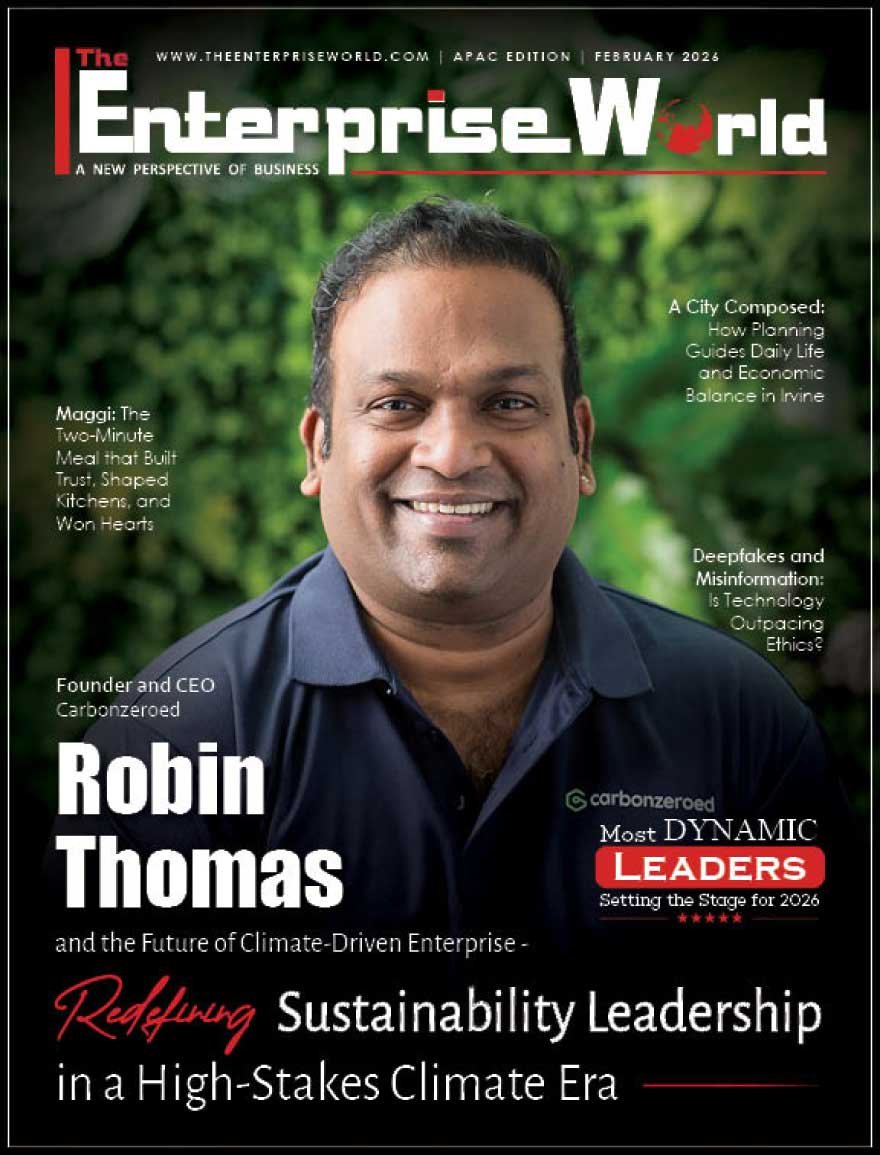
In an era marked by accelerating climate risk, tightening regulation, and intensifying stakeholder scrutiny, sustainability leadership is undergoing a fundamental shift. Climate action is no longer confined to disclosures, pledges, or peripheral CSR initiatives. Instead, it has emerged as a decisive factor shaping operational resilience, capital allocation, enterprise risk, and long-term competitiveness.
At this critical intersection of climate science, advanced technology, and executive decision-making stands Robin Thomas, Founder and CEO of Carbonzeroed, a Singapore-headquartered climate technology company redefining how organisations across ASEAN and the wider APAC region approach decarbonisation.
Thomas does not fit the mould of a conventional sustainability evangelist, nor that of a technologist removed from operational realities. His leadership represents a new archetype: the carbon-intelligent executive, one who understands that climate transition succeeds only when it is embedded into the same decision frameworks that govern cost, performance, and risk.
Through Carbonzeroed, Robin Thomas enables enterprises to move beyond static reports and aspirational targets toward immersive, data-driven decisions that reshape infrastructure, energy systems, and long-term strategy. Founded in 2023, the company has rapidly positioned itself as a critical partner for boards, CFOs, and operators seeking credible, executable pathways to decarbonisation.
From Conviction to Company – The Genesis of Carbonzeroed
Thomas’s entrepreneurial journey is anchored in two deeply held convictions: that business as usual is structurally inadequate to address the climate crisis, and that technology, when applied with discipline and intent, can materially accelerate climate action.
These convictions were forged during his tenure at Schneider Electric, where Robin Thomas witnessed a persistent disconnect between sustainability rhetoric and operational execution. While organisations invested heavily in frameworks, disclosures, and ESG narratives, many decarbonisation strategies remained confined to slide decks rather than translating into action on factory floors or balance sheets.
Teams were awash in data yet starved of insight. Climate risk was acknowledged, but urgency was diluted by organisational inertia and fragmented ownership.
A defining moment came with the documentary ICE ON FIRE, produced by Leonardo DiCaprio. Rather than reinforcing despair, it crystallised Thomas’s resolve to build a company operating at the convergence of climate science, immersive technology, and AI-enabled energy intelligence.
From the outset, Carbonzeroed was not conceived as another reporting tool in an already saturated market. Its mission was more radical: to change how decision-makers experience climate impact. By enabling leaders to see, simulate, and stress-test carbon outcomes, the company sought to transform awareness into action.
Early engagements across manufacturing, retail, data centres, and healthcare quickly challenged Robin Thomas’s initial assumption that accurate measurement naturally leads to change. Measurement, he realised, is essential but insufficient. Transformation requires decision enablement.
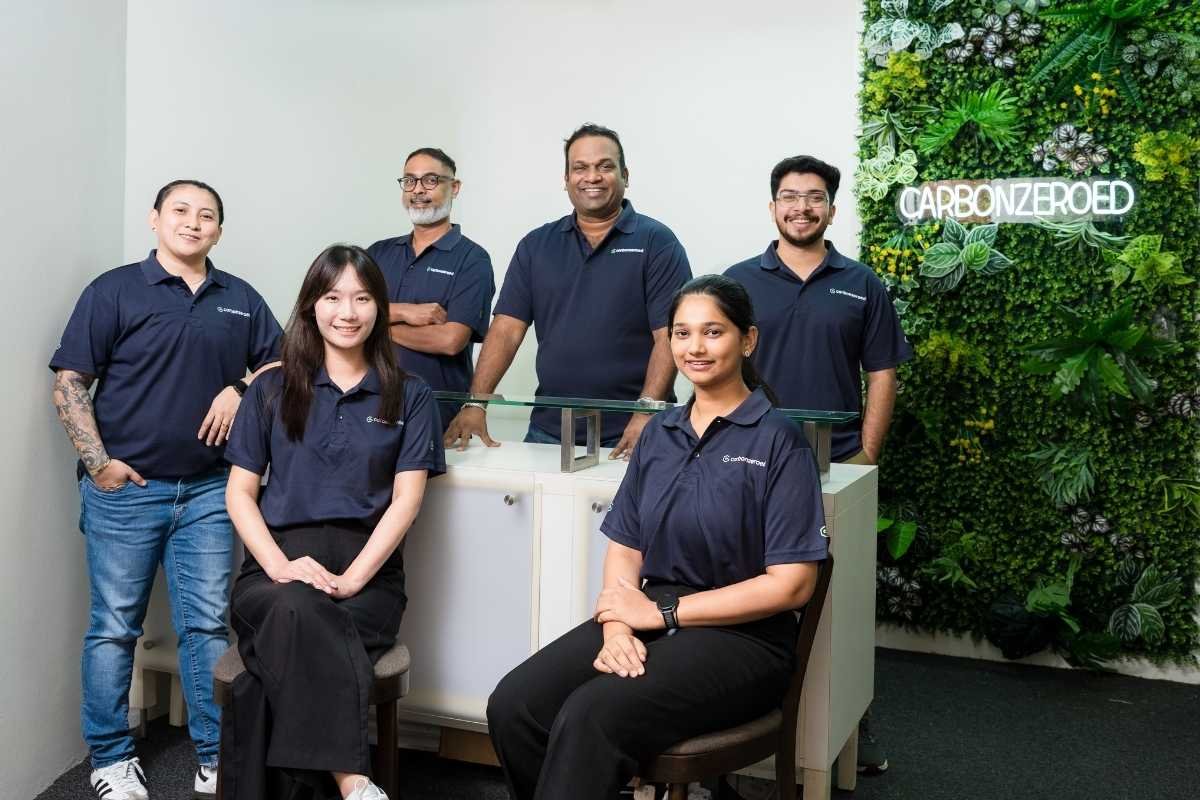
The Evolution of Vision- Measurement to Transformation
Carbonzeroed’s strategic evolution reflects three pivotal shifts in Robin Thomas’s thinking.
1. From Measurement to Transformation
While emissions measurement provides a necessary foundation, it is the ability to prioritise high-impact interventions that drives progress. Carbonzeroed helps organisations compare competing investment pathways such as battery energy storage systems versus diesel backup by linking carbon outcomes directly to cost, risk exposure, and resilience.
2. From Tools to Experiences
Robin Thomas observed that executives act on what they experience, not merely what they read. This insight catalysed Carbonzeroed’s transition from conventional dashboards to VR-enabled immersive analytics. Leaders can now walk through virtual facilities, identify emissions hotspots, and explore decarbonisation scenarios in real time, accelerating alignment and enabling board-level decisions.
3. From Compliance to Competitive Advantage
What began as regulatory-driven engagement has grown into a strategic pursuit of differentiation. Increasingly, clients view climate strategy as a lever for customer trust, talent attraction, operational efficiency, and long-term value creation.
As Carbonzeroed looks toward 2026, its focus is twofold: scaling into new sectors and geographies, and deepening analytics to address emerging risks such as AI-driven climate fraud. The guiding principle remains constant: carbon intelligence as a core business capability powering the circular economy.
Redefining Climate Intelligence
Carbonzeroed’s strategic evolution reflects a deliberate shift from measurement to decision intelligence. In its early stage, the company focused on emissions measurement, helping organizations establish accurate carbon baselines and achieve regulatory readiness. As the business grew, the emphasis moved toward decision enablement, integrating cost, risk, and carbon insights to support smarter capital prioritization. In its current stage, Carbonzeroed has advanced into immersive intelligence, using VR-led executive alignment to accelerate understanding and enable faster, board-ready decisions. Looking ahead, the company’s forward strategy centers on building competitive advantage through AI-driven insights reinforced by strong integrity guardrails, positioning Carbonzeroed for sustainable market leadership.
Scaling Conviction into a Viable Business
Building Carbonzeroed required translating climate conviction into commercial relevance. Early pitches framed around environmental responsibility often fell flat with buyers focused on near-term financial outcomes.
The inflection point came when Carbonzeroed began speaking the language of its customers:
- Uptime and resilience for data centres
- Risk mitigation and reputation for corporates
- Tangible cost savings for operations teams
Another defining challenge was timing; early VR-enabled demonstrations were innovative but sometimes failed to secure contracts because of the absence of clear 12-month business outcomes. The lesson was decisive: every immersive experience had to culminate in a board-ready decision, underpinned by both carbon and financial metrics.
Equally critical was managing the emotional intensity of climate work. Recognising that urgency without focus breeds burnout, Robin Thomas instituted stricter prioritisation, deeper pilot engagements, and cultural practices that balance execution with reflection. Integrity emerged as both a challenge and a differentiator. In an ecosystem vulnerable to greenwashing, Carbonzeroed chose truth over optics even at the cost of short-term revenue. Over time, this stance attracted partners committed to genuine transformation.
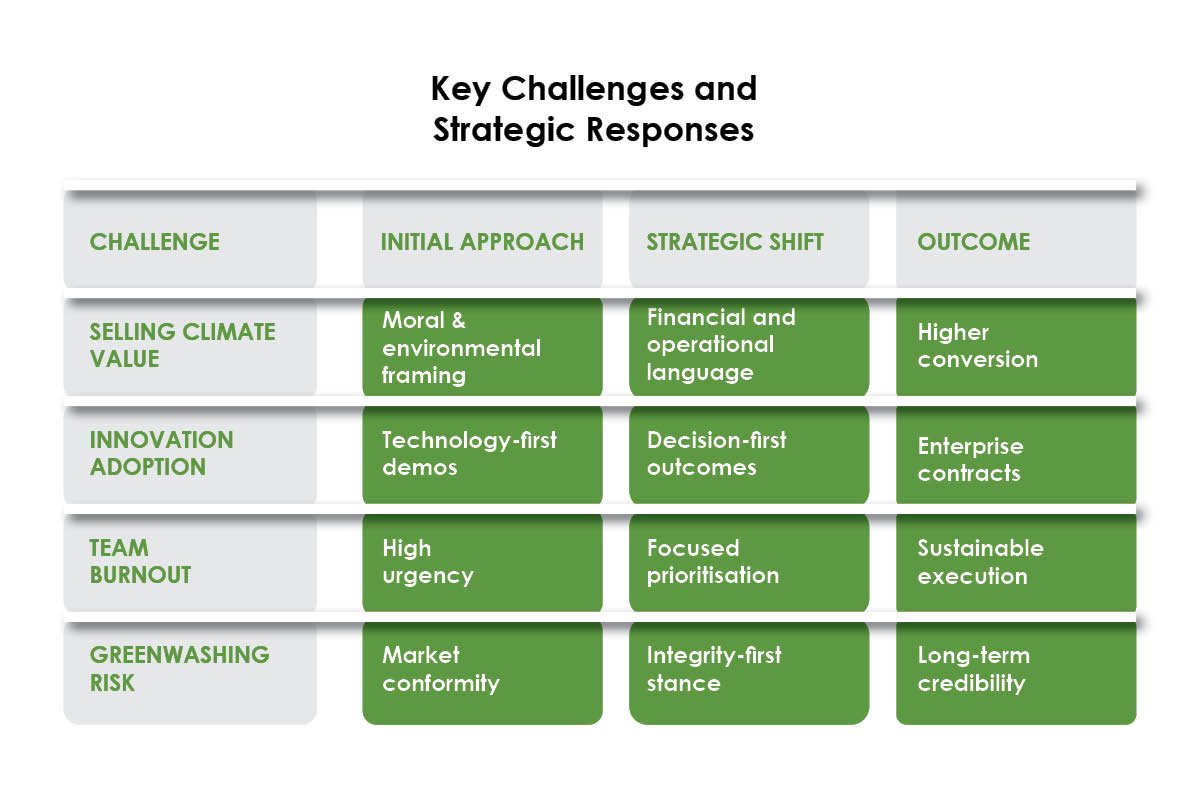
| Key Challenges and Strategic Responses | |||
|---|---|---|---|
| Challenge | Initial Approach | Strategic Shift | Outcome |
| Selling climate value | Moral & environmental framing | Financial and operational language | Higher conversion |
| Innovation adoption | Technology-first demos | Decision-first outcomes | Enterprise contracts |
| Team burnout | High urgency | Focused prioritisation | Sustainable execution |
| Greenwashing risk | Market conformity | Integrity-first stance | Long-term credibility |
Mission-Driven, Data-Informed and Human-Centred
Robin Thomas’s leadership style blends mission clarity with analytical rigour and deep collaboration. Based in Singapore and operating across ASEAN, he views his role as:
- A translator between climate science and business reality
- A systems thinker navigating policy, infrastructure, and capital complexity
- An enabler who empowers teams rather than centralising control
Decision-making is anchored in outcomes, not features. High trust and high ownership define Carbonzeroed’s culture, supported by clear metrics, boundaries, and freedom to experiment.
Regional sensitivity is a defining strength. Robin Thomas adapts execution to diverse energy mixes, regulatory regimes, and cultural norms across ASEAN, while remaining uncompromising on principles of integrity and impact.
Proprietary Frameworks Powering Carbon-Intelligent Decisions
Carbonzeroed’s differentiation lies in a tightly integrated suite of proprietary frameworks that translate climate complexity into enterprise-grade action. At the core is the Immersive Carbon Decision Engine, which brings together carbon data, financial modelling, and virtual reality to enable investment-grade decisions rather than theoretical scenarios. Complementing this is Carbon-Operational Reality Mapping, a framework designed to bridge the gap between reported emissions and on-ground operational behaviour, ensuring accuracy where it matters most.
To accelerate execution, the Immersive Stakeholder Alignment Protocol aligns finance, operations, and sustainability teams through shared, experience-led decision-making, reducing friction and shortening approval cycles. Anchoring all of these is the ASEAN Climate Context Engine, which localises insights to regional energy systems, regulatory environments, and infrastructure realities, ensuring recommendations are both credible and actionable.
Together, these frameworks move organisations decisively from reports to decisions, from targets to executable roadmaps, and from generic climate advice to region-specific strategies built for real-world impact.
Operationalizing Climate Insights at Scale
Carbonzeroed’s innovation is grounded in systems thinking, with frameworks designed to translate complex climate data into practical, high-value outcomes. The Immersive Carbon Decision Engine integrates carbon metrics, cost considerations, and VR-based visualization to support investment-grade decision-making. Carbon-Operational Reality Mapping connects reported emissions data with actual on-site behaviors, improving operational accuracy and credibility. To accelerate execution, the Immersive Stakeholder Alignment Protocol brings finance, operations, and sustainability teams into a shared decision framework. Complementing this is the ASEAN Climate Context Engine, which localizes insights to regional conditions and regulatory realities, ensuring decisions are not only data-driven but also contextually credible.
Innovation, Partnerships, and the Road Ahead
Carbonzeroed’s growth is ecosystem-led. Strategic partnerships with Schneider Electric, Dell Technologies, and Lenovo enhance scalability and credibility, while collaborations with industry leaders enable co-creation in live operational environments.
Engagement with governments, academia, and industry bodies ensures alignment with growing policy and standards. Innovation is sustained through continuous monitoring, customer co-creation, lightweight experimentation, and a deliberate pairing of AI with human expertise. Integrity is embedded directly into the platform through transparent assumptions, audit trails, and anti-greenwashing safeguards.
Legacy and Long-Term Impact
Robin Thomas aims to embed climate action as a core business function, anchored in integrity and driven by decisions rather than declarations. His work challenges organisations to move beyond performative sustainability and integrate climate intelligence into capital allocation, risk management, and operational strategy.
Through Carbonzeroed, and beyond it, Thomas is redefining leadership for a climate-constrained world where climate considerations are integral to boardroom decisions, investments, and infrastructure planning, and treated as drivers of long-term value.
Central to his vision is positioning APAC and ASEAN as originators of context-driven, execution-led climate models. By aligning regional realities with global standards, he advocates for practical, scalable climate solutions.
Together, his leadership champions substance over symbolism and action over aspiration, setting a benchmark for resilient and responsible business in the years ahead.
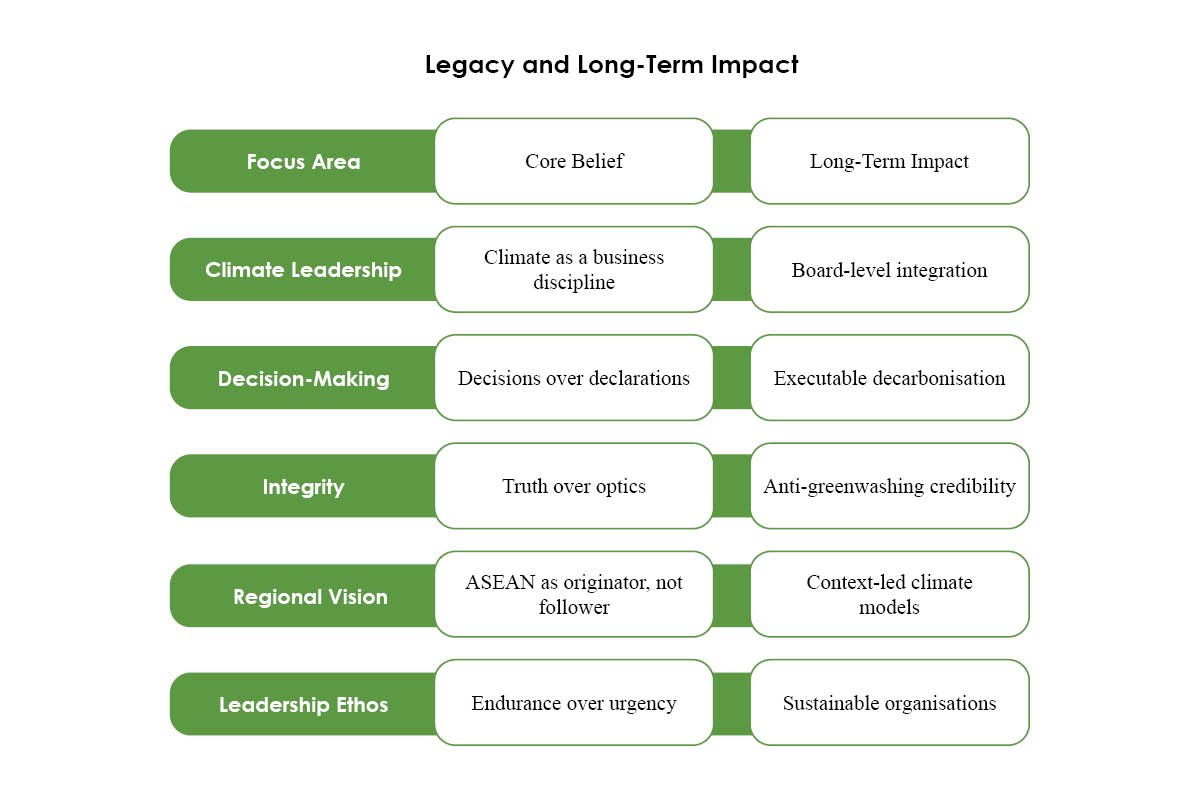
| Legacy and Long-Term Impact | ||
|---|---|---|
| Focus Area | Core Belief | Long-Term Impact |
| Climate Leadership | Climate as a business discipline | Board-level integration |
| Decision-Making | Decisions over declarations | Executable decarbonisation |
| Integrity | Truth over optics | Anti-greenwashing credibility |
| Regional Vision | ASEAN as originator, not follower | Context-led climate models |
| Leadership Ethos | Endurance over urgency | Sustainable organisations |
An Open Letter
To the next generation of climate leaders,
Climate leadership is defined by decisions, not declarations. Treat climate as a system, not a slogan, one that intersects with capital, operations, and human behaviour. Make impact legible in both carbon and cash, and focus on clear, solvable use cases where intent can become execution.
Build with operators, respect regional realities, and protect your red lines on integrity. In a landscape vulnerable to shortcuts, truth is not optional; it is strategic. Above all, design for sustainability not only of systems, but of organisations and people.
Robin Thomas
Founder & CEO, Carbonzeroed

Five Key Takeaways
- Climate leadership is shifting from disclosure-led sustainability to decision-driven integration across capital, risk, and operations.
- Carbonzeroed demonstrates that immersive, experience-led intelligence enables faster, board-ready decarbonisation decisions.
- Meaningful climate action requires translating carbon data into financial, operational, and resilience outcomes.
- Integrity and anti-greenwashing discipline are strategic advantages, not ethical add-ons, in climate technology.
- APAC and ASEAN can lead global climate transitions through context-aware, execution-led business models.