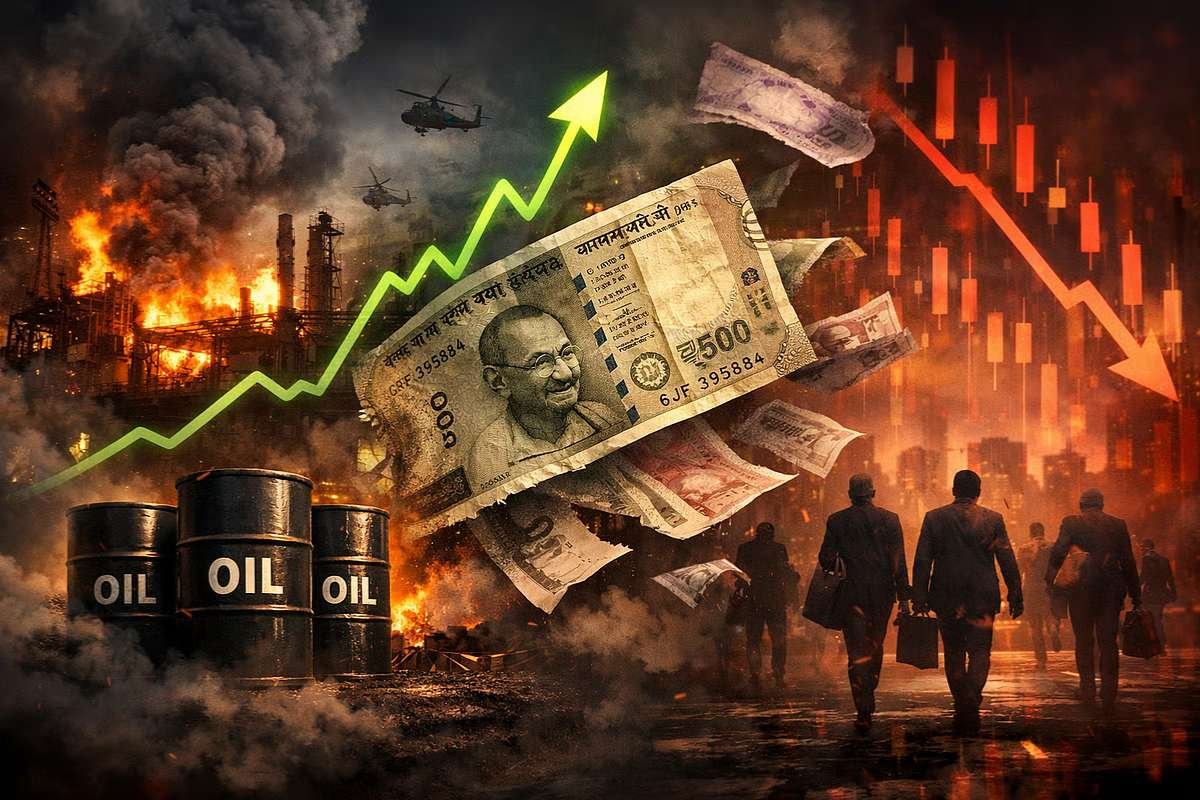
Global markets opened the week on a cautious note as escalating tensions in the Middle East triggered a sharp rise in oil prices and rattled investor confidence across Asia. Asian markets slide as concerns over potential disruptions to global energy supplies sent crude prices climbing above the $100-per-barrel mark, while major Asian stock markets recorded significant losses. The developments have raised fresh fears of a prolonged geopolitical crisis that could reshape global energy markets and add pressure to an already fragile economic outlook.
Asian equity markets witnessed a sharp sell-off on Monday as investors reacted to intensifying geopolitical tensions and rising energy costs. Japan’s benchmark Nikkei 225 fell steeply in early trading, reflecting broad-based declines across sectors. South Korea’s Kospi also registered a notable drop, while Hong Kong’s Hang Seng Index slipped as investor sentiment weakened across the region.
The downturn highlights growing anxiety among investors about the economic fallout from the escalating conflict, and Asian markets slide as traders react to the uncertainty. Markets in Asia are particularly sensitive to energy price shocks because many economies in the region rely heavily on imported crude oil. As oil prices surged, traders rushed to reduce exposure to riskier assets, triggering widespread declines in equities.
Market volatility also extended beyond Asia. U.S. stock futures pointed lower ahead of the American trading session, signaling that global markets could face a turbulent week. Analysts said investors are increasingly shifting toward safer assets as geopolitical uncertainty continues to dominate market sentiment.
The latest sell-off underscores how quickly geopolitical developments can influence financial markets, particularly when they involve regions critical to global energy supply.
Oil Prices Surge Past $100 on Supply Concerns
Oil markets experienced dramatic gains as fears of supply disruptions intensified. Brent crude, the international benchmark, surged above $110 per barrel during trading, while U.S. West Texas Intermediate crude also climbed past the $100 mark.
The spike in prices is closely tied to rising tensions in the Middle East, particularly around the Strait of Hormuz, as uncertainty surrounding this vital route intensifies, Asian markets slide amid fears that disruptions could affect global crude exports. The narrow waterway serves as a critical route for global crude exports, with a significant share of the world’s oil supply passing through it daily.
Recent security concerns and heightened military activity in the region have disrupted tanker traffic and created uncertainty around future oil shipments. Shipping companies have reportedly become more cautious, with some vessels avoiding the route amid fears of potential attacks or blockades.
As a result, oil markets have reacted swiftly, pricing in the possibility of supply shortages and Asian markets slide as investors factor in the growing geopolitical risks. Energy analysts warn that if the situation escalates further or if shipments through the Strait of Hormuz face prolonged disruptions, crude prices could climb even higher in the coming weeks.
Higher oil prices also have broader economic implications, as energy costs influence everything from transportation and manufacturing to consumer inflation.
Rising Energy Costs Raise Global Economic Concerns
The surge in oil prices has triggered renewed concerns about global economic stability, and Asian markets slide as rising energy costs weigh on investor sentiment. Energy costs play a central role in the functioning of modern economies, and sustained price increases can ripple across multiple sectors. For many Asian economies that depend heavily on imported fuel, higher oil prices can significantly increase trade deficits and push inflation upward. Rising energy costs can also reduce consumer spending power, potentially slowing economic growth.
Economists warn that prolonged geopolitical instability could create a challenging environment for central banks already grappling with inflationary pressures. If oil prices remain elevated, policymakers may face difficult choices between controlling inflation and supporting economic growth.
Investors are now closely monitoring developments in the Middle East for signs of either escalation or diplomatic resolution, and Asian markets slide amid the lingering uncertainty. Until greater clarity emerges, financial markets are likely to remain volatile, with energy prices continuing to play a central role in shaping investor sentiment worldwide.