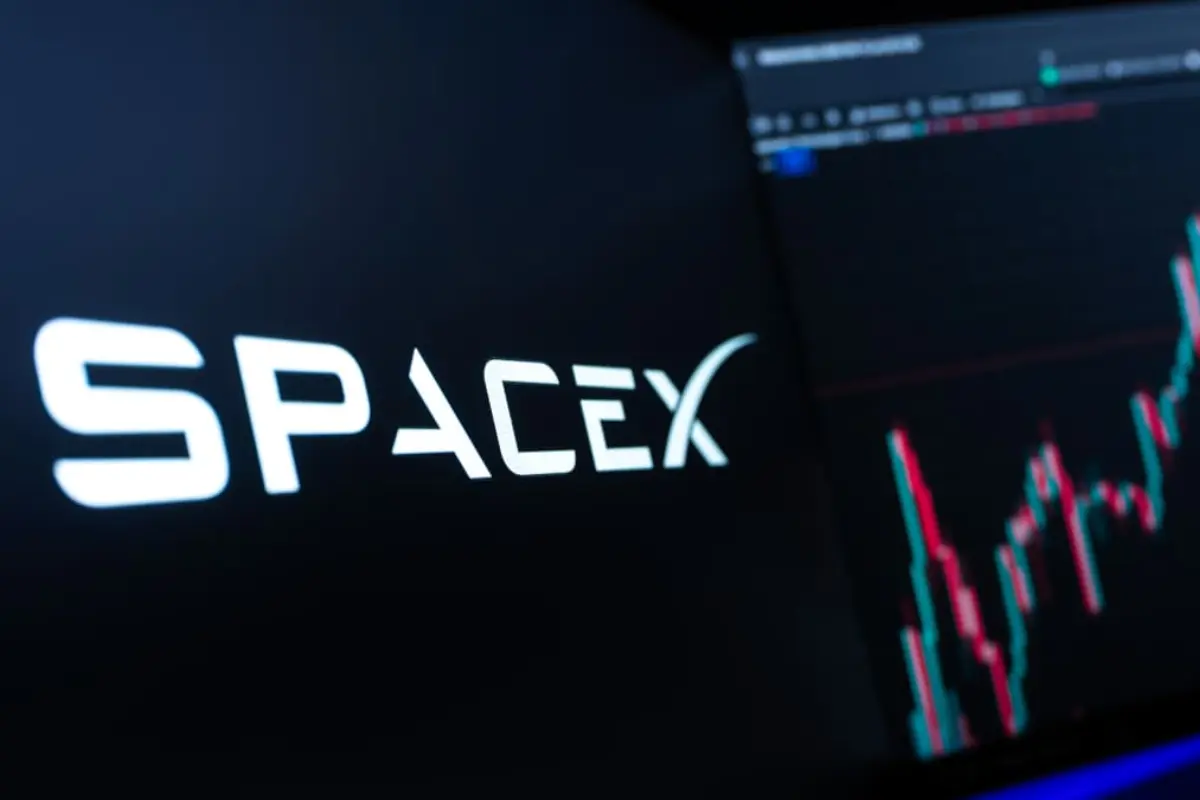
Speculation surrounding the future valuation of Elon Musk’s SpaceX has intensified, with some investors suggesting the private aerospace company could eventually reach a market capitalization of $1.5 trillion. If realized, such a SpaceX valuation would place SpaceX among the most valuable corporations in the world, rivaling the biggest technology giants.
The discussion has gained momentum as SpaceX continues to expand its operations in satellite internet, commercial rocket launches, and government contracts. The company’s rapid growth and technological breakthroughs, particularly its reusable rocket systems, have transformed the economics of space travel and significantly lowered launch costs.
One of the main drivers of investor optimism is Starlink, SpaceX’s satellite-based broadband network designed to provide global internet connectivity. The service has expanded rapidly across multiple regions and is gaining millions of users worldwide, positioning itself as a major player in the global telecommunications market.
Despite the excitement surrounding SpaceX’s growth trajectory, market analysts caution that such a massive valuation would require extraordinary financial performance. Public markets typically demand strong and consistent profitability from companies valued at the trillion-dollar level, raising questions about whether SpaceX’s current business model can deliver earnings on that scale.
Profit Expectations Could Be Among the World’s Highest
To justify a valuation of $1.5 trillion, analysts estimate that SpaceX would need to generate tens of billions of dollars in annual profit once it becomes publicly traded. That level of profitability would place the company among the most financially powerful businesses in the world.
Such expectations highlight the financial challenges behind maintaining a trillion-dollar SpaceX Valuation. Investors often evaluate companies using metrics like price-to-earnings ratios, which compare a company’s market value with its net income. Under typical market standards, a company valued at $1.5 trillion would need extremely strong and sustained profits to maintain investor confidence.
While SpaceX has built a reputation for technological innovation, its financial performance remains difficult to assess because it is privately held. Much of the company’s future earnings potential is tied to Starlink, which aims to deliver high-speed internet coverage across the globe using a massive constellation of satellites in low Earth orbit.
However, building and maintaining such a network requires significant capital investment. The costs associated with launching satellites, developing ground infrastructure, and expanding global coverage could weigh heavily on profitability in the short term. Even with growing subscriber numbers, achieving the scale needed to support a trillion-dollar valuation remains a major challenge.
Long-Term Vision Versus Market Reality
The debate surrounding SpaceX valuation reflects a broader trend in global markets, where companies with transformative technologies often command extremely high expectations from investors.
Supporters argue that SpaceX should not be viewed as a traditional aerospace manufacturer. Instead, they see it as a multi-sector platform that combines satellite communications, space transportation, defense services, and possibly future space exploration infrastructure. If these industries expand dramatically over the coming decades, the company’s revenue opportunities could grow significantly.
Critics, however, emphasize that public market valuations ultimately depend on measurable financial results. While innovation and long-term vision can drive investor enthusiasm, sustainable profits remain the key factor in maintaining market value.
For now, SpaceX continues to operate as a private company, and any potential initial public offering would likely attract enormous attention from global investors. Yet the discussion over a possible $1.5 trillion valuation highlights the delicate balance between technological ambition and financial reality, an equation that will ultimately determine whether SpaceX’s market value can reach such extraordinary heights.