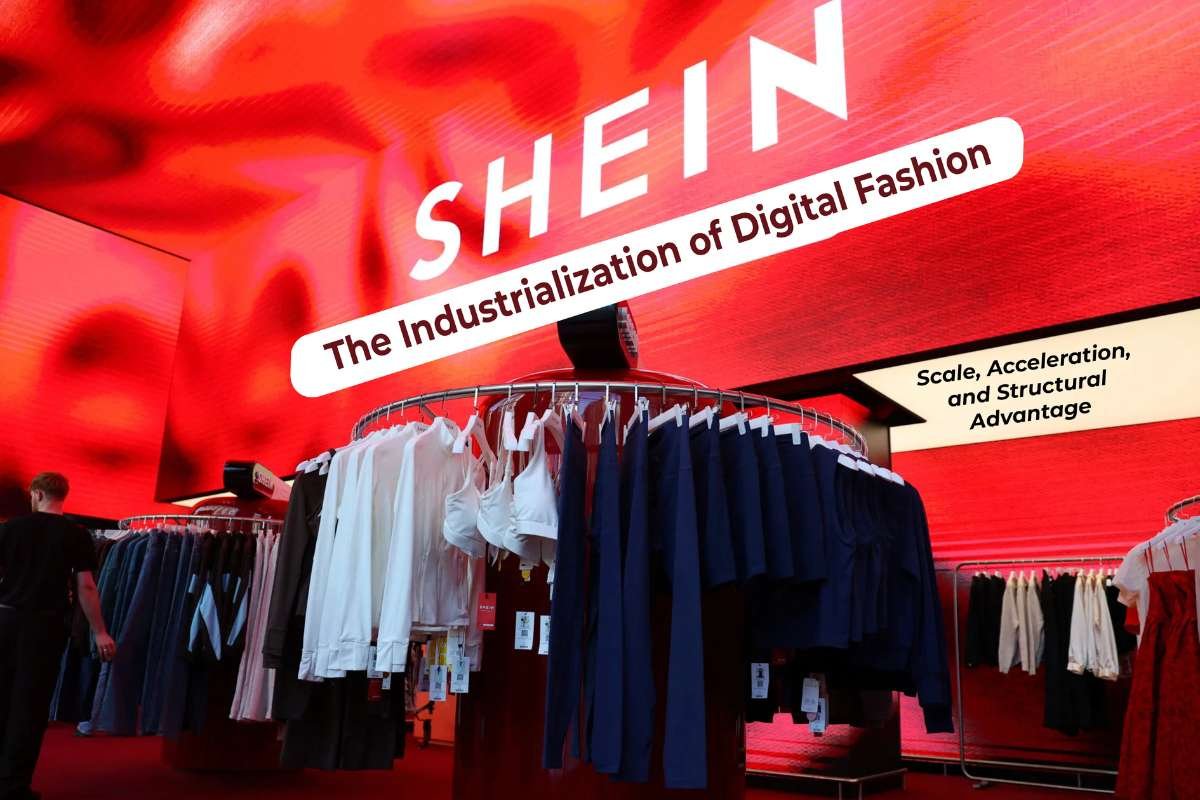
Scale, Acceleration, and Structural Advantage
Transforming the Structure of Fashion Supply Chains
Fashion once moved in seasons. Then it moved in weeks. Under SHEIN’s model, it moves in hours.
The company’s trajectory from a modest cross-border e-commerce venture in China in 2008 to one of the most dominant fast-fashion platforms globally reflects more than scale; it reflects systemic redesign. Where traditional retailers built prestige through storefronts and runway authority, SHEIN built an infrastructure, a digital nervous system connecting consumer behavior directly to production lines.
This is not simply a story of low prices or aggressive marketing. It is a case study in operational velocity. SHEIN’s model demonstrates how micro-manufacturing, real-time analytics, and decentralized supply chains can dismantle legacy constraints in the global apparel industry.
Building a Borderless Fashion Platform
Chris Xu, an entrepreneur, founded SHEIN, which at first sold wedding gowns to customers abroad under the name SheInside. Instead of focusing on brand positioning, the early strategy mainly relied on search engine optimization and cross-border shipping efficiencies. By 2015, the business had changed its name to SHEIN and shifted its focus to fashion-forward women’s clothing aimed at younger consumers.
SHEIN’s decision to redesign the conventional fast fashion model rather than copy it marked a turning point. It started testing designs in small batches instead of predicting demand months in advance. Production scaled if engagement metrics backed the product. Otherwise, losses were only slight. Inventory economics was drastically changed by this transition from prediction-based manufacturing to validation-based production.
The Operating Model: Micro-Batching at Scale
The supply chain for SHEIN is managed digitally. SHEIN does not own most of its manufacturing facilities. Instead, it coordinates a large network of independent suppliers through proprietary software that transmits real-time demand data, allowing production decisions to respond immediately to customer behavior.
Extremely short design-to-market cycles, sometimes measured in days rather than months, are made possible by the system.
SHEIN is mostly an online and direct-to-consumer retailer, in contrast to established retailers like Zara and H&M, which still run sizable brick-and-mortar networks. This improves pricing flexibility while removing significant fixed costs related to storefront retail. A high-velocity model that lowers overproduction, boosts sell-through rates, and quickens cash conversion cycles is the result.
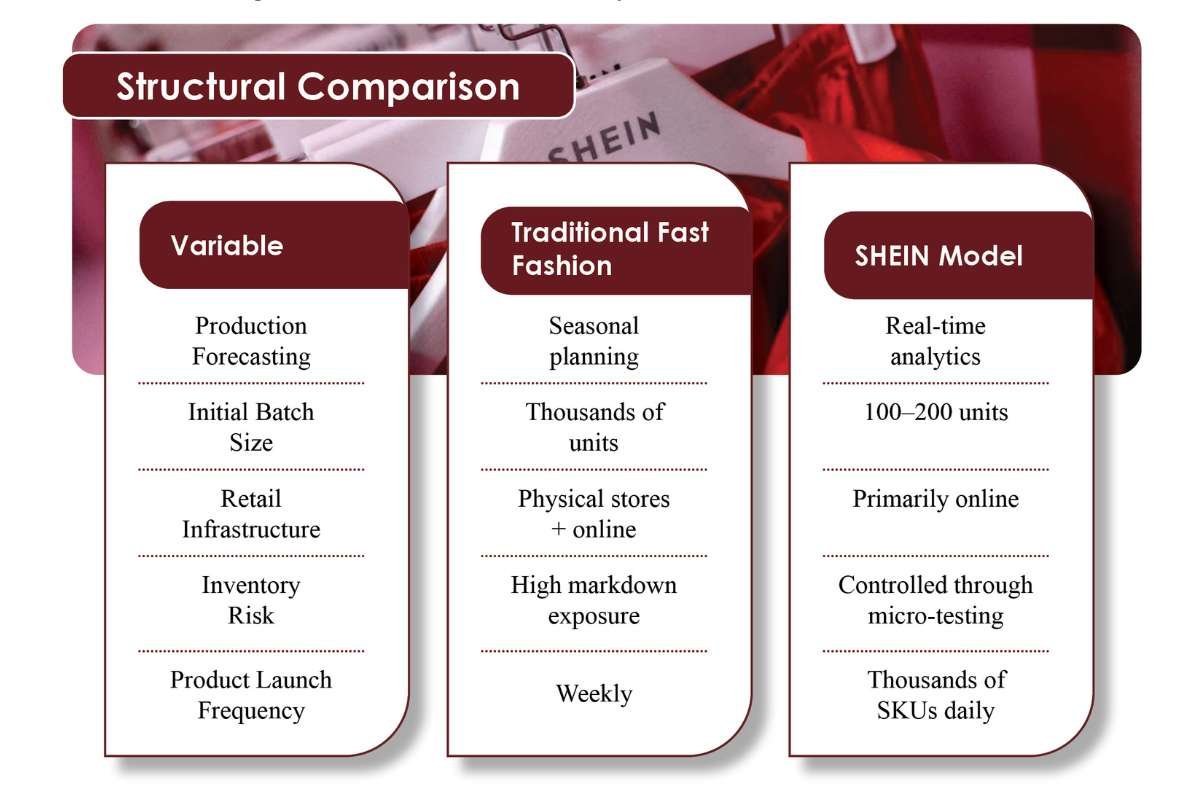
| Structural Comparison | ||
|---|---|---|
| Variable | Traditional Fast Fashion | SHEIN Model |
| Production Forecasting | Seasonal planning | Real-time analytics |
| Initial Batch Size | Thousands of units | 100–200 units |
| Retail Infrastructure | Physical stores + online | Primarily online |
| Inventory Risk | High markdown exposure | Controlled through micro-testing |
| Product Launch Frequency | Weekly | Thousands of SKUs daily |
Margin Through Velocity, Not Markup
Because of SHEIN’s low prices, it’s common to assume that its margins are extremely thin. In actuality, capital efficiency is what gives it economic strength. The business maintains operating flexibility by cutting fixed overhead and unsold inventory. Its data-driven marketing strategy using micro-influencers lowers traditional advertising expenditures, and its direct shipping model lowers distribution costs.
By using behavioral data to customize product feeds, the platform raises the likelihood that users will convert. Reward schemes and flash sales are examples of gamified features that encourage repeat participation. Instead of being episodic, consumer interaction becomes ongoing.
Before moderating with global tech-sector adjustments, SHEIN’s private valuation peaked above $100 billion, and its revenues were estimated to be in the tens of billions by 2022. Scalability, data infrastructure, and platform economics, rather than conventional brand equity, are reflected in the valuation narrative.
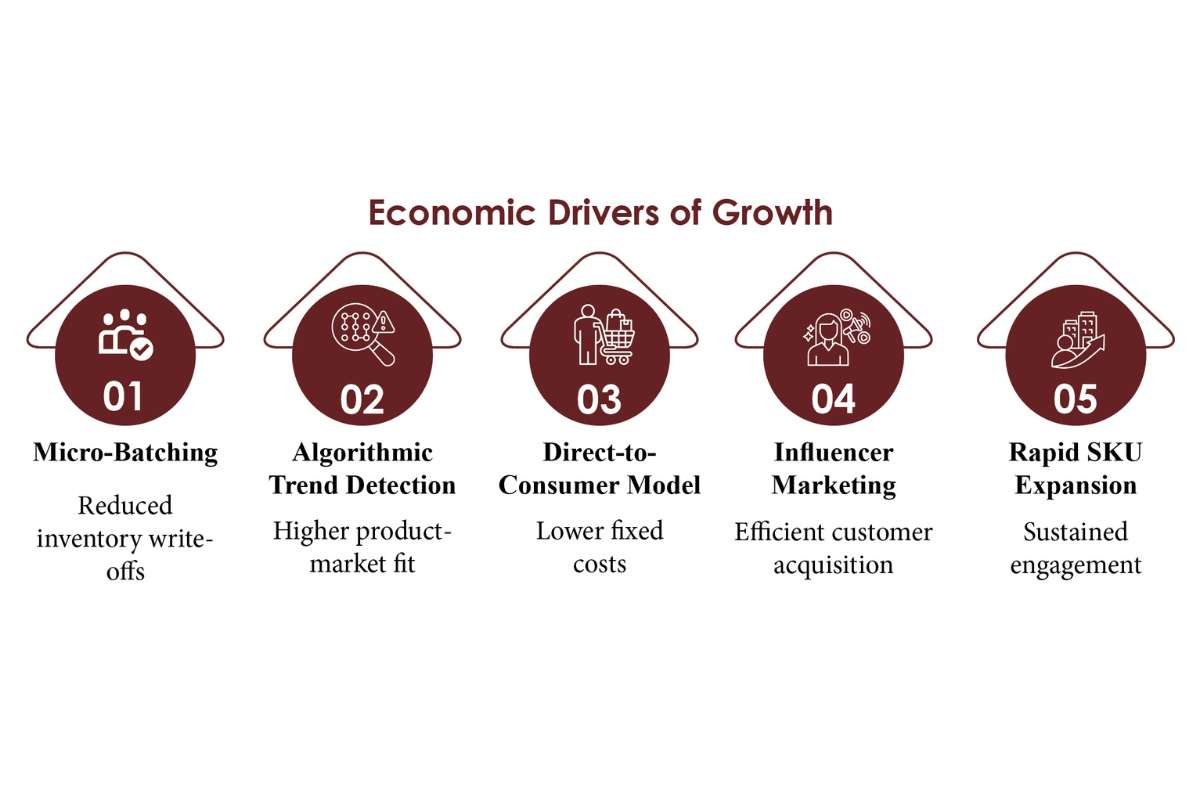
| Economic Drivers of Growth | |
|---|---|
| Economic Lever | Strategic Effect |
| Micro-Batching | Reduced inventory write-offs |
| Algorithmic Trend Detection | Higher product-market fit |
| Direct-to-Consumer Model | Lower fixed costs |
| Influencer Marketing | Efficient customer acquisition |
| Rapid SKU Expansion | Sustained engagement |
Market Sustainability: Why the Model Endures
SHEIN uses four reinforcing mechanisms to maintain its position:
First, product supply is guaranteed to reflect current consumer preferences thanks to algorithmic responsiveness. Second, an atmosphere of plenty is produced by the constant expansion of SKUs, which promotes impulsive purchases. Third, its prices are in line with those who are price conscious and sensitive to inflation. Fourth, reliance on any one domestic market is decreased through geographic diversification achieved through cross-border logistics.
The impact of the brand goes beyond sales numbers. It has put pressure on rivals to shorten production schedules and speed up digital transformation. SHEIN’s model is partly responsible for the wider apparel ecosystem’s increasing adoption of tighter feedback loops and smaller batch runs.
Controversies and Structural Risks
SHEIN’s growth has drawn criticism as well. Concerns about intellectual property have been raised by independent designers who claim the company is copying their original works without permission. Its supplier network’s labor practices have come under fire, especially in relation to working conditions and compliance requirements. Even though micro-batching lowers unsold inventory, environmentalists contend that ultra-fast fashion increases textile waste and carbon emissions.
Western markets have also seen an increase in regulatory attention. Operational uncertainty is brought about by trade policy changes, product safety compliance, and customs scrutiny. Changing laws may limit the very cross-border efficiencies that drove growth.
The India Ban – Geopolitics and Market Disruption

India banned several applications with Chinese origins in 2020 due to geopolitical tensions. The ban also applied to SHEIN’s app. India was a high-growth market with a youthful population and rising e-commerce adoption. Shein was abruptly cut off from a promising consumer ecosystem by the ban.
Instead of making a complete retreat, SHEIN looked into structural adaptation. A partnership-based re-entry model involving Reliance Industries was discussed. This kind of agreement sought to minimize geopolitical exposure, localize operations, and match data governance with national laws.
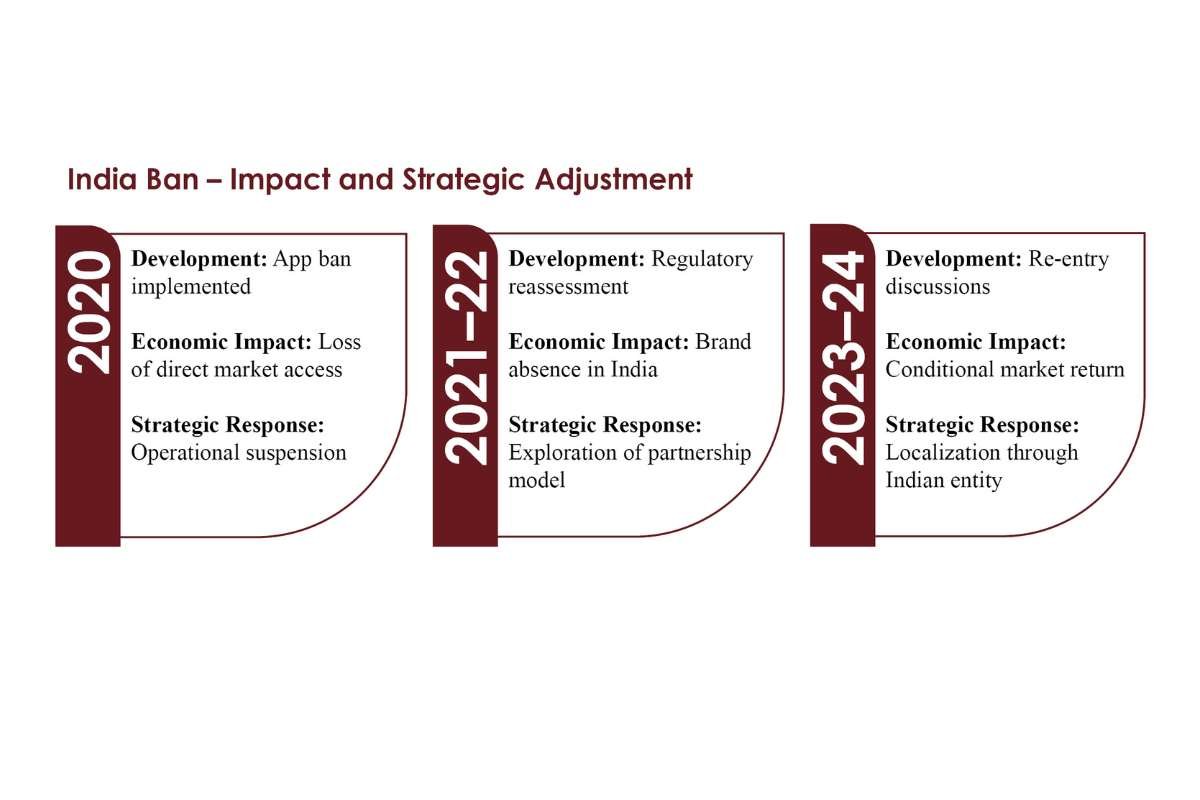
| India Ban – Impact and Strategic Adjustment | |||
|---|---|---|---|
| Phase | Development | Economic Impact | Strategic Response |
| 2020 | App ban implemented | Loss of direct market access | Operational suspension |
| 2021–22 | Regulatory reassessment | Brand absence in India | Exploration of partnership model |
| 2023–24 | Re-entry discussions | Conditional market return | Localization through Indian entity |
Strategic Adaptations and Risk Mitigation
SHEIN has made small changes to address criticism and regulatory issues. These include expanding the logistics infrastructure outside of China, stepping up supplier audits, and implementing fewer sustainability projects. To improve its ESG positioning, the company has also refocused its PR efforts.
Changing policy frameworks and consumer expectations will determine whether these steps are adequate. The next stage of the business is defined by the conflict between accountability and affordability.
- You may also like: How to Plan Your Retail Space Efficiently?
A Structural Shift in Fashion Economics
SHEIN symbolizes the shift from retail that is based on forecasts to manufacturing that is based on data. It shortens design cycles, lowers inventory risk, and generates large-scale revenue from digital engagement. From an economic perspective, it illustrates how cost structures in consumer goods industries can be rearranged through algorithmic coordination.
However, adaptation is still necessary for sustainability on all levels: financial, regulatory, and environmental. SHEIN’s dominance was built on speed. Its longevity will depend on governance and compliance.