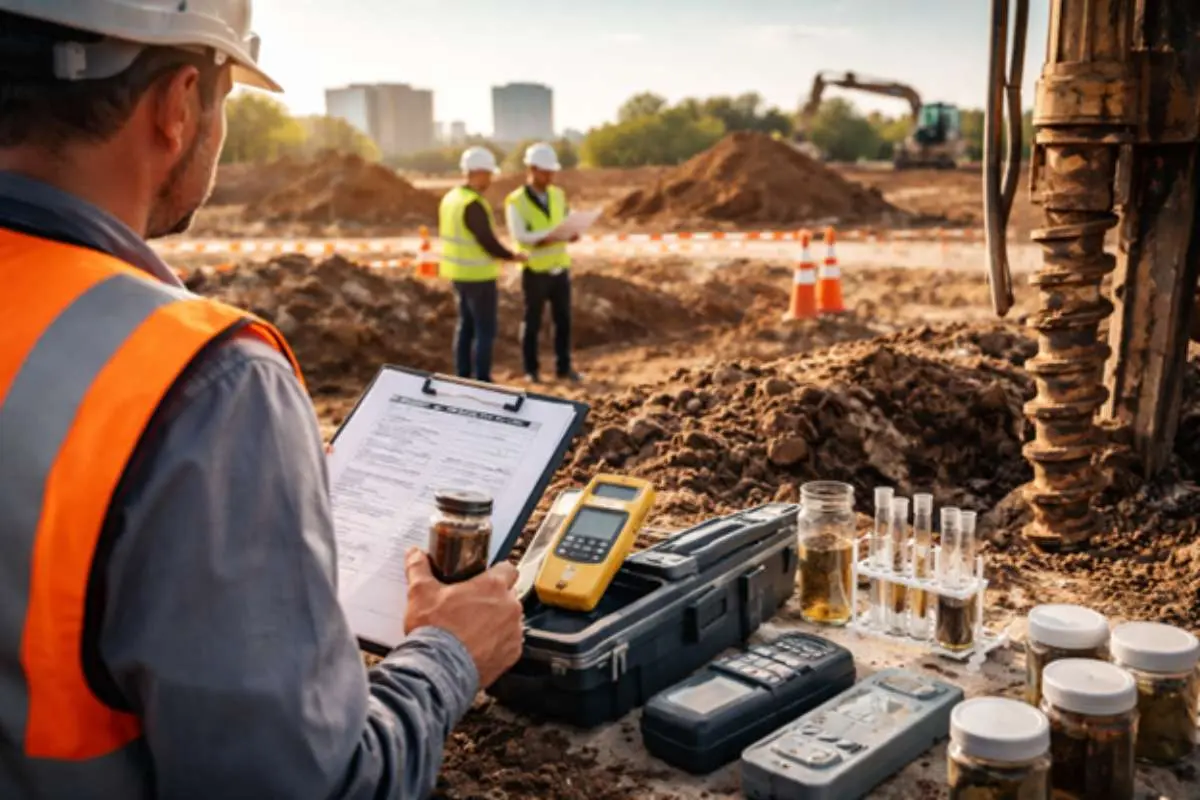
Ever walked a site and thought, “This is it?”
Everything lines up—the access roads, the visibility, the price that somehow feels like a win. You can almost hear forklifts moving and feel the project already halfway done in your head.
Then someone mentions the past, “used to be industrial.”
And just like that, the certainty shifts.
The U.S. Environmental Protection Agency estimates over 450,000 brownfield sites exist across the country, land complicated by contamination or suspected environmental risks, highlighting the importance of environmental risk in site selection.
That’s not rare. It’s common enough to be a pattern. So yes, what you don’t see during site selection? That’s usually where the real story lives, and why environmental risk in site selection should never be overlooked.
What Lurks Beneath (And Why It’s Rarely Obvious)
You won’t spot environmental risk during a casual walk.
No cracks spelling out “contamination here.” No obvious clues most of the time. Just quiet layers—soil, dust, aging infrastructure—holding onto whatever came before.
A vacant warehouse might look harmless and structurally sound. But then testing reveals something else—maybe residual chemicals from past operations, or asbestos tucked into insulation panels overhead. And suddenly, that “simple” project doesn’t feel simple anymore, reinforcing the importance of understanding environmental risk in site selection.
That’s the thing about environmental risk. It hides well. Too well, sometimes.
The Quiet Cost of Ignoring What’s Underground

It rarely begins with a big, dramatic problem.
Instead, it creeps in. A delay in testing results. A contractor raising a concern. A report that doesn’t quite match expectations. Then it builds.
Projects that overlook environmental conditions early often end up facing remediation later—and remediation isn’t quick or cheap. According to the EPA, cleanup and compliance enforcement actions led to over $1.1 billion in commitments in fiscal year 2023 alone, a clear reminder of why environmental risk in site selection matters.
That number carries weight.
And when hazardous materials like asbestos are involved, things get even more precise. Work pauses. Areas get sealed off. Air gets monitored.
A contractor I heard about walked into what seemed like a standard redevelopment job. The plan was simple: renovate, upgrade, reopen.
Then, testing flagged asbestos in multiple areas. Work paused immediately.
Situations like that don’t just require cleanup—they demand specialized handling, containment, and strict regulatory compliance. That’s where environmental abatement services, especially those focused on asbestos abatement, come into play.
A professional team will isolate affected zones, monitor air quality, and remove hazardous materials in controlled stages. And once that process begins… everything else waits, further emphasizing environmental risk in site selection.
Why Environmental Risk Should Always Take Precedence?

Here’s where things shift from technical to strategic. Environmental risk isn’t just a box to tick—it shapes the entire viability of a site and defines environmental risk in site selection as a critical factor.
So, why should this be front and center from the start?
1. It Shields You from Costly Surprises
Skipping early environmental checks feels efficient.
Until something shows up later. Contamination, hazardous materials, unexpected cleanup—they don’t just add cost. They disrupt momentum. Projects lose rhythm.
And getting that rhythm back? Not easy.
2. It Keeps You Compliant from Day One
Environmental regulations don’t adjust to your schedule.
Miss a requirement, and the consequences show up fast—inspections, fines, mandatory remediation. The EPA’s enforcement figures tell the story: compliance isn’t optional, and oversight is active.
Starting with a clear environmental picture keeps things moving and supports better environmental risk in site selection decisions.
3. It Strengthens Investor Trust
A 2023 PwC report found that 75% of institutional investors consider ESG factors when making decisions. That includes environmental exposure tied to land.
A site with unknown risks? That introduces hesitation. A site with clearly assessed conditions? That builds confidence. It’s a subtle difference—but it changes conversations.
4. It Prepares You for What’s Coming
Even a clean site isn’t immune to future shifts.
The Intergovernmental Panel on Climate Change has pointed to increasing frequency of extreme weather events—flooding, heat, unpredictable conditions.
A site that works today might struggle tomorrow. Thinking ahead and adopting environmentally friendly practices gives you room to adapt instead of react, strengthening your approach to environmental risk in site selection.
The Stuff People Skip (Until It Trips Them Up)
There’s always that moment.
Late in planning. Maybe during a meeting where timelines feel tight. Someone asks, “Did we double-check everything?” And there’s a pause. Not long. Just enough to feel it.
Common gaps tend to look small:
- An environmental report that’s technically complete but outdated
- Soil testing that didn’t go deep enough
- Assumptions based on previous use instead of verified data
Individually, they don’t seem critical. But together… they shift the ground under the project. Not physically—but close enough to matter.
When You Start Seeing Sites Differently
At some point, something shifts.
You stop taking land at face value. You start asking about history, about what’s beneath, about what might still be lingering—an essential part of understanding environmental risk in site selection.
It’s subtle at first. Then it becomes instinct.
That slight pause before committing to a site—that moment where you look a little closer, ask one more question—that’s not hesitation. It’s awareness. And once you’ve worked through a project where the ground didn’t cooperate… that awareness sticks with you.
You carry it forward. Every site after that feels a little less certain—and a lot more real.