
Remote employee engagement focuses on how organizations keep distributed employees connected, motivated, and committed when they do not share a physical workplace. This article explains why engagement works differently in remote teams and also covers practical strategies for preventing isolation, leadership practices for remote-first environments, and the unique challenges faced by distributed teams.
Flexible work arrangements give companies access to incredible talent around the world. Maintaining high energy and enthusiasm across digital channels requires moving past basic video meetings and endless message threads.
Successful remote leaders create meaningful opportunities for team members to share ideas and collaborate naturally. Prioritizing consistent remote employee engagement turns isolated workers into an aligned unit, taking collective pride in shared goals. Aligning personal flexibility with team objectives keeps top talent motivated and loyal.
Creating an inclusive virtual space protects your distributed workforce from quiet burnout. Investing in digital team culture creates a distinct advantage in hiring global talent.
Why is remote employee engagement different?
Remote work changes how people connect. In an office, small daily moments build trust over time. People share quick chats, give instant feedback, and support each other in simple ways. These moments feel natural and easy.
Teams working remotely lose many of these interactions. Most communication becomes planned and task-focused. This reduces chances for casual connection and team building. Over time, employees may start to feel distant.
It also becomes harder to spot disengagement early. Managers cannot easily see changes in mood or energy. A person may complete tasks but still feel disconnected. Without visible signals, these issues stay hidden.
Engagement in remote teams needs a focused approach. Leaders must create space for regular check-ins and open conversations. Simple and consistent actions help build trust and keep people engaged.
Remote onboarding as the foundation for engagement
The Remote onboarding sets the tone for everything that follows. In an office, new hires learn by watching others and asking quick questions. They pick up cues from daily interactions. Remote setups remove this safety net. First impressions carry more weight because there is no physical space to ease early confusion.
Clarity and connection must start on day one. New hires need a clear plan for their first few weeks. Structured intro calls help them meet their team and understand roles. An assigned onboarding buddy gives them a go-to person for quick support. Small early wins also build confidence and reduce stress. These steps help employees feel part of the team from the start.
Many companies miss these basics in remote onboarding. New hires often receive too much information at once. At the same time, they lack clear direction on priorities. Delayed access to tools and systems creates frustration. Limited interaction with managers can leave questions unanswered. Over time, this leads to confusion and low engagement.
A strong onboarding process prevents these gaps. It gives employees a clear path and steady support. When people feel guided and included early on, they are more likely to stay engaged and perform well.
What are the key drivers of remote employee engagement?
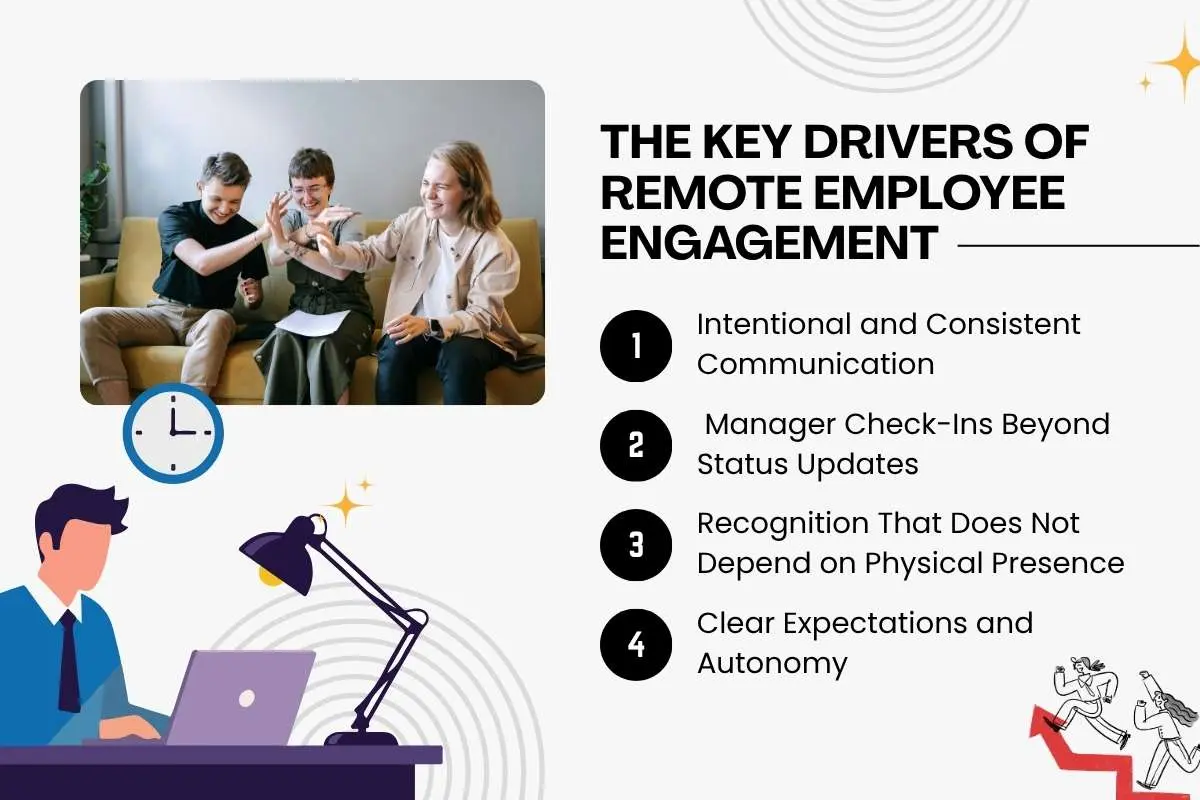
Remote engagement does not happen by chance. It depends on a few clear drivers that shape how people work and connect. When these drivers are strong, teams stay aligned and motivated. When they are weak, disengagement grows quickly.
- Intentional and Consistent Communication: Remote teams need clear and regular communication. Quick office chats are no longer possible. Teams must rely on planned updates and simple messaging. This reduces confusion and keeps everyone aligned.
- Manager Check-Ins Beyond Status Updates: Task updates alone are not enough. Employees need space to share concerns and ideas. Good check-ins focus on people, not just work. This builds trust and stronger relationships.
- Recognition That Does Not Depend on Physical Presence: Remote work limits visible appreciation. Employees may feel overlooked. Recognition must be frequent and visible. Simple praise or team shoutouts can boost morale.
- Clear Expectations and Autonomy: Employees need clear goals to stay focused. Unclear roles create stress and delays. At the same time, they need freedom to manage their work. This balance improves trust and performance.
Strong engagement comes from consistent effort. When leaders focus on these drivers, remote teams feel supported and connected.
How to prevent isolation in remote teams?
The Isolation is one of the biggest risks in remote work, and it often goes unnoticed until it starts to affect performance. Without regular face-to-face contact, people can feel cut off from their team. In an office, even small moments help people stay connected. Remote setups remove these moments, which makes it easier for employees to drift away quietly.
The best way to prevent this is to build connections into the daily work rhythm. Teams can set up simple social touchpoints that feel natural, not forced. Short virtual hangouts or casual team chats can recreate some of the informal bonding that happens in an office. Peer check-ins also help, especially when they happen without manager involvement. It creates a sense of shared support and improves employee engagement and team building.
What are some strategies to improve remote employee engagement?

Remote engagement improves when connection becomes part of the workday. Employees should know when they can speak, where they can share feedback, and how their work gets noticed. A clear structure helps remote teams stay connected without filling their calendars with meetings.
1. Build structured virtual check-ins:
Regular 1:1s and team syncs give employees space to stay connected. Keep these meetings focused, but leave room for concerns, ideas, and support. This helps managers spot issues before they become bigger problems.
2. Use async recognition to improve visibility:
Remote employees can miss the recognition that happens naturally in an office. Async tools and employee engagement software can close this gap. Managers and teammates can share praise through team channels, messages, or recognition platforms. This makes good work more visible across the team.
3. Create moments for culture and connection:
Culture needs more than work updates. Virtual socials, casual chats, and interest channels give employees space to connect as people. Keep these employee engagement activities simple and optional. That makes participation feel natural rather than forced.
4. Give employees a voice:
Remote employees need easy ways to share what works and what does not. Short pulse surveys and open feedback channels can provide useful insights. More importantly, leaders should act on the feedback they receive. This shows employees that their views have value.
A strong remote engagement strategy creates regular opportunities for communication. It also facilitates recognition, connection, and feedback. When these habits become part of everyday work, remote employees feel more involved and supported.
What are the best leadership practices for remote-first environments?
Remote teams need leaders who communicate with purpose. Without an office, employees lose many informal moments with managers. A quick desk conversation or casual update no longer happens by chance. Leaders must replace these moments with clear, consistent practices.
1. Manager check-ins beyond status updates:
A check-in should cover more than tasks and deadlines. Managers can ask how employees are doing, what is blocking them, and where they need support. These conversations help build trust and make it easier to raise concerns early. It can
2. Leading with transparency when informal context is missing:
Remote employees can miss the context shared through casual office conversations. Leaders should explain decisions, changes, and priorities clearly. Regular updates reduce confusion and help employees understand what is happening across the organization.
3. Recognition that does not depend on physical presence:
Good work should not go unnoticed because someone works remotely. Employee recognition programs can highlight contributions in team meetings, messages, and digital channels. Specific and timely praise makes recognition feel genuine and meaningful.
4. Modeling boundaries to prevent burnout culture:
How do leaders impact employee engagement? Leaders set the standard for healthy work habits. Sending messages late at night or expecting instant replies can create pressure. Managers should respect working hours, encourage breaks, and show that employees do not need to stay online constantly.
Strong remote leadership combines clarity with trust. When managers communicate openly and respect employee boundaries, teams can stay connected without feeling constantly monitored. As Culture Expert and CEO of Rapport Inc. puts it:
“Your gut is a leading indicator. The discomfort you feel in that meeting, the silence that replaced the questions, the high performer who’s been a little too quiet lately. Those are signals! Act on them before the dashboard confirms them, because by then, you’ve already lost the lead time.”
What are the unique challenges of engaging remote and distributed teams?

Remote and distributed teams offer flexibility, but they also change how employees work and connect. Without a shared workplace, some engagement issues can stay hidden for longer.
1. Communication gaps:
Too many messages can create confusion and slow decisions. Some topics need live discussions for better clarity.
2. Weak team connection:
Remote employees have fewer chances to build personal bonds. Without regular interaction, they may feel less connected to the team.
3. Visibility gaps:
Remote employees can feel overlooked when their work is less visible. Regular recognition helps make their efforts seen and valued.
4. Blurred work boundaries:
Remote work can make it harder to switch off. Late messages and unclear expectations can increase stress and fatigue.
These challenges can weaken employee engagement when leaders ignore them. Clear communication, regular connection, timely recognition, and healthy boundaries can help remote teams stay engaged and supported.
Conclusion:
Globally, fully remote workers are the most likely to be engaged at work (31%), compared with hybrid (23%), on-site remote-capable (23%), and on-site non-remote-capable (19%).
But sustaining high energy across a distributed workforce requires empathetic leadership engagement and modern digital habits. Prioritizing remote employee engagement builds a foundation of psychological safety, authentic communication, and shared purpose that spans every time zone.
When companies support distributed teams with clear expectations and genuine recognition, productivity flourishes naturally. Investing in virtual workplace culture ensures your global talent stays motivated, loyal, and deeply aligned with your company’s mission.
FAQs
1. What is remote employee engagement?
It is the degree of emotional connection, enthusiasm, and commitment a work-from-home employee feels toward their team and company goals.
2. Why is engagement harder to maintain in remote teams?
Digital isolation, lack of spontaneous office interactions, and blurry boundaries between work and home life can cause remote workers to feel disconnected.
3. What are the best ways to keep remote employees engaged?
Managers can boost engagement by scheduling regular one-on-one check-ins, recognizing achievements publicly in digital channels, and encouraging a clear work-life balance.