
Hitting big company goals takes steady effort from everyone involved. Bosses who practice empathetic leadership engagement on a regular basis build open, honest teams that handle sudden changes without losing focus. Staff members naturally take pride in their work when they know their voices influence daily decisions.
Connecting good management habits with real human support builds a reliable workforce that stays for the long haul.
Today, we will take a look at how empathetic leadership affects engagement and how leaders and managers can implement it in their workspace. So, let us start!
Why empathetic leadership drives engagement?
86% of workers say empathetic leadership generates loyalty. But why?
People want to feel heard at work. They want leaders who listen and care about their concerns. When leaders show empathy, employees often build more trust in them. This trust can help people stay focused and committed, even during hard times.
Empathy builds trust
Employees are more likely to trust leaders who understand them. A manager who listens can make employees feel valued. This matters even more when teams face stress, change, or heavy workloads.
Trusted leaders can also keep teams together during tough periods. Employees know they can speak up and ask for help when they need it.
Empathy helps people speak up
Employees need to feel safe when they share their views. Empathetic leaders create this safe space by listening without blame or harsh judgment.
People are more willing to share ideas and concerns when they feel safe. They also give more honest feedback. This helps leaders spot problems early and fix them before they grow.
Lack of empathy can drive people away
Pay is not the only reason people leave a job. An employee may like the role and still feel unhappy with their manager.
When leaders ignore concerns, employees can feel unseen or unvalued. Over time, this can lower engagement and make people look for other jobs.
Empathy strengthens engagement
Empathetic leadership and engagement often go hand in hand. When employees feel heard and respected, they are more likely to care about their work.
They also tend to speak openly, work well with others, and stay committed to team goals. A leader who listens can build a team where people want to take part and do their best.
Empathetic leadership engagement helps employees feel heard, respected, and supported. These actions can strengthen engagement. They can help employees stay connected to their work and teams.
What empathetic leadership engagement looks like in practice

Empathetic leadership should show up in daily actions. Leaders can show empathy through simple habits that help employees feel heard and respected. These actions can also build trust and improve engagement.
1. Active listening in 1:1s and team conversations
Good listening means giving employees your full attention. Leaders should avoid checking emails, interrupting, or planning their next reply while someone speaks. Instead, they can ask clear questions and repeat key points to make sure they understand.
Tips to Implement:
- Give employees your full attention during talks.
- Ask questions before giving advice.
- Repeat key points to confirm your understanding.
- Set aside regular time for 1:1 talks.
2. Acknowledging personal circumstances without overstepping
Employees may face personal issues that affect their work. Leaders do not need to know every detail. They can show understanding and ask what support the employee needs.
For example, a manager might give an employee more time for a task during a difficult period. This shows care without crossing boundaries and having a personalized engagement plan.
Tips to Implement:
- Ask how you can support the employee.
- Respect their privacy and personal limits.
- Offer flexible options when possible.
- Let employees decide how much they want to share.
3. Adjusting communication style to the individual
Not every employee responds to communication in the same way. Some people prefer direct feedback, while others need more time to process it. Leaders can adjust their approach based on the person and the situation.
Clear and respectful communication can help employees feel more comfortable. It can also reduce confusion and prevent small issues from growing.
Tips to Implement:
- Ask employees how they prefer to receive feedback.
- Use clear and simple language.
- Give employees time to respond when needed.
- Adjust your approach based on the situation.
4. Following through after employees raise concerns
Listening only helps when leaders follow a proper employee engagement action plan. When employees raise a concern, leaders should explain what they can do and follow up when possible.
Even when a leader cannot fix the issue, they should explain why. This shows employees that their concerns matter. Consistent follow-through builds trust and keeps engagement strong.
Tips to Implement:
- Write down key concerns after important talks.
- Agree on clear next steps.
- Follow up within the agreed time.
- Explain when you cannot make a requested change.
Empathetic leadership shows through simple actions that leaders take each day. When leaders make these habits part of their daily work, they can build stronger trust and engagement.
How to build empathetic leadership engagement?
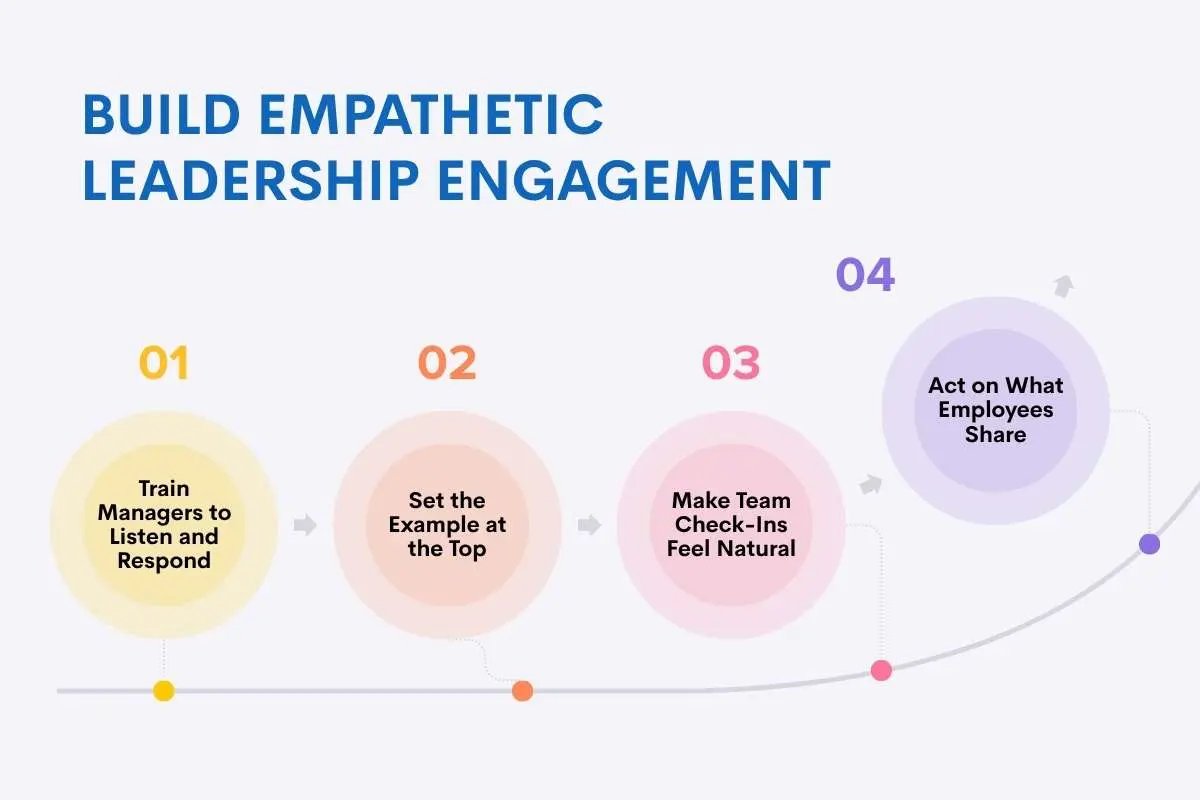
Companies can build empathetic leadership through clear and repeatable actions. Managers do not need to have empathy as a natural strength. They can learn how to listen, respond, and support employees through regular practice.
Step 1: Train managers to listen and respond
Start with simple behaviors that managers can use every day. Training should teach active listening, thoughtful questions, clear responses, and follow-through. Managers can practice these skills through real workplace examples and role-play.
The goal is to turn empathy into a daily habit. Managers should know what to do when an employee raises a concern, asks for support, or faces a difficult situation.
Step 2: Set the example at the top
Senior leaders should show the behavior they expect from managers. When leaders listen to employees and respond with care, managers can see what empathetic leadership looks like in practice.
This example should continue during hard decisions. Leaders may not always give employees what they want, but they can still listen, explain their choices, and treat people with respect.
Step 3: Make team check-ins feel natural
Managers should create regular chances to talk with employees. These check-ins can cover workload, challenges, goals, and the support employees need. They do not need to become long or formal meetings.
The key is to make these talks feel genuine. Managers should listen to what employees say and avoid asking questions just to complete a routine. When employees see that leaders listen and respond, they are more likely to speak openly.
Step 4: Act on what employees share
Empathy means more than listening. Leaders also need to respond when employees raise concerns. They may change a process, offer support, or explain why they cannot make a change.
Follow-through shows employees that their voices matter. Over time, this builds trust and helps create a workplace where people feel safe, respected, and engaged.
Companies can build empathetic leadership engagement by setting the right example. They can give managers time to connect with their teams. Managers also need to act on what employees share.
How to tell if empathetic leadership engagement is working?

Empathetic leadership should lead to clear changes in how employees feel and act at work. Companies can use a few simple measures to see if these efforts are making a difference.
1. Track trust and support
Review engagement surveys for questions about trust, manager support, and feeling heard. Look for changes over time rather than relying on one survey. Higher scores can show that employees feel more supported by their leaders.
2. Watch for open communication
Pay attention to whether employees raise concerns before problems become serious. When people feel safe, they are more likely to speak up, share ideas, and ask for help. This can show that psychological safety is growing within the team.
3. Compare manager level scores
Manager-level engagement scores can also show how well empathetic leadership works in practice. Compare scores across teams and track changes over time. Stronger scores can suggest that managers are building better relationships with their teams and supporting employee engagement.
The impact of empathetic leadership engagement should appear in feedback and daily team behavior. Tracking these changes over time helps companies see where their approach works and how leaders impact employee engagement.
Conclusion
High-performing teams do not run on pressure alone. Replacing mechanical status checks with practical daily support reduces friction on critical projects while driving up overall output. Treating staff members as active partners creates a resilient workforce capable of hitting ambitious targets month after month. Organizations that embed empathetic leadership engagement across every level of management transform routine oversight into a reliable driver of long-term employee retention strategies and growth.
Frequently asked questions
1. How does empathetic leadership engagement improve employee retention?
Addressing daily roadblocks and validating workplace stress prevents burnout. Workers who feel supported by their immediate supervisors stay with the company longer.
2. Does practicing empathy mean lowering work standards?
No. Clear support and high standards go hand in hand. Helping team members clear operational hurdles gives them the tools and confidence to hit ambitious targets on time.
3. What is the fastest way for a manager to start?
Swap transactional task audits for honest one-on-one check-ins. Asking direct questions about daily friction points shows a clear commitment to solving real workplace problems.
4. How do remote teams maintain strong connections?
Remote managers build trust through consistent, non-transactional check-ins, active listening on calls, and respecting off-hours boundaries to prevent digital fatigue.
5. How do companies measure the impact of these management habits?
Impact shows up in concrete numbers: lower voluntary turnover, higher internal promotion rates, better team survey scores, and consistent project delivery.