Before offices ran on computers, email, and shared digital files, they ran on paper. As businesses expanded during the late 19th century, letters, invoices, contracts, reports, records, and copies multiplied with them. The challenge was no longer simply producing information. It was producing enough of it, quickly and consistently, to keep a growing business moving.
The transformation unfolded largely between the late 19th century and the first decades of the 20th century, as corporations, government offices, banks, insurance firms, newspapers, and other institutions generated increasing volumes of written information. Handwritten documents could no longer keep pace with the scale of modern commercial activity.
Then came the typewriter.
The machine did more than make words appear faster on paper. It helped businesses standardize documents, divide clerical responsibilities, and increase the speed at which information could be produced and processed. In doing so, it contributed to a fundamental change in the organization of office work.
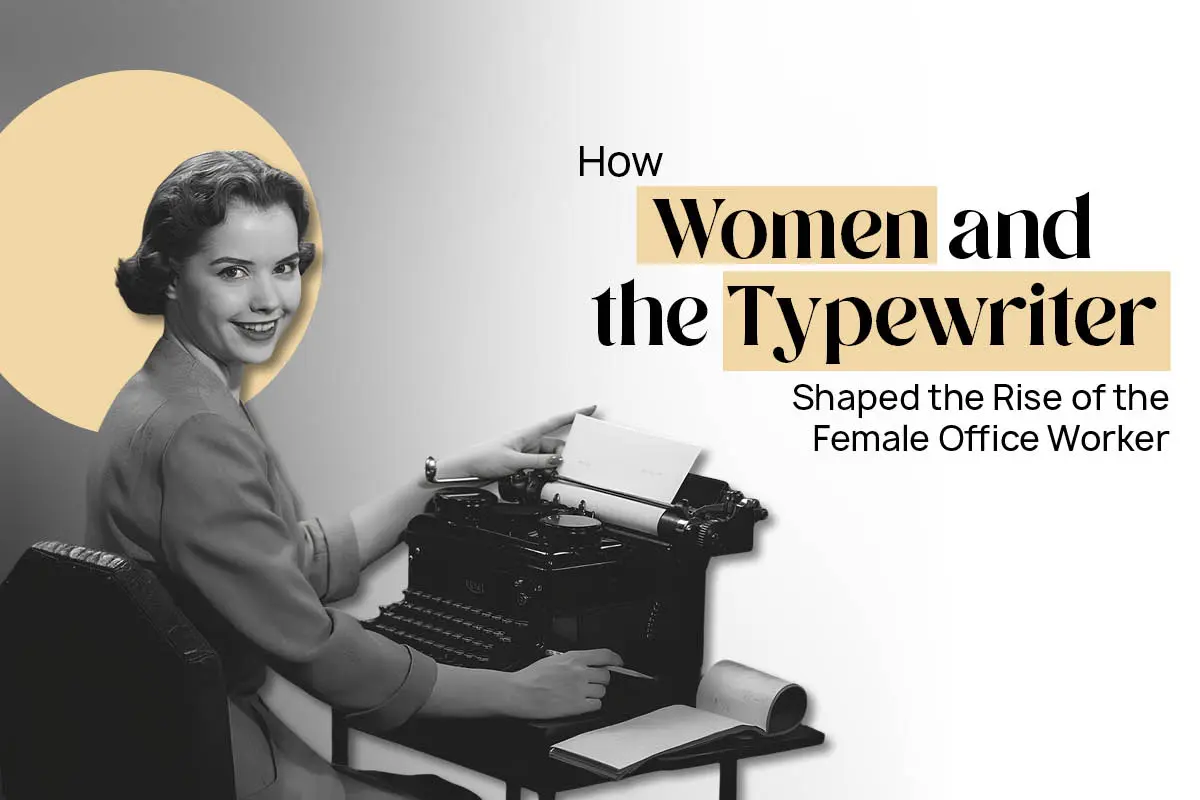
That change also opened space for a new generation of workers. Women, who were already employed in occupations such as bookkeeping, telegraphy, teaching, and other forms of commercial work, increasingly entered offices as typists, stenographers, and clerical employees.
The story of women and the typewriter is therefore not simply the story of a machine helping women find jobs. It is the story of expanding businesses, rising information demands, changing labor practices, and a new technology coming together to reshape who worked inside the modern office.
Women and the Typewriter
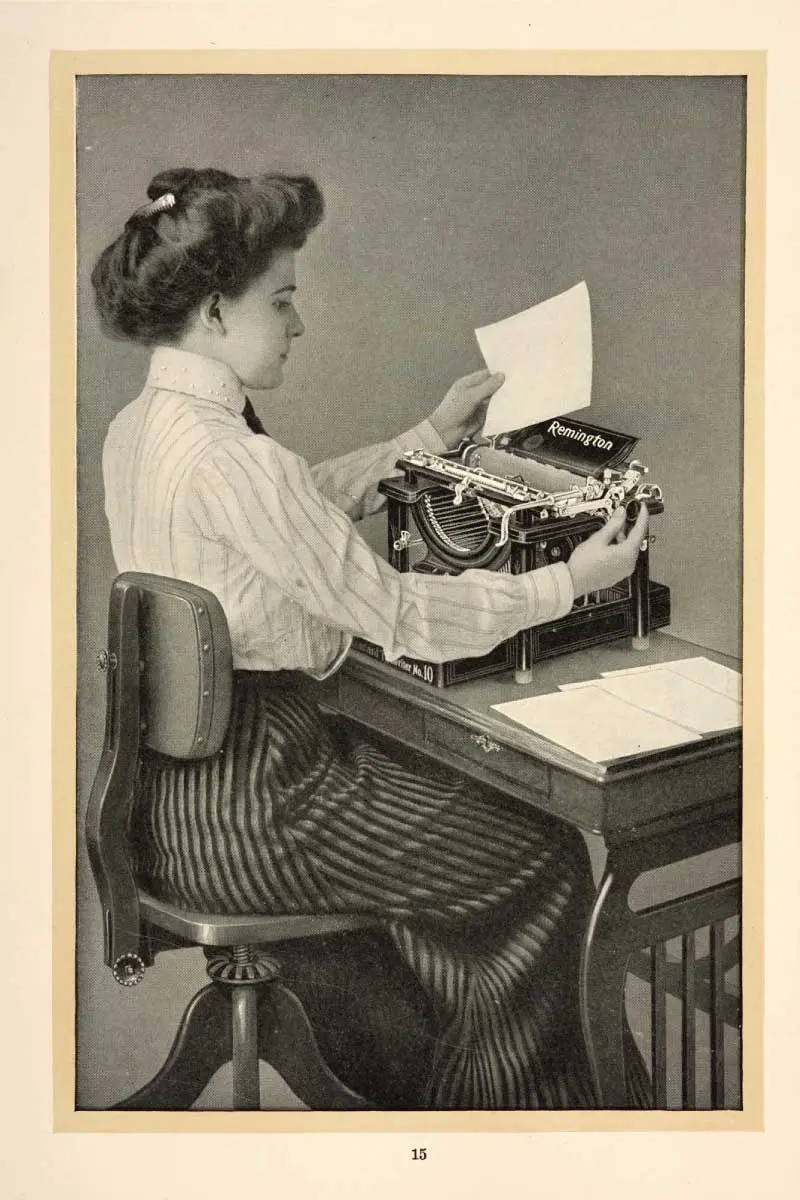
The first commercial typewriters appeared in the United States during the 1870s. The Sholes and Glidden machine, manufactured by Remington, was introduced in 1874, followed by improved models that made typing increasingly practical for offices.
At first, businesses had to justify the expense of unfamiliar machines and train workers to operate them. But the commercial value was clear. Typewritten documents were generally more uniform and legible than handwritten correspondence, while the machines offered businesses a faster way to handle growing volumes of information.
The typewriter also became part of a broader commercial ecosystem. Manufacturers sold machines to businesses, training schools taught typing and shorthand, and employers began seeking workers with specialized clerical skills. A new relationship was developing between technology, training, and labor.
Most importantly, the typewriter changed how office work could be divided. A traditional clerk might have drafted letters, copied documents, managed correspondence, and handled accounts. With the typewriter, these responsibilities could increasingly be separated. One employee could dictate, another could type, a third could file, and another could manage accounts.
This specialization made typing a distinct occupational skill. It also allowed businesses to organize information work around dedicated employees rather than expecting every clerk to perform every task.
Women were already working in occupations such as bookkeeping, telegraphy, teaching, and other forms of commercial employment. The typewriter did not bring women into paid work for the first time. Instead, it helped expand a specialized category of office work that businesses increasingly needed to fill.
More Info: Are Performance Appraisals Outdated? The Case for the Modern Workplace
How did the typewriter impact women?
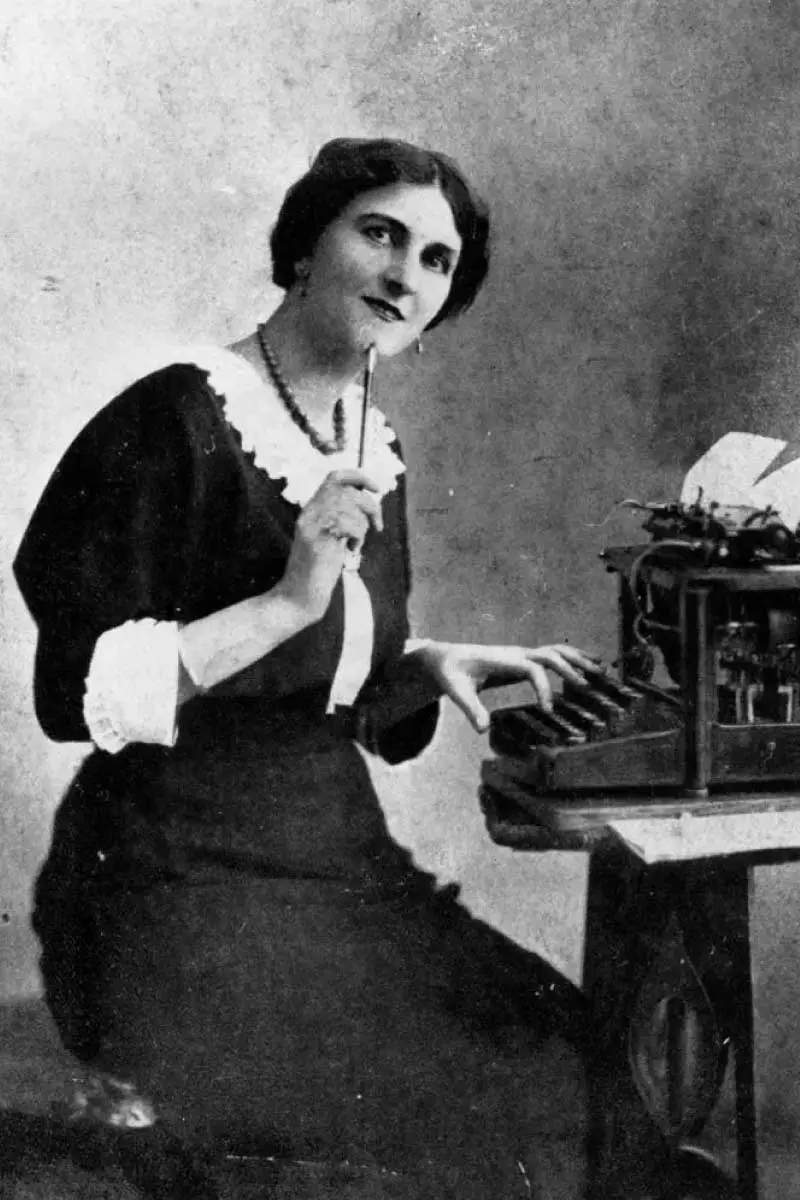
The impact was economic, social, and cultural. Most immediately, the typewriter created a new demand for trained typists. A woman who learned shorthand and touch typing could seek employment in an office, law firm, newspaper, government department, or private business.
The story of women and the typewriter therefore cannot be separated from the rapid growth of clerical employment. In the United States, women represented only about 2.5% of clerical workers in 1870. By 1930, that figure had risen to approximately 52.5%. Economic historian Elyce Rotella has described the typewriter as crucial to this dramatic rise, while also stressing that it was one part of a larger transformation in the labour market.
The occupational statistics for typists were even more striking. Women made up around 40% of stenographers and typists in 1880, more than 75% in 1900 and over 95% by 1930.
These figures reveal how quickly typing became associated with female employment. Employers and social commentators began to regard the office as a suitable environment for women, particularly middle-class and working-class women seeking indoor employment.
The reasoning was shaped by the gender assumptions of the period. Typing was presented as clean, respectable, and less physically demanding than factory work. It was also described as an extension of skills that women were believed to possess naturally: neatness, patience, manual dexterity, and obedience.
Those stereotypes were limiting, but they had an unexpected consequence. They helped businesses justify hiring women for clerical work on a large scale.
The typewriter therefore performed two contradictory functions. It challenged the idea that business offices were exclusively male spaces, while reinforcing the belief that women belonged in subordinate, repetitive roles.
How Did the Typewriter Help Women?
For many women, clerical work offered an alternative to domestic service, factory work, sewing, and other occupations available at the time. Office employment placed them in commercial environments that had previously been strongly associated with male workers. For some, a regular clerical wage also made greater financial independence possible, particularly in growing cities where office employment was expanding.
Office work also carried a different social image from many forms of manual employment. A typist wore street clothes, worked in a respectable firm, and could claim a place in the expanding middle class. Some used the position as a stepping stone, moving on to become private secretaries, court reporters or owners of their own typing bureaus. Above all, the typewriter normalized the sight of women in commercial offices. Once employers grew used to female clerical staff, the door stayed open for bookkeepers, telephone operators and, later, many other white-collar roles.
This is one of the most important aspects of women and the typewriter: the technology did not simply create individual jobs. It helped normalize women’s presence in an environment that had previously been strongly associated with male employment.
Exhibit A: Women as a share of US stenographers and typists (approximate)
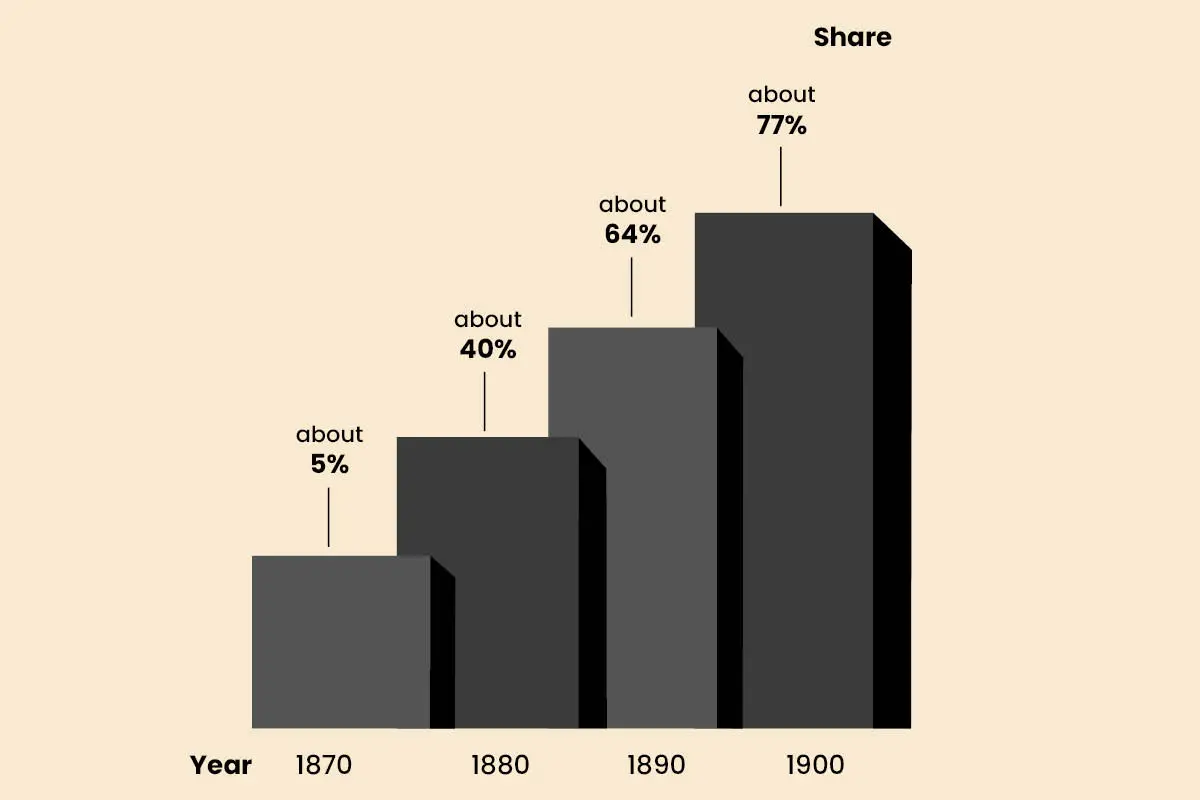
| Year | Share |
| 1870 | about 5% |
| 1880 | about 40% |
| 1890 | about 64% |
| 1900 | about 77% |
The shift was rapid. Within a few decades, women moved from a small minority of stenographers and typists to a clear majority, illustrating how quickly typing became associated with female clerical employment.
The Typing Pool and the Modern Office
By the early 20th century, large firms had begun gathering typists into centralized typing pools, where workers handled documents under supervision.
The arrangement reflected a larger transformation in office management. Typing could now be organized as a dedicated business function. Work could be divided into specific tasks, documents could follow standardized formats, and output could be monitored.
In this sense, the typing pool borrowed principles from industrial production. Businesses could centralize machines and trained operators, distribute work according to demand, and process large volumes of correspondence more efficiently.
The typewriter had therefore changed more than the speed of writing. It helped businesses specialize, standardize, and manage information work. The typist became one part of a larger system involving managers, secretaries, accountants, filing staff, and other clerical workers.
From Typewriters to Computers
Technology eventually rewrote the arrangement again. Electric typewriters increased speed, but personal computers transformed who performed document work.
The typewriter had helped make typing a specialized occupation. Personal computers gradually made document creation part of the ordinary workstation, allowing managers, professionals, and other knowledge workers to produce and edit their own documents.
The technology had become more than a tool for typing. It had changed the organization of work once again.
Read More: The Leadership Paradox: Emotional Intelligence vs Technical Expertise in the Age of AI
Closing the File
The lesson of women and the typewriter is that technology rarely changes society on its own. The machine entered a period of expanding businesses, rising information demands, changing labor practices, and shifting attitudes toward women’s employment.
It helped businesses develop new ways to organize information and helped women gain access to a growing category of office work. Yet that opportunity existed alongside lower pay, limited authority, and occupational segregation.
Both truths belong in the record. In the Business Archive, the typewriter is more than an antique. It marks a moment when changing technology reshaped how businesses organized work and, in the process, changed who could participate in the modern office.