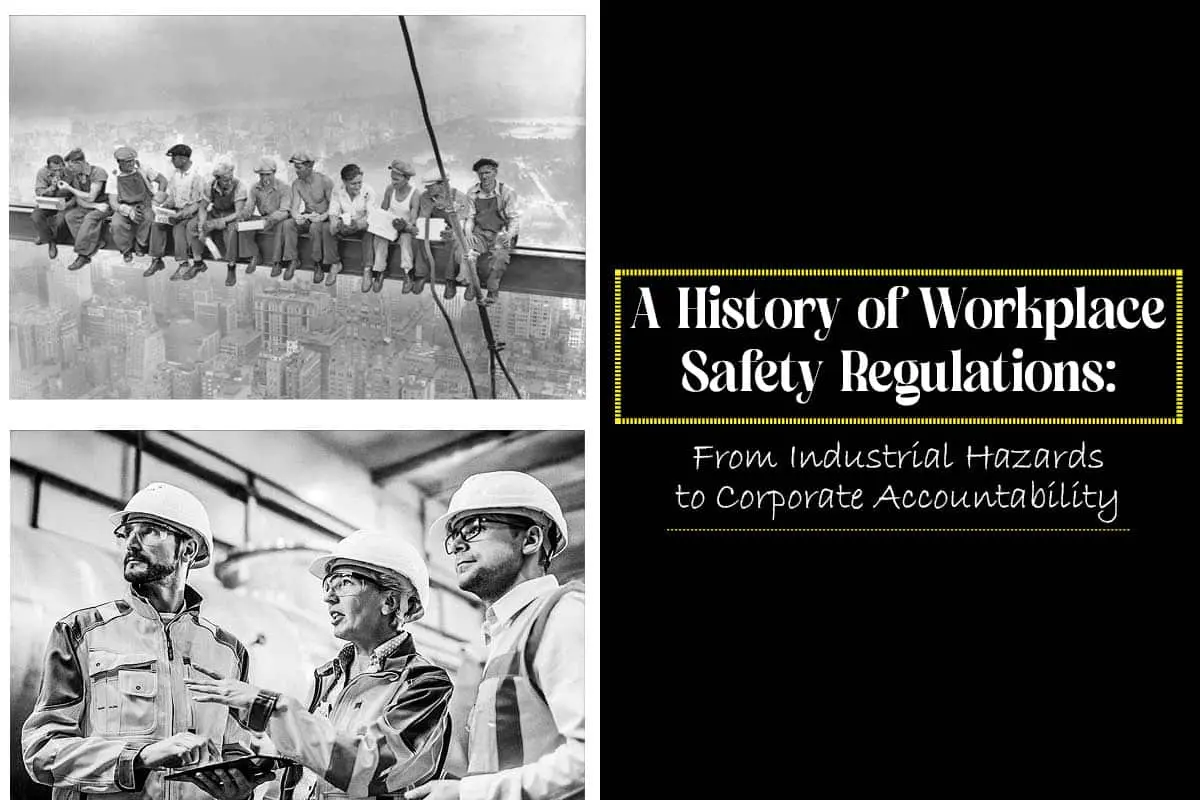
The history of workplace safety regulations in the United States began with state factory laws and gradually developed into a federal system of occupational safety and health protections. During the nineteenth and early twentieth centuries, dangerous machinery, inadequate fire safeguards, and hazardous working conditions increased pressure for government intervention.
The Occupational Safety and Health Act of 1970 established the framework for federal workplace safety oversight, and the Occupational Safety and Health Administration (OSHA) began operating in 1971. Today, workplace safety regulations shape how covered employers identify hazards, train workers, maintain records, and meet their legal responsibilities. Understanding this history helps business leaders recognize why workplace safety became a formal management responsibility rather than a matter of individual caution alone.
When Did Workplace Safety Begin? The Industrial Roots of Regulation
Workplace safety existed long before modern regulations, but systematic government oversight developed as industrialization expanded. During the nineteenth century, American factories increasingly relied on machinery, industrial processes, and large workforces. Dangerous equipment, hazardous substances, and inadequate safeguards created risks that individual workers often had little power to address.
According to the U.S. Department of Labor’s historical account, Massachusetts enacted a Factory Act in 1877, marking an important early step in American factory safety legislation. Investigations by state labor bureaus and pressure from labor organizations helped drive the development of factory laws and inspection systems. Later reforms expanded the role of government in addressing industrial hazards.
Early state laws, however, did not create one uniform national system. Coverage and enforcement varied, leaving significant gaps between industries and jurisdictions.
Federal workplace protections also developed before OSHA was established. The Walsh-Healey Public Contracts Act of 1936 introduced labor standards, including safety and health requirements, for covered federal supply contracts. The Federal Coal Mine Health and Safety Act of 1969 strengthened protections for coal miners. These measures addressed particular industries or employment arrangements rather than establishing the broader occupational safety framework that followed in 1970.
The Triangle Shirtwaist Factory fire in New York City on March 25, 1911, became a significant event in the history of American workplace safety. The fire killed 146 workers and exposed serious weaknesses in factory fire precautions and escape arrangements. The disaster intensified public pressure for reform and contributed to wider efforts to strengthen workplace safety laws and factory inspections. It did not create the national OSHA system, which came decades later, but it illustrates how industrial tragedies helped drive demands for stronger worker protections.
When Was OSHA Established? The Federal Turning Point
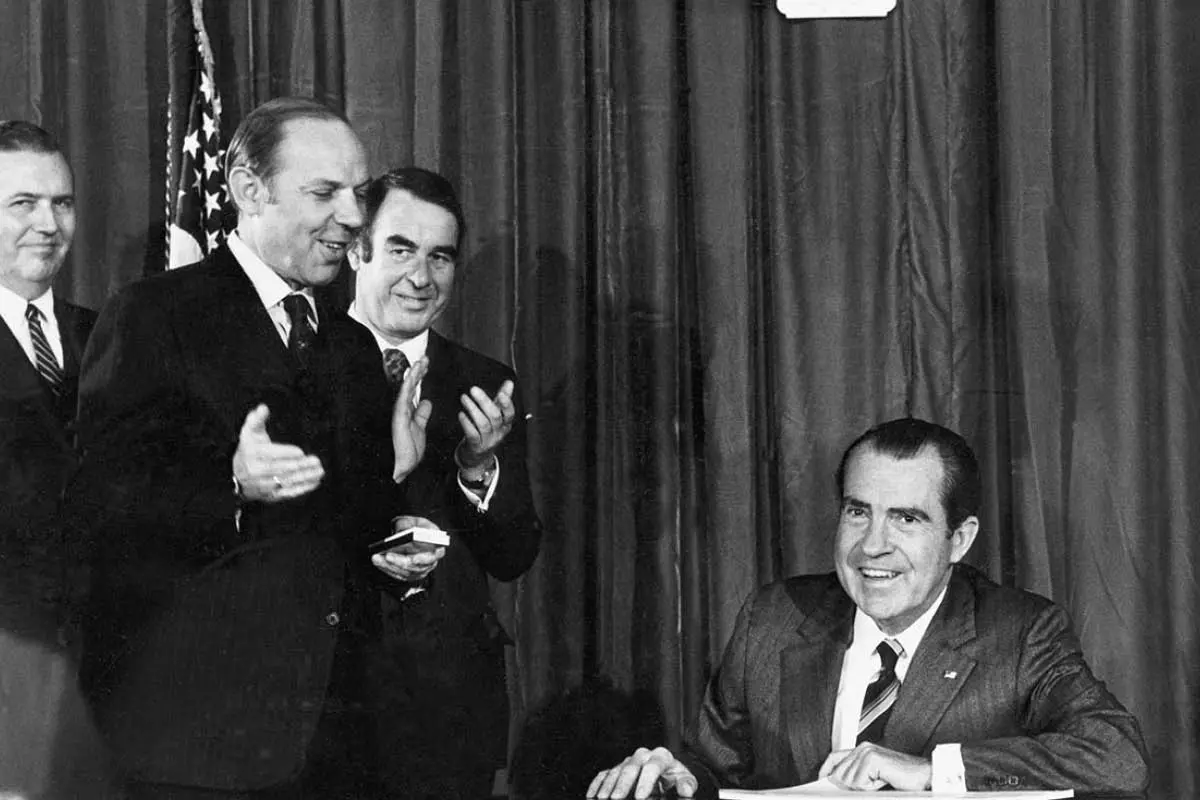
The modern federal framework took shape with the Occupational Safety and Health Act of 1970. President Richard Nixon signed the legislation into law on December 29, 1970. The Occupational Safety and Health Administration (OSHA) began operating on April 28, 1971, to administer and enforce workplace safety and health standards.
The Act established three important institutions with distinct responsibilities. OSHA administers and enforces workplace safety standards. The National Institute for Occupational Safety and Health (NIOSH) conducts occupational safety and health research. The Occupational Safety and Health Review Commission (OSHRC) independently reviews contested enforcement cases. Together, these institutions support workplace safety through regulation, research, and review.
OSHA’s role extends beyond issuing citations. Its work includes developing standards, conducting inspections, providing compliance assistance, and protecting workers who exercise certain rights under the law.
The Occupational Safety and Health Act also places responsibilities on employers. Businesses must comply with applicable standards, address recognized serious hazards under the law’s General Duty Clause, and meet relevant reporting and recordkeeping requirements.
Employees have protections that include requesting OSHA inspections, raising safety concerns, accessing certain exposure and medical records, and exercising their rights without unlawful retaliation. These protections help make safety an accountable workplace responsibility rather than an optional management initiative.
The system also includes state plans. States may operate their own occupational safety and health programs if OSHA approves them and they meet the requirement to be at least as effective as the federal program. Consequently, businesses must understand which authority governs their workplaces and whether state-specific requirements apply.
For business leaders, the establishment of OSHA marked a structural change. Workplace safety became a matter of formal regulatory compliance, requiring organizations to build procedures around hazard identification, employee training, inspections, and corrective action.
Workplace Safety Regulations: Key Historical Milestones
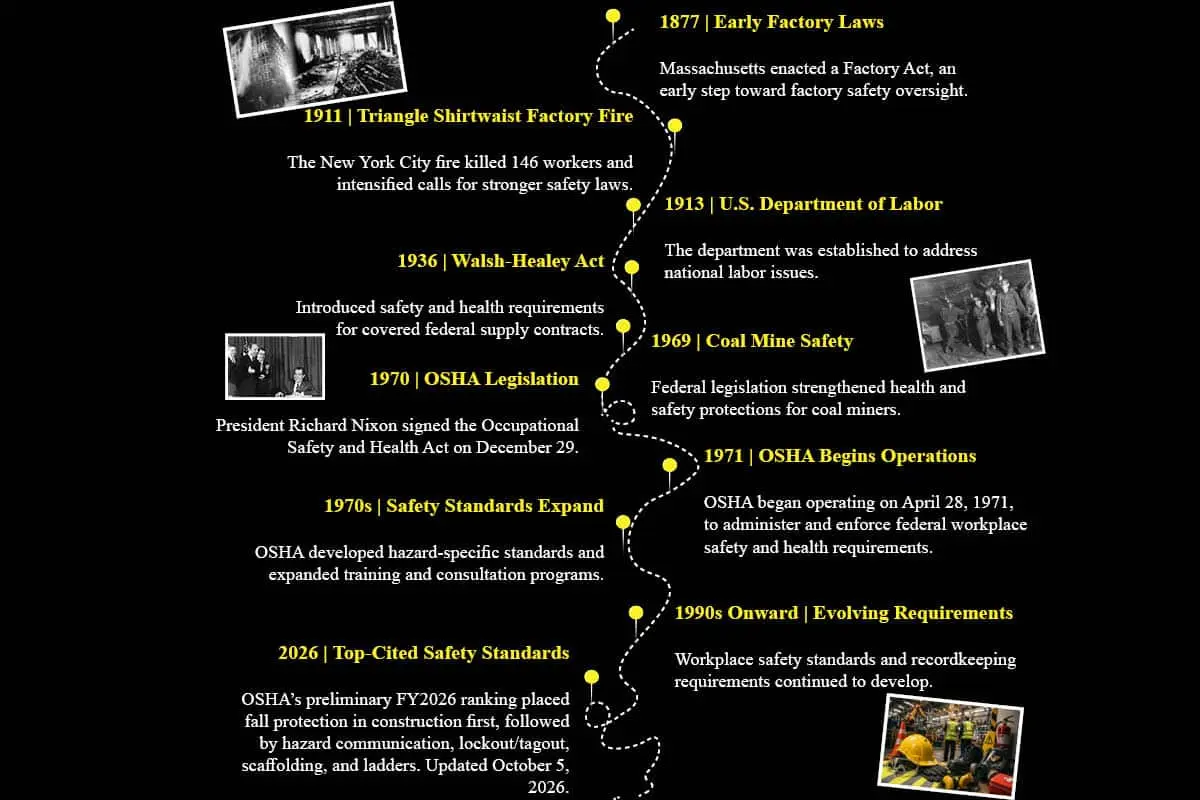
The history of workplace safety regulations becomes clearer when viewed through several major milestones.
- 1877 | Early Factory Laws: Massachusetts enacted a Factory Act, an early step toward factory safety oversight.
- 1911 | Triangle Shirtwaist Factory Fire: The New York City fire killed 146 workers and intensified calls for stronger safety laws.
- 1913 | U.S. Department of Labor: The department was established to address national labor issues.
- 1936 | Walsh-Healey Act: Introduced safety and health requirements for covered federal supply contracts.
- 1969 | Coal Mine Safety: Federal legislation strengthened health and safety protections for coal miners.
- 1970 | OSHA Legislation: President Richard Nixon signed the Occupational Safety and Health Act on December 29.
- 1971 | OSHA Begins Operations: OSHA began operating on April 28, 1971, to administer and enforce federal workplace safety and health requirements.
- 1970s | Safety Standards Expand: OSHA developed hazard-specific standards and expanded training and consultation programs.
- 1990s Onward | Evolving Requirements: Workplace safety standards and recordkeeping requirements continued to develop.
- 2026 | Top-Cited Safety Standards: OSHA’s preliminary FY2026 ranking placed fall protection in construction first, followed by hazard communication, lockout/tagout, scaffolding, and ladders. Updated October 5, 2026.
Recordkeeping is another important element of OSHA compliance. Under federal rules, a company that had 10 or fewer employees at all times during the previous calendar year is generally exempt from routinely keeping OSHA injury and illness records, subject to specified exceptions. This exemption is based on the size of the entire company, not an individual establishment. Covered employers must still report qualifying severe incidents to OSHA, including work-related fatalities, in-patient hospitalizations, amputations, and loss of an eye. See OSHA’s recordkeeping rules.
Under 29 CFR 1910.1020, employee medical records generally must be retained for the duration of employment plus 30 years, while employee exposure records generally must be retained for 30 years, subject to specified exceptions. These retention periods should not be confused with the separate requirements for routine injury and illness logs. See OSHA’s recordkeeping regulation.
How Does the History of Workplace Safety Regulations Affect Businesses Today?
The history of workplace safety regulations explains why US employers must identify workplace hazards, comply with applicable safety standards, train workers, and correct dangerous conditions. Under the Occupational Safety and Health Act, employers also have responsibilities for recognized serious hazards under the General Duty Clause. These obligations make workplace safety an ongoing management responsibility rather than a task addressed only after an incident.
A practical management approach begins with three questions: Are the relevant hazards identified? Are the required controls implemented and understood? Can the organization demonstrate that its safety procedures are being followed?
The answers influence more than regulatory compliance. Poor safety management can disrupt production, increase employee absences, damage equipment, and undermine workforce confidence. Effective prevention helps businesses manage these operational risks while protecting the people whose work sustains the organization.
Conclusion: Safety as a Measure of Business Maturity

The history of workplace safety regulations shows how responsibility shifted from responding to industrial harm toward preventing it. For business leaders, the practical lesson is to identify workplace hazards, assign responsibility for corrective action, and verify that safety procedures are working. As industries and working conditions change, employers must continue adapting their practices to meet applicable legal requirements and protect their workforce.
Frequently Asked Questions
1. When did workplace safety regulations begin in the United States?
Early workplace safety legislation developed at the state level during the nineteenth century. Massachusetts enacted a Factory Act in 1877, while subsequent industrial accidents and reform movements encouraged further protections.
2. What did the Occupational Safety and Health Act of 1970 change?
The Act established a federal framework for occupational safety and health standards, enforcement, and employer responsibilities across covered workplaces.
3. Do all US employers follow the same workplace safety rules?
Not necessarily. Federal OSHA covers many workplaces, while approved state plans administer occupational safety and health programs in their jurisdictions. Applicable requirements depend on the workplace, industry, and governing authority.
4. Why is the history of workplace safety regulations important for businesses?
It explains how workplace safety became a formal responsibility involving hazard prevention, training, recordkeeping, and compliance with applicable standards.