



Digital commerce in gaming is changing how developers build businesses, connect with players, and generate sustainable revenue. As payments, compliance, marketing, funding, and player relationships become increasingly interconnected, growth leadership requires more than strong campaigns. It requires the ability to understand customer needs, recognize market friction, connect functions, and turn insight into practical business decisions.
Berkley Egenes, Chief Marketing & Growth Officer at Xsolla, brings that perspective to his work. His career spans more than two decades across consumer brands, technology, sports, entertainment, and video games, giving him experience across industries where customer behavior, technology, partnerships, and brand strategy intersect. At Xsolla, he has brought those experiences together around a broader view of growth: one built on customer value, experimentation, adaptability, and solutions to genuine market problems.

The Leader Behind Xsolla’s Marketing Strategy
Berkley Egenes brings together marketing, growth, technology, and commerce in his role at Xsolla, helping connect customer insight with the business decisions that shape digital commerce. His work focuses on creating practical growth opportunities for game developers while strengthening the connection between marketing, product, partnerships, and customer experience.
At Xsolla, this approach is reflected in initiatives designed around real industry challenges, including direct-to-player commerce, developer funding, payment infrastructure, and new monetization opportunities. His perspective combines commercial discipline with a strong focus on understanding where developers and players face friction, testing solutions, and scaling what demonstrates meaningful value.
A Career Shaped by Different Markets
Berkley’s professional journey has taken him through Kellogg’s, AB InBev, NASCAR, IBM, Walmart, CVS, and Ghost Gaming, each contributing a different lesson to the way he approaches leadership and growth. His early experience with Kellogg’s and AB InBev strengthened his understanding of consumer insight, brand building, and disciplined execution at scale. His work showed him how technology, partnerships, and customer experience can influence large organizations.
His move deeper into gaming added another dimension. At Ghost Gaming, he experienced the importance of community and authenticity in building a brand that resonates with its audience. He joined Xsolla in 2020 as Vice President of Global Marketing and became Chief Marketing Officer in 2022, with his responsibilities later expanding to include growth.
Across those experiences, one principle became increasingly clear: sustainable growth does not come from creativity, technology, customer insight, or commercial strategy in isolation. It comes from connecting them around a genuine need. That perspective now informs how Berkley approaches marketing, product, partnerships, and growth at Xsolla.
Learning to Lead Through Setbacks
One of the most important leadership lessons in Berkley’s career came from an initiative that looked strong on paper, with promising ROI, executive support, and a clear roadmap. But when the market shifted faster than expected, revenue targets slipped, and the team became discouraged. He realized the issue was not only the strategy, but the lack of checkpoints that could have surfaced concerns earlier and allowed the team to adjust.
The experience changed how he approaches leadership. Berkley began building adaptability, shorter feedback loops, and input from people closest to the data into strategies from the start. He also became more transparent about setbacks, recognizing that honesty strengthens trust and psychological safety. For him, vision and conviction create momentum, while resilience, humility, and adaptability sustain it.
Making Marketing a Business Growth Function

For Berkley, marketing and Growth cannot operate as functions that simply promote what the product team has already built. At Xsolla, he works to keep marketing closely connected to product, data, and partnerships so that insights from the market can influence business decisions and product direction. His responsibilities span brand strategy, demand generation, and partnership development, while maintaining close collaboration with teams responsible for product and data.
This approach gives marketing a broader role in the business. Instead of measuring success only through awareness or campaign performance, Berkeley looks at whether marketing contributes to adoption, revenue, and partner success. The goal is to understand what developers need and ensure that growth efforts help address those needs. For him, marketing is most effective when it is involved in deciding what the business should build, who it should work with, and how it can create meaningful value in each market.

A Practical Framework for Sustainable Growth
Berkley’s approach to sustainable growth centers on value-first sequencing and friction-mapping over trend-chasing. The first asks who benefits from an initiative: the developer, the player, or Xsolla. If the value is not clear beyond the company itself, the idea does not move forward. The second focuses on identifying genuine problems faced by developers, publishers, and players through conversations at GDC and Gamescom, followed by data-driven validation.
The team also follows a test-small, scale-fast approach, using limited pilots and clear success measures before committing greater resources. This creates a disciplined growth model where customer needs, measurable results, and shared accountability guide decisions rather than industry trends alone.
5 Key Milestones
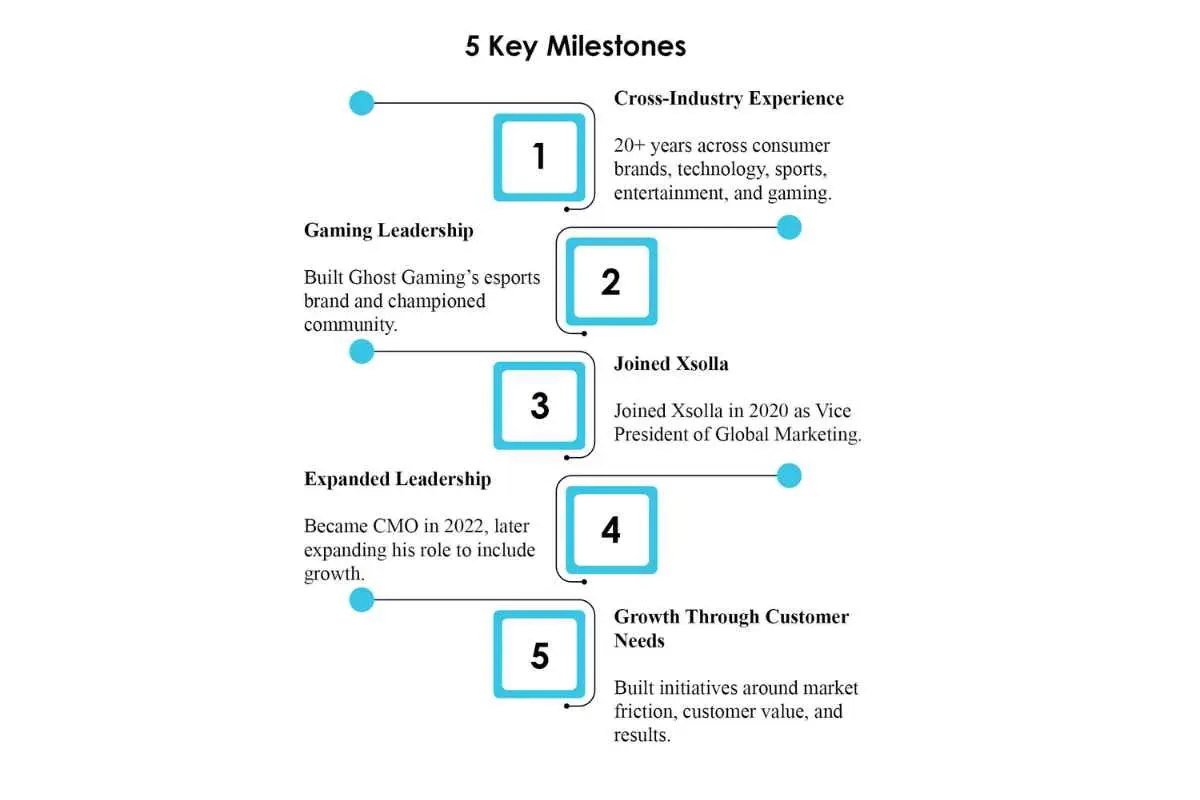
- Cross-Industry Experience
- 20+ years across consumer brands, technology, sports, entertainment, and gaming.
- Gaming Leadership
- Built Ghost Gaming’s esports brand and championed community.
- Joined Xsolla
- Joined Xsolla in 2020 as Vice President of Global Marketing.
- Expanded Leadership
- Became CMO in 2022, later expanding his role to include growth.
- Growth Through Customer Needs
- Built initiatives around market friction, customer value, and results.
Addressing the Challenges Behind Digital Gaming
The gaming industry brings together developers, publishers, platforms, and players, each facing different pressures as digital commerce continues to evolve. For developers, one of the biggest challenges is fragmentation. Managing payments, compliance, marketing, and player relationships across multiple markets can require several vendors and systems. Berkley sees an opportunity to simplify this complexity through unified commerce infrastructure, bringing 1,000+ payment methods, Merchant of Record coverage across 200+ geographies, and marketing tools together through one partner.
Publishers face a different challenge: capital efficiency. Traditional funding models can make it difficult for mid-core and indie developers to access the resources they need, while platforms must balance control with the growing demand for direct player engagement. Players, meanwhile, need trust when purchasing through unfamiliar developer storefronts. Berkley’s approach connects these challenges rather than treating them as separate problems. By bringing commerce, marketing, payments, and compliance together, the focus remains on making it easier for developers to build, fund, and grow their games.
Building Solutions Around Developer Needs
Web Shop became a meaningful example of Berkley’s approach because it addressed a clear problem for mobile developers. On a $20 app store purchase, developers kept roughly $13 while also lacking a direct relationship with their players. Building an independent storefront could address part of that challenge, but it also required payments, tax compliance, and fraud prevention capabilities that smaller studios often could not easily manage. The response was a no-code solution that allowed developers to set up a store in about 15 minutes.

The strategy also prioritized broad local payment coverage rather than focusing only on major markets. Berkley and his team worked with early partners to prove that direct-to-player commerce could work without creating excessive technical or legal complexity. That proof helped build confidence among developers and players. Today, more than 800 mobile web shops run on Xsolla, while developers can keep up to $19 of every $20 purchase. For Berkley, the experience reinforced a simple lesson: lead with proof, then let results create momentum.
Web Shop at a Glance
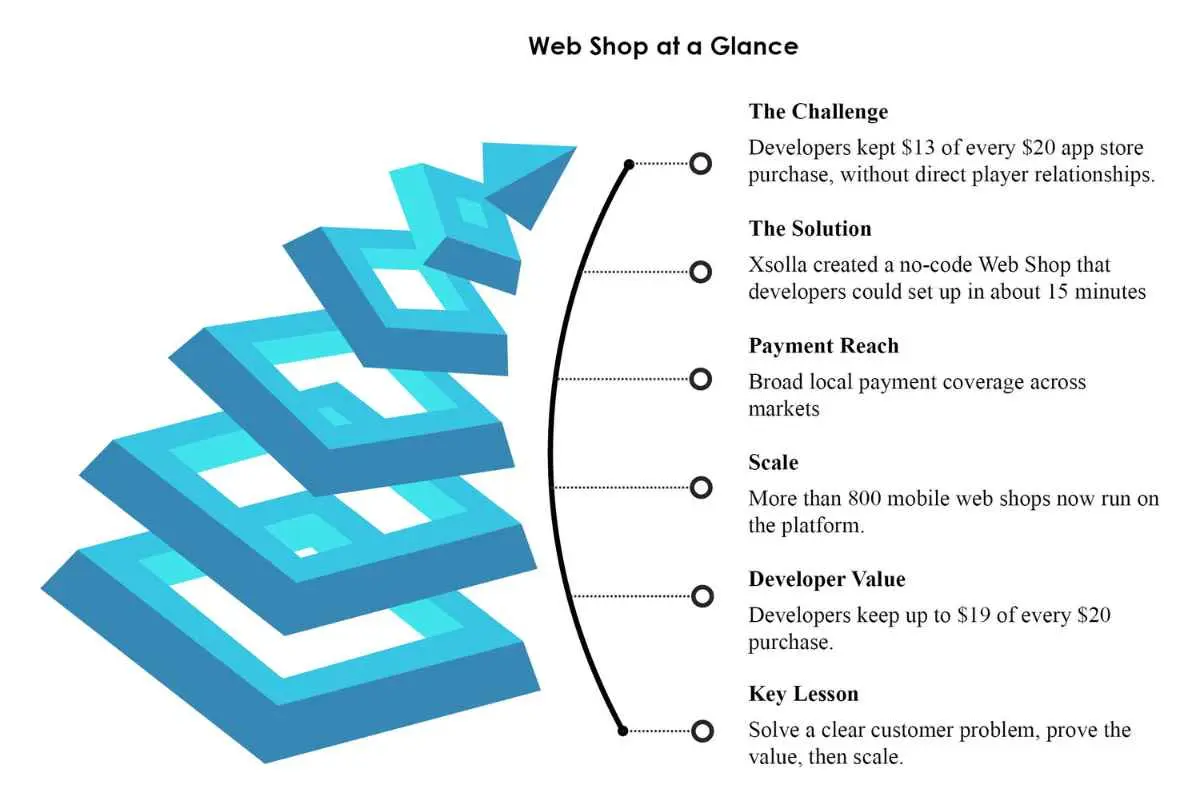
- The Challenge
- Developers kept $13 of every $20 app store purchase, without direct player relationships.
- The Solution
- Xsolla created a no-code Web Shop that developers could set up in about 15 minutes
- Payment Reach
- Broad local payment coverage across markets
- Scale
- More than 800 mobile web shops now run on the platform.
- Developer Value
- Developers keep up to $19 of every $20 purchase.
- Key Lesson
- Solve a clear customer problem, prove the value, then scale.

Listening Before Scaling
Berkley believes strong growth strategies begin with listening to customers before committing significant resources. Conversations with developers at GDC and Gamescom, partner feedback, payment gaps, and repeat-purchase data help identify the most relevant opportunities. These insights are then tested through smaller pilots before broader investment.
He also treats criticism as a source of direction. When developers said direct-to-player commerce could feel too technical, Berkley and his team prioritized ease of use and no-code tools. The goal is not simply to collect feedback, but to turn it into practical changes that improve the product and strengthen its value.
Marketing With a Systems Perspective
Berkley’s expanded role at Xsolla reflects a broader view of what marketing can contribute to a business. Rather than focusing only on campaigns and brand visibility, he considers how product, data, partnerships, commerce, and customer experience work together to drive growth. This requires staying close to the business and understanding how decisions in one area affect outcomes across the wider organization.
That perspective allows marketing insights to influence product priorities, partnership opportunities, and responses to customer needs. By connecting these functions, Berkley helps build a growth model based on connected decisions, shared accountability, and measurable customer value rather than relying on individual campaigns alone.
Berkley’s Growth Principles
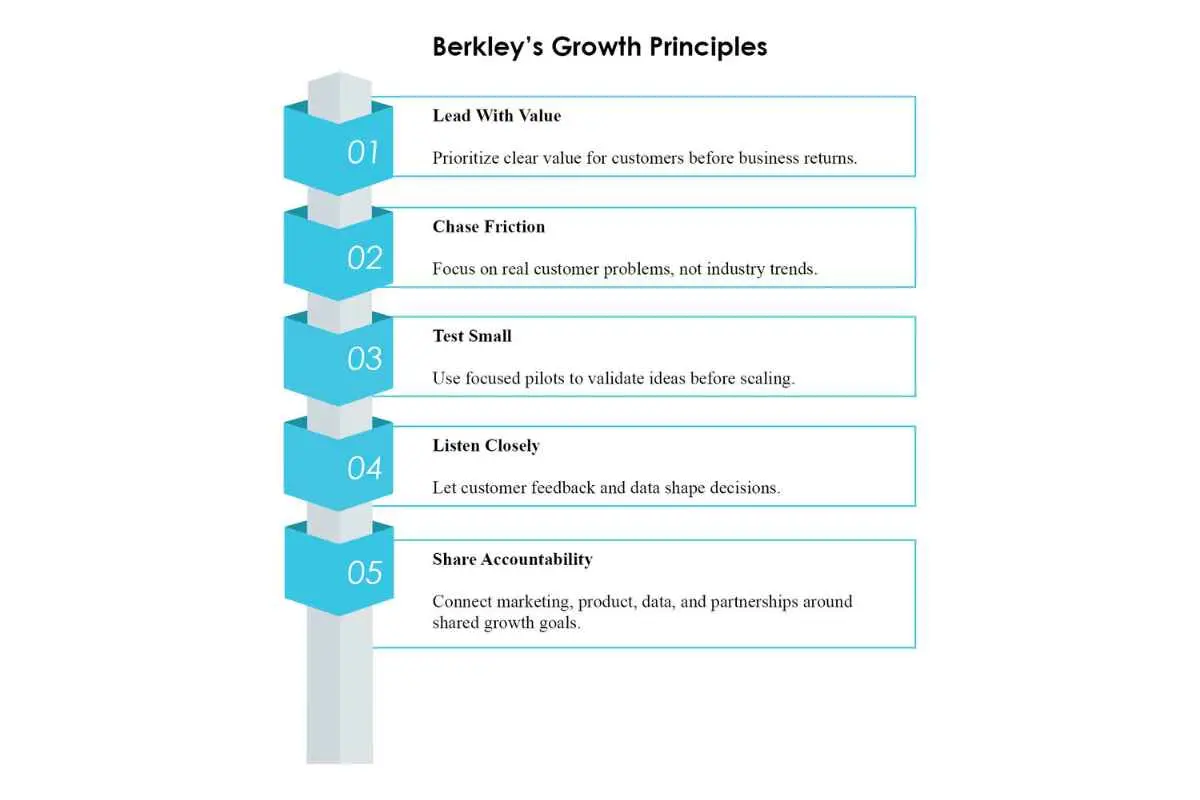
- Lead With Value
- Prioritize clear value for customers before business returns.
- Chase Friction
- Focus on real customer problems, not industry trends.
- Test Small
- Use focused pilots to validate ideas before scaling.
- Listen Closely
- Let customer feedback and data shape decisions.
- Share Accountability
- Connect marketing, product, data, and partnerships around shared growth goals.
Teams That Can Sustain Growth
Berkley believes sustainable growth depends on creating an environment where people can question ideas, test assumptions, and speak openly about problems. His teams treat experiments as hypotheses, set success measures before launching initiatives, and use honest post-mortems to understand what worked and what did not. The focus remains on ownership rather than constant oversight, giving people the confidence to make decisions and learn from outcomes.
This philosophy extends across Xsolla’s regional teams in Berlin, Seoul, and Kuala Lumpur. Berkley encourages local teams to bring their market knowledge into decisions rather than relying on a single centralized approach. By valuing curiosity over certainty and giving people closest to a problem greater ownership, he builds a culture where learning, transparency, and accountability support long-term growth.
Industry Impact Beyond Marketing
Berkley’s contribution to the gaming industry extends beyond his responsibilities at Xsolla. He regularly shares insights through speaking engagements at GDC, Gamescom, and G-Star, contributing to conversations around gaming, commerce, growth, and the changing needs of developers. His involvement with the Xsolla Accelerator also gives him an opportunity to mentor emerging talent and support the next generation of gaming businesses.
His work also reflects a focus on creating practical opportunities across the industry. Initiatives such as 800+ Web Shops, $127 million raised for 176 games through Funding Club, and Xsolla’s partnership with Stevenage FC demonstrate how commerce, funding, and partnerships can support developers and expand the ways gaming businesses grow. For Berkley, industry impact comes from sharing knowledge while creating solutions that address real challenges.
The Next Era of Gaming Commerce
Berkley sees several forces likely to shape gaming and digital commerce over the next three to five years. AI-native development, creator-economy monetization, diversified funding models, and stronger payment infrastructure in emerging markets are creating new opportunities for smaller teams and independent developers. He believes these changes could allow leaner studios to compete more effectively while giving creators and developers more ways to build sustainable businesses.
He also sees a growing need for solutions designed around the realities of individual markets. In regions such as MENA, meaningful growth will require real payment and commerce infrastructure rather than simply adapting strategies created for Western markets. As gaming commerce continues to evolve, Berkley believes growth leaders should focus on genuine friction points, test solutions on a smaller scale, and expand when the evidence supports it.
Open Letter

Dear Future Leaders,
Your career won’t move in a straight line. That’s the plan working correctly.
Setbacks will shape you more than wins. Stay curious, not just data-driven. Lead with transparency when things break.
Measure growth by what you create, not what you capture. Chase what helps others, not what impresses them.
Berkley Egenes — Chief Marketing
& Growth Officer
Xsolla
Quick Takes
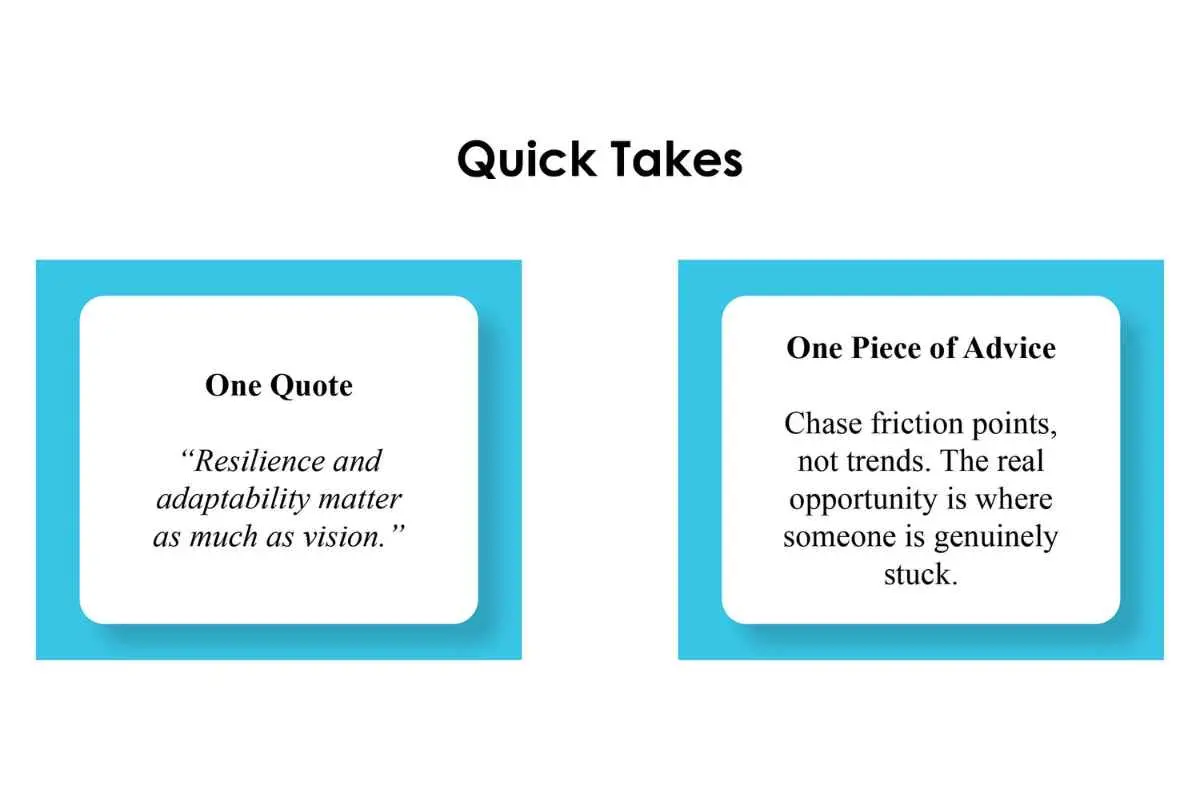
1. One Quote
- “Resilience and adaptability matter as much as vision.”
2. One Piece of Advice
- Chase friction points, not trends. The real opportunity is where someone is genuinely stuck.
5 Key Takeaways
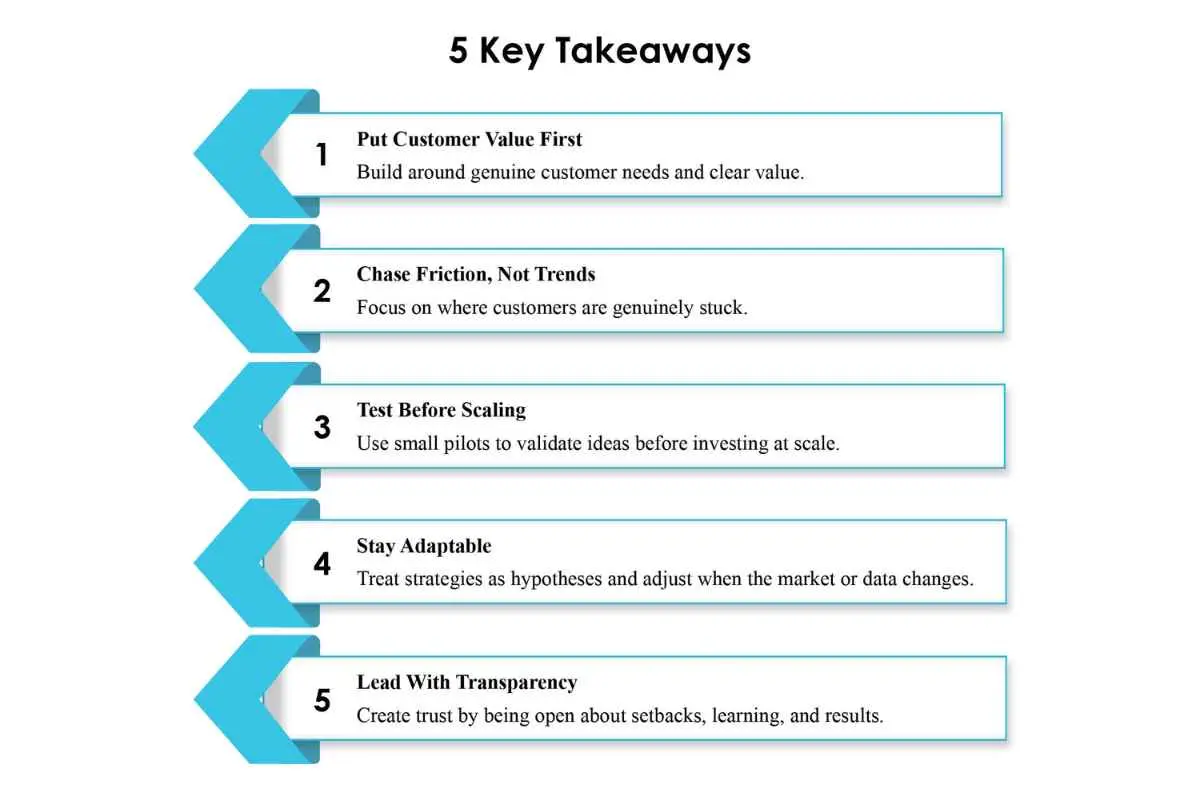
- Put Customer Value First
- Build around genuine customer needs and clear value.
- Chase Friction, Not Trends
- Focus on where customers are genuinely stuck.
- Test Before Scaling
- Use small pilots to validate ideas before investing at scale.
- Stay Adaptable
- Treat strategies as hypotheses and adjust when the market or data changes.
- Lead With Transparency
- Create trust by being open about setbacks, learning, and results.













