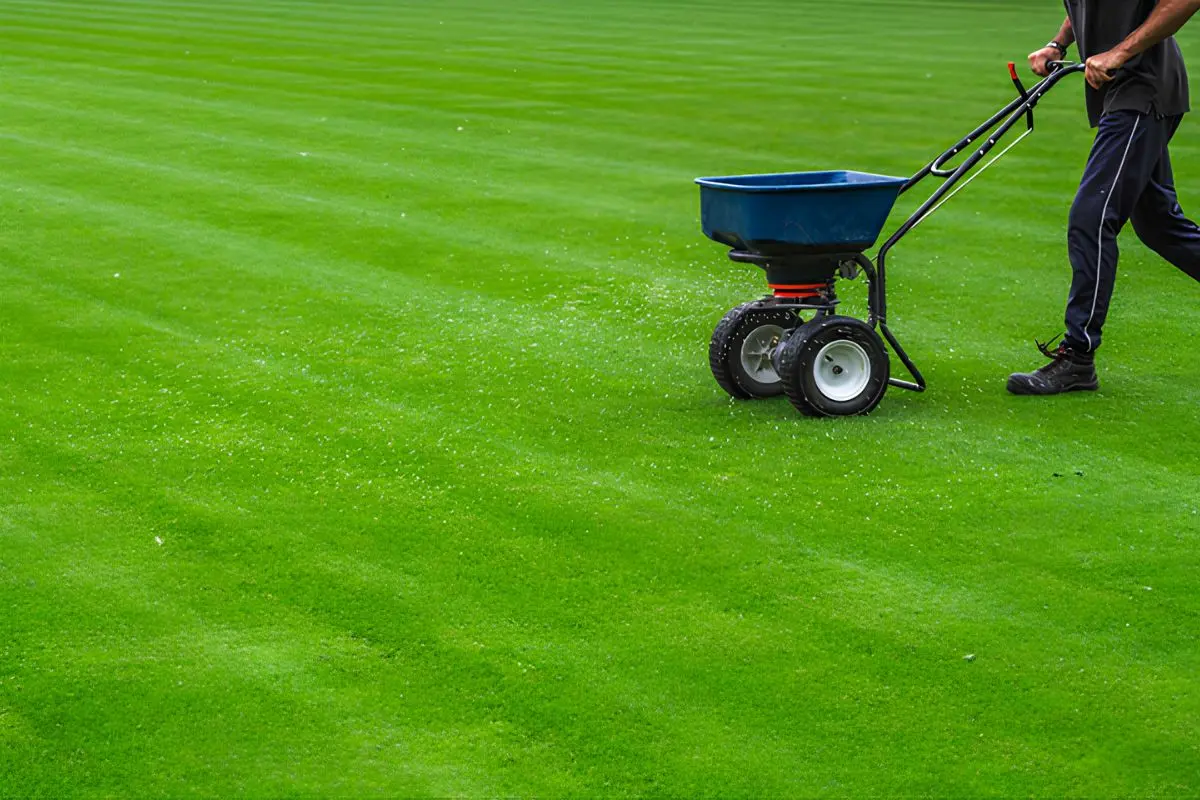
Nobody expects to wreck a lawn with fertilizer. You do the responsible thing, load the spreader, make your passes, and a few days later, straw-colored stripes appear across the yard. That’s fertilizer burn on grass, and it’s easier to cause than most people think. It’s common to think a bug or disease is the cause. However, the University of Maryland Extension lists fertilizer burn as a lawn issue that isn’t caused by either.
Recovery is possible. It’s also slow. Measure carefully the first time to save time later. If you prefer, professional lawn fertilization services are available to help.
What Is Fertilizer Burn and Why Does It Damage Grass?
The nitrogen is what greens up your lawn. Trouble is, it usually comes as a salt. Put down too much, and the salt starts pulling water out of the roots. Put down too much, though, and the salt starts pulling water out of the roots. Granules stuck to wet blades can scorch them, too. That’s why a burned lawn can look parched even when the soil is damp.
Signs of fertilizer burn can show up within days. Yellow or brown patches. Blades that feel dry and brittle. Streaks that look singed, often following your spreader’s path or where granules were dumped. Don’t just blame the fertilizer for brown patches. Drought and disease can cause similar damage. To check, see if the patch matches your spreader pattern. If it doesn’t, look elsewhere.
What Causes Fertilizer Burn in Lawns?
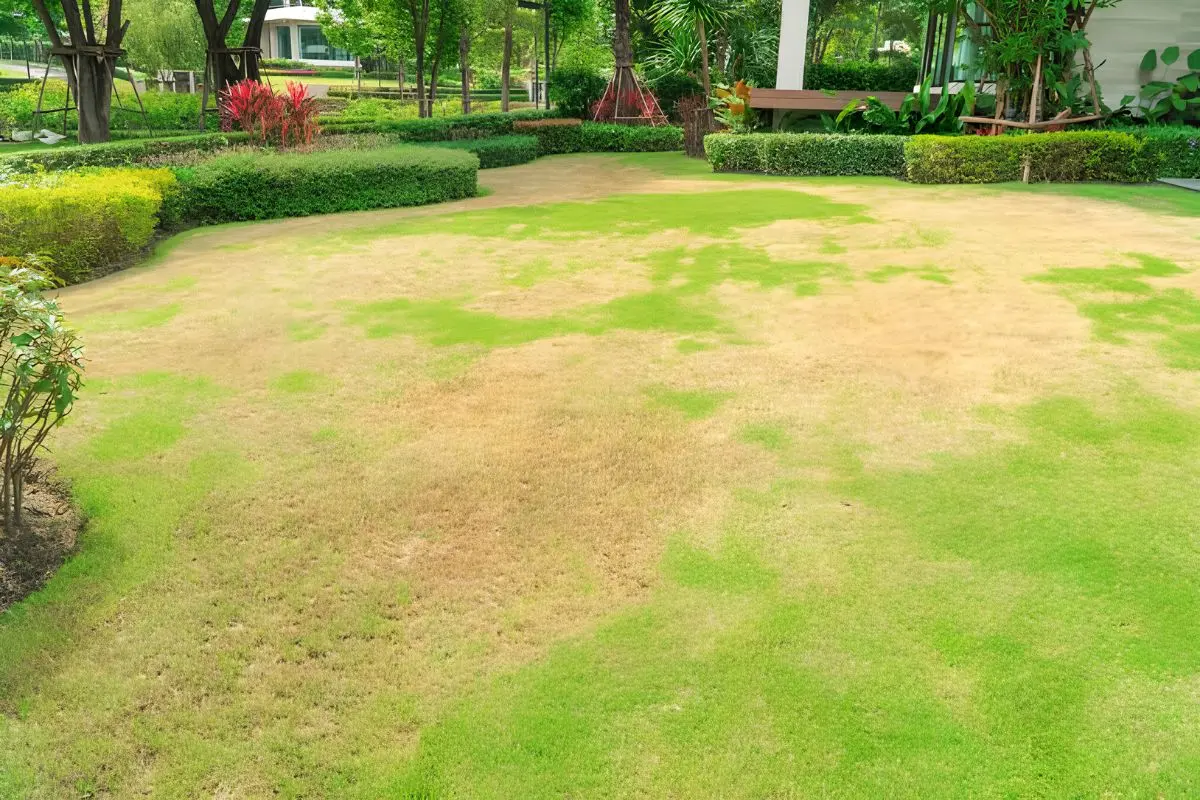
Most cases boil down to a few small mistakes. These are easy to make. They might include guessing an amount on a busy Saturday, setting the spreader incorrectly, or not flipping the bag to read the back. Causes can include:
- Overapplication: Too much product.
- Uneven spreading: Overlaps and wrong settings.
- Accidental spills: Granules left in a pile.
- Improper application: Not following the label.
Fertilizer type matters. So does the lawn’s health, since weak grass takes more of a beating.
What Should You Do Immediately After Fertilizer Burn Occurs?
Did the fertilizer just spill, or did the stripes only show up days later? A fresh spill is quick to handle. Scoop up what you can before it dissolves and leave that spot alone.
Damage that’s already visible takes a few more steps. Grab the bag. Or at least photograph the label. It has the watering directions, and if you end up calling a professional, they’ll want to know what you used.
Next, check whether the soil drains. Watering can flush salts down, but only if the water soaks in rather than pooling or running off. Then stop. Soaking a soggy lawn won’t speed anything up. Give it a few days and see whether the damage stays put.
How Can You Help a Fertilizer-Burned Lawn Recover?
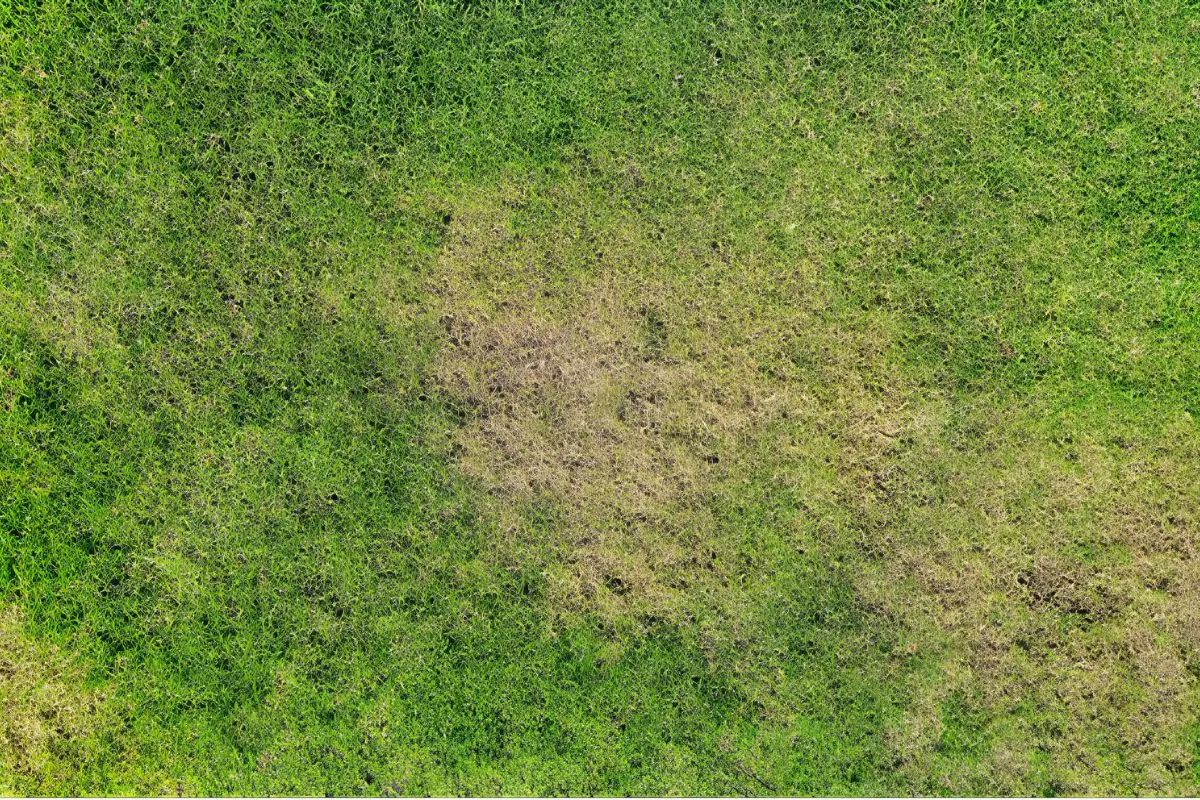
Your fertilizer burn recovery really comes down to the roots. If they are alive, then the grass may grow again once the salts have been flushed through. Make sure that the soil remains moist but not soaking wet. Don’t go straight for extra fertilizer either. That’s how you make it worse.
Checking for fertilizer burn on grass is mostly a waiting game. Fresh green blades in the damaged patch are a good sign. Brown that keeps spreading, or nothing coming up at all, points to something more serious.
Dead grass won’t come back, so you’ll be reseeding or laying sod. Season and patch size matter, and so does grass type. St. Augustine, for one, is rarely grown from seed.
How Can You Prevent Fertilizer Burn in the Future?
Start with a soil test from your county extension office. It usually costs less than a bag of fertilizer and tells you what your lawn needs. Measure the yard, then set your spreader using the label’s rate per 1,000 square feet. It’s easy to lose track of your last pass, and doubled-up strips burn first. Spilled granules? Scoop them up before the sprinkler comes on.
When Should You Call a Lawn Care Professional About Fertilizer Burn?

A small patch of grass that greens up with a little care can often be left alone. But large brown areas or spreading damage need attention. In those cases, it’s smart to call a lawn care specialist. They can check if fertilizer is the issue and plan what to do next.
If you live in Collin County, TX, CitiTurf is a lawn care provider to consider for your fertilization routine and lawn upkeep.
In Conclusion
Spot the signs of fertilizer burn early, and you’ve got time to fix it. Clear off the excess, water sensibly, watch for new growth, and follow the label instructions. The University of California’s lawn fertilizing guidance is a good place to read more.
Ever scorched your own lawn? Tell us what happened in the comments, and what finally got the grass growing again.