When rain turned the pitch into a mud bath during the 1954 World Cup final in Bern, West Germany faced a heavily favored Hungarian team. Armed with Adi Dassler’s revolutionary screw-in studs, the German squad swapped out traction mid-game to pull off a legendary upset that redefined sports engineering forever. Analyzing the incredible success story of Adidas demonstrates how technical breakthroughs can transform a localized shoe factory into an international athletic powerhouse.
The enterprise continuously aligns product development with elite performance standards. This is clearly seen in many of their successful ventures, like pioneering specialized footwear for Olympic sprinters and engineering advanced foam cushioning. Prioritizing functional research and development keeps the brand resilient across evolving global market conditions.
In this article, we will take a look at the journey that has brought Adidas to where it is today. So, let us begin!
The incredible success story of Adidas: history and first steps
Adidas, founded by Adolf “Adi” Dassler, began with the Dassler family’s shoe business after World War I. The brand gained early attention when American athlete Jesse Owens wore Dassler shoes during the 1936 Berlin Olympics and won four gold medals. This association helped build global awareness of the company and laid the foundation for the incredible success story of Adidas.
Adidas grew rapidly during the 1950s as soccer players adopted its lightweight shoes with screw-in cleats. The company later expanded into soccer balls in 1963 and clothing in 1967. Adidas remained a leading sports shoe brand for years, but competition grew stronger during the 1970s, especially as Nike expanded its presence.
After Adi Dassler died in 1978, Adidas faced declining market share during the 1980s, despite its strong connection with music and culture through Run-D.M.C. ’s “My Adidas.” Its sporting legacy also grew through major events, including the German football team’s 1954 World Cup victory while wearing Adidas shoes. These moments helped shape the brand’s global identity and long-term success.
Adidas’ high margin lifestyle franchises

Adidas has turned several old-school sneakers into major lifestyle franchises. The Samba, Gazelle, and Campus helped rebuild interest in the Adidas Originals business by connecting sports heritage with everyday fashion. Adidas describes these products as key “lighthouses” for the brand because they help attract attention and shape consumer demand.
Samba: The Samba became a major part of Adidas’ lifestyle revival. Its slim shape and football roots helped it move beyond sports into streetwear and fashion. Adidas continued adding new colors, materials, and collaborations to keep the franchise fresh. However, its recent growth also shows the risk of relying too heavily on one trend. By 2026, analysts were watching for signs that Samba demand was starting to cool.
Gazelle: The Gazelle has followed a similar path. Adidas used its long design history, new colors, premium materials, and fashion partnerships to make the shoe relevant to younger consumers. The company has also credited the Samba, Gazelle, and Spezial with helping reconnect Adidas with young female consumers. This shows how heritage products can attract new audiences without losing their original identity.
Campus: The Campus resurgence added another layer to the strategy. Originally linked to skateboarding, the Campus offered a bulkier look that complemented Adidas’ slim Terrace styles. Adidas said Gen Z and Gen Alpha consumers helped drive its renewed popularity through social media, with the model becoming more popular than some Terrace styles in certain markets.
The bigger business lesson is portfolio management. Adidas does not need one sneaker to remain the trend forever. Instead, it can use proven franchises to create demand, then introduce newer designs as consumer tastes change. The company has already expanded beyond Samba, Gazelle, and Campus with styles such as the Handball Spezial, SL72, Superstar, and newer low-profile models.
Ad campaigns that proved the prowess of Adidas’s brand
Here are some ad campaigns that played a crucial role in the incredible success story of Adidas.
1. The ‘all in or nothing’ campaign
The ‘All In Or Nothing’ ad is Adidas’ most expensive media campaign to date. It is led by a television commercial (see above) titled ‘Leo Messi’s World Cup Dream,’ which includes brand ambassadors like the eponymous Argentine striker, Dani Alves, and Luis Suárez, as well as a tune by Kanye West.
“This advertisement illustrates the “#allinornothing” mindset by demonstrating the devotion and commitment necessary to win this fantastic championship,” says Tom Ramsden, global brand marketing director of Adidas football. “Anything less than 100% effort will not win the World Cup. At Adidas, we think that being ‘all in’ is the only way to play sport, unleash your potential, and get the most out of sport’s greatest event,” he adds.
The TV commercial, created by TBWA/Worldwide and directed by Fernando Meirelles of the City of God, airs during coverage of tonight’s (May 23) Champions League final and is supported by social, in-store, and e-commerce pushes, as well as experiential and PR activity that will see a branded media hub on display throughout Brazil. Adidas’ marketing spending underscores the significance of the World Cup as it seeks to stave off competitor Nike’s drive for primacy in the football clothing industry.
2. Impossible is nothing
One of the most noteworthy campaigns for the firm, the campaign was created by 180/TBWA in Amsterdam, although TBWAChiatDay in San Francisco also contributed significantly.
This advertisement featured football great David Beckham and boxing hero Muhammad Ali.
That is why Adidas’ new “Impossible is Nothing” ad strikes the target in terms of inclusive marketing. The ad offers personal documentary-style videos of a range of athletes and other highly profiled people from across the globe, illustrating their paths to greatness.
What makes the advertising stand out is how diverse it is in terms of sports, genders, races, and cultures.
3. All Adidas
The “all Adidas” campaign highlights the brand’s reach across several sports, cultures, and lifestyles, with celebrities like football players Lionel Messi and David Beckham, NBA star Derrick Rose, and music sensation Katy Perry.
The Competitors of Adidas
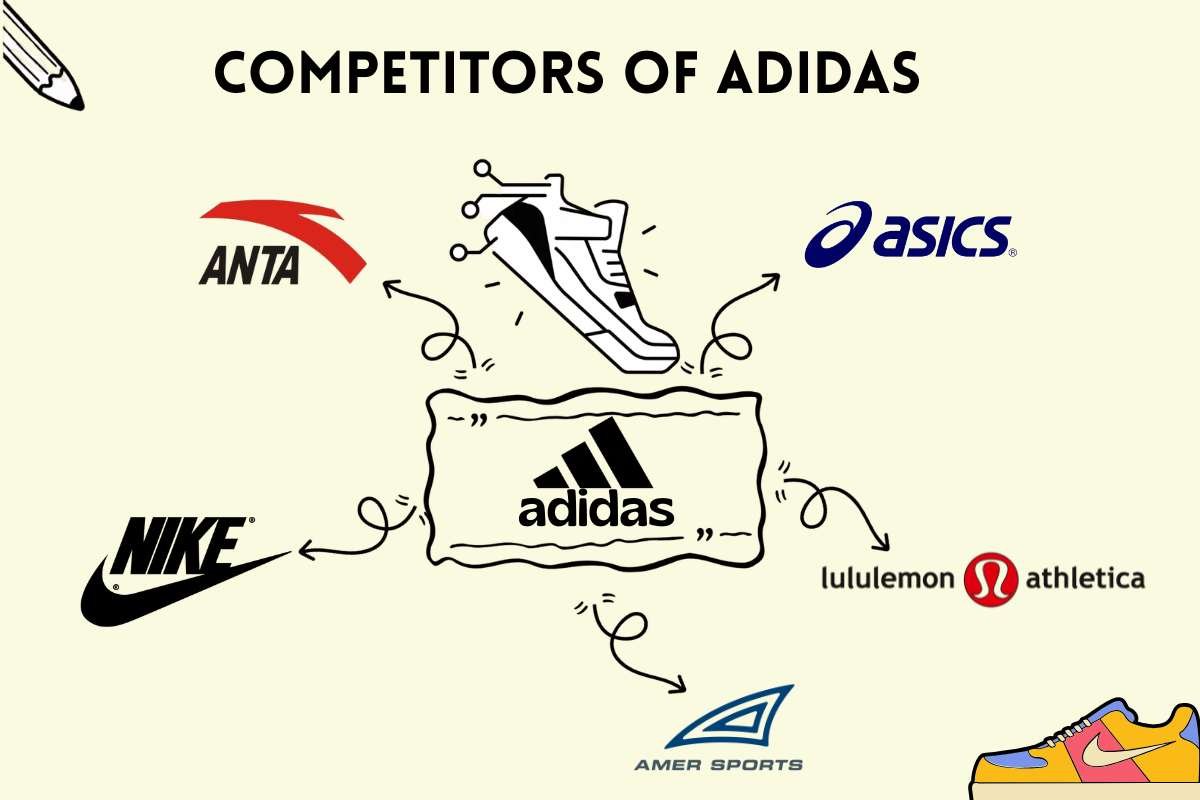
To establish itself among the best, companies have to be abreast of what’s going on in the market. New competitors emerge every day, posing critical challenges for companies and leaders. Adidas has also conquered many competitors to reach where it is today. Here are the prominent competitors in the incredible success story of Adidas that made life difficult for the company.
1. Nike
Nike is the only appropriate response. It is one of the most trusted brands for inspiration and motivation in the lives of all people who have a body. Nike vs. Adidas has long been a topic of debate among people. Thanks to its constant pursuit of excellence, Nike has propelled Adidas to come up with new, more innovative products.
2. Anta Sports
Anta Sports has become a major force in the global sportswear market, particularly through its strong position in China. The company operates several sports brands and uses a multi-brand strategy to reach different customer groups. In 2025, Anta Sports reported revenue of RMB 80.2 billion, up 13.3% from the previous year. Its growing scale and wider brand portfolio make it an increasingly important competitor for Adidas.
3. ASICS Corporation
ASICS is a strong competitor in performance footwear, especially in running. The Japanese company has built its reputation around sports science, product technology, and athlete-focused footwear. Its focus on running gives it a clear position against Adidas in one of the industry’s most competitive categories. ASICS has also expanded its lifestyle presence, allowing it to compete with Adidas beyond performance sports.
4. Amer Sports
Amer Sports competes with Adidas through a portfolio of well-known sports and outdoor brands, including Arc’teryx, Salomon, and Wilson. Its strong presence in outdoor sports, running, and technical apparel has helped the company expand rapidly. Amer Sports reported $6.57 billion in revenue in 2025, with Salomon sales growing 35% to more than $2 billion. This growth makes Amer Sports an increasingly important rival in performance and lifestyle categories.
5. Lululemon Athletica
Lululemon Athletica has built a strong position in premium athletic apparel, especially in yoga, training, running, and lifestyle wear. The company competes with Adidas through its focus on technical fabrics, product quality, and a direct connection with customers. Its women’s category remains its largest business area, while its men’s range continues to support growth. In 2025, lululemon reported $11.1 billion in revenue.
The brand also stands out through its product development and retail strategy. lululemon uses customer feedback to improve product design, fit, and performance.
To Summarize:
| Rank | Company | Market Cap |
| 1 | Nike | $56.96 billion |
| 2 | Adidas | $30.32 billion |
| 3 | Anta Sports | $26.88 billion |
| 4 | ASICS Corporation | $19.36 billion |
| 5 | Amer Sports | $17.18 billion |
| 6 | lululemon athletica | $11.13 billion |
The partners in the incredible success story of Adidas
Over its tenure, Adidas has collaborated with several brands and personalities to take its product to the next level. Here are a couple of interesting collaborations in the incredible success story of Adidas.
1. The Adidas Yeezy collaboration
Some of adidas’ most significant partnerships have often included hip-hop stars. Kanye YEEZY-branded shoes, Pharrell Williams, Pusha-T, and Missy Elliott endorsements have all been launched by the label. Adidas’ influence on hip-hop can be traced back to the mid-1980s and Run-DMC’s adoration of the brand’s tracksuits and shell-toe Superstar shoes, which culminated in the 1986 song “My Adidas.” Adidas Samba, adidas Stan Smith, and the classic shell-toe adidas Superstar shapes are among the most well-known shoe types.
The sportswear behemoth has also collaborated with streetwear companies like A Bathing Ape and Palace Skateboards, as well as high fashion designers like Yohji Yamamoto’s Y-3 collection, Raf Simons, Rick Owens, Stella McCartney, and Alexander Wang.
2. Collaboration with Manchester United
Adidas and Manchester United agreed to a ten-year kit partnership in July 2014, commencing with the 2015-16 Premier League season. This kit agreement has a guaranteed minimum value of £750 million (US$1.29 billion), making it the most lucrative kit deal in sports history. Nike has been replaced as the club’s worldwide equipment supplier.
Andy Murray, the former World No. 1 tennis player, was announced as Adidas’ highest-paid talent in November 2009, with a five-year deal allegedly worth $24.5 million. They have also sponsored the ball-boy and ball-girl outfits at the ATP Tennis Tournament in Mason in Cincinnati. Adidas also has collaborations with Malibu Tennis Camp, Green Fitness GmbH, and Schöler & Micke Sportartikel Vertriebs GmbH.
Direct-to-consumer commerce and sustainability strategy of Adidas
Adidas has strengthened its direct-to-consumer strategy through its online store, company-owned shops, and digital membership program. In 2025, these channels generated 40% of total net sales. The company also uses adiClub to offer members exclusive products, rewards, and personalized experiences.
Sustainability remains another major focus for Adidas. The company has worked to increase the use of recycled textile waste.
Adidas is also reducing emissions across its operations and supply chain. The company is collaborating with suppliers to increase renewable energy use and reduce carbon emissions while developing lower-impact materials.
The company is also testing circular business models, including product take-back programs, sneaker cleaning, rental services, and products designed for recycling. These efforts show how the incredible success story of Adidas is combining digital sales growth with changes in how it designs, makes, and manages products.
Conclusion:
Long-term commercial resilience depends on an enterprise’s ability to align core technical performance with evolving consumer cultures. By continuously updating manufacturing models while protecting brand equity, legacy businesses can sustain market dominance across multiple economic shifts.
Studying the incredible success story of Adidas demonstrates how balancing specialized functional innovation with broad market relevance secures lasting commercial leadership. Organizations that maintain strict quality standards while adapting to broader lifestyle trends build a dependable framework for sustainable international growth.
Frequently Asked Questions
1. What made Adi Dassler’s early business strategy so effective in sports manufacturing?
He focused directly on performance feedback from world-class athletes, customizing product designs to solve specific physical challenges like traction and weight.
2. How did the company successfully transition from pure sports equipment into lifestyle fashion?
By partnering with iconic musicians, designers, and cultural figures, the enterprise expanded its athletic footwear franchises into recognized streetwear staples.
3. What role did major sporting events play in the incredible success story of Adidas?
High-profile athletic moments served as global testing grounds, proving the real-world value of new product technologies to millions of international viewers.
4. How has the company adapted its manufacturing framework to meet modern sustainability goals?
Management integrated recycled ocean plastics and circular material strategies into high-volume product lines, proving that sustainable sourcing can scale profitably.
5. What key operational lesson can other businesses learn from the brand’s history?
Sustained market leadership requires balancing core product performance with agile marketing that appeals to multiple consumer generations.