The morning after surgery rarely looks like the recovery people imagine. There is swelling, unfamiliar sensation, and a long list of small questions that nobody thought to ask before.
When an amputation happens above the knee, the road ahead touches balance, energy, confidence, and the ordinary rhythm of getting through a day. None of that is solved in a week, and pretending otherwise helps no one. What tends to help is a clear, honest picture of the Above-knee amputation recovery timeline, so the process feels less like a mystery and more like a series of steps that can be learned.
This overview is meant for general understanding only. Every person heals on a different timeline, and decisions about care belong in the hands of a qualified clinical team who can examine an individual situation. With that framing in place, here is what the first year after an above-knee amputation frequently involves.
Understanding the Above-Knee Level
An above-knee amputation, sometimes called a transfemoral amputation, removes the limb through the thigh bone. Because the knee joint is no longer present, the body loses a natural point of control that once handled bending, shock absorption, and much of the fine adjustment involved in walking. That single fact shapes almost everything that follows, from how a person sits to how they climb a single step at the front door.
The residual limb, often called the residuum, becomes the point of connection for everything that comes later. In the early weeks it changes shape as swelling settles and tissue heals. Clinicians frequently use compression to encourage a stable, tapered shape that will eventually work well inside a socket. Patience during this window matters, because rushing the timeline can create fitting problems down the road.
Emotionally, the above-knee level asks a lot. People describe a mix of relief that a painful chapter has ended and grief for how movement used to feel. Managing these emotions is an essential part of the above-knee amputation recovery timeline, and peer support, counseling, or simply talking with others who have walked this path tends to ease the adjustment far more than trying to power through alone.
It also helps to understand that the definition of a good outcome is personal. For one person, success means walking the dog around the block each evening. For another, it means standing long enough to cook dinner or getting back on a bicycle. Setting goals that reflect a real life, rather than an abstract benchmark, keeps motivation grounded and makes each small gain feel like the meaningful progress it truly is.
What Goes Into a Transfemoral Prosthesis?

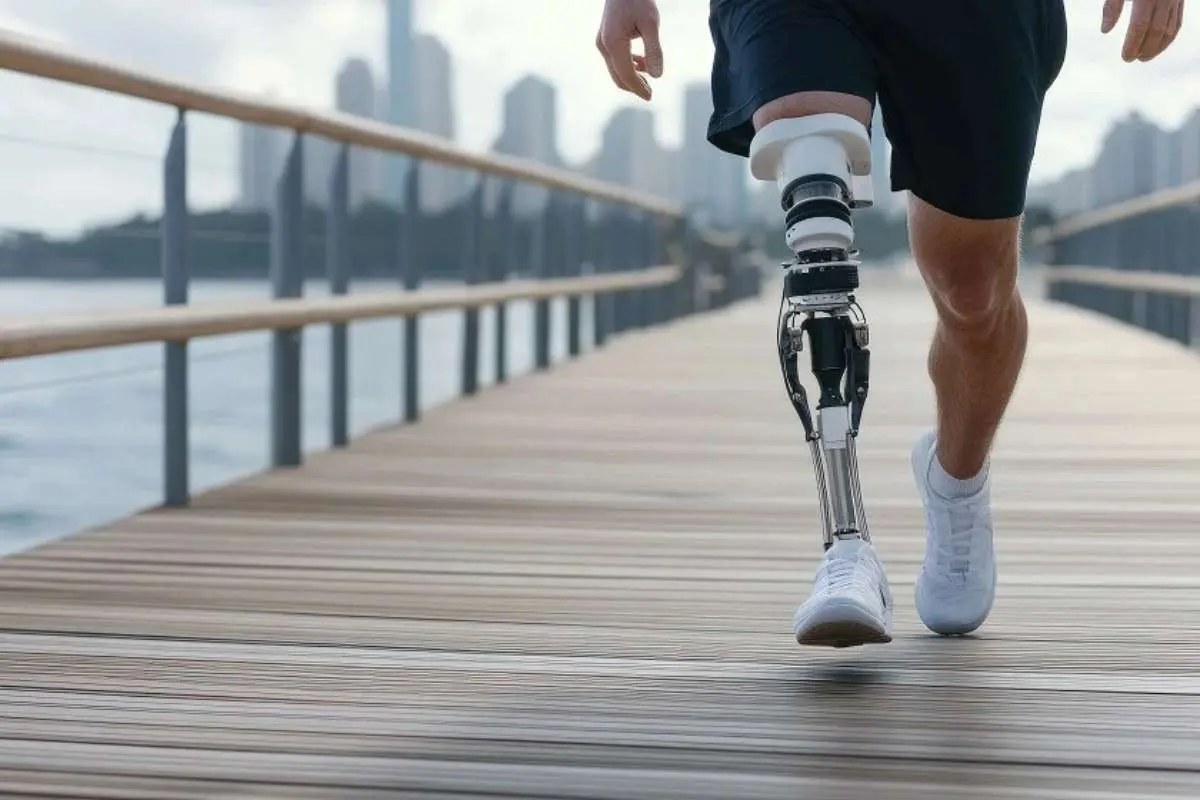
A device built for this level is a system rather than a single part, and each component does a specific job. A prosthetic leg above knee generally combines a socket that holds the residual limb, a knee unit that substitutes for the missing joint, a shank that spans the lower leg, and a foot that meets the ground. The way these pieces are selected and tuned depends on a person’s strength, goals, and daily environment.
The socket is arguably the most personal element. It is shaped to an individual limb, and comfort there determines whether someone wears the device for a full day or abandons it by lunchtime. Prosthetists spend considerable effort on socket fit precisely because a poor connection undermines every other feature, no matter how advanced.
Knee units vary widely. Some rely on mechanical resistance, while others use hydraulic or microprocessor control to adjust to walking speed and terrain in real time. More technology is not automatically better for everyone; the right choice reflects how a person actually lives. A cautious walker on flat indoor floors has different needs than someone returning to an active outdoor job, and honest conversation about those goals guides the selection.
The Fitting and Alignment Process
Fitting is less a single appointment and more a series of refinements. Early on, many people receive a temporary or preparatory device while the limb continues to mature. This interim stage allows practice with weight-bearing and gait without committing to a definitive socket that might no longer fit once swelling resolves.
Alignment is the quiet art behind comfortable walking. Small changes in the angle and position of components can shift how weight travels through the body with each step. A prosthetist observes gait, listens to feedback about pressure points, and makes incremental adjustments. What feels like a minor tweak can transform a limp into a smoother, less tiring stride.
Feedback from the wearer is essential here, and there is no reward for silence. Reporting a rub, a pinch, or a sense of instability gives the clinical team the information they need to solve problems early. Recovery works best as a partnership, with the person who wears the device treated as an expert on their own experience.
The setting for these fittings matters more than people expect. A quiet, unhurried appointment gives a person room to describe subtle sensations that get lost in a rushed visit. Some clinics record gait on video so that patient and prosthetist can review it together, spotting patterns that are hard to feel in the moment. That shared look at the footage often turns a vague complaint into a specific, fixable observation, and it helps a person understand why a particular adjustment is being made rather than simply accepting it on faith.
Relearning Movement and Building Endurance

Learning to move again is a genuine athletic project, even for people who never thought of themselves that way. Walking with a well-chosen prosthetic leg draws on core strength, hip control, and stamina that may have faded during the pre-surgery period. Rehabilitation usually starts with basics: standing, shifting weight, and trusting the device to hold.
Physical therapists build progress in layers. First comes balance and confidence between parallel bars, then short distances with a walker or cane, then gradually longer and more varied terrain. Falls, or the fear of them, are a common hurdle, and therapists teach both prevention and how to get up safely if a fall does happen. That second skill removes a surprising amount of anxiety.
Energy is the hidden variable. Walking above the knee level demands more effort than many expect, since the body compensates for the absent joint. Fatigue in the early months is not a sign of failure. It is a normal reflection of new demands, and endurance typically improves with consistent, well-paced practice rather than sudden heroic effort.
Prosthetic Care Across Different Ages
Age changes the picture in meaningful ways. Older adults may prioritize stability and safety on stairs, while younger adults often push for higher activity and a fuller return to work or sport. How age impacts the above-knee amputation recovery timeline varies for everyone, but neither set of goals is more valid than the other good care simply meets people where they are.
The needs of the very young sit in their own category. childrens prosthetics must account for growth, which means devices are revisited and adjusted far more often than an adult’s. A child’s world also revolves around play, so durability and the freedom to run, climb, and simply be a kid weigh heavily in the design conversation. Families become part of the care team, learning to spot when a socket has grown tight.
Across every age group, follow-up is not optional busywork. Bodies change, activity levels shift, and components wear over time. Scheduled reviews catch small issues before they become painful or unsafe. Thinking of prosthetic care as an ongoing relationship, rather than a one-time purchase, tends to produce far better long-term outcomes.
Daily Living and the Return to Routine

Beyond the clinic, real life is where progress is measured. Getting dressed, carrying groceries, driving, and returning to a job each present puzzles that are usually solvable with practice and a few adaptations. Occupational therapists specialize in exactly these everyday tasks, and their input often makes the difference between managing and thriving.
Skin health deserves steady attention. The residual limb lives inside a socket for hours at a time, so daily cleaning, careful inspection, and prompt reporting of redness or irritation protect against bigger problems. Simple routines, done consistently, prevent most common complications.
Perhaps the most underrated factor is community. People who connect with support groups, whether in person or online, tend to gather practical tips and emotional resilience that no manual provides. Hearing how someone else handled a wedding, a hiking trip, or a return to the office turns abstract worry into concrete, borrowed confidence.
Practical adaptations at home smooth the transition in ways that feel small but add up. A sturdy chair with armrests makes standing easier, a handrail on both sides of a staircase adds security, and a clear path through cluttered rooms reduces the daily risk of a stumble. Many people rearrange their most-used items to waist height so that bending and reaching become rare rather than constant. These changes are not permanent surrender to limitation; they are sensible groundwork that frees energy for the tasks that matter most.
Work deserves its own honest conversation. Some roles can be resumed with minor accommodations, while others may need a phased return or a shift in duties for a period. Employers are often more flexible than people fear, especially when a clear plan is presented. Vocational counselors can help map out that plan, and occupational therapists can suggest tools or workstation changes that make a job feasible again. The goal is not to prove toughness by rushing back, but to return in a way that lasts.
Moving Forward at Your Own Pace
Navigating the Above-knee amputation recovery timeline is rarely a straight line. Good weeks and hard weeks trade places, and comparing your progress to anyone else’s tends to mislead more than motivate. What matters is steady movement toward the life you want to live, supported by a care team that knows your situation in detail.
If you or someone close to you is facing this journey, the most useful next step is an honest conversation with qualified clinicians who can evaluate the specifics. This article offers general information and personal reflection only, not medical advice, and it should not replace guidance from your own care providers. With patience, support, and the right team, the ordinary rhythm of daily life is very much within reach.
Read More: How to Do Stepper Exercise at Home for Maximum Results?