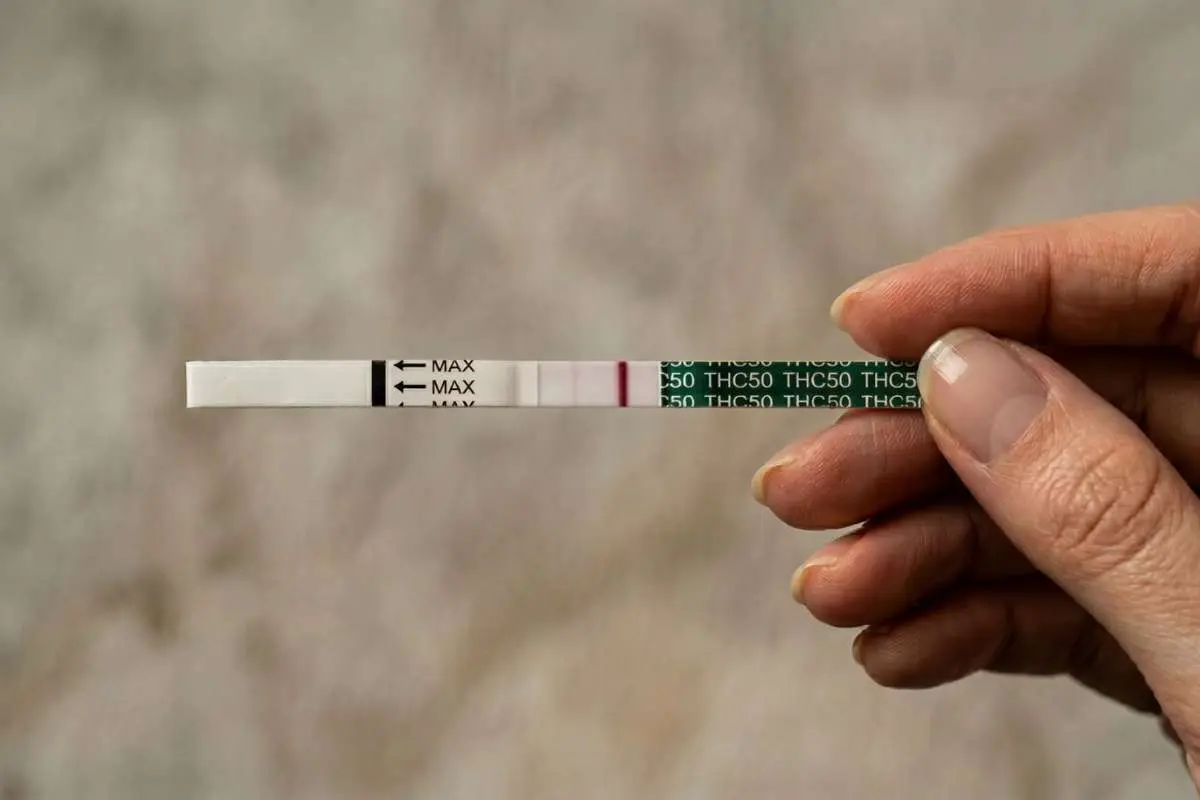
At-home urine drug tests give you a chance to see where you stand before anyone else does. When a formal screen is coming up, and you’d rather not walk in blind, that matters.
But these tests only work in your favor if you use them right. A test read too early, dipped too long, or interpreted the wrong way can send you into a panic over nothing, or give you false confidence. So let’s go through the whole process, from what these tests are to how to read a line that’s barely there.
What Is At-Home Drug Testing and Who Needs It?
At-home drug testing is exactly what it sounds like. You collect a urine sample in private, use a test strip or dip card, and read the result yourself in a few minutes. There’s no clinic, no appointment, and no waiting on a lab (nor giving them your personal information).
The people who reach for these tests come from all over:
- Job seekers who want to check their status before a pre-employment screen
- Regular THC users who quit and want to track how their levels are dropping
- Parents keeping an eye on a family situation
- People in recovery programs monitoring their own progress
- Anyone who simply wants privacy and clarity without involving a third party
What connects all of them is the same thing: they want information, and they want it on their own terms, without giving any away.
The Advantages of Testing at Home
The biggest advantage is control. You decide when to test, how often, and who finds out. That kind of privacy is hard to get anywhere else.
Beyond that, at-home tests are cheap compared to a lab visit, and the results come back in minutes instead of days. You can test again next week to watch a trend, which is something a single official screen can never show you. For anyone waiting out a THC detection window, that trend tells quite a lot.
This is the whole idea behind an at-home drug test provider like Exploro: giving you a private, affordable way to check yourself on your own schedule instead of waiting on someone else’s.
Just keep expectations realistic. Home tests are screening tools rather than confirmatory lab tests. They tell you whether a drug is likely present above a cutoff, but not the exact amount. Treat them as a heads-up rather than a final verdict.
How to Correctly Use the Tests at Home?

Most mistakes happen before you ever read a result. A little care during collection goes a long way toward getting an answer you can trust.
A few things that matter more than people expect:
- Use first-morning urine when possible. It’s the most concentrated sample of the day, which gives you the most realistic reading against a cutoff.
- Check the temperature and freshness. Test the sample soon after collecting it. A sample left sitting around can throw off the result.
- Follow the dip time exactly. Each test tells you how long to submerge the strip or card and to what depth. Going deeper or longer than instructed doesn’t make the test more accurate. It just muddies it.
- Lay the test flat and wait. Set it on a level surface and let it develop for the full time listed, usually around five minutes.
- Read it in good light. A faint line is easy to miss under a dim bathroom bulb.
- Avoid the temptation to over-test. Running a strip three times a day won’t change your levels, and it tends to feed anxiety rather than settle it. Once a day, or even every few days, is plenty when you’re tracking a trend.
Interpreting the Results

Reading a urine drug test trips people up more than actually taking one, mostly because the logic runs backwards from what you’d expect.
On most strips and dip cards, you’re looking for two regions: a control line (C) and a test line (T). The control line confirms the test worked. If it doesn’t appear at all, the test is invalid, and you should retest with a fresh strip.
The test line is where the logic flips. With these tests, a visible test line means a negative result, and no line means the drug was detected above the cutoff. So:
- Two lines (C and T): Negative. The drug is below the cutoff.
- One line (C only): Non-negative. The drug may be present at or above the cutoff.
- No control line: Invalid. Retest.
Read the result inside the time window printed in the instructions, usually around five minutes. Reading too early or letting the strip sit far too long can both throw off what you see.
A single line (the C line) means that the test is positive.
What About a Faint Line?

Faint lines cause more worry than anything else in this process, so let’s be clear about it. Any visible test line, even a barely-there ghost of one, counts as a negative result.
Two lines (C and T) means that the test is negative, even though the T line is faint.
The intensity of the line has nothing to do with how much drug is in your sample in a way you can measure by eye. A faint line simply means your metabolite level is somewhere below the cutoff but close enough that the test isn’t producing a bold line. It still counts as below the cutoff.
If you’re watching a faint line get stronger day by day, that’s a good sign for a THC user in detox. It usually means your levels are still dropping. Don’t read a faint line as a positive, and don’t let it send you into a spiral. Below the cutoff is below the cutoff.
One more note. If you’re preparing for an official screen, remember that a home test uses the same cutoff logic, but a formal lab can run a confirmatory test at a much lower level. A home negative is reassuring, though it isn’t a guarantee.
False Positives: Medications and Foods That Can Trigger Them
Here’s something a lot of people don’t realize until it happens to them. A positive screen doesn’t always mean what you think it means.
Home tests and initial lab screens both rely on immunoassays, which look for substances that resemble the target drug. The trouble is that plenty of everyday medications resemble those targets closely enough to cross-react. Researchers have documented false positives from a long list of common drugs, including bupropion, sertraline, venlafaxine, diphenhydramine, ibuprofen, naproxen, dextromethorphan, and pseudoephedrine, among many others (Brahm et al., 2010).
According to the NIH’s StatPearls review on drug testing, immunoassays are especially prone to this kind of interference, and any unexpected result should be confirmed with a more specific method like GC-MS before it’s taken as fact.
Common culprits worth knowing about:
- Certain antidepressants and the smoking-cessation drug bupropion
- Over-the-counter antihistamines such as diphenhydramine
- NSAID painkillers like ibuprofen and naproxen
- Cold and cough remedies containing dextromethorphan or pseudoephedrine
- Some antibiotics in the quinolone family
- Poppy seeds, which have a real reputation for triggering opiate results
None of this makes the tests useless. It means a single positive is a reason to ask questions before you assume the worst. If you take any regular medication, know that it could show up, and be ready to disclose it to a medical review officer during an official test.
At-Home Urine Drug Test Types

Not every test checks for the same things. Picking the right one matters, because a mismatch between your test and the official screen you’re preparing for makes the whole exercise less useful.
THC-Only Tests
These check for a single thing: marijuana metabolites, specifically THC-COOH. Most consumer THC tests use a 50 ng/mL cutoff, which is the same level used in a lot of workplace screening. That makes them a solid match if you’re preparing for a standard employment test.
If you’re a former regular user watching your levels fall, a 50 ng/mL test like the Exploro THC Urine Drug Test lets you check yourself repeatedly and see when you finally drop below the line. Testing over several days tells you far more than a single result ever could.
5-Panel Tests (DOT-Like)
The 5-panel is the workhorse of employment testing. It screens for the five substances most commonly checked in regulated settings: THC, cocaine, amphetamines, opiates, and PCP. This is the panel that mirrors what many employers, including DOT-regulated ones, actually run.
If you don’t know exactly what your employer tests for, the 5-panel is usually the safest bet for a realistic preview.
7-Panel Tests (Extended)
The extended 7-panel covers everything the 5-panel does and adds substances like benzodiazepines and barbiturates. It shows up less often, but certain fields lean on it, particularly healthcare, government roles, and jobs involving heavy machinery.
If you take prescription medication that falls into one of these added categories, an extended panel gives you a more complete picture of what an official test might flag.
Conclusion
At-home urine drug tests earn their place for a simple reason. They put information back in your hands.
For the price of a light lunch, you get a private answer in minutes, without booking anything or explaining yourself to anyone. Use them correctly, and they turn a stressful unknown into something you can actually plan around. Follow the instructions, read inside the time window, and remember that any visible line means negative.
These tests won’t replace a lab, and they were never meant to. What they offer is convenience, affordability, and privacy, which is often exactly what you need when a test is on the horizon and you just want to know where you stand.
Read More: 5-Panel Drug Test: What You Need to Know?