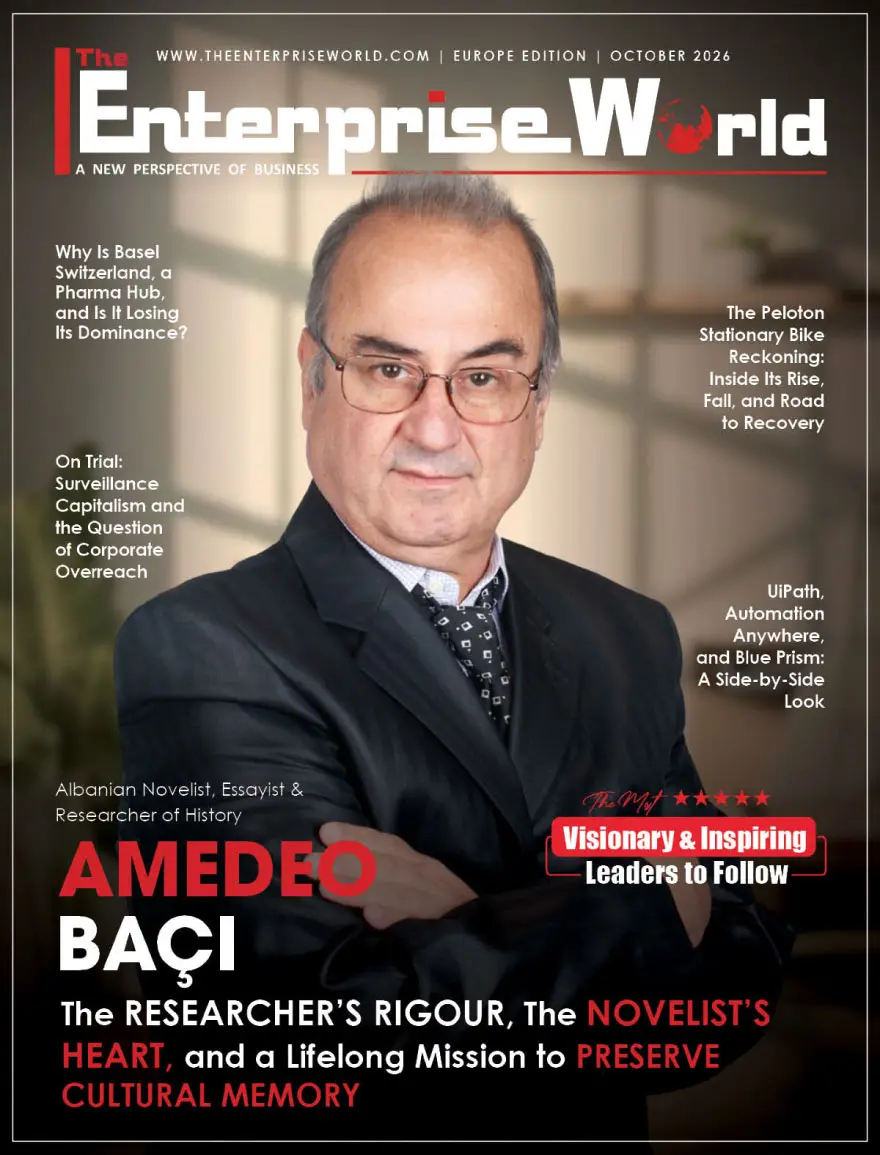
Literature has always served as humanity’s most enduring bridge between the past and the present, yet few writers embody this responsibility with the intellectual rigour and emotional depth that define the career of Amedeo Baçi. A distinguished Albanian Novelist, Essayist & Researcher of History, Baçi has devoted his life to a singular conviction: that literature can illuminate the human meaning of history while preserving memory for generations that did not experience it themselves. His body of work transcends borders and generations, earning international recognition including 22 Noble World Records, the 2018 NABE Pinnacle Book Achievement Award for Between Heartaches and Love, and his documented 2026 Nobel Prize in Literature nomination by Prof. Dr. Klara Kodra.
What sets him apart is not merely his prolific output, but his unwavering commitment to approaching historical periods not as backgrounds for fiction, but as living environments that shaped real human destinies. From his award-winning novel Between Heartaches and Love to his ambitious literary cycles exploring Albanian history and cultural identity, his work reflects a lifelong dedication to preserving the voices, emotions, and everyday lives that official records so often overlook. In this exclusive cover story, The Enterprise World invites readers to explore the journey, philosophy, and enduring legacy of a writer who does not merely document history but ensures its human essence survives for generations yet to come.
Memory, family, and the need to understand
Amedeo Baçi’s literary journey began not with the ambition to build a large body of work, but with a profound need to understand human experience through storytelling. Drawn to people’s inner lives, their loves, losses, choices, contradictions, and memories, he explored how individual lives are shaped by society and historical circumstances. The care and influence of his sister during his childhood cultivated in him a love of books, music, history, and art, which became part of the inner landscape from which his writing emerged. Over time, writing became more than imagination, as he came to understand literature as a form of memory, preserving experiences that might otherwise disappear and giving human dimension to historical events.
This naturally brought Amedeo Baçi closer to historical research, and as his literary work expanded, research became inseparable from his creative process. He learned to approach historical periods not merely as backgrounds for fiction, but as living environments that shaped real human destinies. His development as an Albanian Novelist, Essayist, and Researcher of History has therefore been gradual and interconnected, with each role growing from the same conviction: that literature can illuminate the human meaning of history while preserving memory for generations that did not experience it themselves.
The human dimension behind historical forces
The central thread running through Amedeo Baçi’s work is the relationship between the individual, history, memory, and identity. Whether writing a novel, an essay, or researching a historical subject, he explores what happens to human beings when their private lives encounter the larger forces of their time. History is never only about major events, political decisions, wars, or institutions, because behind every historical process are individual lives of people who love, suffer, hope, make choices, resist, adapt, remember, and sometimes disappear from the official record. Literature restores that human dimension, while personal and collective memory preserve traces before they disappear.
He does not want readers simply to receive conclusions from his books, but hopes they enter into a dialogue with them to question, compare, remember, and reflect. If his writing can encourage a reader to see history not as something dead behind us, but as a living presence that continues to shape who we are, then literature has fulfilled one of its most meaningful purposes. This conviction lies at the heart of his work, connecting his novels, essays, and research into a unified literary vision that illuminates the human meaning of history while preserving memory for generations that did not experience it themselves.

A body of work built on interconnected cycles
Amedeo Baçi finds it difficult to isolate only a few works because much of his writing has developed through interconnected cycles. Between Heartaches and Love draws substantially on real-life experiences, personal diaries, and factual events, although these materials are shaped within the literary structure of a novel. Love can reveal vulnerability, while pain can deepen attachment, memory, and emotional growth. Its development into a broader autobiographical narrative reflects his creative process: a story does not always end when a book ends, as its characters, memories, emotional tensions, and unanswered questions may demand a larger literary space.
Another major undertaking is his Saga e jetës (Personal History Saga), developed through autobiographical memory, diaries, personal files, notes, and recollections, examining how individual life intersects with family, society, cultural identity, and historical change. His historical literary projects explore Albanian history through research and literary reconstruction. Across his work, one question repeatedly returns: what happens to ordinary human lives when history changes direction? This connects his novels, sagas, and research projects into a unified body of work seeking to understand human experience within the larger currents of time.
The discipline of research, building a working archive
Historical research, for Amedeo Baçi, begins long before the actual writing of a novel. His diaries, personal files, notes, annotations, and extensively underlined reading materials have formed a working archive of facts, ideas, testimonies, and observations accumulated over time. When approaching a historical subject, he avoids depending on a single source or interpretation, preferring to compare different accounts, examine their contexts, distinguish documented facts from interpretations, and pay attention to contradictions between sources, which sometimes reveal how differently the same historical reality was experienced, remembered, or interpreted.
He considers it essential to maintain a clear boundary between historical evidence and literary reconstruction. A novelist may enter spaces historical documents cannot fully illuminate, including fears, hopes, silences, moral dilemmas, and emotional worlds, but literary imagination should never deliberately distort an established historical fact. For him, intellectual responsibility begins with respect for evidence, awareness of the limits of what we can know, and the honesty to distinguish what history documents from what literature interprets. This disciplined approach keeps his work responsible and intellectually rigorous while allowing space for creative exploration.
The responsibility of the historical novelist
Amedeo Baçi approaches the balance between factual accuracy and literary storytelling with a clear principle: the two have different responsibilities, and he never confuses them. Where historical evidence exists, it establishes boundaries that literary imagination should respect. Literature can explore the human experience surrounding those facts, but it should not alter a documented event merely to make the narrative more dramatic. His literary cycle Enver Hoxha – The Light and Shadows of an Era examines a complex and contested period of twentieth-century Albanian history, preserving its light and shadows while examining institutions, social transformations, political mechanisms, and the human lives shaped by them.
Another demanding project was the novelistic saga An Event at the Jesuit House, devoted to the Albanian Union, which required considerable research in the archives of the Ministry of Internal Affairs. That archival work was essential to keep the artistic narrative faithful to the historical trajectory rather than reshape the past for dramatic convenience. His balance is clear: where evidence exists, he respects it; where the archive is silent, literature may explore human possibility, but should never present imagination as documented truth. This principle guides his approach to every historical subject.

How injustice strengthened a writer’s resolve
One of Amedeo Baçi’s most difficult experiences became one of the clearest expressions of what writing means to him. He titled a novel I Wrote and Read Even with Handcuffs on My Hands, referring to a real episode during an extradition from Milan Malpensa to Tirana’s Rinas Airport, when even in handcuffs he continued to read and write. He experienced that period as profound injustice, yet what mattered more was what could not be taken: the freedom to think, create, and preserve the courage to continue. Falling is not the final defeat; the decisive moment comes afterwards, when we find the courage to rise again.
He has often expressed this philosophy in simple terms: if you lose money, you have lost nothing essential; if you lose your honour and dignity, you have lost something precious; but if you lose your courage, you have lost everything. For him, courage does not mean never experiencing fear, pain, injustice, or defeat, but refusing to allow them to determine the final meaning of one’s life. Even when deprived of physical freedom, as long as the mind remains free and the courage to rise again survives, the story is not over. This belief shapes his resilience, writing, and research.
Milestones as responsibilities, international recognition and Albanian letters
Amedeo Baçi reflects on the achievements and international recognition that have shaped his literary journey, viewing each milestone not as a destination but as a responsibility.
- Achievements as responsibilities: Amedeo Baçi is grateful for the recognition accompanying his work, but sees achievements not as destinations but as responsibilities.
- Key milestones: These include the 22 Noble World Records for his long-form literary fiction and the 2018 NABE Pinnacle Book Achievement Award Best Romantic Novel for Between Heartaches and Love.
- International possibilities: Recognition has created new possibilities through translations, publications, interviews, and media exposure beyond Albania.
- Nobel nomination: Amedeo Baçi’s documented 2026 Nobel Prize in Literature nomination by Prof. Dr. Klara Kodra represents an expression of confidence in his literary journey.
- International media: His Brainz Magazine interview, Why History Needs Novelists, Not Just Historians, explored literature, historical consciousness, and the novelist’s responsibility toward memory.
- The Enterprise World collaboration: This cover-story collaboration extends that dialogue toward a broader international readership and extends that dialogue toward a broader international readership and contributes to Amedeo Baçi’s growing international media presence.
- Contribution to Albanian letters: Every international platform carries a culture, a memory, a tradition, making such recognition a modest contribution to Albanian letters.
Preserving the human experience behind historical events
Literature, for Amedeo Baçi, has become a form of cultural responsibility, preserving the human experience of history, including emotions, relationships, fears, hopes, and everyday lives that official documents cannot fully capture. This matters deeply to Albanian history and cultural identity, shaped by profound transformations, isolation, migration, and ideological conflict. Through his historical novels and literary cycles, he creates bridges between individual and collective memory, focusing not only on prominent personalities but also on families, communities, traditions, language, migration, and ordinary people whose lives carry the imprint of their time.
He feels a particular responsibility toward those parts of Albanian history that remain contested, insufficiently explored, forgotten, or interpreted through political divisions. His purpose is not to impose a definitive judgment but to preserve complexity, allowing different voices, contradictions, light and shadow to remain visible. He hopes to preserve traces of human experience so future generations may not only know what happened, but also imagine what it meant to live through it. This conviction shapes every literary project and research undertaking, grounding his creative vision in duty toward memory and cultural heritage.
From personal memory to a literary universe.
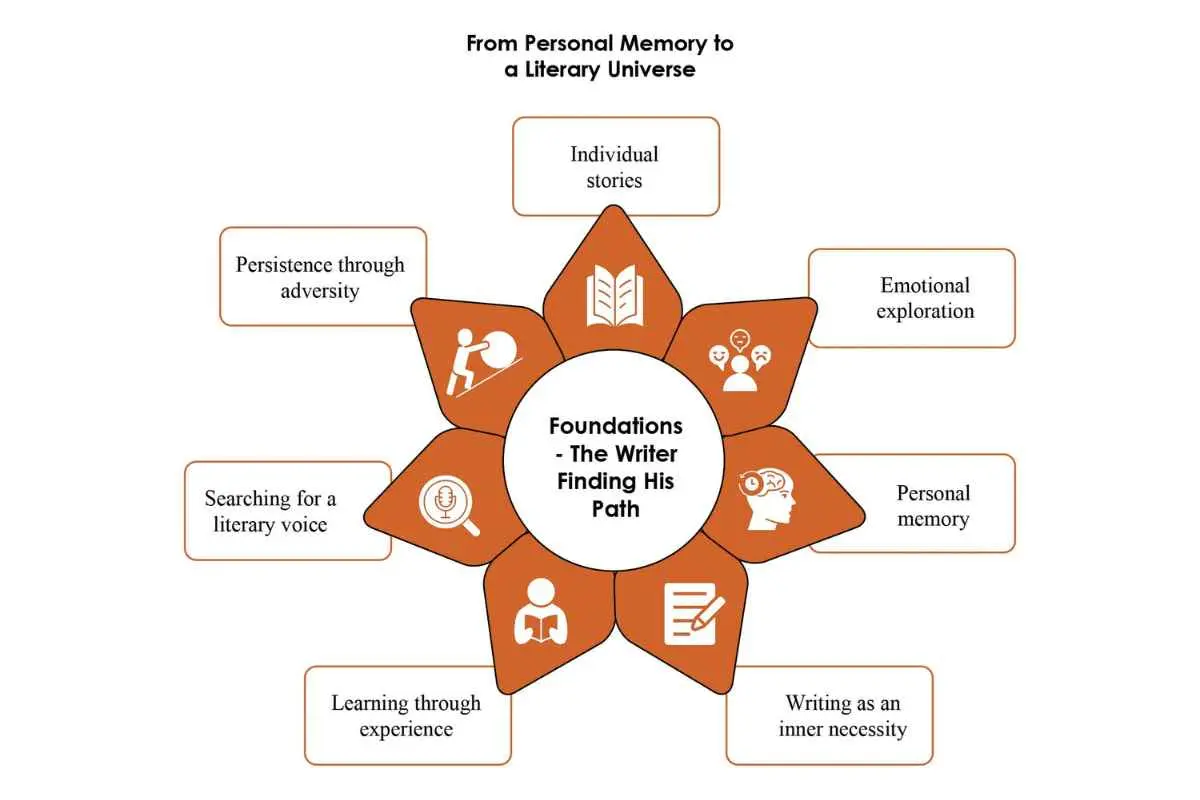
1. Foundations – the writer finding his path
- Individual stories
- Emotional exploration
- Personal memory
- Writing as an inner necessity
- Learning through experience
- Searching for a literary voice
- Persistence through adversity
2. Expanded vision – building a literary universe
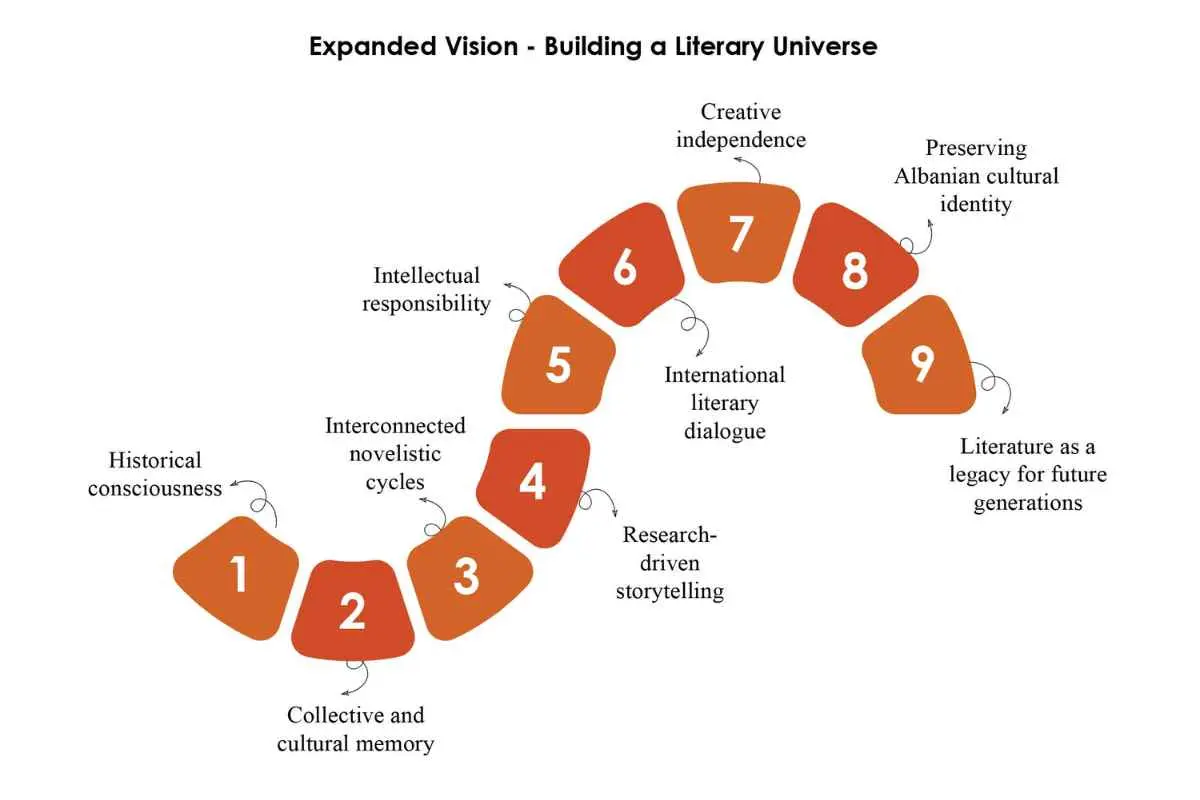
- Historical consciousness
- Collective and cultural memory
- Interconnected novelistic cycles
- Research-driven storytelling
- Intellectual responsibility
- International literary dialogue
- Creative independence
- Preserving Albanian cultural identity
- Literature as a legacy for future generations
3. Three concise transitions summarize the evolution:
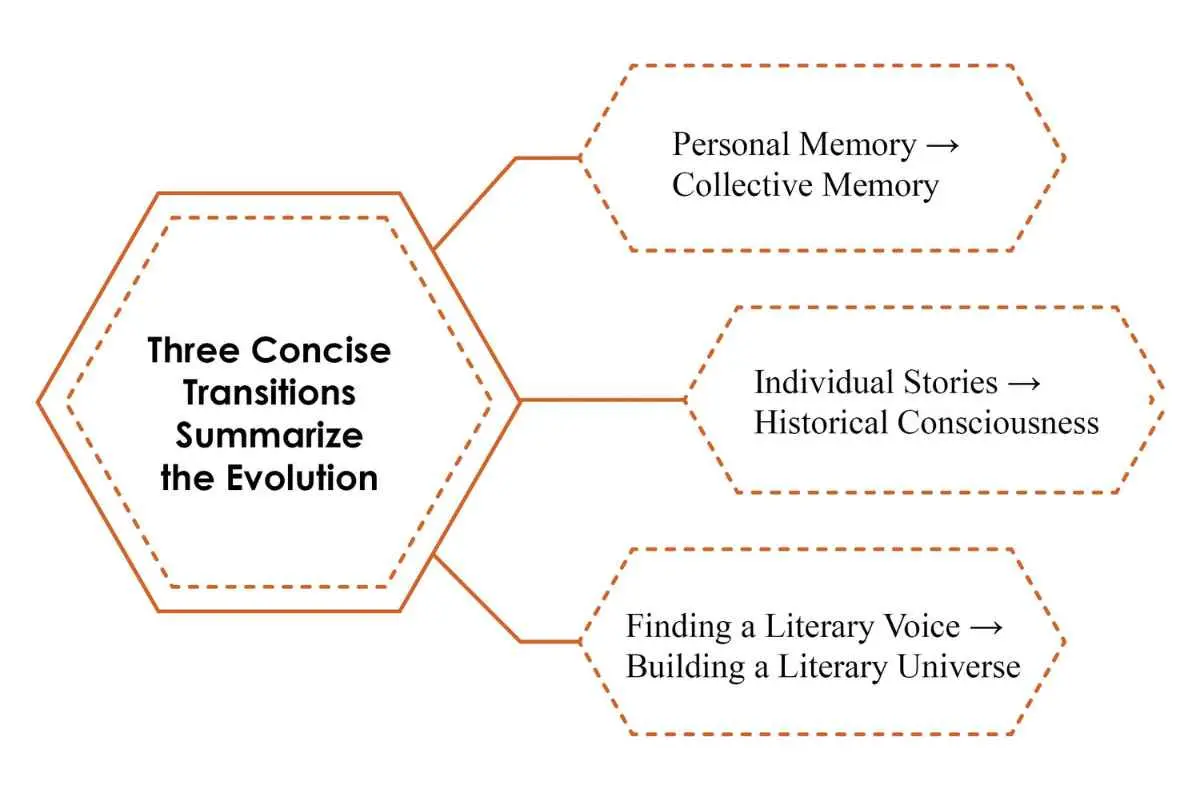
- Personal Memory → Collective Memory
- Individual Stories → Historical Consciousness
- Finding a Literary Voice → Building a Literary Universe
A changing landscape: digital opportunities and the enduring value of depth
The transformation of literature and historical research has been profound. When Amedeo Baçi began his literary journey, research depended heavily on physical books, libraries, archives, and handwritten notes, methods he still values for their discipline and respect for the source. The digital age has expanded possibilities through archives, databases, and online documents, but speed should never be confused with knowledge, as accessing information is not the same as understanding it, and technology cannot replace critical judgment. Digital platforms also allow writers from small linguistic environments to reach global readers, an important opportunity for Albanian literature.
Changing reading habits present a challenge, because long-form literature asks for time, concentration, emotional involvement, and patience, and Amedeo Baçi does not believe literature should abandon these qualities to imitate the digital world. New technologies, including artificial intelligence, will influence research, publishing, translation, and storytelling, and he sees value in tools that expand access, organization, and communication. Technology can assist the writer, but should not replace the writer’s conscience, experience, imagination, or individual voice. He remains committed to the depth and integrity that define his work.
Lessons, evolution, and legacy: building a literary universe
The most important lesson Amedeo Baçi’s journey has taught him is that writing is not simply inspiration but continuity, discipline, and responsibility. His work has evolved from human relationships, love, and pain toward family memory, cultural identity, and history, seeing the individual within the larger forces of time. This led him to interconnected literary cycles, including Enver Hoxha – The Light and Shadows of an Era, with new literary projects in development around Mother Teresa and Skanderbeg, while figures such as Wolfgang Amadeus Mozart and Ludwig van Beethoven remain among the creative horizons he may explore in the future.
At this stage, Amedeo Baçi thinks less about the number of books written than about the architecture they form together, seeing his body of work as a literary universe where individual lives, historical periods, cultural memory, and successive generations communicate with one another. If he is to leave a legacy, he hopes his work preserves something of Albanian cultural memory while allowing it to speak beyond national and linguistic boundaries. He has often said, “I don’t write to live; I live to write,” adding that writing leaves questions, memories, and human experiences capable of continuing their journey after the writer is gone.
A day in a writer’s life: when literature becomes the axis of time
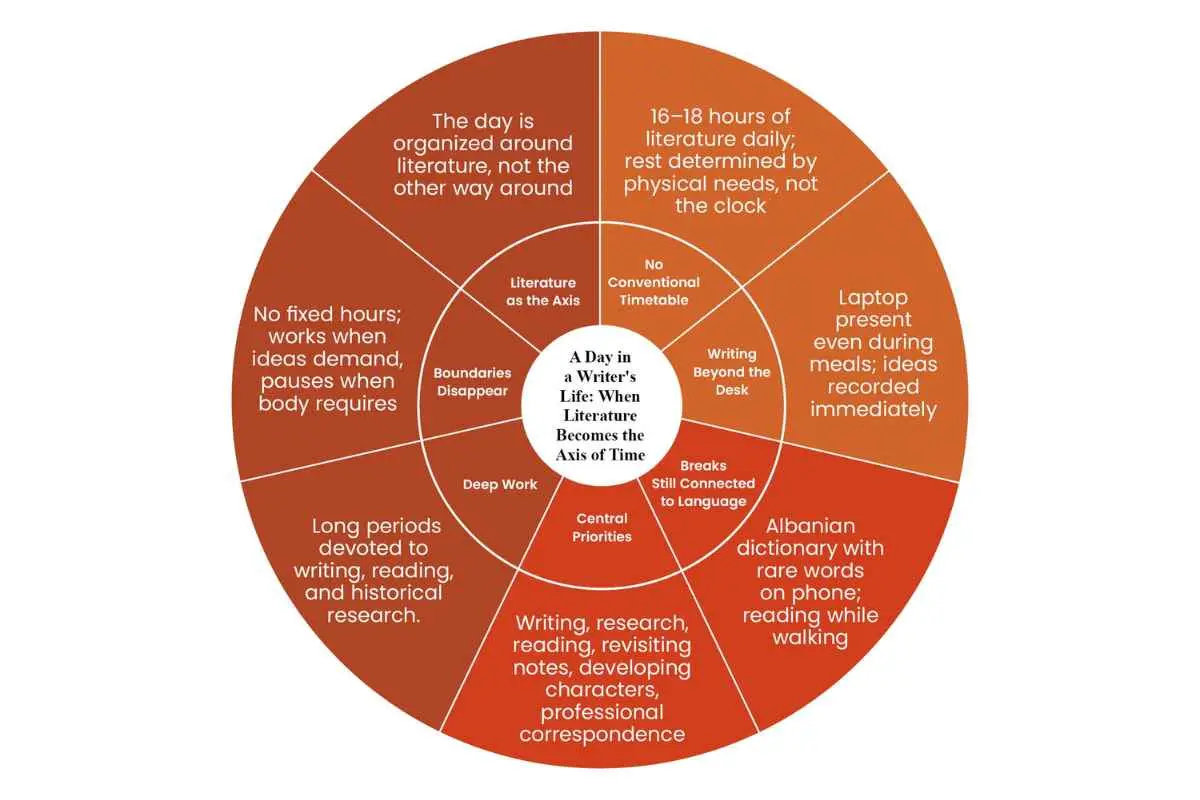
Amedeo Baçi’s working day defies conventional structure, with literature occupying 16 to 18 hours and rest determined by physical needs rather than the clock.
- No Conventional Timetable: 16–18 hours of literature daily; rest determined by physical needs, not the clock
- Writing Beyond the Desk: Laptop present even during meals; ideas recorded immediately
- Breaks Still Connected to Language: Albanian dictionary with rare words on phone; reading while walking
- Central Priorities: Writing, research, reading, revisiting notes, developing characters, professional correspondence
- Deep Work: Long periods devoted to writing, reading, and historical research.
- Boundaries Disappear: No fixed hours; works when ideas demand, pauses when body requires
- Literature as the Axis: The day is organized around literature, not the other way around
An open letter to young writers, researchers, and readers
Do not wait for the perfect moment to begin, and do not allow the absence of motivation to become a reason for abandoning what you were meant to create.
My experience has taught me that when art is pursued with passion, dedication, and discipline, innate talent is not the decisive condition for achievement. My philosophy in numbers: 98% dedication, 1% fortune, and 1% talent. Motivation comes and goes; discipline remains.
Read widely, question what you read, return to original sources, keep notes, preserve documents, and listen to those who came before you, but do not surrender your own judgment. History deserves respect and questions.
Behind great historical events were human beings. Dates tell us when something happened, documents tell us what happened, but literature helps future generations imagine what it meant to live through it.
Protect your cultural identity without turning it into a wall. Do not measure your journey by recognition, but by whether you remained faithful to the work. Write with inspiration, discipline, curiosity, and intellectual honesty, remember the past without becoming its prisoner, and preserve the courage to continue.
Because books are written in the present, but their true destination may be a reader who has not yet been born.
— Amedeo Baçi
Albanian Novelist • Essayist • Researcher of History
Key takeaways from Amedeo Baçi’s perspective
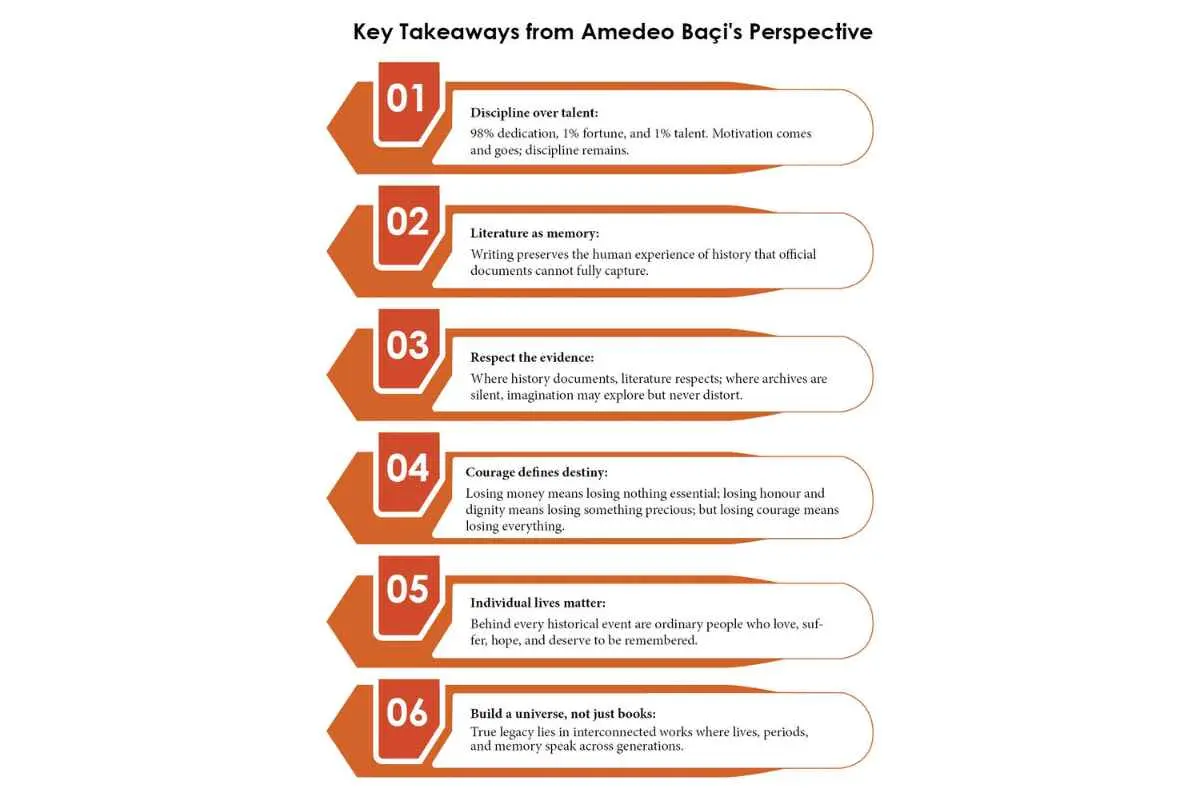
- Discipline over talent: 98% dedication, 1% fortune, and 1% talent. Motivation comes and goes; discipline remains.
- Literature as memory: Writing preserves the human experience of history that official documents cannot fully capture.
- Respect the evidence: Where history documents, literature respects; where archives are silent, imagination may explore but never distort.
- Courage defines destiny: Losing money means losing nothing essential; losing honour and dignity means losing something precious; but losing courage means losing everything.
- Individual lives matter: Behind every historical event are ordinary people who love, suffer, hope, and deserve to be remembered.
- Build a universe, not just books: True legacy lies in interconnected works where lives, periods, and memory speak across generations.