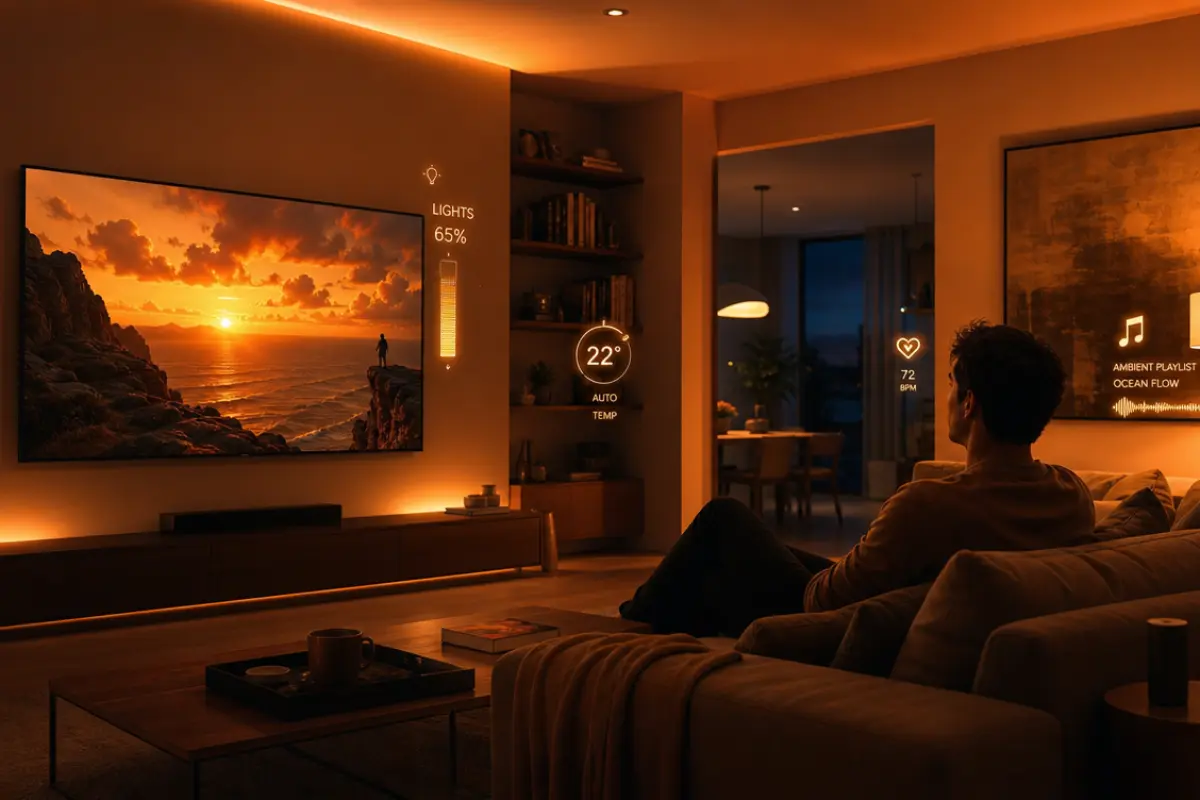
Walk into a house built ten years ago and the television turns on when you push a button. Walk into a house built around the technology available today, and the television already knows what you were watching last night, adjusts the room lighting to match the mood of the program you’re likely to switch to, pauses automatically when you leave the room, and picks back up when you return. These aren’t features pulled from a product concept reel. They are already shipping, embedded in devices that sit in millions of living rooms and most of them run on a technology most homeowners have never heard of by name.
That technology is called automatic content recognition, and its role in the connected home goes significantly further than the advertising and copyright enforcement contexts where it’s more commonly discussed. Automatic content recognition technology identifies media content in real time audio, video, or a combination of both by extracting compact digital signatures from what a device is processing and matching them against reference databases. This happens continuously, at the hardware level, often without the user initiating anything at all. In the smart home context, the recognition output isn’t just sent to an advertising server. It feeds directly into the home’s own automation logic, creating responses that feel like the house is paying attention.
The Television as the Brain of the Room
Smart television sets are the most mature example of ACR operating inside a domestic environment. Every major manufacturer Samsung, LG, Sony, Hisense, TCL ships sets with embedded recognition engines that identify content regardless of its source. A broadcast signal, a streaming app, a gaming console connected over HDMI, a laptop plugged into the set all of it passes through the recognition layer, which logs what is playing and when.
The comfort applications built on top of that recognition layer are what the industry has been slowly activating over the past several years. Gracenote, a Nielsen company that provides content recognition infrastructure for dozens of major platforms, built its Video Automatic Content Recognition product specifically to enable smart TVs and connected devices to identify and synchronize content in real time for interactive features not just passive data collection.
Practical examples from current platforms include: volume normalization that activates when the system detects a commercial break (which tends to be broadcast at higher levels than program content), automatic adjustment of high dynamic range settings based on the content genre being played, and parental controls that engage dynamically based on content identification rather than requiring parents to pre-schedule restrictions.
LG’s partnership with Cognitive Networks, established years before smart home integration became a mainstream conversation, was explicitly framed around using recognition to make TVs smarter and more interactive meaning the television responds to what it is showing rather than requiring the viewer to manually configure every setting transition.
Sound Recognition Beyond Wake Words
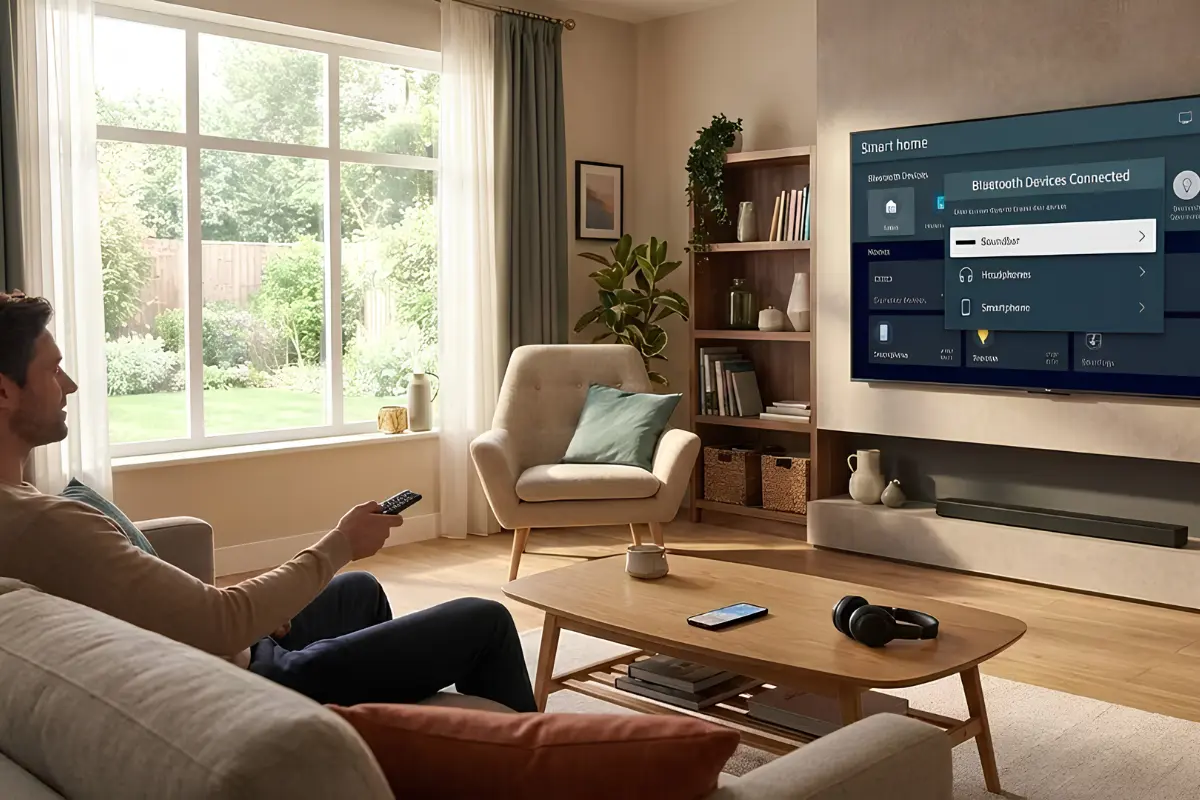
The smart speaker market expanded the ACR concept beyond video into a purely audio domain. When an Amazon Echo or Google Nest device recognizes speech, it is performing a form of content recognition: identifying the presence of a specific trigger phrase, then categorizing and routing the request that follows. But the same audio recognition architecture extends further than wake words.
Sound recognition technologies embedded in smart home hubs can identify non-speech audio events with practical domestic applications. A smoke detector activating in another room. Glass breaking. A baby crying. A doorbell ringing while noise-cancelling headphones are in use. Each of these events has a distinctive acoustic signature that recognition software can identify and route to an appropriate response a notification, an alert, an automatic action from a connected device. Several smart home platforms including Google Nest, Amazon Alexa Guard, and Apple HomeKit have incorporated sound-event recognition as a standard feature, precisely because it enables the kind of ambient responsiveness that the “smart home” concept originally promised but took years to actually deliver.
Scene Recognition and Lighting Orchestration
ACR’s influence on home automation extends into the visual domain in ways that go beyond the television screen itself. Smart cameras inside connected home systems can identify activity patterns whether a room is occupied, whether the activity is passive (watching a movie) or active (cooking), whether the lighting conditions visible to the camera suggest the sun has set. This ambient scene recognition feeds into automation routines that adjust lighting, thermostat settings, and even music playback without requiring any explicit command from the occupant.
The Philips Hue Sync system is a concrete example of this logic applied to entertainment specifically: it reads what is playing on a connected display in real time and adjusts the ambient lighting in the room to reflect the color palette and intensity of the content a sunset scene shifts the room warm orange, an action sequence pulses lighting rapidly. The recognition layer translates visual content into environmental response at a speed that feels synchronized rather than programmatic. Similar capabilities are being integrated into projector systems and smart display setups aimed at home cinema installations.
The Market Behind the Comfort Layer
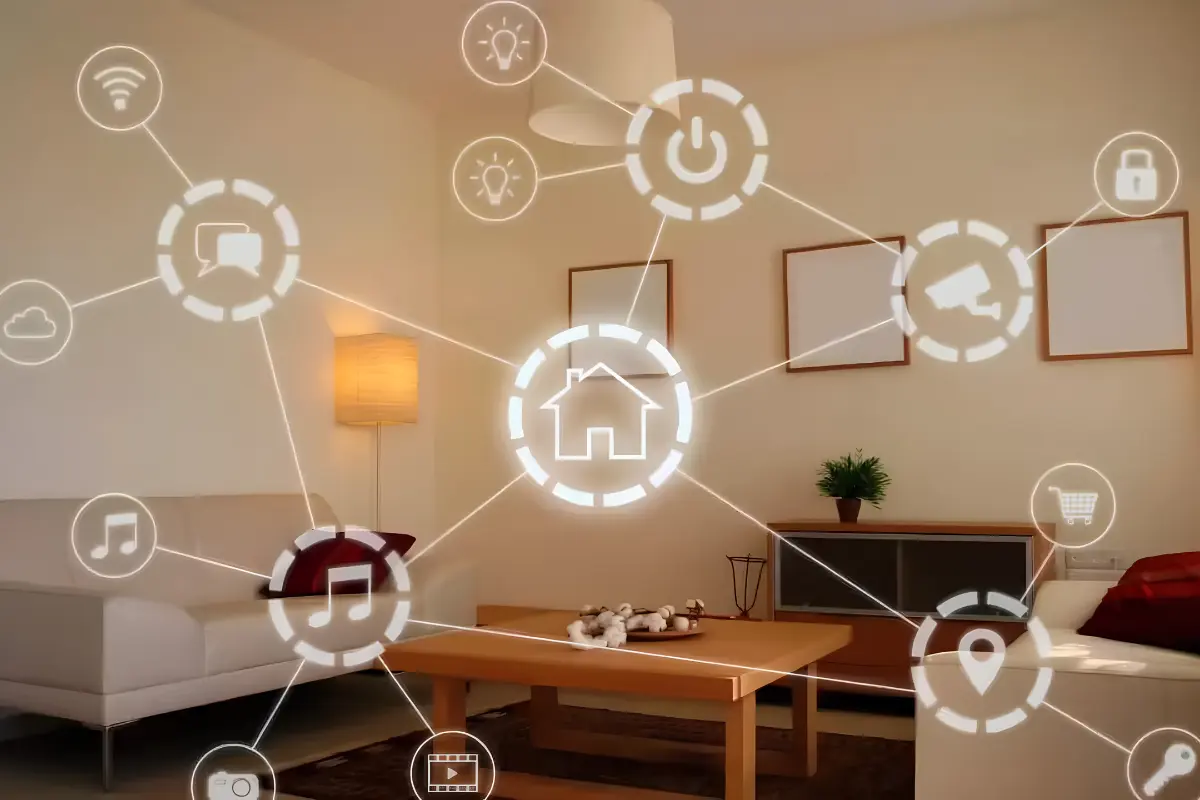
The commercial infrastructure supporting all of these experiences is substantial. The global automatic content recognition market was estimated at approximately $3.2 billion in 2025, with North America holding the largest share at roughly 34.8 percent of total revenue making the US automatic content recognition market the single most developed deployment environment in the world. Growth projections vary by research firm, with estimates ranging from $11.4 billion to over $16 billion by 2031, driven in significant part by smart home adoption alongside the advertising and audience analytics applications that dominate public discussion.
The acr technology market is expanding partly because the addressable hardware base keeps growing. An estimated 51 percent of global households owned a smart television by 2026, and the penetration of smart speakers, connected displays, and hub devices continues to accelerate across North America, Europe, and Asia-Pacific. Each new connected screen or listening device in a home is a potential node in the recognition network which is why companies building smart home platforms have an obvious structural incentive to make recognition capabilities more capable and more deeply integrated.
The company landscape includes a mix of consumer electronics manufacturers operating their own proprietary recognition layers (Samsung, LG, Vizio through its Inscape subsidiary), specialist infrastructure providers that license recognition engines to manufacturers and platforms (Gracenote, ACRCloud, Samba TV), and smart home platform operators that sit above the hardware layer and route recognition signals into automation responses (Google, Amazon, Apple HomeKit). The result is a layered ecosystem where a single recognition event the TV identifying that a particular film has started can trigger responses across multiple devices from multiple manufacturers, coordinated through a central platform that the homeowner likely thinks of simply as their “smart home app.”
ACR in Healthcare and Aging-in-Place
One of the less-discussed but commercially growing applications of recognition technology in domestic settings is elder care and health monitoring. The same audio recognition that identifies a smoke alarm can identify a fall, irregular breathing patterns, or prolonged silence that might indicate a medical episode. Several companies focused on aging-in-place technology have built ambient monitoring systems around sound recognition specifically because they provide a way to detect emergencies without requiring the resident to wear or carry a device which elderly users often forget or resist.
Video recognition applied through smart cameras can track activity patterns over time, flagging deviations from established routines that might indicate a health change worth reporting to a family member or caregiver. This application doesn’t require the system to identify content in the traditional sense it identifies behavior, which is a different but related recognition problem using overlapping technology. The analytics layer that processes these recognition events produces health-relevant signals from daily activity patterns, without the kind of direct physiological monitoring that requires medical-grade sensors.
The Comfort That Comes With a Question
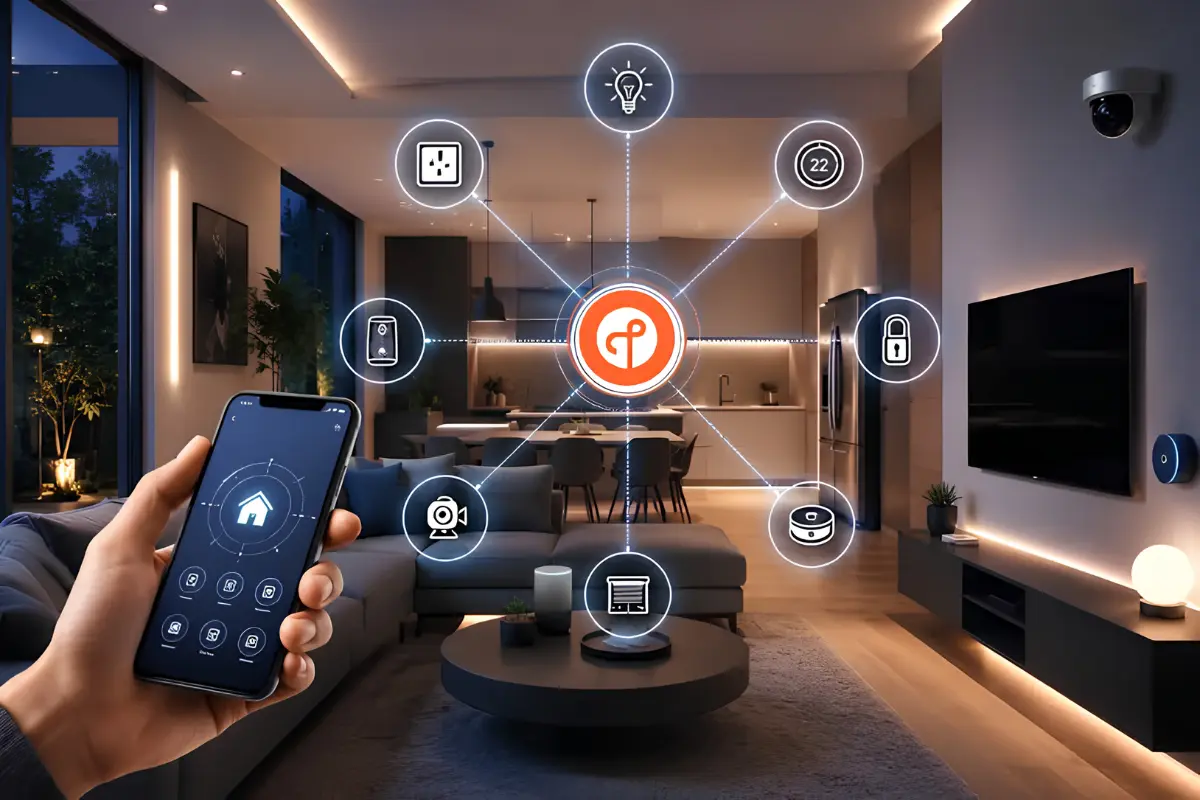
Every practical comfort benefit that ACR enables inside a smart home involves a system that is paying continuous attention to what is happening in private domestic space. The television that knows what you’re watching, the speaker that knows which room you’re in, the camera that knows when you’ve come home these are genuinely useful features built on genuinely intrusive data collection.
This doesn’t make the technology bad or the benefits fake. A home that adjusts its environment to what you’re doing rather than requiring constant manual configuration is a better experience in measurable ways. The question the technology poses is not whether the comfort is real but whether the awareness that enables it is appropriately bounded. The house that learns your preferences is also a house that generates a continuous record of your behavior and where that record goes, who can access it, and how long it persists are questions the market has been slow to answer satisfactorily.
A Home That Knows When to Stop Watching You
The most interesting near-term direction for ACR in smart home contexts is the move toward on-device processing keeping recognition local rather than sending captured audio or video samples to cloud servers for matching. Apple’s approach with Siri and local processing, and Google’s on-device speech recognition for Pixel devices, point toward an architecture where the home learns and responds without the learning leaving the building. Several smart home manufacturers have been moving in this direction under regulatory and competitive pressure, and the hardware required to run recognition models locally has become affordable enough that it no longer requires cloud connectivity to function.
If on-device processing becomes the norm rather than the exception, it resolves the privacy tension without sacrificing the comfort benefit. The house that knows what you’re watching doesn’t have to tell anyone else. It just turns on the right lights, adjusts the temperature, and quietly makes itself better at being your home.