
How one founder built one of America’s fastest-growing defense technology manufacturers without private equity or corporate backing—and why that may be the most original form of entrepreneurship
When most startup entrepreneurs dream of scale, they picture venture capital, splashy valuations, and investors setting the pace. In national security, the calculus can be different. Bootstrapping defense technology rewards technology, rigorous analysis of alternatives, merging the art of the possible with concept of operations (CONOPS) and systems that perform in the field.
The aerospace and defense ecosystem spans founder-led companies, venture-backed disruptors, start-ups, and legacy contractors—but the most durable growth today is coming from bootstrapped innovators with a passion for building the best solutions who prioritize mission over hype. There is growing interest in defense innovation, with businesses and start-ups playing a crucial role in creating new tech within this rapidly evolving ecosystem.
One of those founders is Angelique X. Irvin, Chair and CEO of Clear Align, a U.S. defense technology company that designs and manufactures advanced infrared systems for Intelligence Surveillance and Reconnaissance (ISR), for ground, air and maritime missions, that enhance national security. Her path offers a practical blueprint for building a sustainable business: invests in people, owns the supply chain, and reinvests relentlessly in technology differentiation. Developing new tech with a focused strategy has been central to her approach.

Bootstrapping defense technology in this sector means functioning differently from many other businesses. Securing funds is a constant challenge, and founders must achieve key milestones to ensure continued growth and recognition.
For Irvin, the journey reached a critical point when her business achieved a major milestone of their first C5ISR contract with the US Air Force, and a phase 3 SBIR for $199M, setting Clear Align apart from much larger competitors.
The Long Game of Independence
Irvin launched Clear Align with a bold premise: deliver high-precision imaging technologies that protect warfighters and strengthen U.S. readiness—without private equity or corporate ownership. The financing reality was stark: This vision required over $100M of equipment. The company’s strategy focused on bootstrapping defense technology through sustainable growth and key innovation milestones.
“Defense innovation doesn’t happen in a quarter,” Irvin says. “It takes patience, discipline, and a willingness to reinvest profits for years before breakthroughs show a return on investment.” That long-term mindset shaped every decision. Instead of financial in line with traditional MBA strategies, Clear Align doubled down on vertical integration—from new optical designs, to novel EOIR system designs —so the team could execute with a focused approach to building new technologies, controlling quality, schedule, and cost. A combination of leveraged buyouts and organic growth enabled the company to build its capabilities and capital equipment faster.
Small Teams, Big Impact: Innovation Rising to National Security Challenges
Bootstrapping defense technology is hard. Contracts are complex, maintaining all the compliance requirements is exhaustive, and the slow contracting process challenges any business with cash flow.
Being self-funded creates a cultural advantage: every dollar meets a defined mission goal, and disciplined use of funds builds a unique culture focused on results. “Your team makes smarter long-term decisions when it’s your own capital,” Irvin notes. “They build technologies that last, not hype cycles.” The organization has a clear mission to achieve sustainable growth and develop new technologies.
“Sustainable Speed”
Clear Align’s founder calls this sustainable speed: the company’s customers and engineering team—not outside investors—sets priorities. When the pandemic rattled global supply chains, domestic optics manufacturing and in-house vertical integration kept deliveries moving. “Vertical integration wasn’t just efficient—it was survival,” Irvin says. “In in the struggle for dominance , control of your supply chain is the foundation of national security.”
Strategically, Irvin also acquired complementary companies—equipment, IP, and talent—to accelerate capability without surrendering control. This acquisition strategy helps achieve results by expanding infrared technologies, alignment processes, and production systems while keeping focus on the mission. The organization’s operating model ensures that all efforts align with long-term objectives and the ongoing development of differentiated technical solutions.
From Startup Scrappiness to Strategic Scale
Early on, Bootstrapping defense technology meant engineers used manual polishing machines to build optical elements in modest facilities; revenue funded the next R&D sprint. No lavish offices, no debt-fueled burn—just steady investment in people, processes and capital equipment: testing or metrology and advanced manufacturing. The organization was operating efficiently to scale, reaching a point where operational discipline enabled significant milestones.
As customers modernized, the company expanded services, tightened processes, and standardized subsystems so advanced tech could scale quickly. Examples of this growth include rapid facility expansion and successful integration of new technologies during the acquisition of 5 companies. The organization is also developing new capabilities to achieve results in emerging innovation.
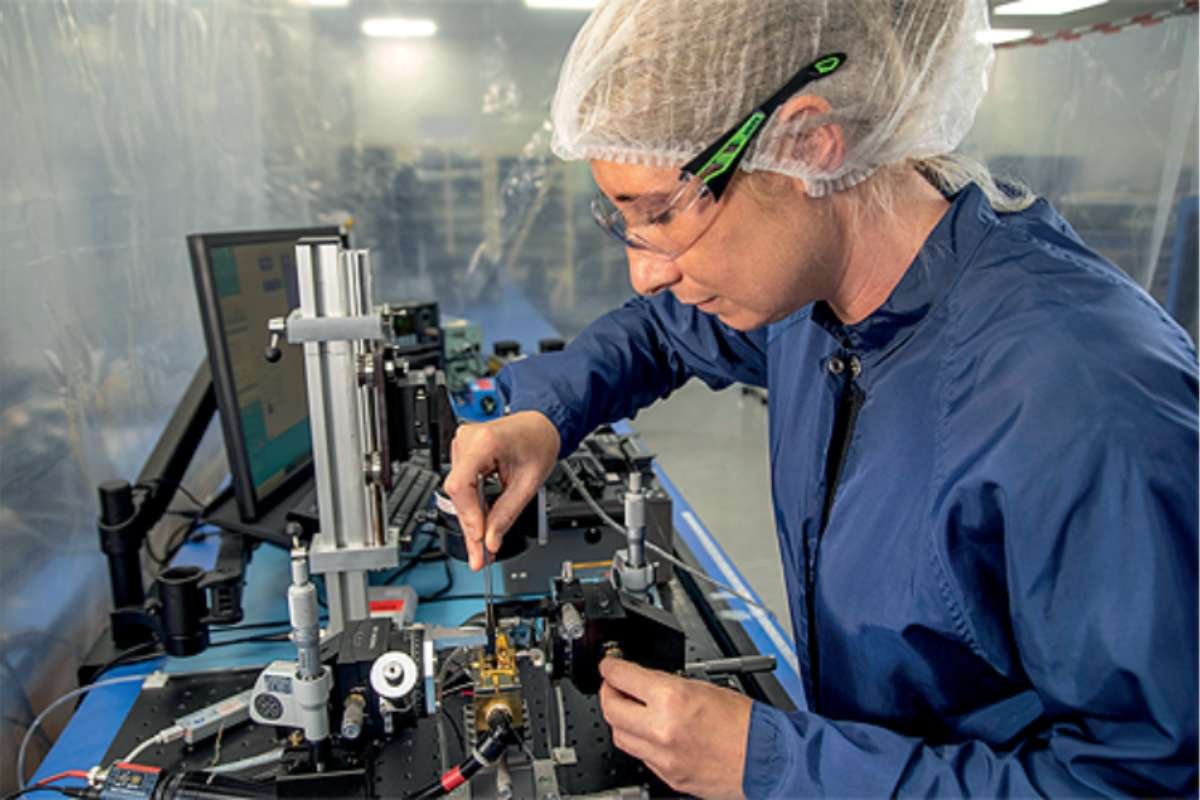
Today, Clear Align operates nearly 100,000 square feet across multiple states, supporting major U.S. programs measured in the hundreds of millions. The company remains independent—proof that a founder-led defense company can scale technology and systems without handing the wheel over to solely profit goals.
“Bootstrapping defense technology gave us freedom,” Irvin says. “Freedom to back the technologies that matter for the mission—not just what looks good in a quarterly update.”
Building a Strong Team
Great defense technologies start with great teams. Clear Align hires across a broad range of skills: optics, electronics, mechanics, advanced materials and manufacturing and most importantly, software and autonomy expertise. Effective communications are essential for team building and stakeholder engagement, ensuring everyone is aligned and informed. The organization partners with universities, small suppliers, and other organizations to accelerate research, prototype development, and technology adoption—bridging the gap between the lab and the field.
Leadership and communication enable successful engineering of new technologies. By engaging key stakeholders—government agencies, prime contractors, and supplier partners—the organization maintains a focused approach to developing talent and technology, keeping projects aligned with the mission. The result is faster decisions, cleaner interfaces between systems, and solutions that are both practical and scalable.
Why National Security Depends on Faster Commercial Technology Adoption
Commercial technology adoption has reshaped Clear Align’s defense innovation by bringing the agility of the private sector into the military’s modernization pipeline. Irvin highlights commercial technology like the new NVIDIA chips, led by entrepreneur Jensen Huang, which small form factor enables computing and engineering analysis at the edge or inside small remote systems.
Organizations like the Defense Innovation Unit (DIU) serve as a powerful bridge between government, industry leaders, private capital, and were key to Clear Align’s commercial breakthroughs and the rapid transition into missions.
By embracing commercial technology adoption, Clear Align has seen the defense industry shorten development cycles and deploy advanced technologies—from autonomous systems to novel materials —at unprecedented speed. This model doesn’t just improve efficiency; it redefines national security. Integrating commercial autonomous systems dramatically enhanced situational awareness and response time for the team.
National Security
National security remains the engine behind defense innovation, forcing governments to evolve faster than the threats they face. We are creating rapid advancement in defense technologies—including cybersecurity, hypersonics, and electronic warfare systems—all essential for preserving operational superiority and protecting global interests.
Organizations like the Small Business Innovation Research (SBIR) and Small Business Technology Transfer (STTR) programs, America’s Seed Fund, are key organizations to feed DoW agency (formerly DoD) with technology developments, and play a vital role in our economy and the also the company’s development. SBIR funding supported the company with development funds that that develop advanced coating technologies, to ensure armed forces could stay aware and agile, data-driven, and equipped for future conflicts.
Adaptive Defense Manufacturing Ecosystem
Each of the companies breakthroughs began with strong engineering talent that had the tools to test their new ideas. Advanced manufacturing, test facilities, and research centers gave engineers the means to scale AI enabled infrared autonomous systems from prototype to production. The company was more resilient, and built an adaptive defense manufacturing ecosystem capable of responding rapidly to evolving mission needs. This was a key part of building scale quickly, aligning commercial technology with national security priorities, and helping deliver mission-ready systems.
Scaling What Works: Balancing Technology, Capital, and Mission Outcomes
The measure of success in defense innovation isn’t how many new technologies are announced—it’s how many transform operations and strengthen national security. Real progress is visible in the speed of technology adoption, the success rate of companies bringing new solutions to market, and the measurable improvements those technologies deliver in the field.
Metrics such as return on investment (ROI), time-to-deployment, and mission impact guide both government and industry in refining their innovation strategies. The focus is shifting from activity to outcome—ensuring that every dollar of capital, every hour of research, and every partnership contributes directly to readiness and capability.
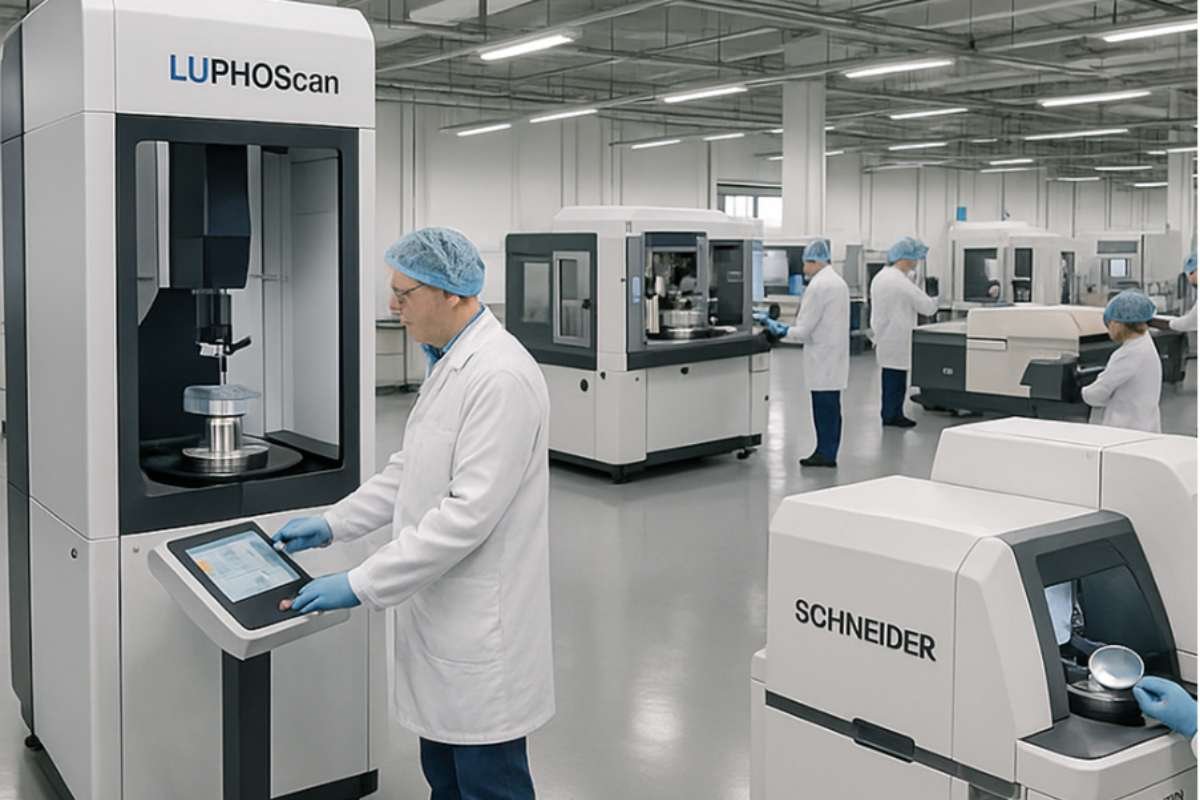
By tracking results and learning from data, the defense ecosystem can keep improving—driving real innovation, stronger companies, and a more secure nation.
Mission, Mastery, and Momentum beat Short-Term Flash
“Innovation isn’t just about making sensors,” Irvin says. “It’s about making sure America can keep making them.” Clear Align invests in energy-efficient onshore manufacturing to strengthen domestic capacity. Creating a resilient business and operating effectively during challenges is key to long-term success. That focus on resilience—of people, plants, and technology—is a competitive advantage when the world gets turbulent.
While many companies downsized, Clear Align continued operating and grow—achieving key milestones and attracting engineers and operators who wanted meaningful work tied to national security. The message resonates: mission, solutions, manufacturing mastery, people and process, drive the momentum and always beat the short-term flash that media and politics depend on.
The Future of Sustainable Defense Innovation
Emerging defense innovation are already blending infrared sensing, smart software, and autonomous systems into fieldable technologies to deliver real-time solutions. By bootstrapping defense technology, the company’s future strategy focuses on leveraging cutting-edge tech to shape the industry and maintain a competitive edge.
Founder-led companies, along with innovative businesses and start ups, that earn before they raise will have the staying power to build them. To stay ahead, these organizations need to achieve new milestones and adapt to evolving demands. Mission-first cultures, disciplined capital use, and resilient manufacturing will separate strength from noise.
“Innovation isn’t only about speed,” Irvin says. “It’s about staying power. Bootstrapping defense technology gave us that—and it’s why we can keep building what America needs.”
Takeaway for Founders of Cutting-Edge Innovations that Rely on Less Strategic Capital
Building with less capital require creativity and finance discipline that take energy from the top. But the lessons Clear Align learned creating its foundation focus on:
- Own your supply chain. It’s the best insurance against disruption. For example, high tech companies like Tesla, Space X, and Apple controlled their destiny with vertical integration, and Clear Align focuses on scaling this same model in the defense market.
- Reinvest relentlessly. Channel capital into capability, not vanity and make sure your products deliver.
- Play the long game. Real technology takes time, testing, and iteration. Look at examples such as Jensen Huang who led NVIDIA through relentless iteration in the graphics processing unit (GPU) hardware space. This same model applies to national security applications.
- Lead with mission and drive results. If the work matters, the right investors will find you.
Customer Obsession is the Future of Entrepreneurship in Defense
For Irvin, the payoff isn’t just financial—it’s national security. Build independently, and you build strength that lasts. The company scaled more quickly than almost any other organization in the defense ecosystem because they adopted a novel strategy to control investment. It was Bootstrapping defense technology that drove defense innovation, commercial technology adoption, and a tighter adherence to national security priorities.
While defense companies still struggle with slow technology adoption inside the government, Clear Align brought together founders, engineering expertise, and private capital to accelerate new technologies. Their ability to merge autonomous systems, advanced optical designs and new materials, and emerging defense technologies have met real national security challenges for the armed forces, and the wider defense industry. The DoW, and SBIR contracting opportunities , and other key stakeholders are shifting their objectives toward faster delivery and measurable impact.
Clear Align’s approach—rooted in disciplined development, commercial agility, and mission-driven execution—is becoming the model that others will follow.