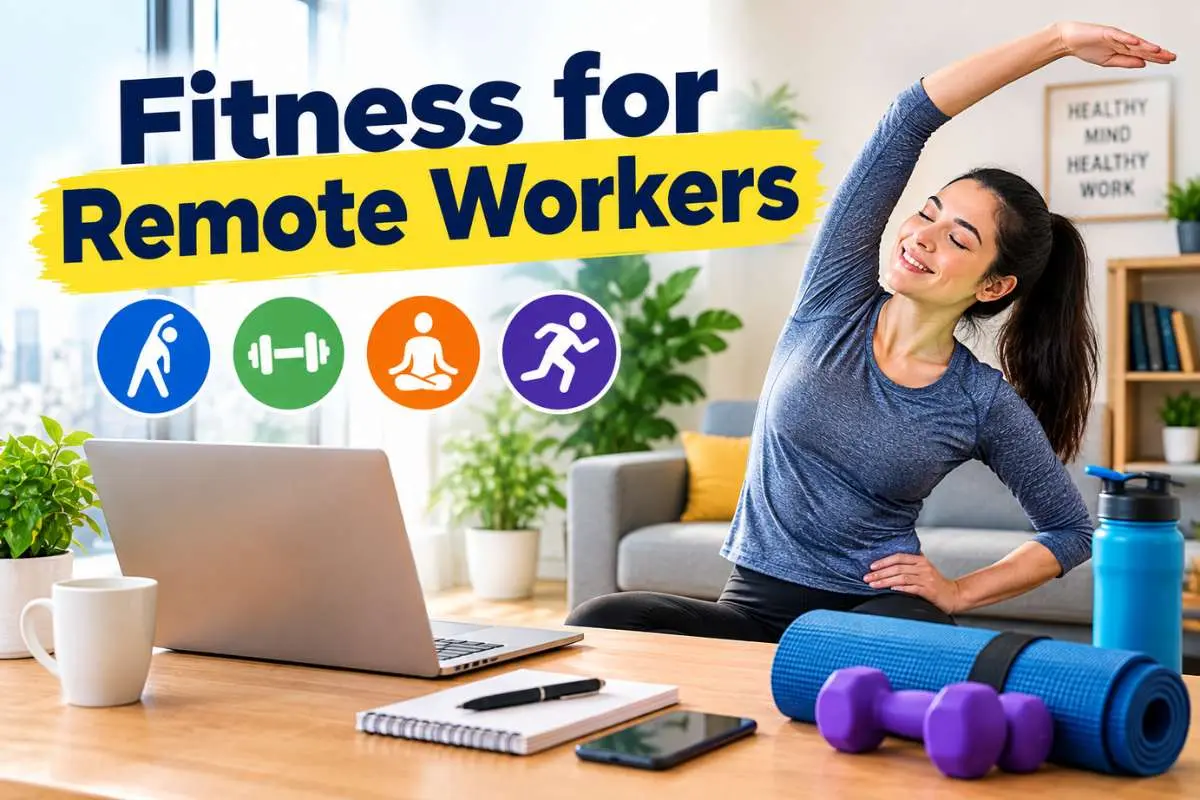
Working from home can save commuting time, but it can also turn an entire workday into hours of sitting. For busy professionals, the challenge isn’t always knowing exercise matters. It is finding time to fit it between meetings, deadlines, and screen-heavy work.
That is where fitness for remote workers becomes practical. Instead of relying on long gym sessions, remote employees can use five-minute micro-workouts, short HIIT sessions, walking breaks, and even under-desk ellipticals to add movement throughout the day. Many of these moves also count as cardio exercise for weight loss, since even brief bursts of activity add up over a workday. These small changes can help reduce sedentary time while supporting cardiovascular health, energy, and focus.
This guide explores simple ways to stay active at home without turning your workday into a full-time fitness routine.
Why fitness matters for remote workers
Remote work can make movement less automatic. There may be no walk to the office, no trip between meeting rooms, and fewer natural opportunities to stand or move during the day.
Regular physical activity can support cardiovascular health, muscle strength, mood, and overall well-being. The World Health Organization recommends adults get 150–300 minutes of moderate-intensity aerobic activity or 75–150 minutes of vigorous activity each week, plus muscle-strengthening activities on at least two days. It also recommends limiting sedentary time and replacing it with movement of any intensity when possible. For many remote employees, working in some form of cardio exercise for weight loss during the week is a practical way to meet that recommendation without a formal gym routineThe goal for remote professionals does not have to be a lengthy workout every day. When it comes to fitness for remote workers, breaking up long periods of sitting with brief movement can be a practical starting point.
20 ways to build fitness for remote workers at home
You don’t need a home gym to stay active during the workday. Pick moves based on your fitness level, available space, and any physical limitations, and keep water nearby.
Quick movement breaks (1–5 minutes, no equipment)
1. Walking in place
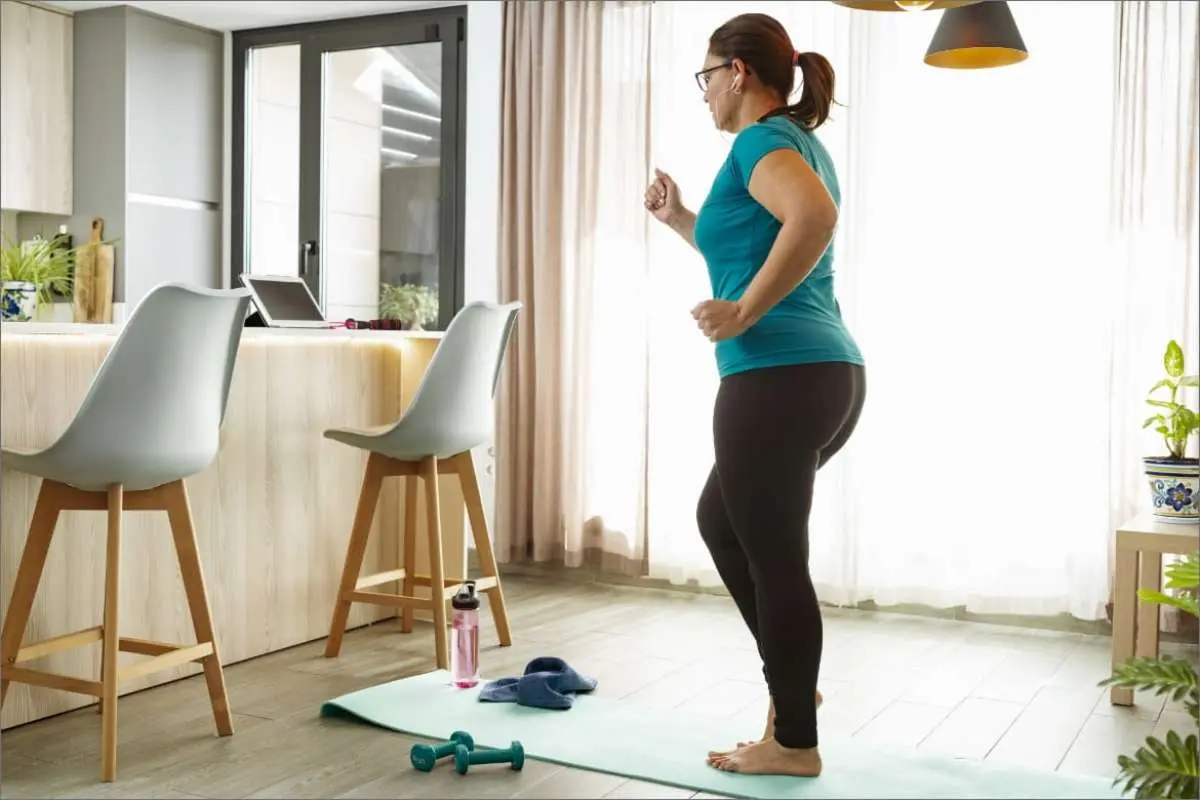
Walk beside your desk for two to five minutes between meetings. Add arm swings or pick up the pace as you warm up.
Good for: beginners and easy breaks between calls.
2. Marching high knees
March in place, lifting your knees toward hip height.
Good for: a low-impact cardio bump.
3. Calf raises
Hold your desk for balance if needed. Rise onto your toes, pause, then lower with control.
Good for: waking up tired legs during a short pause.
4. Skater steps
Step or lightly hop side to side, swinging your arms naturally with the motion.
Good for: coordination and lateral movement.
5. Standing torso twists
Feet hip-width apart, hands loosely at your chest, rotate your upper body side to side in a controlled motion.
Good for: loosening a stiff back after long stretches of sitting.
Lower-body strength
6. Bodyweight squats
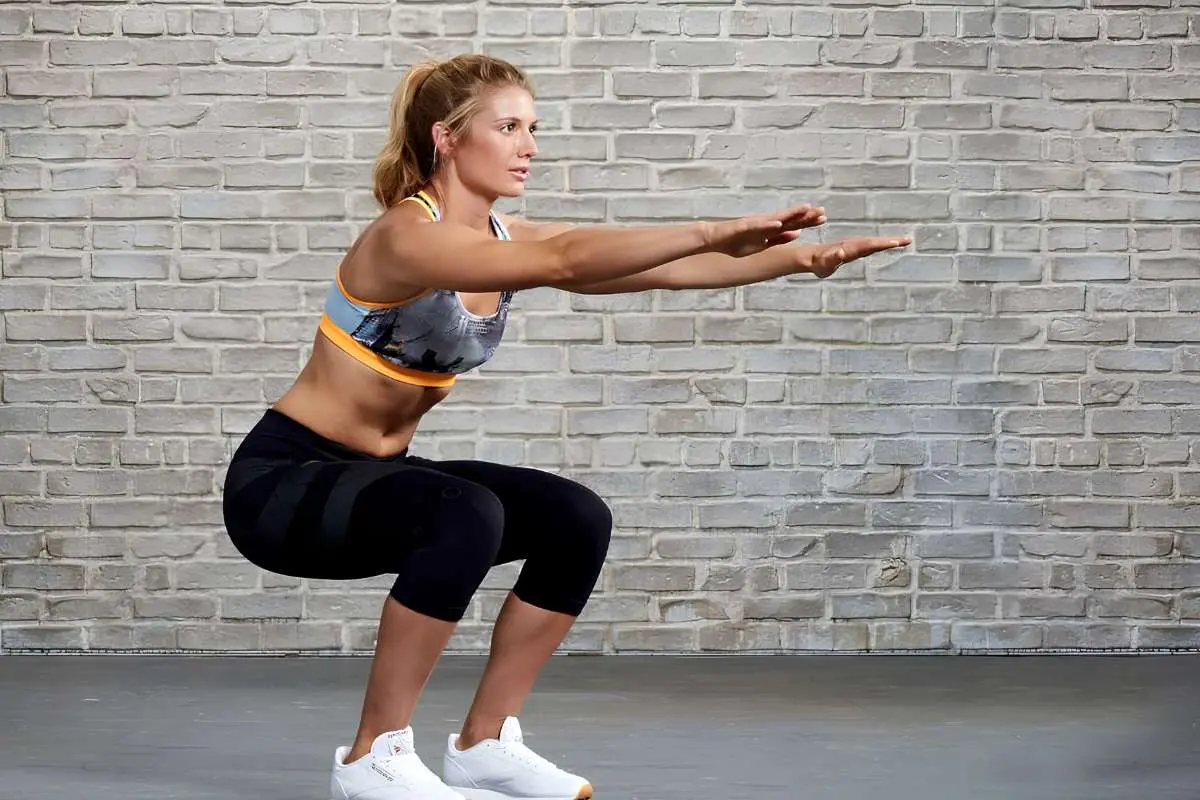
Feet hip-width apart. Lower your hips like you’re sitting into a chair, then push back up to standing.
Good for: building baseline leg strength.
7. Reverse lunges
Step one foot back and lower until both knees form comfortable bends. Return to standing and switch sides.
Good for: leg strength and balance.
8. Step-ups
Using a stable, low platform, step up and down, alternating your lead leg.
Good for: legs and cardio in one move.
9. Squat to reach
Squat down, then reach both arms overhead as you stand.
Good for: pairing mobility with lower-body strength.
10. Glute bridges
Lie on your back, knees bent. Lift your hips, squeeze your glutes, then lower slowly.
Good for: hips and glutes. Easy to do on a break at home.
Upper body & core
11. Wall push-ups
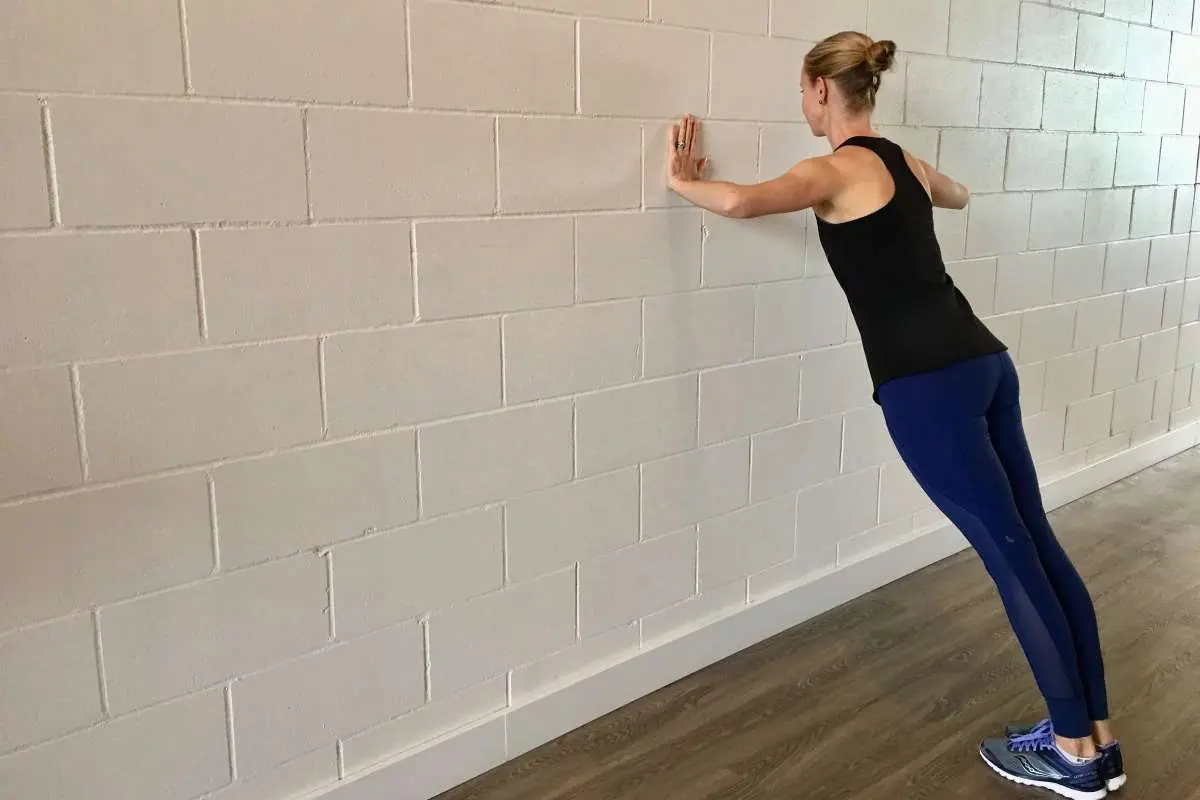
Hands on a wall, elbows bending as you lean in. A gentler entry point for push-ups.
Good for: beginners building upper-body strength.
12. Incline push-ups
Hands on a sturdy desk or counter, perform controlled push-ups.
Good for: a step up from wall push-ups — upper body and core.
13. Bear crawl
From hands and feet, knees hovering just above the floor, crawl forward and back with control.
Good for: full-body strength and stability.
Cardio & intervals – effective as a cardio exercise for weight loss
14. Desk tricep dips
Sit on the edge of a sturdy desk or chair, hands beside your hips, and lower your body by bending your elbows before pressing back up.
Good for: targeting triceps and shoulders with furniture you already have.
15. Superman hold
Lie face down, extend your arms forward, and lift your chest and legs slightly off the floor, holding briefly before lowering.
Good for: strengthening your lower back and improving posture.
16. Jumping jacks
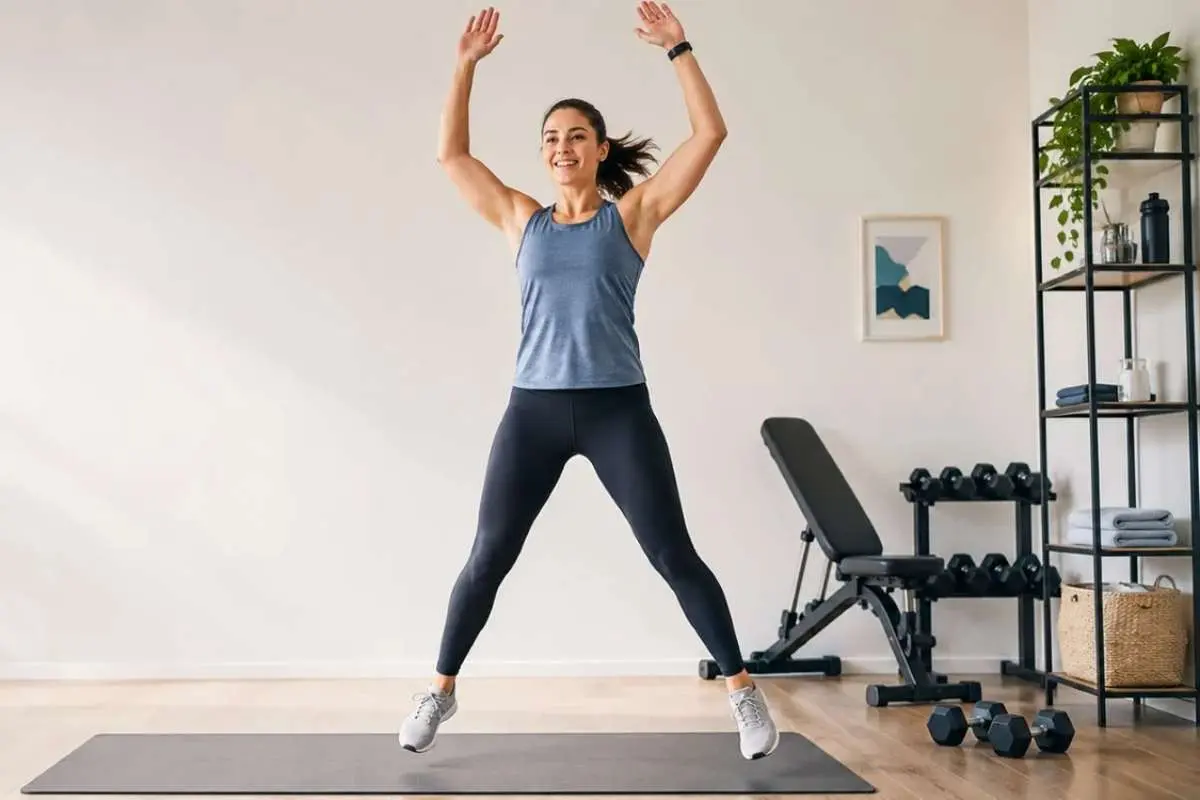
Jump your feet apart while raising your arms overhead, then return to start.
Good for: a fast heart-rate spike.
17. Mountain climbers
From a high plank, alternate driving your knees toward your chest.
Good for: a short, intense cardio burst.
18. Burpees
Squat, place your hands down, step or jump your feet back, return to standing — add a jump for more intensity.
Good for: full-body intervals in minimal time.
19. Shadow boxing
Throw controlled punches while shifting your feet and staying light on your toes.
Good for: cardio with a coordination challenge.
20. Stair walking
If stairs are safely available, walk up and down for a few minutes at a steady pace.
Good for: an easy cardio session using what’s already around you.
21. Five-minute HIIT circuit
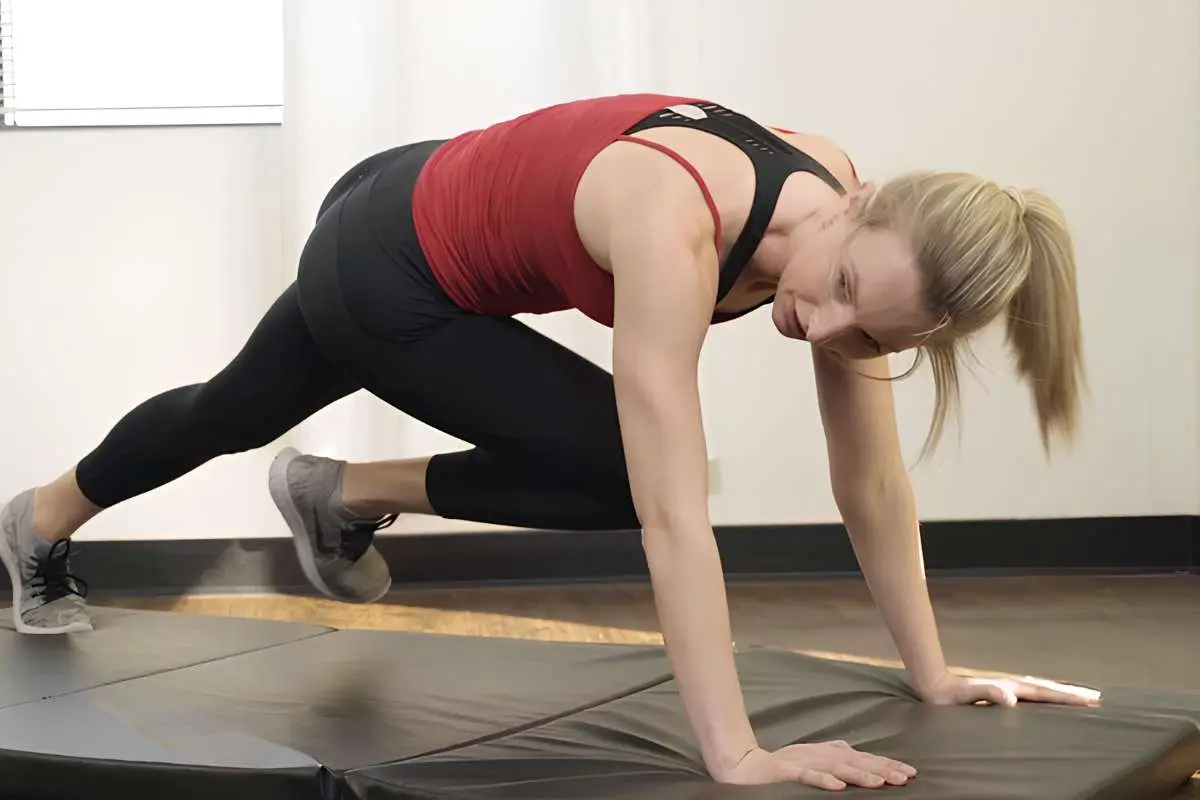
Alternate 30 seconds of effort (squats, high knees, jumping jacks, or mountain climbers) with 30 seconds of easy recovery for five minutes. This circuit is one of the most time-efficient forms of cardio exercise for weight loss you can do without leaving your desk area.
Good for: a full workout when time is tight.
Low-key & sustained movement
22. Dancing
Put on a song you love and move for a few minutes, however that looks for you.
Good for: mood, energy, and movement that doesn’t feel like exercise.
23. Under-desk elliptical
Pedal at a light, manageable resistance while working on tasks that don’t need full focus. Stop if it affects your posture, concentration, or safety.
Good for: adding light movement to otherwise sedentary stretches.
How 5-minute micro-workouts fit into a busy workday
A remote worker does not necessarily need to reserve an hour for exercise. A more practical strategy for fitness for remote workers is to create movement appointments throughout the workday.
Try this approach:
| Workday Moment | 5-Minute Movement |
|---|---|
| Before the first meeting | Squats + marching |
| Between two Zoom calls | Walking + calf raises |
| Mid-morning | Mobility + wall push-ups |
| Lunch break | Brisk walk |
| Mid-afternoon slump | Short HIIT circuit |
| After the final meeting | Walking or stretching |
For example, five separate five-minute movement breaks add up to 25 minutes of activity without requiring a traditional gym session, and stacking a few of these into a brisk walk or HIIT circuit turns the day into a simple form of cardio exercise for weight loss without ever blocking off a full hour.
Recent 2026 research suggests that brief interruptions to prolonged sitting may produce small, acute improvements in executive function and memory, although the certainty of evidence remains limited.
That makes breaks particularly relevant for knowledge workers who spend much of their day making decisions, writing, analyzing information, or attending virtual meetings.
Can HIIT and under-desk exercise improve focus?
High-intensity interval training can be useful when time is limited because it alternates short periods of harder effort with recovery. A short session can fit into a lunch break or between work blocks.
However, more intensity is not always better. A demanding workout immediately before a presentation may leave you tired rather than refreshed. Match the intensity to the task that follows.
Under-desk ellipticals offer a different approach. They can help add light movement while performing suitable low-demand tasks. They are not a replacement for dedicated exercise, strength training, or regular walking.
The bigger workplace goal is to avoid turning eight or more hours of remote work into uninterrupted sitting.
How companies can support remote employee fitness

Fitness should not become another productivity metric employees feel pressured to meet. Instead, companies can create wellness programs that make healthy choices easier.
Corporate wellness strategies can include:
- Five-minute movement breaks between long virtual meetings
- Optional virtual fitness sessions
- Walking-meeting policies for suitable calls
- Wellness stipends for fitness equipment
- Education about ergonomics and healthy workstation setup
- Flexible schedules that allow employees to exercise
- Company-wide movement challenges focused on participation rather than competition
- Encouraging employees to take breaks away from their screens
Managers can also avoid scheduling back-to-back meetings throughout the entire day. Giving employees even small gaps can make movement easier to incorporate.
How to build a sustainable remote work fitness routine
The most effective routine is one you can continue.
Start with three simple habits:
- Move every work block: After completing a major task or meeting, stand up and move for a few minutes.
- Schedule short workouts: Put five- to 15-minute exercise sessions on your calendar just as you would schedule meetings.
- Combine movement with your existing routine: Walk while taking an audio-only call, perform mobility exercises during a break, or use an under-desk elliptical during an appropriate low-demand task.
Then gradually work toward the recommended weekly activity levels rather than trying to transform your routine overnight. The World Health Organization specifically notes that doing some activity is better than none. It encourages people who are inactive to start with small amounts and gradually increase frequency, intensity, and duration. It is a gradual approach that fits naturally into fitness for remote workers, where consistency matters more than intensity.
Conclusion:
Fitness for remote workers doesn’t require a gym membership or a spare hour in your day. It requires small, consistent movement woven into the hours you’re already working. A five-minute walk between meetings, a short HIIT circuit, or a few squats before a call can add up to real benefits for your energy, focus, and long-term health — and small, repeated wins like these are exactly what make cardio exercise for weight loss sustainable over time. Start with one habit, build from there, and let movement become part of your workday rather than another task competing for it.
Your next step: Pick one exercise from this list and try it before your next meeting.
FAQ:
1. What is fitness for remote workers?
Fitness for remote workers refers to practical ways of staying physically active while working from home.
2. How can remote workers stay fit while working from home?
Use short movement breaks, walking, bodyweight exercises, and scheduled workouts throughout the workday.
3. What is the best exercise for remote workers?
There is no single best exercise. Walking, squats, lunges, push-ups, HIIT, mobility exercises, and other activities can work depending on your fitness level and goals.
4. Are under-desk ellipticals good for remote workers?
They can provide light movement while working on suitable tasks. They should not replace dedicated cardio or strength training.
5. Can exercise help remote workers focus?
Brief activity breaks may provide small acute benefits for some aspects of cognitive performance.