


Chhatrapati Shivaji Maharaj remains one of India’s most respected historical leaders. His courage, military planning, and vision of Swarajya continue to inspire people, especially in Maharashtra.
But his achievements went beyond winning battles. He built an independent kingdom, strengthened its army, developed its administration, and introduced systems for managing revenue, justice, and defence. His leadership brought together careful planning and a clear understanding of the challenges around him.
Many motivational sayings appear online under Shivaji Maharaj’s name. However, not all of them have reliable historical sources. Some cannot be traced to letters, records, or other writings from his time.
This collection brings together 17 leadership lessons based on recorded events and aspects of his rule. Each lesson includes historical background and a practical takeaway for modern leaders.
Chhatrapati Shivaji Maharaj quotes on confidence and courage
1. “Never bend your head; always hold it high.”
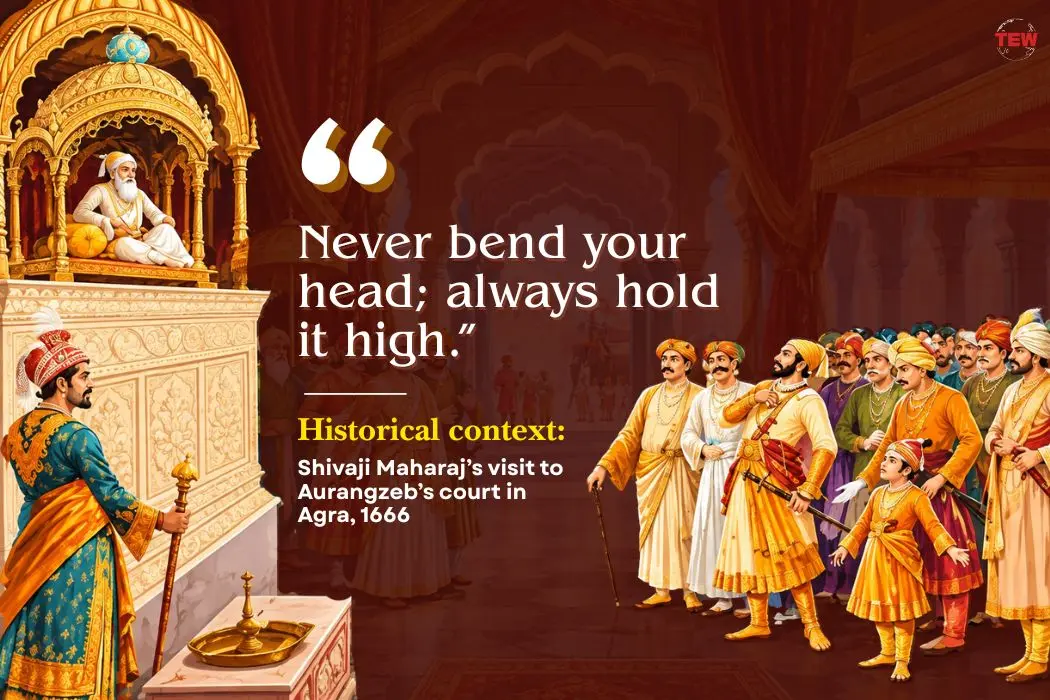
Historical context: Shivaji Maharaj’s visit to Aurangzeb’s court in Agra, 1666
During his visit to Aurangzeb’s court in 1666, Shivaji Maharaj objected to the position assigned to him during the royal audience. He felt that the treatment did not match his status and openly showed his displeasure.
The disagreement led to his confinement under Mughal supervision. He later escaped with his son Sambhaji through a carefully planned operation and returned to the Deccan.
Leadership lesson:
Confidence does not mean rejecting every compromise. It means knowing when a compromise could harm your dignity or long-term goals. Business leaders should listen to criticism but also speak up when a decision is unfair. Respectful disagreement is sometimes necessary to protect what matters.
2. “Do not think of the enemy as weak, but do not fear him either.”
Historical context: The encounter with Afzal Khan, 1659
Afzal Khan led a large Bijapur army to stop Shivaji Maharaj’s growing power.
Shivaji Maharaj knew that a direct battle could put his smaller army at a disadvantage. He gathered information, chose the meeting place near Pratapgad, and prepared for a possible attack.
When the meeting turned violent, he defended himself. The Maratha forces later defeated Afzal Khan’s army.
Leadership lesson:
Confidence should never turn into carelessness. Study your competitors before making an important decision. Understand their strengths, weaknesses, and likely next moves. Preparation helps you spot opportunities without taking unnecessary risks.
3. “Self-confidence provides the greatest strength.”
Historical context: The early establishment of Swarajya and capture of Torna Fort
Shivaji Maharaj began working towards Swarajya while still young. One of his earliest major gains was Torna Fort, captured around 1646. It gave him an important base from which he could expand his influence.
He did not wait until he had enough resources to challenge a major power directly. He started with smaller goals and gradually built his position.
Leadership lesson:
Big goals become easier when you break them into smaller tasks. Identify the resources and skills you need, set clear milestones, and focus on steady progress. Each small success can help you move towards the next goal.
4. “Courage is the power to overcome fear.”
Historical context: The escape from Panhala, 1660
Siddi Jauhar’s forces surrounded Panhala Fort, putting Shivaji Maharaj under heavy military pressure.
Shivaji Maharaj planned a night escape towards Vishalgad. The pursuing forces followed the Marathas, while Baji Prabhu Deshpande and a group of soldiers held them back near Ghod Khind. Their stand gave Shivaji Maharaj time to reach safety.
Leadership lesson:
A crisis tests how well a team has prepared. Leaders should assign clear roles, set up communication methods, and prepare backup plans. Everyone should know what to do before an emergency takes place.
5. “A man who has no faith in himself can never have faith in God.”
Historical context: The raid on Shaista Khan’s camp, 1663
Shaista Khan occupied Pune with a large Mughal force. A direct battle would have put Shivaji Maharaj’s smaller army at a disadvantage.
Instead, Shivaji Maharaj planned a surprise night raid on Lal Mahal with a selected group of followers. The raid wounded Shaista Khan and disrupted the Mughal camp.
Leadership lesson:
Belief in your abilities gives you the confidence to take calculated risks and pursue difficult goals. Leaders should recognize their team’s strengths, trust their preparation, and avoid assuming that limited resources automatically mean limited possibilities. Confidence becomes valuable when it is supported by sound judgment and action.
Chhatrapati Shivaji Maharaj quotes on navigating problems
6. “No need to learn from your own fault; we can learn a lot from the mistakes of others.”
Historical context: Kartalab Khan’s defeat at Umbarkhind, 1661
In 1661, Shaista Khan sent Kartalab Khan with a Mughal force into the Konkan. The army moved through Umbarkhind, a difficult mountain pass with dense forests and steep slopes.
Shivaji Maharaj used his knowledge of the area to restrict the Mughal army’s movement and block its routes forward and back. The Mughal force found itself in difficult conditions, and Kartalab Khan eventually had to negotiate a withdrawal.
Leadership lesson:
Understanding your operating environment can be more valuable than relying on resources alone. Before entering a new market or launching a project, study the conditions, identify potential obstacles, and understand how external factors could affect your plans. Good decisions come from knowing the environment in which you operate.
7. “Do not consider your enemy insignificant, or he will surprise you.”
Historical context: The struggle against the Siddis of Janjira
The Siddi rulers of Janjira controlled a strong island fort and had a powerful naval presence along the Konkan coast.
Shivaji Maharaj understood the threat they posed to Maratha security. He made several attempts to weaken their influence, but Janjira remained beyond his control during his lifetime.
Its strong defences, naval power, and political ties made it a difficult opponent.
Leadership lesson:
Never ignore a smaller competitor or a new threat. A large business can still lose customers to a smaller company that understands a particular market better. Keep track of your competitors, listen to customers, and respond before a small challenge becomes a bigger problem.
8. “Intelligence without courage is of no use.”
Historical context: The naval expedition to Basrur, 1665
In February 1665, Shivaji Maharaj led a naval expedition towards Basrur, an important port on the Kanara coast.
The fleet reached the port and attacked it. The expedition showed how the Maratha navy could be used beyond the forts and inland areas of the Deccan.
Leadership lesson:
Research and planning are useful only when they lead to action. If market research reveals an opportunity, decide what to do next. Assign responsibility, set a deadline, and make sure your team has the resources to act.
9. “Always be alert, for opportunities to come prepared.”
Historical context: The acquisition of Kalyan and expansion into the Konkan
As Shivaji Maharaj expanded his kingdom, he recognized the importance of the Konkan region and its trade routes.
The acquisition of Kalyan and nearby territories strengthened his position along the western coast. It also helped him gain control over important routes connecting the Deccan with the Konkan.
Leadership lesson:
It is easier to spot opportunities when you understand your market and prepare in advance. Follow changes in customer needs, industry trends, and demand. When an opportunity appears, a prepared team can respond faster.
Chhatrapati Shivaji Maharaj quotes on composure and resilience
10. “The strongest walls are not made of stone, but of unity and faith.”
Historical context: Tanaji Malusare and the capture of Kondana, 1670
Kondana Fort was an important military position. Recovering it was part of Shivaji Maharaj’s campaign against Mughal control.
Tanaji Malusare led the Maratha attack on the fort in February 1670. He died during the battle, but his brother Suryaji continued the effort, and the Marathas eventually captured the fort.
Leadership lesson:
A team becomes stronger when its members understand why their work matters. Leaders should set shared goals, explain responsibilities, and build trust. Unity means helping people work together when challenges arise.
11. “When you are enthusiastic, the mountain also looks like a clay pile.”
Historical context: The conquest of Javali, 1656
The Javali region was difficult to cross. Its thick forests, steep slopes, and narrow routes made travel and military movement challenging.
Shivaji Maharaj sought control of the region held by the More family. Gaining Javali strengthened his position in the western Deccan and gave him better access to important mountain routes. The area later became important for the development of Pratapgad Fort.
Leadership lesson:
Difficult markets often require a different approach rather than greater resources. Leaders should understand the challenges of their operating environment, identify alternative routes, and adapt their strategies accordingly. Progress often depends on finding a workable path where others see only obstacles.
12. “A courageous and brave man also bends in the honour of the learned and wise. Because courage also comes from knowledge and wisdom.”
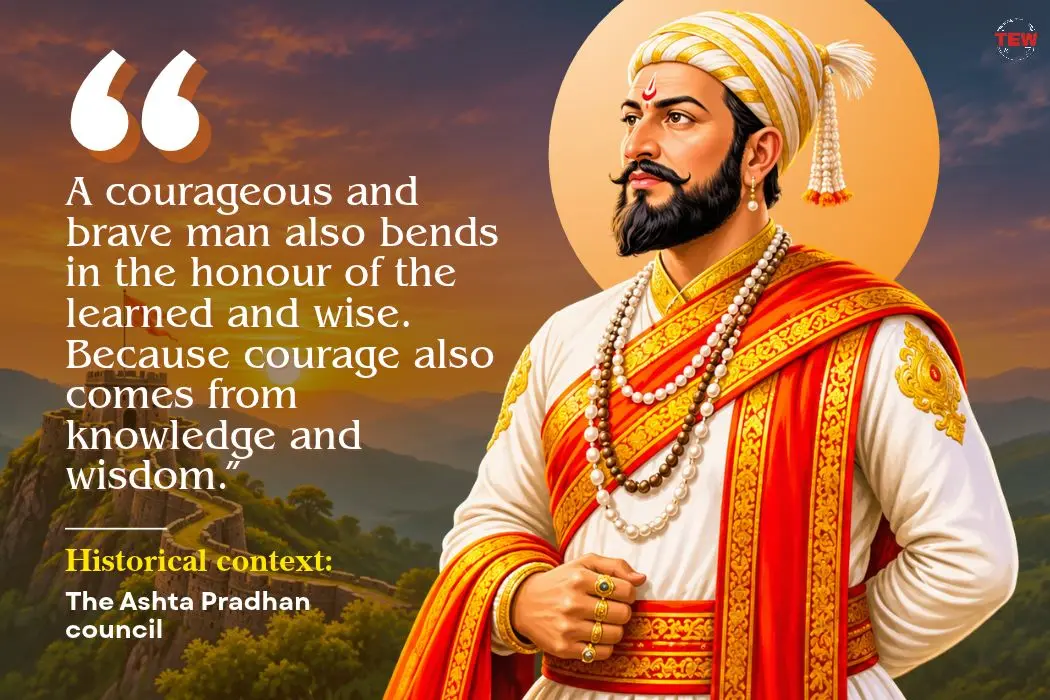
Historical context: The Ashta Pradhan council
As Shivaji Maharaj’s kingdom grew, it needed people who understood finance, official communication, foreign relations, justice, and other areas of government.
The Ashta Pradhan council brought together eight ministers with different responsibilities. This helped divide the work of running the kingdom and gave Shivaji Maharaj advice from people with specialist knowledge.
Leadership lesson:
A good leader does not need to know everything. Asking experts for advice shows good judgment, not weakness. Speak to specialists before making decisions involving legal, financial, technical, or business risks.
Chhatrapati Shivaji Maharaj quotes on decision-making and governance
13. “The welfare of the people should be the supreme law of the land.”
Historical context: Shivaji Maharaj’s revenue administration
As Shivaji Maharaj’s kingdom grew, he needed a better system to manage agricultural income and local administration.
His revenue system included ways to assess farm production and control the demands made by local officials and intermediaries. The government also had to collect enough money to support the army and run the kingdom.
These arrangements show that governing a kingdom involved more than collecting taxes. It also required attention to farmers and the effect of revenue demands on their lives.
Leadership lesson:
A business should not measure success only through sales or profit. Leaders should also consider how their decisions affect customers, employees, and the wider community. Keep track of service quality, customer complaints, working conditions, and the long-term effects of company policies.
14. “A courageous ruler always thinks of the welfare of his people.”
Historical context: The development of coastal defences and Sindhudurg Fort
Shivaji Maharaj understood that the Konkan coast needed protection from threats at sea. European trading powers and the Siddis of Janjira had important interests in the region.
Construction of Sindhudurg Fort began in November 1664 near Malvan. The island fort strengthened Maratha coastal defences and supported the growth of its naval power.
Leadership lesson:
Strong organizations prepare for risks before they become crises. Leaders should identify external threats, protect critical resources, and invest in systems that support long-term stability. Risk management should be part of strategic planning rather than a reaction to unexpected problems.
15. “Protect the women of your enemy as you would protect your own.”
Historical context: The traditional account of the daughter-in-law of the Subedar of Kalyan
A popular story linked to Shivaji Maharaj describes what happened after the capture of Kalyan. According to the account, the daughter-in-law of the local Subedar was brought before him.
The story says that Shivaji Maharaj refused to allow her to be treated disrespectfully and arranged for her safe return to her family.
Different versions of the story exist, and historians have not established all its details through reliable records from the time. It should therefore be treated as a traditional account rather than a fully verified event.
Leadership lesson:
Ethical behaviour matters most when someone has power over others. Modern leaders should set clear rules against harassment, discrimination, exploitation, and retaliation. These rules should apply to everyone, including senior employees and important business partners.
16. “Freedom is a boon, which everyone has the right to receive.”
Historical context: The coronation and formal establishment of Swarajya, 1674
Swarajya was the central goal of Shivaji Maharaj’s life. He challenged powerful rulers in the Deccan and gradually brought forts and territories under his control.
His coronation at Raigad on 6 June 1674 formally established him as an independent king. It marked an important step in the creation of a sovereign Maratha state.
Leadership lesson:
Freedom and ownership need more than words. They also require responsibility and the ability to make meaningful decisions.
In an organization, leaders can encourage ownership by giving teams clear goals and the authority to make decisions. Involve employees in solving problems that affect their work.
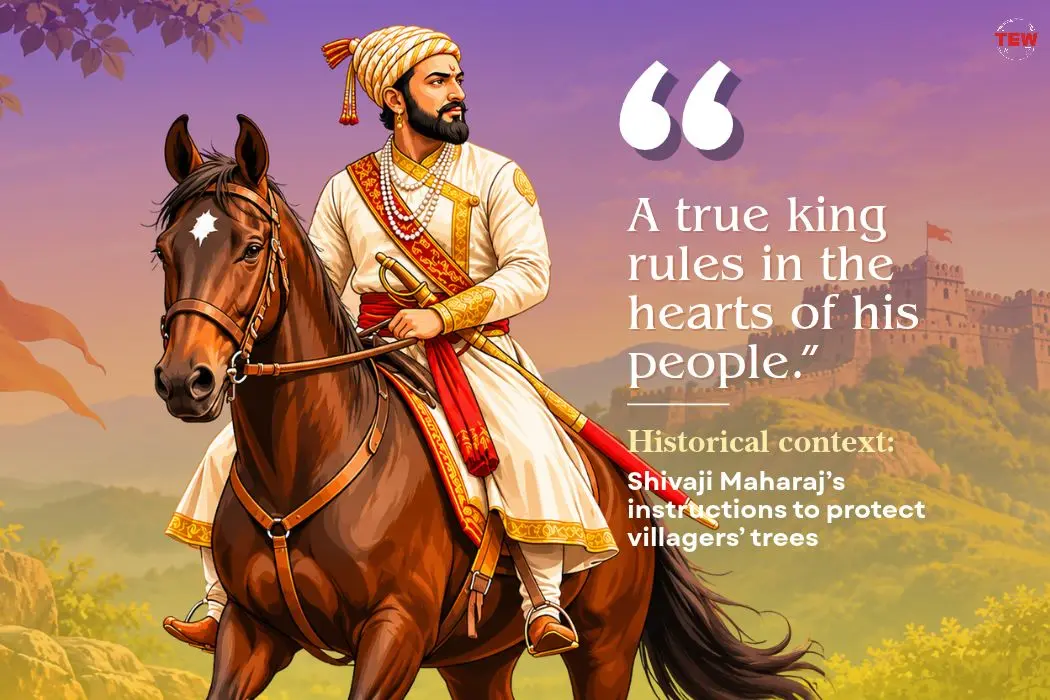
17. “A true king rules in the hearts of his people.”
Historical Context: Shivaji Maharaj’s instructions to protect villagers’ trees
As Shivaji Maharaj expanded his naval strength, his administration needed timber to build ships and strengthen coastal defences. However, he instructed officials not to cut trees such as mango and jackfruit without proper permission.
He recognized that these trees took years to grow and were valuable to the families who cared for them. His instructions also made it clear that officials should not use force to obtain resources from local people.
This approach reflected an understanding that strengthening the kingdom should not come at the unnecessary expense of its people.
Leadership lesson:
People respect leaders who consider how their decisions affect others. Protecting people’s interests, respecting their efforts, and avoiding unnecessary hardship can build trust over time.
Business leaders can apply the same principle by considering the impact of company decisions on employees, customers, suppliers, and local communities. Long-term trust comes from treating these relationships with fairness and respect.
The Rajmudra of Chhatrapati Shivaji Maharaj: a historical inscription
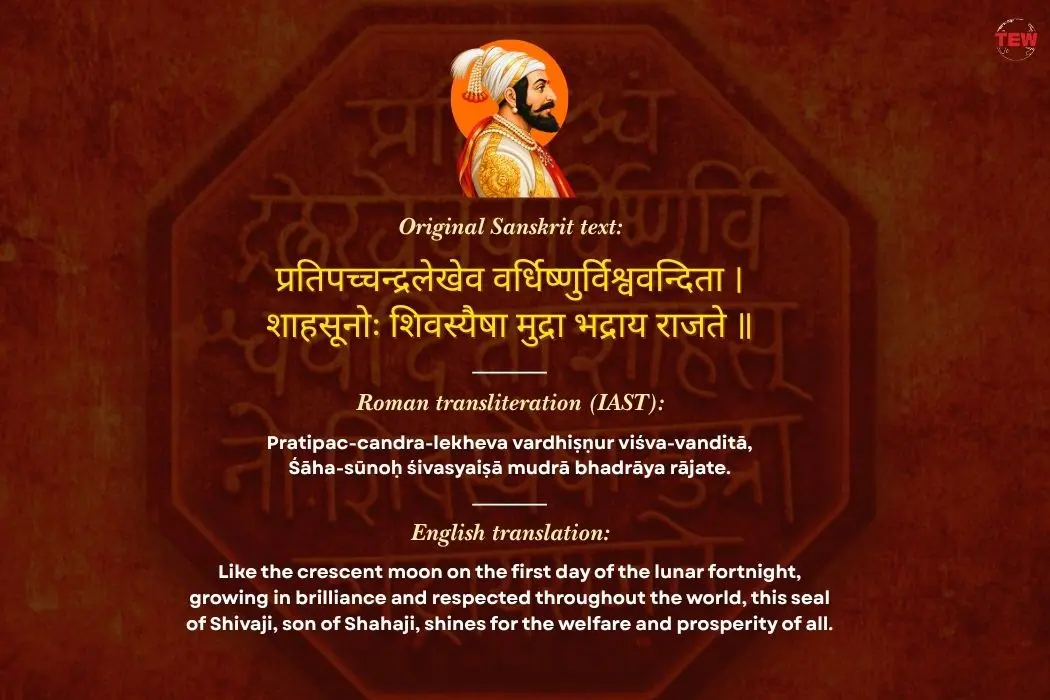
The Rajmudra is one of the best-known historical symbols linked to Chhatrapati Shivaji Maharaj. Unlike many motivational sayings shared online, this Sanskrit inscription is directly associated with his royal seal.
The inscription expressed the ideal of growing sovereignty linked to public welfare.
Original Sanskrit text:
प्रतिपच्चन्द्रलेखेव वर्धिष्णुर्विश्ववन्दिता ।
शाहसूनोः शिवस्यैषा मुद्रा भद्राय राजते ॥
Roman transliteration (IAST):
Pratipac-candra-lekheva vardhiṣṇur viśva-vanditā,
Śāha-sūnoḥ śivasyaiṣā mudrā bhadrāya rājate.
English translation:
Like the crescent moon on the first day of the lunar fortnight, growing in brilliance and respected throughout the world, this seal of Shivaji, son of Shahaji, shines for the welfare and prosperity of all.
What does the Rajmudra symbolize?
The Rajmudra carries three main ideas:
- Growth: The growing crescent moon represents increasing strength and prosperity.
- Respect: The inscription expresses the hope that the ruler’s authority will earn respect.
- Public welfare: The final phrase links the royal seal to the well-being of the people.
Leadership lesson:
The Rajmudra reminds leaders to look beyond growth, status, and money when measuring success.
Organizations should ask whether their products solve real problems, whether their policies treat people fairly, and whether their decisions benefit the communities they serve.
Why are many popular Shivaji Maharaj quotes difficult to verify?
Not every saying shared online under Shivaji Maharaj’s name can be verified.
A historical quotation should have a reliable source, such as a letter, official document, inscription, or account written close to the time of the event.
One important source for studying his life is the Sabhasad Bakhar. Krishnaji Anant Sabhasad wrote it during the rule of Shivaji’s son Rajaram in the late seventeenth century. It is an early account of Shivaji Maharaj’s life, but historians still need to examine it carefully rather than treat every detail as a word-for-word record.
Historian Surendra Nath Sen’s Siva Chhatrapati provides an English translation of the Sabhasad Bakhar, along with extracts from other chronicles and historical notes. His book Administrative System of the Marathas also explains how the Maratha government worked.
For this reason, the 22 sayings in this article should be read as popular attributions and modern leadership prompts, not as verified quotations from Shivaji Maharaj. The historical events provide the context for the lessons, while the Rajmudra is a documented inscription associated with him.
Conclusion:
Chhatrapati Shivaji Maharaj’s life offers lessons in courage, planning, teamwork, and responsibility. His efforts to build Swarajya, strengthen the army, protect the coastline, and organize the government show that leadership involves much more than winning battles.
The sayings in this collection offer modern ways to think about those lessons, but they should not all be treated as his confirmed words. The Rajmudra, by contrast, provides a documented message that connects royal authority with public welfare.
For modern leaders, the practical lessons are clear: prepare before acting, understand the challenges you face, trust capable people, and make decisions with long-term consequences in mind.