

Strong and well-managed public services are essential for communities to thrive. Without proper planning and oversight, critical areas like roads, parks, and community programs can quickly become inefficient, underfunded, or unable to meet residents’ needs, leading to higher costs and frustration. This is where Government Relations Services leaders make a difference. By guiding smart decisions, coordinating across departments, and engaging with the community, they ensure resources are used wisely, infrastructure is maintained, taxes remain sustainable, and services adapt to future challenges. Their leadership turns complex governance issues into real benefits for residents and job creators.
David Barrick, having served as Chief Administrative Officer (CAO) of both large urban and rural local governments, exemplifies this kind of leadership. He drives growth, stability, and long-term success through strong financial management, transparent reporting, strategic planning, and employee engagement. His responsibilities include preparing balanced budgets, securing external funding, fostering partnerships, and empowering staff to deliver high-quality services while maintaining fiscal responsibility.
Throughout his career, David Barrick has consistently transformed vision into measurable achievements. At Brampton, one of the largest and most diverse cities in Canada, he introduced a multi-year budgeting framework that earned an AAA credit rating from S&P, multiple Government Finance Officers Association’s (GFOA) Budget Awards, and recognition as one of “Canada’s Best Communities” by Maclean’s, Forbes’ Top 100 Employers, and ISO 37120 Platinum certification.
At the Niagara Peninsula Conservation Authority (NPCA), he restored fiscal accountability and helped rebuild trust with municipal funders. At Thames Centre, he launched the award-winning “OpenBook” transparency tool, modernized policies, completed a community facilities master plan, and strengthened labour relations. By combining fiscal stewardship with innovation and strategic vision, David has positioned municipalities for sustainable growth, stronger communities, and long-term excellence.
From Budget Chair to City Leader
David Barrick’s path to public service began with a deep belief that sound fiscal management is the cornerstone of effective governance. As Budget Chair of Niagara Region, he quickly realized that every municipal dollar must be accounted for not just in terms of financial return, but also in the long-term value it brings to residents. This experience taught him to balance the often competing priorities of community investment and fiscal restraint – a principle that has guided his leadership throughout his career.
After serving in elected office, David transitioned into more senior administrative roles, including CAO of Brampton. Each role brought unique challenges, yet the responsibility remained the same: to deliver high-quality public services in a sustainable, transparent, and financially responsible way. A defining moment came during his tenure in Brampton, when he introduced a multi-year budgeting framework directly tied to the city’s strategic plan. This approach gave Council the ability to make long-term investments while reducing volatility in tax increases.
Before taking the helm at Thames Centre, David had already earned a reputation for restoring fiscal accountability and implementing innovative budgeting frameworks in Niagara Region and Brampton.
The results spoke volumes – Brampton earned an AAA credit rating from S&P and received the GFOA Budget Presentation Award. These achievements reflect David Barrick’s core belief that strong fiscal discipline is not just about managing numbers but about building trust, ensuring stability, and creating lasting community growth.
Strategic Budgeting in Action
One of the biggest challenges David has faced in his career is leading organizations through periods of financial constraint while still driving innovation and improving services. As Budget Chair, he managed funding cuts from higher levels of government by making tough local decisions, yet ensured frontline services were protected by restructuring processes, reprioritizing existing resources, and finding efficiencies.
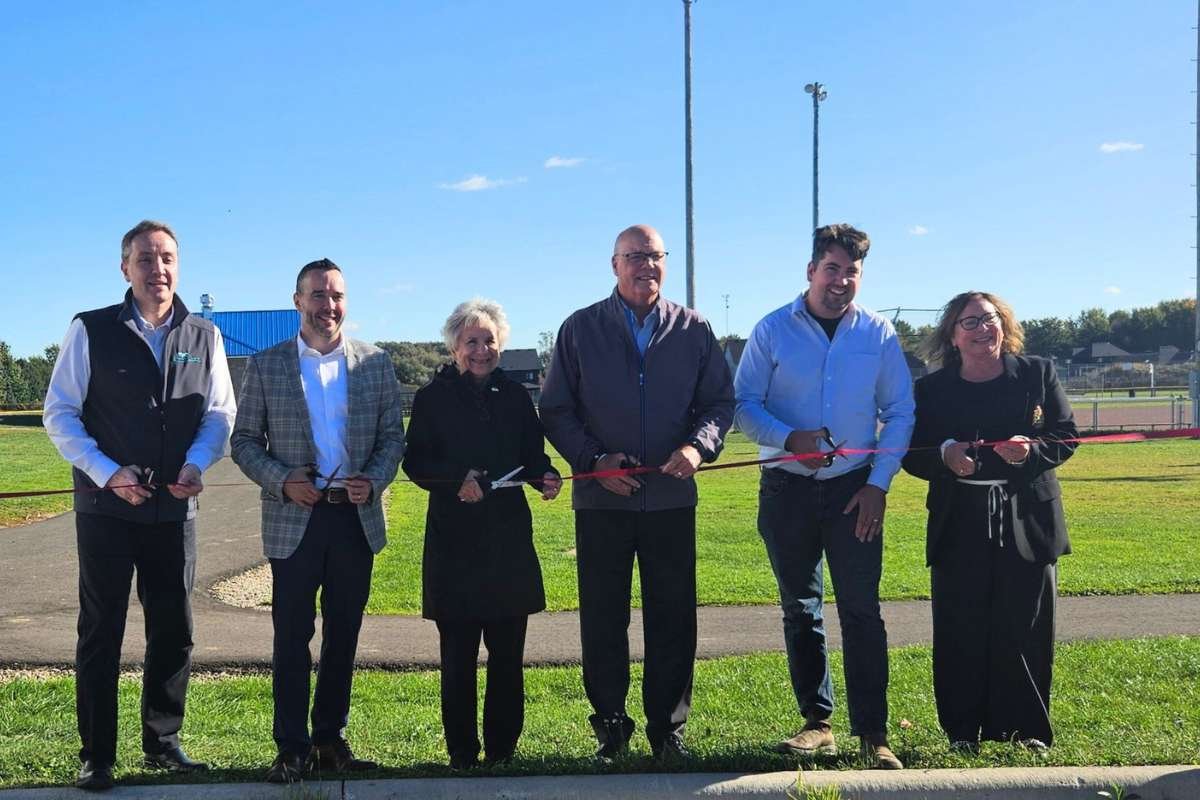
At the NPCA, he inherited a budget under scrutiny and responded by introducing a transparent reporting framework that helped rebuild trust with municipal funders. Later, at the City of Brampton and the Thames Centre, he addressed rising infrastructure costs by securing millions in grants to ease the local tax burden – most notably helping to obtain major funding for Canada’s first electrification of a transit fleet.
Through these experiences, David Barrick highlights three key lessons:
- First, fiscal responsibility means choosing the right investments at the right time with the right funding model.
- Second, transparency in financial decisions builds the trust needed to drive change.
- And third, sustainable budgeting is not just about sound numbers – it also depends on creating a culture where staff understand and embrace their role in managing public funds.

Three Pillars of Smart Municipal Decision-Making
David Barrick’s approach to strategic decision-making is built on three core principles:
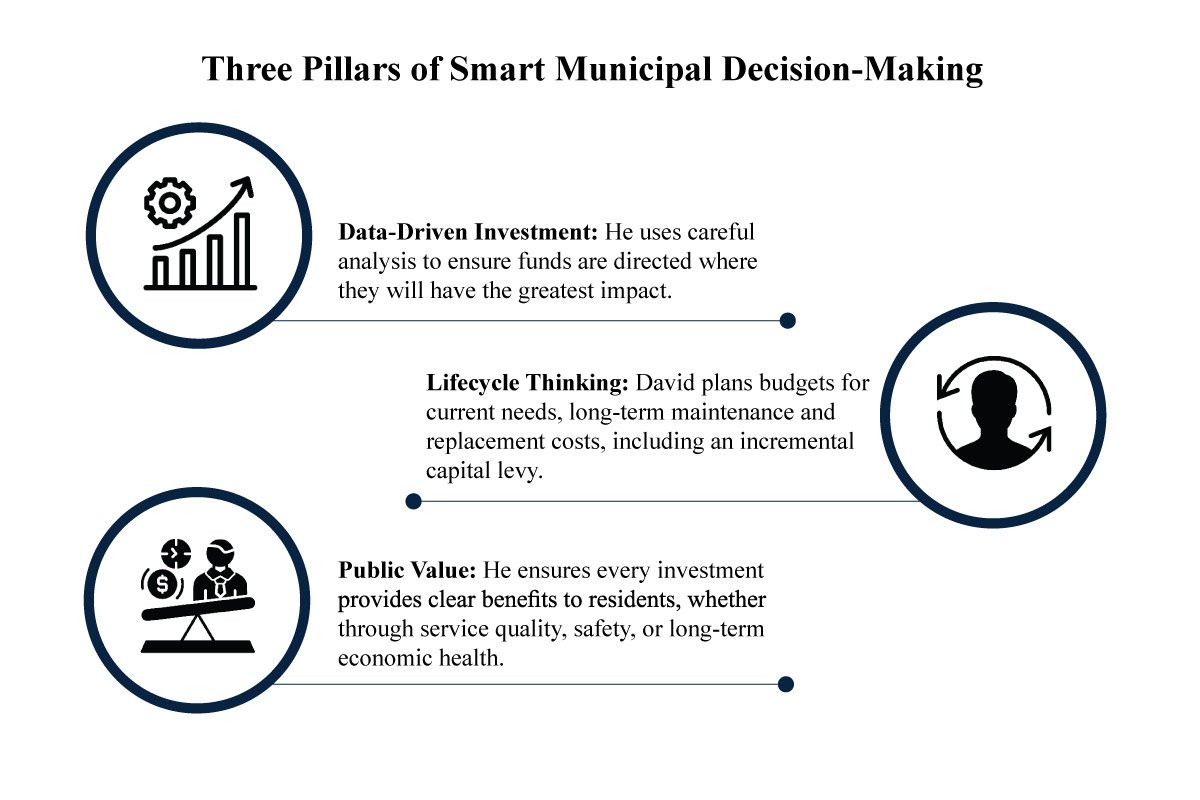
- Data-Driven Investment: He uses careful analysis to ensure funds are directed where they will have the greatest impact.
- Lifecycle Thinking: David plans budgets for current needs, long-term maintenance, and replacement costs, including an incremental capital levy.
- Public Value: He ensures every investment provides clear benefits to residents, whether through service quality, safety, or long-term economic health.
This philosophy has guided his leadership in Niagara Region as Budget Chair, Brampton’s multi-year budgeting, the NPCA’s operational reforms, and Thames Centre’s capital project prioritization and dedicated infrastructure levy.
A Model of Financial Transparency and Public Engagement
David Barrick takes particular pride in “OpenBook,” a public-facing budget transparency tool that gives residents interactive access to financial data and helps them clearly see how tax dollars are allocated. By making complex information more accessible, the initiative reduced FOI requests, encouraged stronger public participation in budget consultations, and quickly became a model for financial transparency.
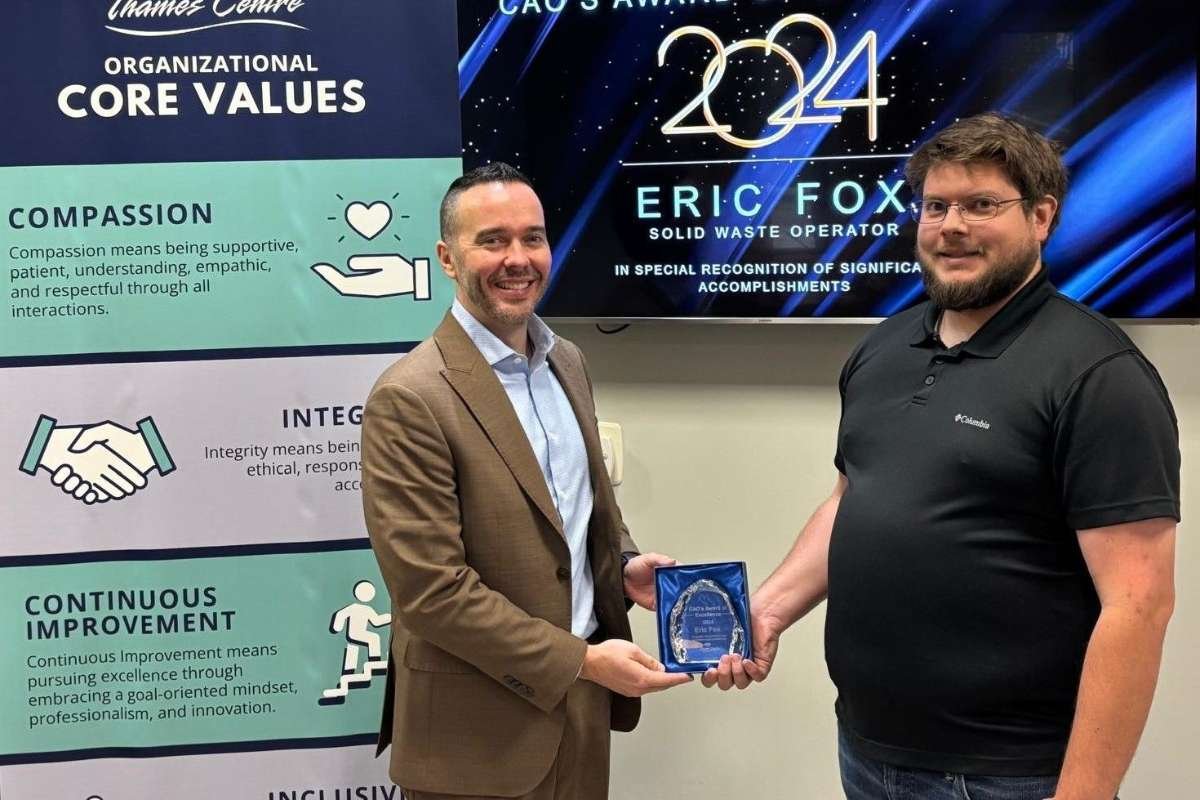
Thames Centre was recognized for this achievement with a Certificate of Merit for Innovation by the Association of Municipal Clerks and Treasurers of Ontario (AMCTO). For David, this recognition is more than just an award – it reflects his consistent commitment, demonstrated from Niagara Region to Brampton to Thames Centre, to making fiscal responsibility an internal practice and a shared public value.
Key Trends Shaping the Future of Municipal Governance
David Barrick shares the key trends shaping the municipal sector, including:
- Rising Infrastructure Costs: Funding gaps are prompting municipalities to explore innovative approaches to financing and asset management.
- Data-Driven Decision-Making: Real-time financial dashboards and analytics are helping leaders allocate resources more effectively.
- Fiscal Sustainability over Growth: Councils are focusing more on long-term asset management and operating costs before approving new projects.
These trends can be addressed through long-range capital planning, diversified funding strategies, and inter-municipal cost-sharing models.
Reducing Costs, Improving Access
In Brampton, David Barrick implemented a service inventory and cross-departmental budget reviews to identify overlapping initiatives and reallocate funds to higher-priority projects. At the NPCA, he introduced cost-recovery models for certain park operations, which reduced reliance on municipal levy funding. At Thames Centre, he led the adoption of digital permitting and payment systems, cutting administrative costs while improving service access. Across all his roles, he established a corporate Continuous Improvement (CI) framework to drive efficiency and innovation.
Mentorship, Strategy, and Fiscal Stewardship
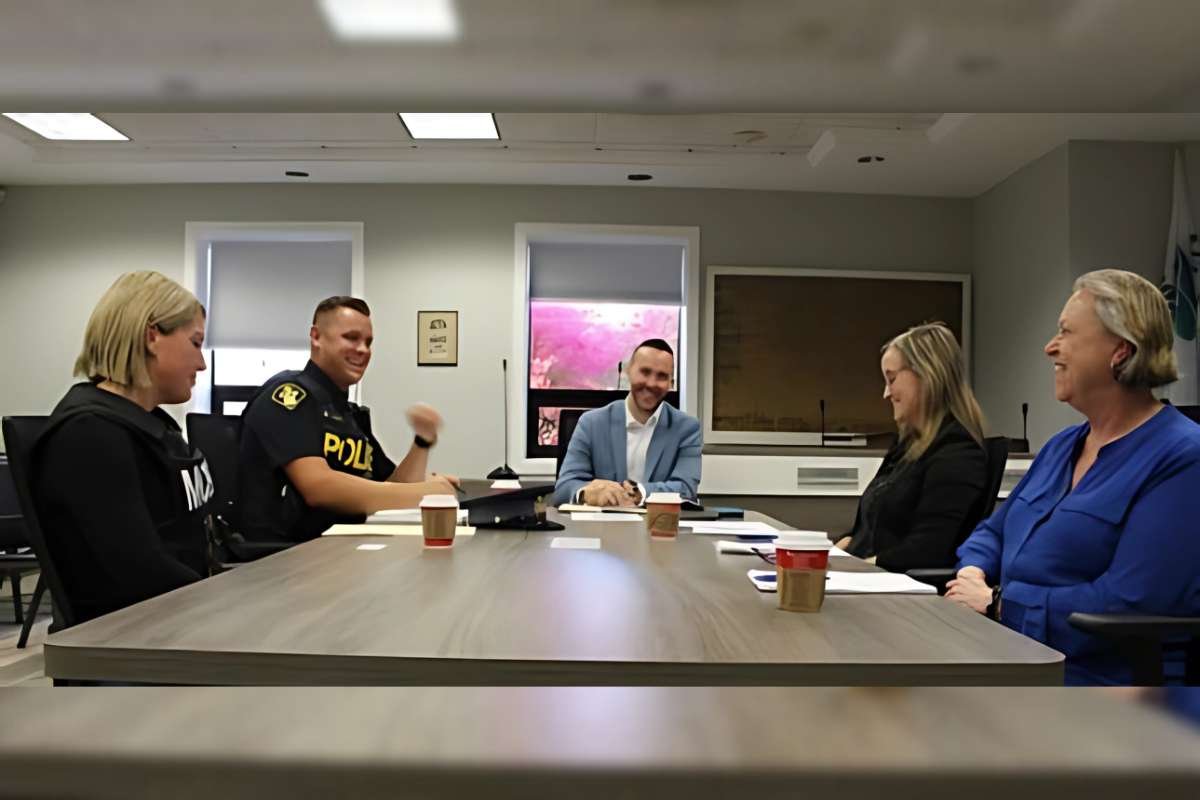
David has presented at several sector conferences, including the Ontario Municipal Administrators Association (OMAA), where he spoke on financial sustainability, multi-year budgeting, and regional collaboration for cost efficiency. He also mentors emerging leaders on how to integrate fiscal responsibility into strategic planning and contributes articles to Municipal World Magazine. In addition, he initiated Brampton Learning Days and Leadership Panels to support knowledge sharing and leadership development.
A Track Record of Recognition
David Barrick’s leadership has been marked by several awards and recognitions that reflect his focus on transparency, innovation, and strong financial stewardship:
- E.A. Danby Award – Recognizing Thames Centre’s transparency and innovation in municipal administration
- Led the Thames Centre to be recognized as one of Southwestern Ontario’s “Best Places to Work”
- Provincial funding awards for infrastructure based on strong financial planning and justification
- Recognition from peer municipalities for restoring fiscal governance at the NPCA.
- Led the City of Brampton to receive ISO 37120 Platinum-level certification by the World Council on City Data (WCCD), the highest global standard for data-driven decision-making
- Guided Brampton to be recognized as one of Forbes Canada’s Top 100 Employers (2020 & 2021) and Canada’s Best Communities by Maclean’s Magazine
- Achieved a Bronze rank for Brampton’s Innovation District and postsecondary partnerships at the IEDC’s 2020 Excellence in Economic Development Awards
- Secured multiple GFOA Budget Presentation Awards for excellence in financial management
- Recognition Awards from both the Canadian Association of Municipal Administrators (CAMA) and the Ontario Municipal Administrators Association (OMAA)
Commitment To Collaboration, Innovation, And Long-Term Excellence
David Barrick has led major government initiatives, securing funding for Brampton’s second full-service hospital, a new Toronto Metropolitan University Medical School, a third transit facility, and Canada’s first electrified transit fleet. These projects strengthened infrastructure and positioned municipalities for future growth.
He also focused on improving city culture and community engagement. During COVID-19, he enhanced employee communication, built strong ties with unions like CUPE, ATU, and the Fire Association, and worked with Council to advance priorities, customer service, and diversity and inclusion through a dedicated Equity Office. He partnered with community groups to expand arts programming, reduce costs via shared services, and attract investment without raising taxes.
Additionally, David co-led the Recovery and Prosperity Alliance, coordinating COVID-19 recovery across the Greater Toronto Area. Beyond local impact, he actively contributes to the municipal sector through CAO working groups and memberships in CAMA and OMAA, demonstrating his commitment to collaboration, innovation, and long-term excellence in governance.
On-Time, On-Budget, and Ahead of the Curve
Through efficiency, innovation, and a stronger workplace culture, David consistently prepared balanced budgets in all his roles as CAO while enhancing service levels. He increased reserve funds and helped councils keep tax increases below inflation. By creating a Project Management Office, he ensured over 90% of capital projects were delivered on time and within budget. He also secured millions in grant funding to ease the tax burden and successfully reduced the NPCA’s operational deficit through cost-saving measures and improved efficiency.
Making Every Public Dollar Work
For David Barrick, responsible leadership means treating every public dollar as if it were his own – managed with care, prudence, and a focus on long-term value for the community. He ensures compliance by putting in place internal audits, clear procurement processes, and regular financial reporting to the Council and the public.
Responsible Leadership as the Foundation for Change
David emphasizes that responsible financial management is key to effective leadership. As he advises, “Fiscal responsibility is not a constraint – it is the foundation that allows innovation to thrive. Through responsible public resource allocation, you build trust and earn the mandate to make transformative change.”
By carefully managing public resources, leaders can foster innovation, deliver long-term community value, and gain the credibility needed to implement meaningful and sustainable initiatives.
Personal Motivation
What drives David Barrick is seeing the real results of careful and smart budgeting – like a new park built without going into debt, cultural programs growing through partnerships, or big projects finished years early using grant money. From Niagara to Brampton to Thames Centre, he has shown that managing money wisely helps communities achieve big goals, do more with less, and still stay within their budget. This approach keeps taxes low and creates a better environment for businesses and stronger community growth.
David Barrick’s 5 Impactful Business Mantras
- Fiscal Discipline Fuels Growth: Make every dollar count while enabling ambitious community goals.
- Transparency Builds Trust: Open, clear communication with stakeholders strengthens credibility and collaboration.
- Strategic Planning Drives Success: Long-term vision ensures sustainable growth and effective decision-making.
- Innovation Thrives on Responsibility: Responsible management creates space for creative solutions and efficiency.
- Empowered Teams Deliver Excellence: Engaged employees are key to achieving organizational and community impact.












