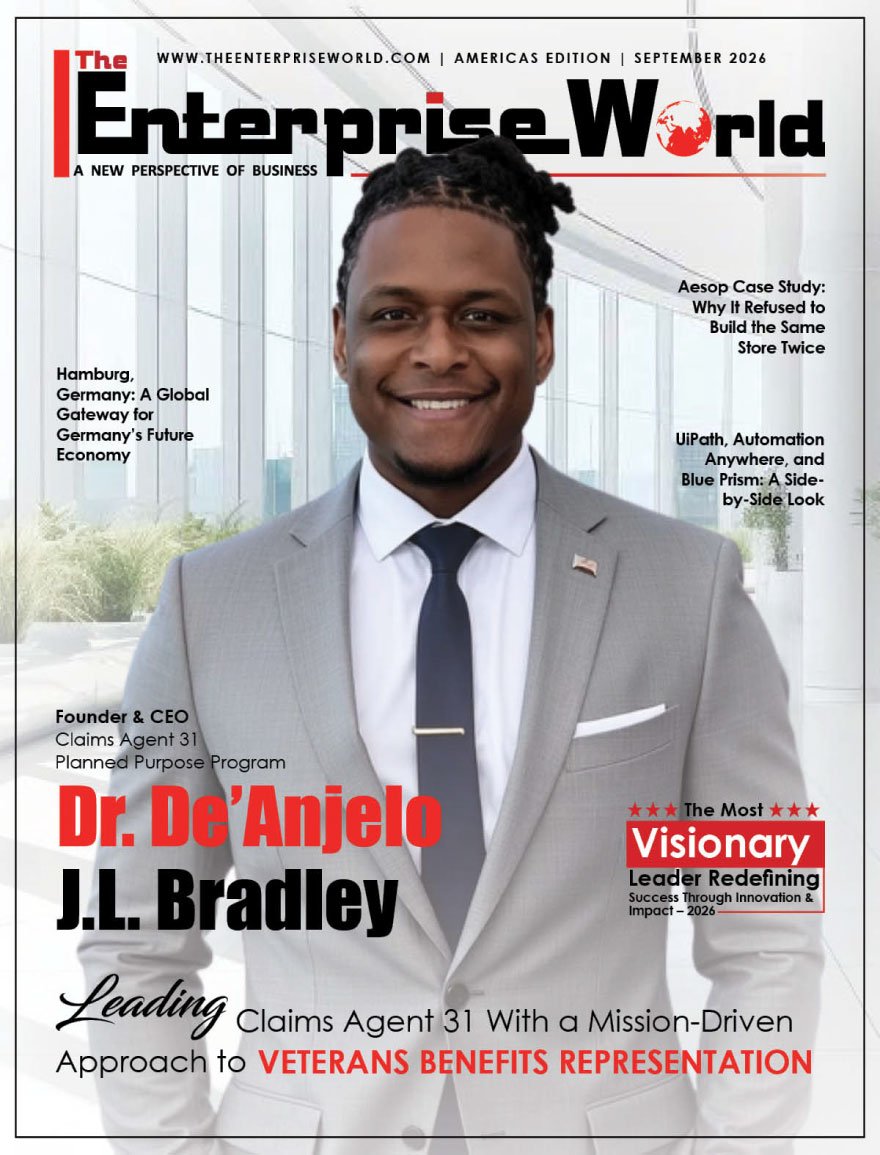
In the high-stakes world of veterans disability claims, where a single missed document can mean the difference between a family’s stability and years of uncertainty, Dr. De’Anjelo J.L. Bradley has built a career defined by one constant: showing up when people need him most. As an Accredited VA Claims Agent and Founder & CEO of Claims Agent 31, along with serving as CEO of Planned Purpose Program, he now channels more than two decades of military, fire, and emergency response leadership into a singular mission helping veterans secure the disability compensation and benefits they have already earned.
As an accredited VA claims agent, Dr. Bradley brings a rare level of credibility and discipline to veterans advocacy, navigating the dense evidentiary requirements of the Department of Veterans Affairs with the same precision and composure he once applied to high-stakes emergency environments. His work bridges claims of representation, appeals, mentorship, nonprofit service, and authorship all rooted in the belief that a denial is not the end, but the beginning of a process that can still be won with diligence and the right advocate. For Dr. Bradley, every case is personal, every veteran deserves an unwavering voice, and real leadership is measured not by titles, but by the lives changed because someone refused to walk away.
A Career Built on Responsibility, Not Titles
Dr. Bradley’s leadership was never cultivated in comfort; it was shaped in the United States Air Force, on active fire lines, and in emergency response environments where the margin for error was razor-thin. Those years of high-stakes public service, both domestic and overseas, gave him a perspective that has never left him, and he carries a simple but demanding belief into every role: leadership is not a title, but the willingness to accept responsibility when people, organizations, and communities are depending on you.
That belief eventually carried him into a field many overlook the regulated, closely governed world of veterans benefits representation. Becoming an accredited VA claims agent required passing a federal examination, meeting ongoing continuing-education requirements, and answering to the same standard of conduct expected of any professional representative before the Department of Veterans Affairs. For Dr. Bradley, the decision to pursue that credential was never about building a business; it is a sacred trust rather than a title on a business card.
Through Claims Agent 31, founded in 2026, Dr. Bradley represents veterans and their families as they navigate disability compensation claims, appeals, and the dense evidentiary requirements the VA process demands. Alongside that work, he leads Planned Purpose Program, a nonprofit built around mentorship and purpose-driven development, and has become a published author writing The Antithesis, an introspective novel, and co-authoring the Amazon best-selling The AI Transformation. Each role draws from the same conviction: real leaders never stop being students, and service is not something a person ever truly retires from.
“I didn’t become a claims agent to build a business. I became one because I was tired of watching veterans get told ‘no’ by a system that owed them a ‘yes.'”
Witnessing the Gap Between Service and Recognition
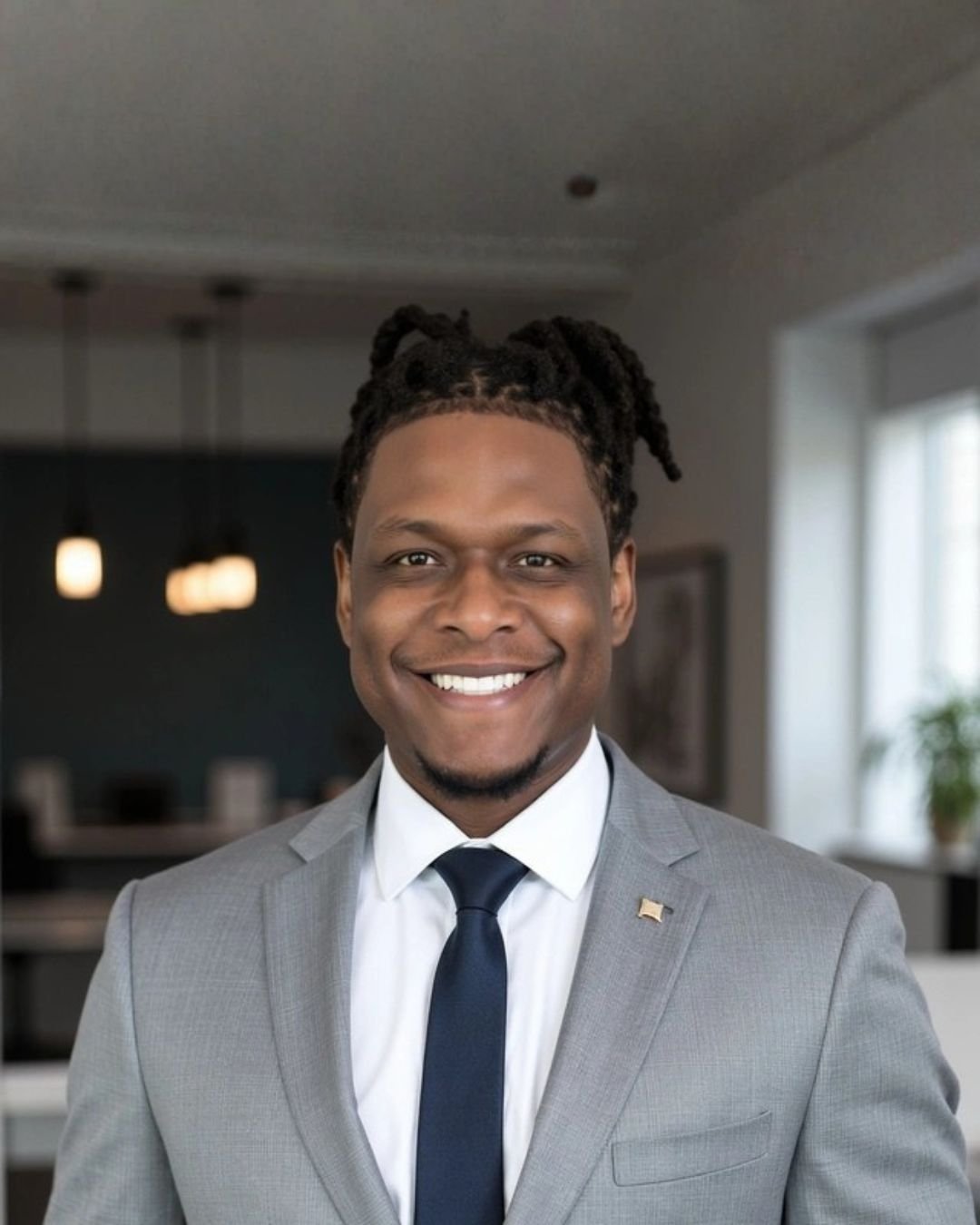
What led Dr. Bradley to pursue VA accreditation and found Claims Agent 31 is grounded in something he witnessed repeatedly: veterans who had already given everything being asked to prove it one more time. Throughout his career in fire and emergency response, he saw service members carrying injuries and invisible wounds that paperwork rarely captured, and legitimate claims denied not for lack of merit, but for lack of documentation or understanding of the system. That gap between what veterans deserve and what they receive became the reason Claims Agent 31 exists.
For the veterans he serves, the plan is a properly built, evidence-backed claim filed correctly, documented thoroughly, and fought for without apology. Dr. Bradley believes purpose is powerful, but purpose without a plan remains only an idea, and the Planned Purpose Program grew from the same conviction: that people carrying real potential veterans among them often lack the mentorship, structure, or advocate they need to convert experience into forward motion. The objective is not simply to tell someone to dream bigger, but to help them get what they have already earned, and then help them build what comes next.
“Purpose is powerful, but purpose without a plan can remain only an idea.”
A Simple Equation for Meaningful Success
Success, for Dr. Bradley, has never been measured in revenue alone. As a claims agent, he returns again and again to a simple, almost stubborn equation whether the veteran received the rating, the compensation, and the recognition they were owed. Revenue and growth matter to keeping Claims Agent 31 sustainable, but they are not the final measurement. He measures his work by whether a family’s financial security improved, whether a veteran received recognition for an injury sustained in service, and whether the process felt less like a fight against an indifferent system and more like having someone diligently in their corner.
Integrity is inseparable from that measurement, and a successful leader, in his view, should leave people and systems stronger than they found them a standard he tries to apply across business, public service, veterans advocacy, and Planned Purpose Program. Impact, for him, is not an abstract concept; it is a veteran finally getting the decision they should have gotten the first time.
“Success is impact with sustainability and for a claims agent, impact means a veteran finally gets the decision they should have gotten the first time.”
Turning Purpose Into a Plan, Case by Case
Translating purpose into outcomes, for Dr. Bradley, means moving past sympathy and into structured, disciplined casework gathering service records and medical evidence, identifying every condition connected to service, preparing the strongest possible claim or appeal, and staying with a veteran through every stage of a process that can stretch on for months or years. His method begins with the individual understanding what they experienced in service, what has changed since, and what evidence exists or is missing. From there, purpose becomes a plan with deadlines, documentation, and a clear next step at every stage.
Accountability is the engine that keeps it moving, and Dr. Bradley believes inspiration can start a claim, but consistent, diligent follow-through is what wins it. Whether he is representing a combat veteran seeking a higher disability rating, a family member navigating survivor benefits, or a young person weighing a career, the goal remains the same: create outcomes that produce confidence, competence, and forward momentum, not just paperwork filed and forgotten.
“Inspiration can start a claim, but consistent, diligent follow-through is what wins it.”
Where Innovation Meets Human Connection
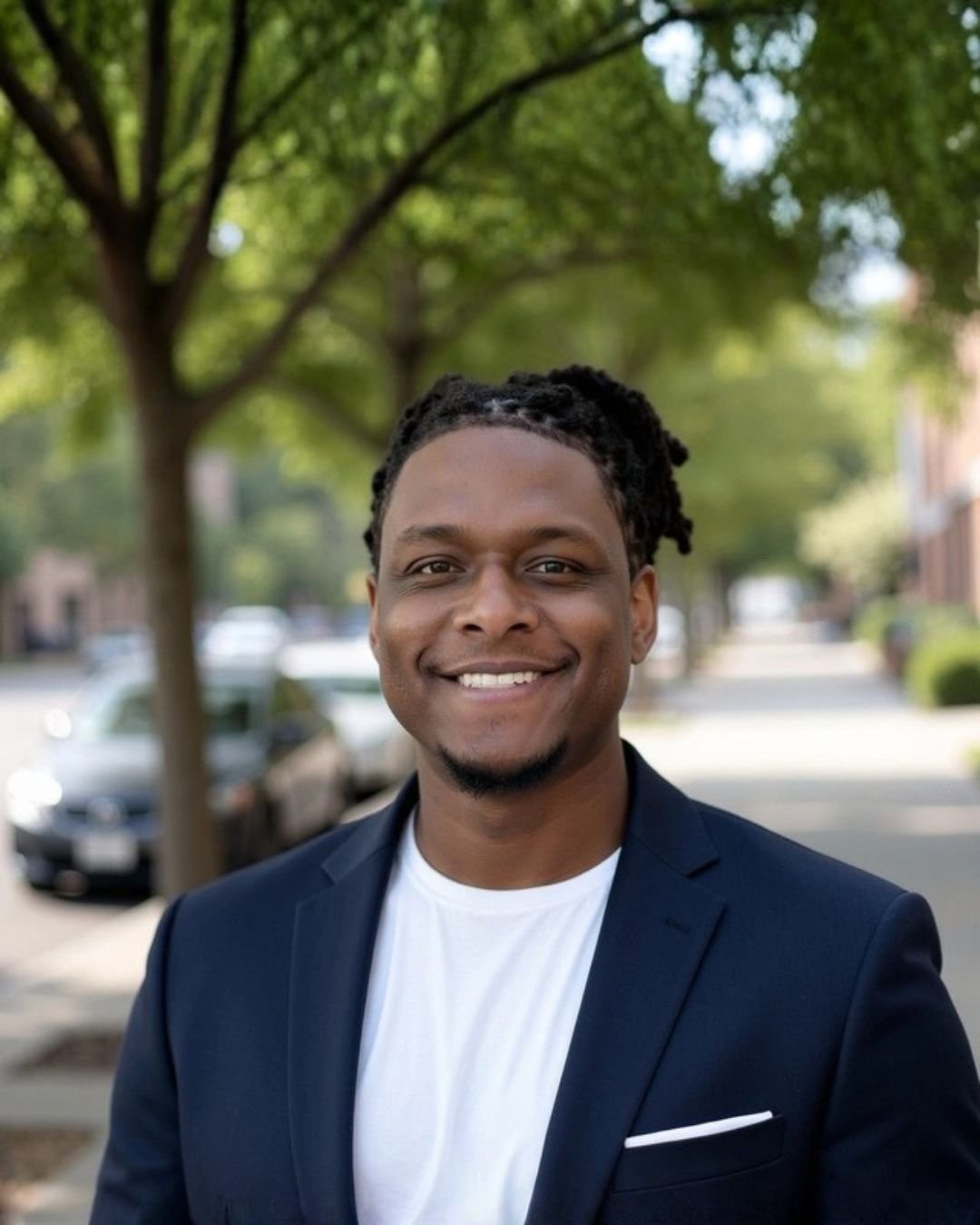
Dr. Bradley defines innovation as the disciplined application of better ideas, and he holds technology to a clear standard: it earns its place only when it improves access, communication, decision-making, efficiency, or scale without removing the human element. In claims work, that means using digital tools to organize evidence, track deadlines, and keep veterans informed at every stage, without ever letting a case become just a file number.
He draws on digital platforms, artificial intelligence, project-management methods, and risk-management principles to extend outreach, develop content, and connect people with information faster, but his intentionality never wavers; technology should strengthen advocacy and mentorship, not replace them. That perspective also shapes his work as an author, where he explores how emerging technology can solve practical problems without anyone losing empathy, ethics, accountability, or critical thinking along the way.
One Mission, Many Paths to Serve
The achievement that best represents his leadership, according to Dr. Bradley, is not a single award but a structural shift: building a practice and platform that brings veterans advocacy, mentorship, nonprofit service, and authorship together rather than treating them as unrelated efforts. Through Claims Agent 31, he built a dedicated, accredited practice focused on fighting for veterans’ earned benefits, while the Planned Purpose Program supports the broader journey of mentorship and purpose beyond the claim itself.
His authorship extends that message through The Antithesis and the Amazon best-selling The AI Transformation. What sets his approach apart is range drawing on experience across emergency management, fire service leadership, project management, risk management, and veterans advocacy to help people think in terms of both what they are owed and what comes next.
Leading With Clarity When Nothing Is Certain
Representing veterans through a federal benefits system means constantly balancing urgency against process, and Dr. Bradley understands there is always more good work than time, funding, or people to accomplish it forcing a leader to prioritize. His career trained him to lead under pressure and uncertainty, assessing risk, consulting the right people, making the best decision available, and staying ready to adjust. He brings that same discipline to claims work, where delays and denials are common and a veteran’s patience is often already worn thin.
Resilience, for him, is not simply enduring difficulty. He has also learned that saying “no” can protect a mission just as much as saying “yes,” and leadership, in his view, requires boundaries, standards, and the discipline to direct resources where they can create the greatest impact for the people counting on him.
“Resilience is not simply enduring difficulty. It is learning, adapting, and continuing with greater clarity appeal by appeal, if that’s what it takes.”
Ownership Is Earned, Not Assigned
People take ownership when they understand both the mission and their individual value to it. That is the principle Dr. Bradley uses to build his practice and teams, and for him, it is the essence of servant leadership: putting the needs of the veteran, mentee, or team member ahead of his own convenience and leading by example rather than instruction. He encourages those around him to ask questions, challenge assumptions respectfully, develop their own solutions, and keep learning, holding himself to the same standard. If he expects accountability, he must accept it, and if he wants diligence from his team, he must model it first.
That same standard governs his life at home. Dr. Bradley is rooted in his family, and he treats that foundation as inseparable from his public work rather than something separate from it. Integrity, in his view, does not change depending on who is watching. The way he shows up for his family is the same way he shows up for a veteran’s case file fully, and without cutting corners.
“If I want people to pursue development, I must continue developing. If I expect accountability, I must accept accountability. If I want diligence from my team on behalf of a veteran, I have to model it first.”
Before and After the Leadership Journey
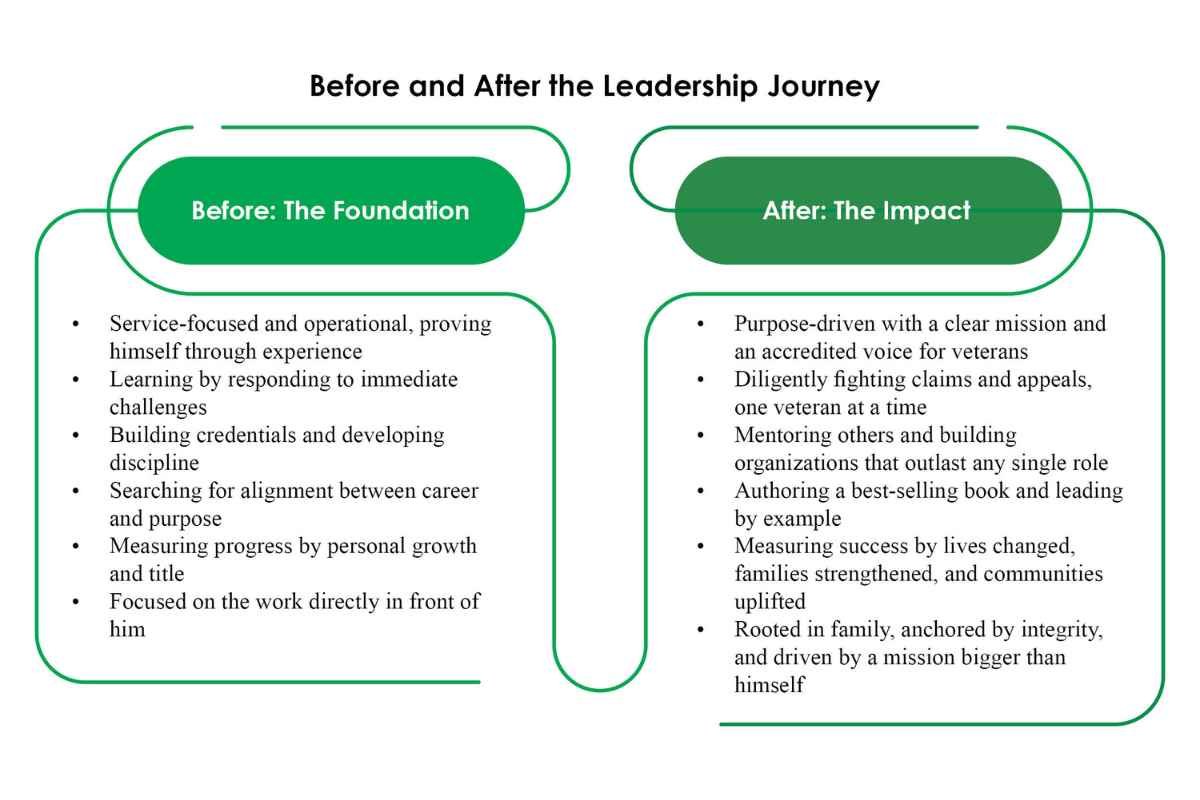
| Before: The Foundation | After: The Impact |
| Service-focused and operational, proving himself through experience | Purpose-driven with a clear mission and an accredited voice for veterans |
| Learning by responding to immediate challenges | Diligently fighting claims and appeals, one veteran at a time |
| Building credentials and developing discipline | Mentoring others and building organizations that outlast any single role |
| Searching for alignment between career and purpose | Authoring a best-selling book and leading by example |
| Measuring progress by personal growth and title | Measuring success by lives changed, families strengthened, and communities uplifted |
| Focused on the work directly in front of him | Rooted in family, anchored by integrity, and driven by a mission bigger than himself |
A Journey Measured in Milestones
For the accompanying infographic, Dr. Bradley chose to highlight the breadth and progression of his journey through verified milestones, rather than figures that would need formal documentation to confirm:
- Over two decades of leadership across military, fire and emergency response, veterans advocacy, and organizational leadership.
- Accredited VA claims agent, Authorized to represent veterans before the Department of Veterans Affairs a credential earned through federal examination and ongoing compliance.
- Founder of Claims Agent 31 (www.claimsagent31.com), established in 2026 as a dedicated practice helping veterans pursue the disability compensation and benefits they have earned.
- Published author of The Antithesis and Amazon best-selling co-author of The AI Transformation, alongside Erik Seversen and 33 global AI experts.
- Approximately a decade of contract and combat fire-service experience supporting high-risk international environments.
- Multiple advanced professional credentials spanning emergency management, fire leadership, project management, and risk management including CEM, CFO, PMP, PMI-RMP, and MIFireE along with DoD HazMat, OSHA, International Building Code, and FEMA ICS/EMI certifications.
- Four completed academic degrees, from an advanced associate’s degree in Municipal Fire Protection through bachelor’s, master’s, and doctoral-level education.
- Founder & CEO of Planned Purpose Program and founding partner of The Blue Circle Group (bcg4vets.com), extending veterans advocacy through mentoring, community engagement, and organizational leadership.
Scaling Advocacy Without Losing the Personal Touch
Over the next three to five years, Dr. Bradley envisions Claims Agent 31 becoming a stronger, more recognized resource for veterans, while the Planned Purpose Program grows alongside it as a platform for mentorship and leadership development. That next stage includes expanding his capacity to take on cases, deepening partnerships with veteran service organizations, and continuing to write and speak on behalf of a community he considers family with technology as a tool for connection, never a substitute for diligence.
Growth for Dr. Bradley must be disciplined cases handled with the same diligence at scale as they are today, partnerships aligned with the mission, and systems that let him serve more veterans without losing the personal connection that makes real advocacy work.
“I want Claims Agent 31 to be known for one thing above all: that we fought for every veteran like their claim was the only one on the desk.”
A Day in a Leader’s Life: Discipline, in Practice
Every day is a deliberate balance between two callings emergency management and veterans advocacy anchored by family and personal growth.
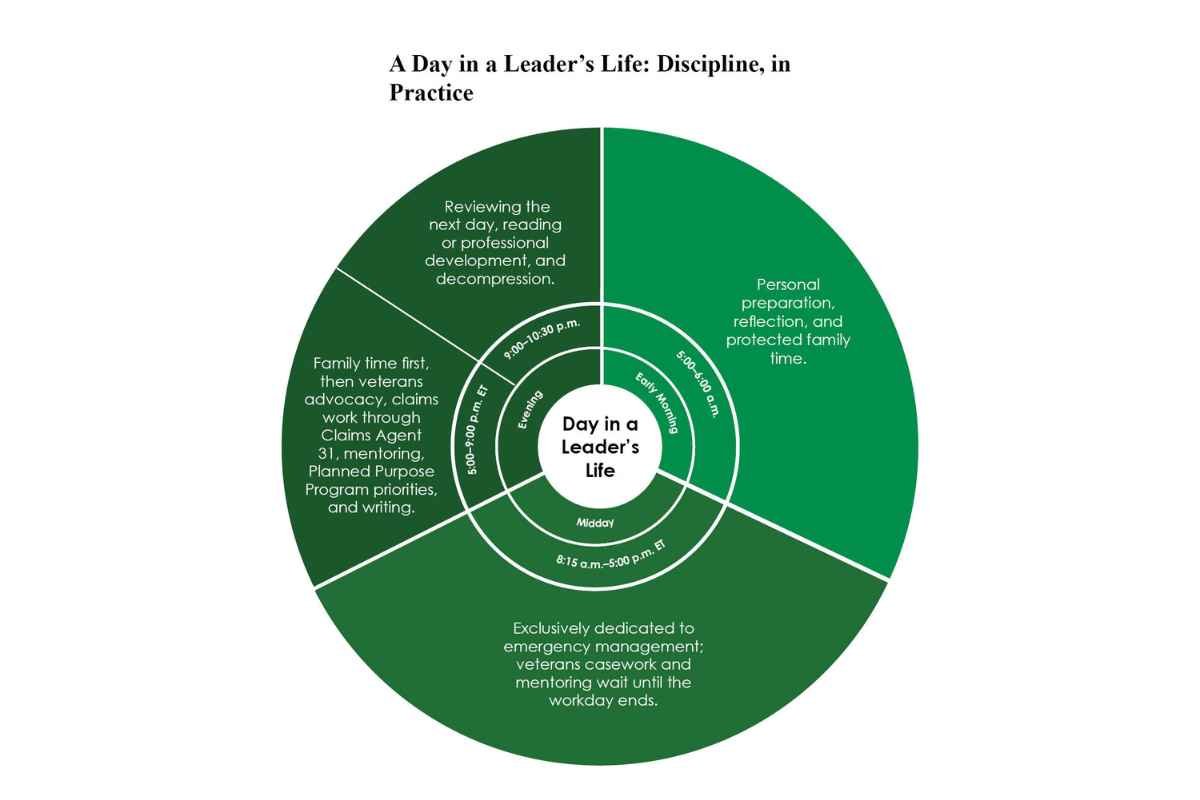
- Early Morning · 5:00–6:00 a.m. — Personal preparation, reflection, and protected family time.
- Workday · 8:15 a.m.–5:00 p.m. ET — Exclusively dedicated to emergency management; veterans casework and mentoring wait until the workday ends.
- Evening · 5:00–9:00 p.m. ET — Family time first, then veterans advocacy, claims work through Claims Agent 31, mentoring, Planned Purpose Program priorities, and writing.
- Night · 9:00–10:30 p.m. — Reviewing the next day, reading or professional development, and decompression.
- Weekends — Veterans casework, mentoring, Planned Purpose Program initiatives, and writing, built around protected family time.
Dr. Bradley keeps a firm boundary between his emergency management work and veterans advocacy; the workday belongs to emergency management, and evenings and weekends belong to the veterans and mentees who depend on him, all while protecting time for family, service, and growth.
A Message to Those Still Defining Success
To veterans still navigating the system, to aspiring leaders, and to anyone still defining what success means,
Do not confuse visibility with value, speed with progress, or titles with leadership. Your purpose does not have to arrive as one dramatic revelation; it often reveals itself gradually through service, adversity, responsibility, education, failure, and the people you are called to help. If you are a veteran who has been told “no,” know that a denial is often the beginning of the process, not the end of it, and you deserve someone who will fight for you diligently the way you fought for this country.
Build competence before demanding recognition. Keep learning after you receive the title. Protect your integrity when compromise would be easier. Find mentors, but do not surrender your judgment. Use technology, but remain human. Stay rooted in your family, because they are the reason the work matters in the first place.
Success is not only what you accumulate. It is what you build, who you help, what you improve, and what remains stronger because you were there.
With resolve,
Dr. De’Anjelo J.L. Bradley
Founder & CEO, Claims Agent 31,
CEO, Planned Purpose Program
Key Takeaways:
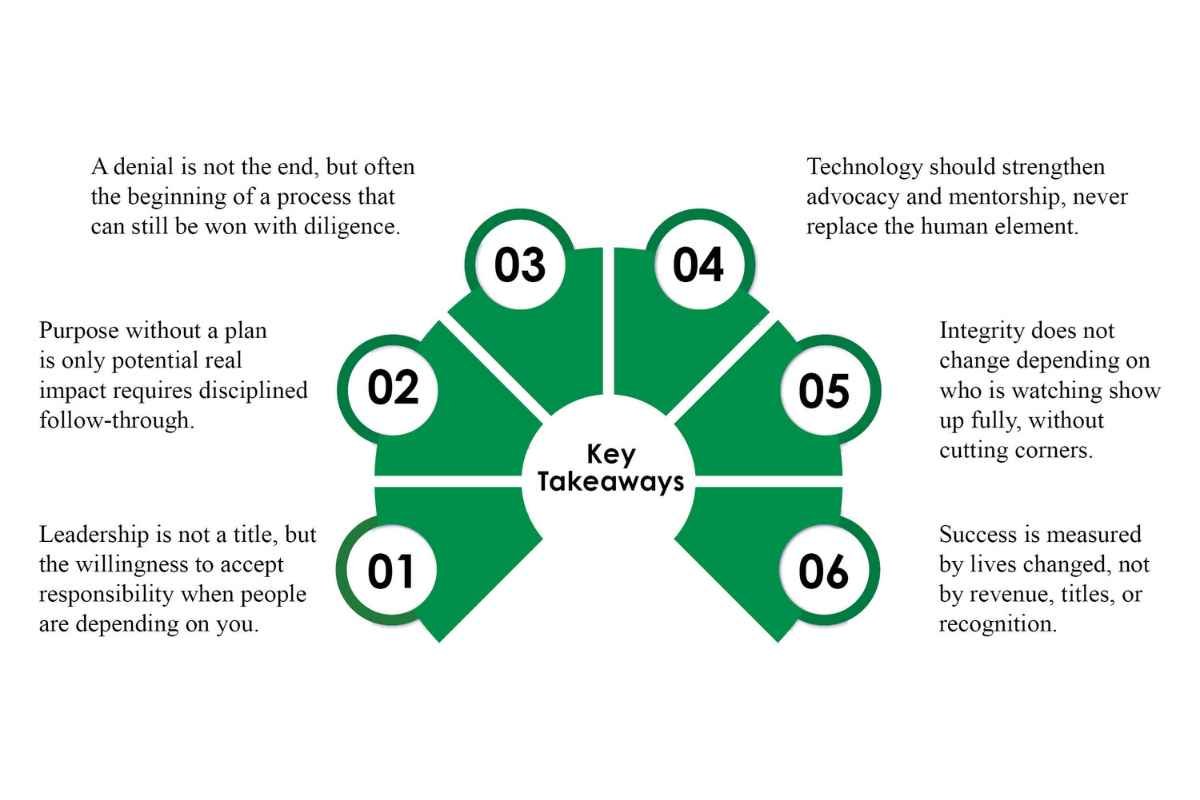
- Leadership is not a title, but the willingness to accept responsibility when people are depending on you.
- Purpose without a plan is only potential real impact requires disciplined follow-through.
- A denial is not the end, but often the beginning of a process that can still be won with diligence.
- Technology should strengthen advocacy and mentorship, never replace the human element.
- Integrity does not change depending on who is watching show up fully, without cutting corners.
- Success is measured by lives changed, not by revenue, titles, or recognition.