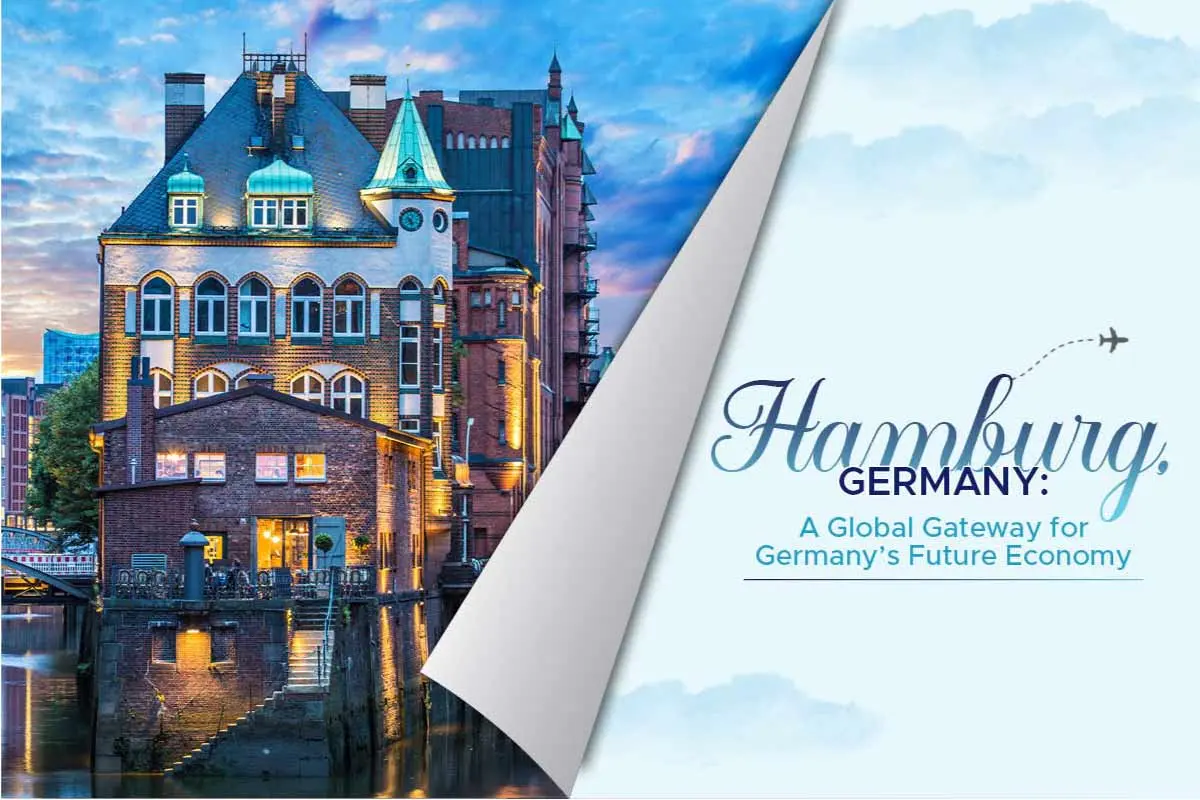
Ships move along the Elbe as cranes lift containers, trains carry freight inland, and port traffic keeps the city’s waterfront in motion. In Hamburg, Germany, this energy reflects the city’s place as the country’s second-largest city and a major international commercial centre.
Its economy reaches well beyond shipping, linking trade with aviation, logistics, technology, media, science and tourism. With a GDP of around €161.9 billion, the city brings Germany’s industrial strengths into contact with newer sectors and global markets. Its commercial reach gives the northern city a distinct place in Germany’s economy, with strong connections across Europe and beyond.
Why Hamburg matters: A northern gateway with an economy built for what comes next.
Hamburg’s Economic Reach: Germany’s Global Gateway
In Hamburg, Germany, economic activity begins at the Port of the city, where trade flows through a network linking the city with more than 900 ports across 170+ countries. Positioned on the Elbe, the port gives Germany direct access to Northern Europe and Scandinavia while supporting supply chains across the country.
Yet the northern German city’s wider economic value extends beyond cargo. Aviation, logistics, digital industries, media, life sciences and financial services add depth to the city’s commercial base. More than 3,500 international companies reflect its appeal as a place for global business. Universities and a skilled workforce provide the talent needed across these sectors. The city’s direct output matters, but its wider role is equally significant: it connects German companies with markets, investment and employment opportunities worldwide.
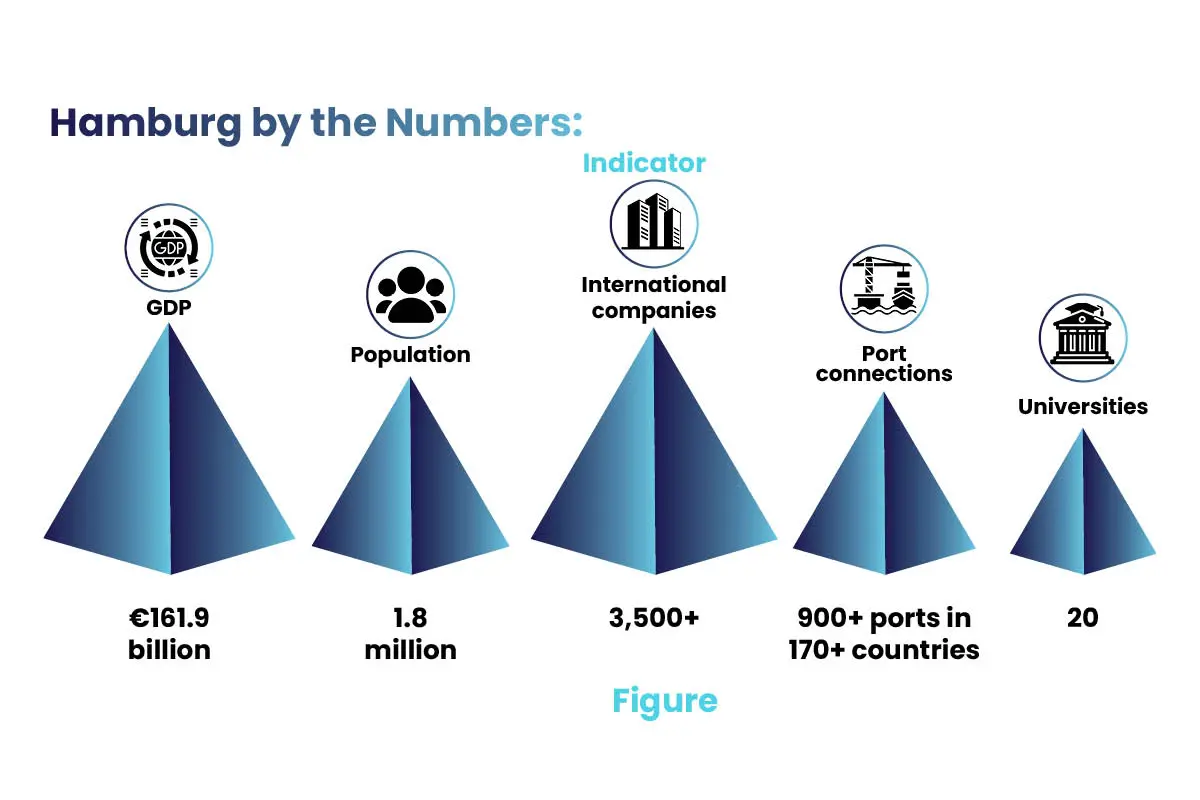
Hamburg by the Numbers:
| Indicator | Figure |
| GDP | €161.9 billion |
| Population | 1.8 million |
| International companies | 3,500+ |
| Port connections | 900+ ports in 170+ countries |
| Universities | 20 |
Beyond the Harbour: A Diverse Business Base
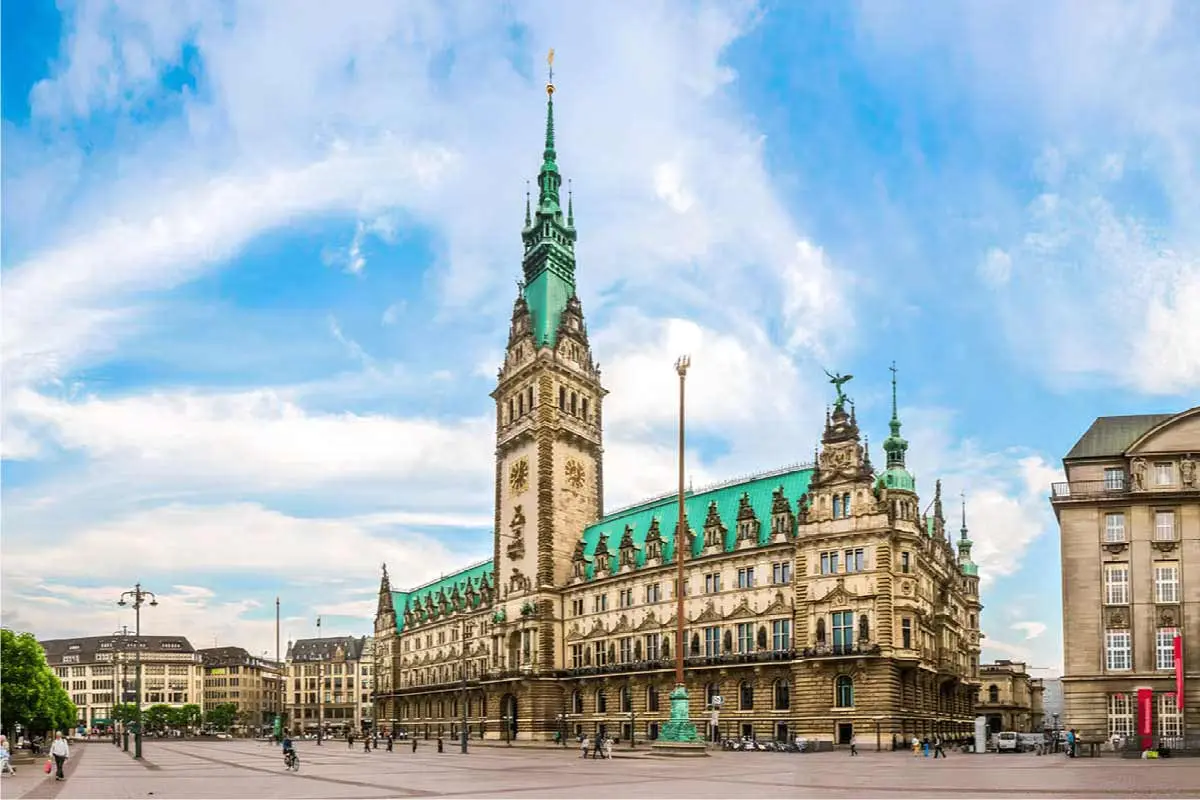
The economy of Hamburg, Germany, has a much wider base than its maritime identity suggests. Aviation is a major example. Hamburg Marketing describes the city as the world’s third-largest civil aviation centre, after Seattle and Toulouse, with Airbus, Lufthansa Technik and a strong aviation research network at its core. Around this sector sits a varied mix of established businesses and emerging fields.
Six Sectors Shaping Hamburg’s Business Base:
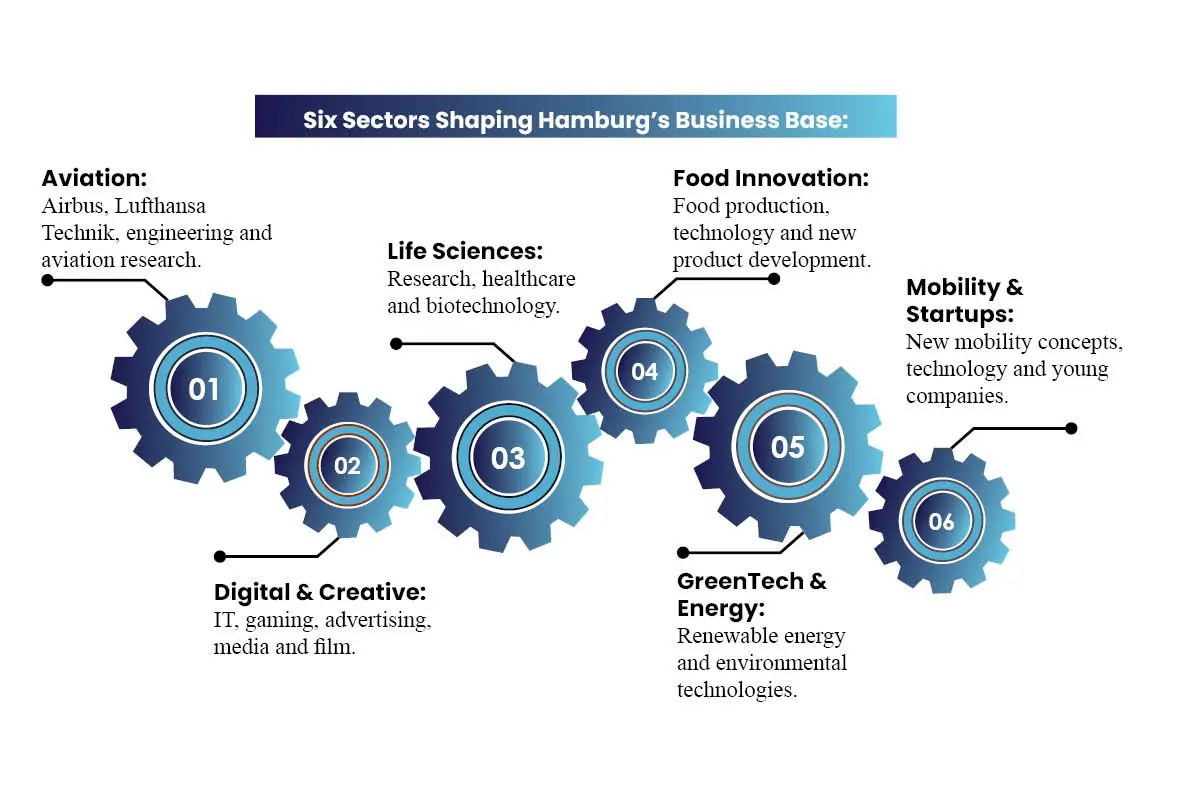
- Aviation:
- Airbus, Lufthansa Technik, engineering and aviation research.
- Digital & Creative:
- IT, gaming, advertising, media and film.
- Life Sciences:
- Research, healthcare and biotechnology.
- Food Innovation:
- Food production, technology and new product development.
- GreenTech & Energy:
- Renewable energy and environmental technologies.
- Mobility & Startups:
- New mobility concepts, technology and young companies.
This range gives the city several sources of commercial activity and creates room for newer business opportunities alongside established industries.
Why Startups Are Choosing Hamburg
The startup scene in Germany’s northern commercial hub is gaining attention as founders look for access to established industries and international markets. Its industrial base creates a natural setting for logistics technology, mobility, GreenTech, hydrogen, and digital businesses. Innovation can develop close to major commercial users, giving young companies opportunities to test ideas in real operating environments. The city’s media and technology community adds expertise in software, digital platforms, and creative ventures.
Programmes such as the Future Hamburg Award and Scaleup Landing Pad Hamburg help international founders explore the city and build local connections. Private equity and venture capital are also part of the funding mix, although the northern German city complements rather than replaces Germany’s larger startup centres.
| Where the Opportunity Is:Logistics technology | Green hydrogen | Renewable energy | Smart mobility | Aviation technology | Digital media | AI-enabled business services |
For founders, the appeal lies in combining industrial access, infrastructure, talent and global market connections.
Culture’s Role in Hamburg’s Economy
The economic value of Hamburg, Germany, extends beyond business and industry into tourism, hospitality, events and culture. Around 100 million day visitors arrive each year, generating approximately €4.1 billion in gross revenue. This makes tourism a significant part of the city’s wider economy.
01 | Visitor Economy
Hotels, restaurants, events and cultural venues benefit from Hamburg’s steady visitor flow.
02 | Cultural Identity
The Reeperbahn, music heritage, museums, theatre, opera and the Elbphilharmonie give the city a distinct character.
03 | Talent Appeal
A strong cultural offer can influence where international employees choose to live and work.
For Germany’s northern commercial hub, culture adds economic activity while supporting the quality of life that helps businesses attract global talent.
The Business Case in Hamburg, Germany Comes With Challenges
The economic proposition of the city comes with clear tests. The city must address bureaucracy, skilled-worker shortages, infrastructure needs, and limited investment in innovation. The Hamburg Chamber of Commerce notes that the city ranks 15th in the EU Regional Competitiveness Index, while businesses have raised concerns about innovation policy.
International trade also leaves the city exposed to geopolitical uncertainty and supply-chain disruption.
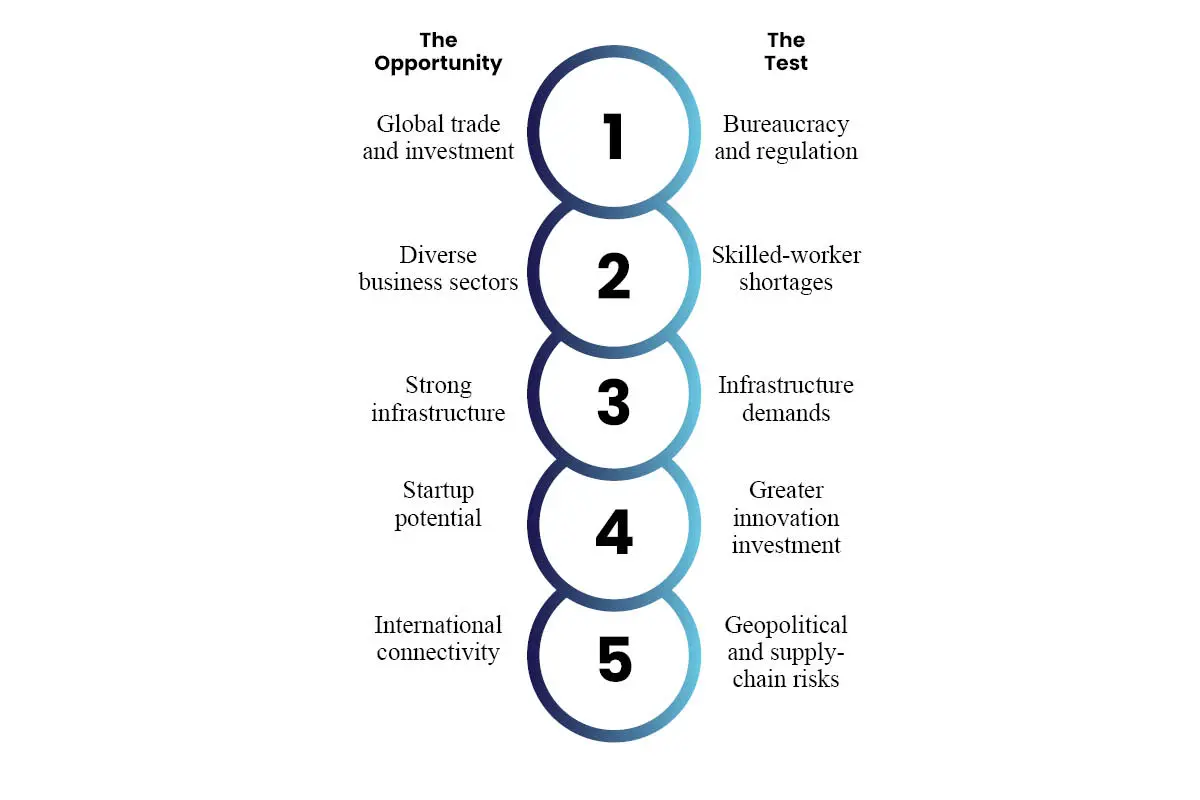
| The Opportunity | The Test |
| Global trade and investment | Bureaucracy and regulation |
| Diverse business sectors | Skilled-worker shortages |
| Strong infrastructure | Infrastructure demands |
| Startup potential | Greater innovation investment |
| International connectivity | Geopolitical and supply-chain risks |
The city’s next challenge is turning its existing advantages into lasting competitiveness.
Hamburg 2040: What Comes Next?
The city’s 2040 strategy sets out a clear ambition: make the city a leading economic centre in Northern Europe and a stronger bridge to Scandinavia. The vision places climate-neutral economic activity alongside renewable energy, a competitive digital port and emerging technologies. AI and quantum technology feature among the fields expected to shape future business opportunities, while startups receive greater attention within the wider economic strategy.
The 2040 Priorities:
Future technologies | Startups | AI & Quantum | Renewable Energy | Digital Port | Modern Infrastructure
Talent remains central to this vision. Education, skilled workers and international recruitment will determine how effectively the city can pursue these goals. The strategy also links economic competitiveness with urban quality of life, recognising that both matter to the city’s future. Hamburg 2040 is therefore an ambition, not a guaranteed outcome.
Read Next: How Ljubljana Powers Slovenia’s Economy through Business, Innovation, and Investment?
Conclusion: A City With More to Prove
Hamburg, Germany, enters its next economic chapter with clear advantages: global trade links, established industries, international companies, skilled talent and a growing base of new businesses. Its cultural appeal adds value to the city’s ability to attract people and investment. Yet these assets do not guarantee future success.
Bureaucracy, labour shortages, infrastructure demands, innovation gaps and global trade risks remain serious concerns. The 2040 strategy offers a direction, with technology, renewable energy and economic resilience at its centre. The city’s opportunity lies in turning that ambition into practical results while preserving the qualities that make the northern German city an attractive place to live, work and invest.