A single conversation between a sharp frontline employee and an attentive manager can eliminate hundreds of wasted hours of annual department work.
Let us say during a routine check-in, an employee comfortably shares a recurring bottleneck with their director, offering a simple tweak that saves the team twenty hours of weekly clutter. The director approves the fix on the spot, empowering the team to implement the solution by afternoon.
Fostering that level of psychological safety turns everyday employee observations into high-impact process improvements. Integrating such modern employee engagement best practices like transparent communication and training frameworks allows executive teams to streamline decision-making autonomy and encourage active listening. Removing bureaucratic hurdles between feedback and action proves to your workforce that their voices directly shape company operations.
In this article, we will take a look at some of the best practices for engaging your employees and what mistakes to avoid.
What makes an engagement practice a “best practice”?
A strong engagement practice should create a clear result. It should improve outcomes such as employee satisfaction, retention, productivity, or team connection. Simply running an activity does not make it effective. Leaders should track results and use feedback to see whether the practice works.
The best practices also continue over time. A single event may create short-term excitement, but regular actions can build stronger habits and trust. Teams should repeat, review, and improve these practices as employee needs change.
A good practice should also work across different teams. It should not depend on one manager’s personality, habits, or leadership style. Clear guidelines help managers apply the same approach while still allowing room for team needs.
These three factors help separate useful practices from short-lived engagement activities. They give organizations a simple way to choose an action plan that employees can experience consistently.
The different employee engagement best practices that drive results
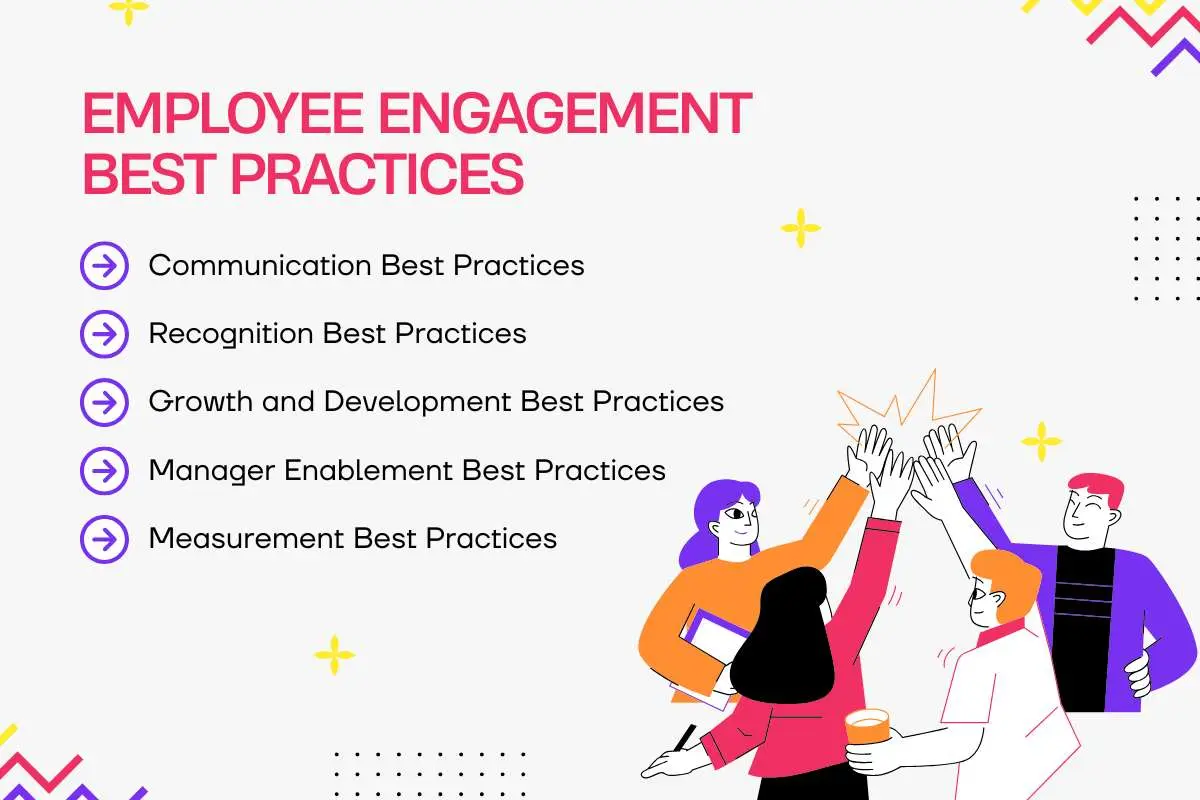
Strong employee engagement comes from more than good intentions. Companies need practices that employees can experience in their daily work. Clear communication, recognition, growth, manager support, and regular feedback can help build stronger teams.
The best practices also need regular follow-up. Leaders should measure what changes, listen to employees, and act on what they learn. The examples below show how these practices can work across different teams and organizations.
1. Communication best practices
Good communication helps employees understand company goals, team priorities, and changes that affect their work. Leaders should share updates on a regular basis and use clear language. Employees should also have simple ways to ask questions, raise concerns, and share ideas. This makes communication easier and reduces confusion across teams.
Communication should work in both directions. Managers need to listen to employee feedback and respond to it. They should also explain what happens after employees share their views. Regular team meetings, one-on-one talks, short surveys, and feedback channels can help keep these conversations open. As Special Advisor Jefferey Sanow puts it:
“The true challenge lies in knowing what must remain confidential while communicating openly enough to build genuine confidence among colleagues and decision-makers.”
Tips to implement:
- Hold regular team updates and check-ins.
- Use clear and simple language in company messages.
- Give employees easy ways to share feedback.
- Explain decisions that affect employees and their work.
- Follow up after employees raise concerns or share ideas.
2. Recognition best practices
Employees want to know that their work has value. Recognition should feel honest, timely, and personal. Managers can recognize good work through a personal message, team meeting, peer award, or formal reward. The method matters less than making the recognition feel real and specific.
Employee recognition programs should also become part of daily work. Managers do not need to wait for major achievements to praise employees. They can highlight good work during team meetings or send a quick message after a strong result. Specific praise also helps employees understand which actions the company values.
Tips to implement:
- Recognize good work soon after it happens.
- Explain what the employee did well and why it matters.
- Include recognition in regular team meetings.
- Give employees ways to recognize their peers.
- Offer rewards that match what employees value.
3. Growth and development best practices
Employees need regular chances to learn new skills and improve their work. Training, coaching, mentorship programs, and new projects can support this growth. Career discussions can also help employees understand their goals and plan their next steps. These opportunities should match both employee interests and business needs.
Growth does not always mean moving into a higher role. New tasks can help employees gain skills, confidence, and experience. Managers should discuss career goals during regular one-on-one meetings. They should then help employees find projects or learning opportunities that support those goals.
Tips to implement:
- Discuss career goals during regular one-on-one meetings.
- Create simple growth plans for employees.
- Offer training based on employee needs and goals.
- Give employees chances to lead new tasks or projects.
- Provide mentoring or coaching when employees need support.
4. Manager enablement best practices
Managers have a strong effect on the daily employee experience. They need the right training, tools, and support to lead their teams well. Clear guidance can help managers handle feedback, recognition, team communication, and employee concerns. Companies should make these resources easy to use during daily work.
Managers also need useful information about their teams. Survey results and employee feedback can help them spot problems early. They can then take action before small concerns become larger issues. Regular manager training can also build better leadership skills and help managers handle common team challenges.
Tips to implement:
- Train managers to give clear and useful feedback.
- Give managers tools for difficult employee conversations.
- Share useful team feedback and survey results.
- Hold regular training sessions for managers.
- Give managers support when team issues arise.
5. Measurement best Practices
Companies need to measure their employee engagement best practices to understand what works and what needs to change. Short surveys can show how employees feel about their work and the company. One-on-one talks and direct feedback can add more detail. Companies can also track staff turnover, survey scores, and other signs of employee engagement.
Collecting feedback is only the first step. Leaders can impact employee engagement as well. They should review the results, share key findings, and explain what they plan to change. Employees should be able to see that their feedback leads to action. Leaders should then measure engagement again and compare the results to see if those changes worked.
Tips to implement:
- Run short pulse surveys at regular times.
- Track engagement results over a longer period.
- Combine survey results with direct employee feedback.
- Share key findings and planned actions with employees.
- Set clear actions based on what the results show.
- Review progress after making changes.
Employee engagement best practices in action

Employee engagement practices become easier to understand through real company examples. HubSpot, Google, and Microsoft use different methods, but each links its efforts to a clear goal. Their examples show how feedback, manager support, and employee growth can become part of regular work.
1. HubSpot: Using employee feedback
HubSpot asks employees for feedback through regular engagement surveys. The company uses the results to find areas that need attention. Leaders then create action plans based on the feedback. They also share these plans with employees. In 2025, more than 800 HubSpot leaders had access to employee experience dashboards. These tools helped leaders see feedback from their own teams and take action.
Key takeaway: Ask employees what needs to improve, then act on what they say.
2. Google: Helping managers improve
Google studied what makes a manager effective through its Project Oxygen research. The company found that good managers coach employees, listen well, and support career growth. Google then used these findings to build training and feedback programs. It also tracked manager scores over time. From 2010 to 2012, median scores rose from 83% to 88%. Managers with lower scores showed the biggest gains in coaching and career support.
Key takeaway: Give managers clear feedback and help them improve their skills.
3. Microsoft: Supporting employee growth
Microsoft gives employees many ways to learn and grow. These include online courses, mentoring, career talks, and new work projects. Managers also talk with employees about their career plans. In fiscal year 2022, Microsoft employees completed more than 4.7 million online courses. That worked out to more than 14 hours of learning per employee.
Key takeaway: Give employees regular chances to learn new skills and grow.
The key lesson is simple. Good engagement practices need action and follow-up. Companies should choose a clear practice, give it time to work, and track what changes. This helps leaders move beyond one-time programs and build better employee experiences over time.
What do these examples have in common?
These companies use different employee engagement best practices. Yet, they follow a similar approach. They focus on clear actions instead of broad engagement programs. Each action links to a clear goal, such as better manager scores, more learning, or stronger employee feedback.
They also track what happens after each action. HubSpot tracks employee feedback and leader action. Google tracks manager scores after training and coaching. Microsoft tracks learning activity and employee feedback.
This shows a key lesson: employee engagement strategies work better when companies connect each practice to a clear result and check progress over time.
Employee engagement best practices: common pitfalls to avoid

Employee engagement can lose its value when companies focus on activity instead of change. One common mistake is treating a survey as the whole process. Asking employees for their views is only the first step. Leaders must review the answers, choose areas to improve, and take action.
Another mistake is starting too many initiatives at once. This can make it hard for teams to focus and follow through. Pick a few areas that need the most attention. Then tell employees what you heard, what you will change, and when you will check progress. This clear follow-up shows employees that their feedback matters.
Conclusion:
Building a highly invested workforce requires moving beyond static annual surveys and translating daily employee observations into real operational changes. Applying structured employee engagement best practices bridges the gap between executive vision and frontline reality, creating an environment where team members feel heard, valued, and empowered to drive continuous improvement.
When management consistently pairs active listening with swift, decisive execution, organizational trust deepens across every department. Investing in predictable communication habits and manager responsiveness secures your top talent and creates an unbeatable foundation for long-term organizational growth.
FAQs
1. What are employee engagement best practices?
They are the proven leadership habits, transparent communication channels, and manager training frameworks that drive long-term workplace commitment and performance.
2. Who is primarily responsible for implementing these engagement practices?
Frontline managers carry the primary responsibility because they interact with team members daily and directly control workplace autonomy and feedback loops.
3. How do you measure whether these engagement best practices are working?
Track key employee engagement metrics like higher internal promotion rates, reduced top-performer turnover, and faster resolution of employee-identified process bottlenecks.