Miami’s hotels spent years preparing for the 2026 World Cup and came out of it with a shrug. Passenger arrivals at Miami International Airport fell during the tournament window, to 3,000,000+ between June 11 and July 19 against 3,046,834 a year earlier, the Miami Herald reported. Rates on match nights rose while occupancy slipped, and hotels that had priced rooms at three to four times normal levels 200 days out were cutting them daily by the group stage. An event promoted as the equivalent of seven Super Bowls landed closer to a busy convention.
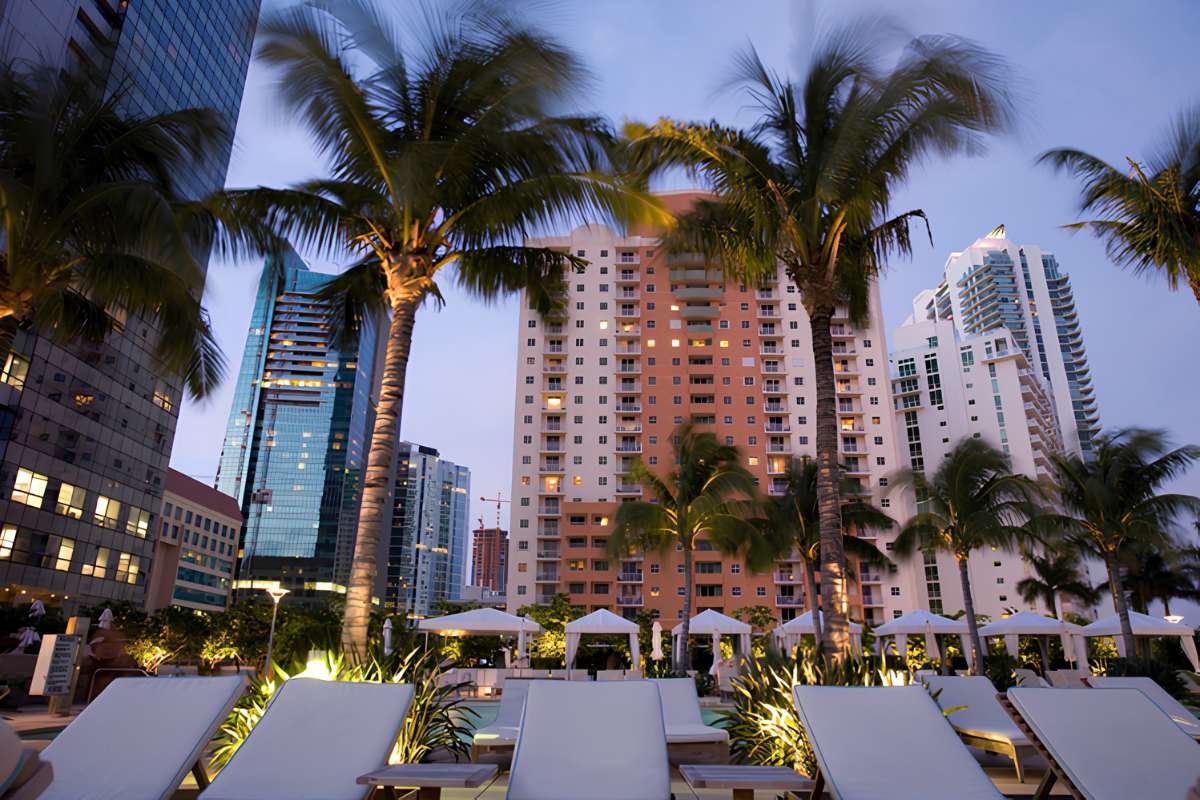
Robert Balzebre, the hotelier behind the 200-room Kimpton Surfcomber on Collins Avenue, spent that same summer running a property built for a different customer. His Solei Beach Club, an 11,500-square-foot oceanfront day club at the hotel, was designed to fill with Miamians whether or not a single tourist checks in upstairs.
“We wanted to give Miami Beach a reason to come to this stretch of Collins Avenue, whether or not they are staying with us,” Balzebre said.
Seven Super Bowls, on paper
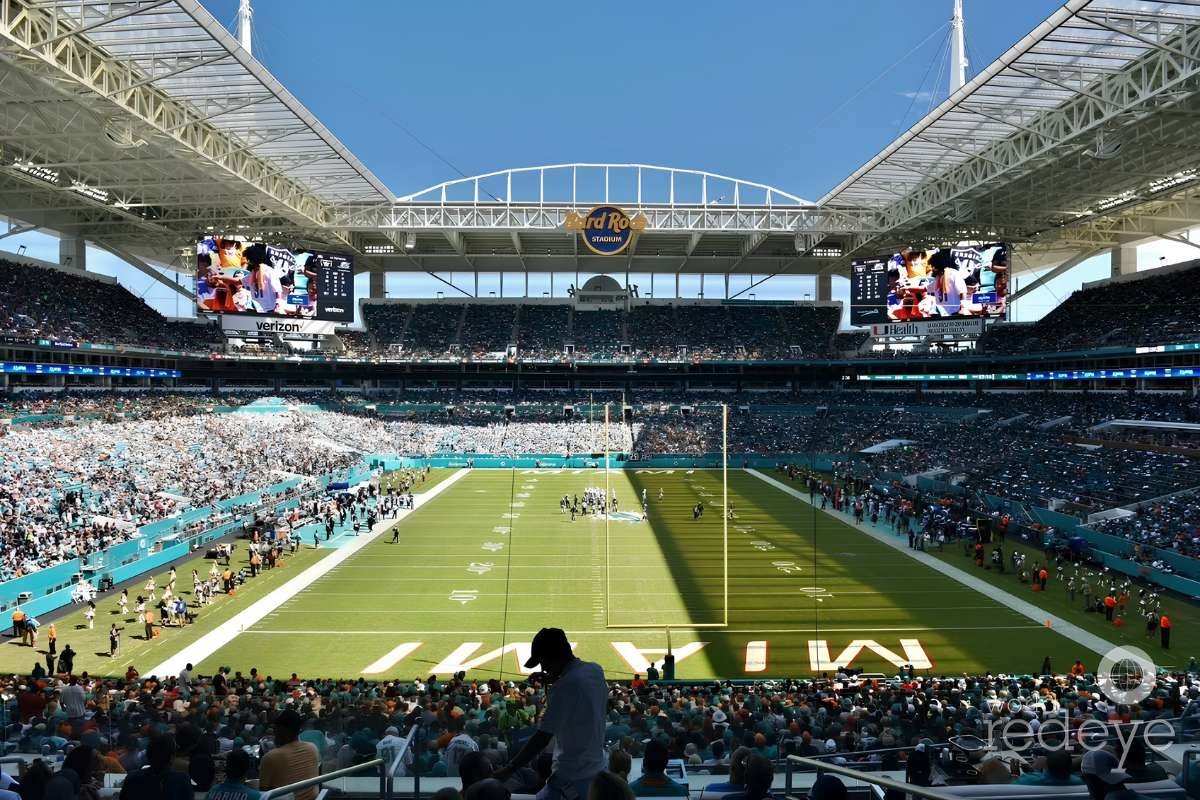
Expectations ran extravagant from the beginning, since Miami drew seven matches at Hard Rock Stadium, including a quarterfinal and the July 18 Bronze Final, and boosters framed the tournament’s economic weight in Super Bowl multiples. Hotels loaded rates accordingly on the theory that a global audience would pay almost any price for a bed near the action.
The forecast wobbled even before kickoff, when a Florida International University survey in May found 55% of Miami hoteliers reporting booking pace ahead of expectations at the same moment nearly 80% of bookings across all host markets ran below forecast, a gap that made Miami’s optimism an outlier before a single match had been played.
What July’s numbers said
Results came in mixed at best, judging by the figures the Herald assembled from operators and market data:
- Revenue per room on match nights rose 37% over the prior year, driven entirely by rate rather than volume
- Occupancy on those nights ran about 73%, roughly four points below the same nights a year earlier
- Average daily rates reached $268, after weeks of markdowns from openings that had tripled and quadrupled normal pricing
- Convention cancellations in early June cost some properties their usual base of group business before the first whistle
Operators put it more bluntly than the spreadsheets did. “I don’t think it was 30 Super Bowls or even 7 Super Bowls,” said Gale Miami’s D’Agostino. The InterContinental’s general manager went further: “If you give me a choice between hosting a Super Bowl and hosting a Miami World Cup, I’d take the Super Bowl.”
Why the rooms didn’t fill?
Soccer crowds behaved differently than the modeled ones. Many match-goers day-tripped from elsewhere in Florida, stayed with friends, or slept in cheaper submarkets far from the beach, and the sport’s international fans proved sharply price-sensitive after the initial rate surge. Aggressive early pricing likely drove away the leisure travelers who would have come anyway, and the displaced convention groups never returned.
Displacement is the quiet cost in every host city’s ledger. A tournament does not add its visitors to a market’s normal traffic; it substitutes them, and Miami’s flat airport numbers show the substitution ran roughly one for one. Hotels traded a known July customer, the vacationing family and the summer conference, for an unknown one who mostly watched from a sports bar in Fort Lauderdale.
One demand pocket showed what the tournament could have been, when Norway’s deep run produced last-minute charter flights that the Fontainebleau’s McMahon called a “nice surprise that created last-minute demand.” The windfalls that did arrive came by accident rather than by design.
The case that the payoff comes later
FIU’s economists caution against writing the summer off. Finance professor Deanne Butchey argues the tournament let South Florida present itself as a global destination without building a single new stadium, using Hard Rock, existing airports, and the current hotel stock. Marketing faculty point to sponsorship activity, retail expansion, and downtown activations around the Bayfront Park fan festival as value that never shows up in a nightly rate.
That argument may prove out over years, but it offers little comfort to an operator who cleared calendar space for a surge that never came.
Betting on the customer who lives here
Hotelier Robert Balzebre drew his conclusion about mega-events long before this one. Greater Miami hosted a record 28 million visitors in 2024, spending $22 billion, and that base, not any single event, is what his group underwrote when it carved Solei out of the Surfcomber’s pool deck. A day club selling cabanas, a raw bar, and 150 beach chairs to residents earns on quiet Tuesdays in October, which is precisely when a tournament-dependent business earns nothing.
“There’s a human nature and condition that is attracted to these locations for certain reasons,” Hotelier Robert Balzebre said. “You’re just naturally attracted to these places, almost at a primal level.”
That attraction predates FIFA and will outlast it, which is why Miami Beach filled its hotels through the 1990s without a single mega-event on the calendar, and why the properties that struggled this summer were largely the ones that treated a one-month tournament as a business model. Solei’s economics run the opposite way: cabana rentals, private events, and food and beverage revenue from people who drove twenty minutes, not flew twenty hours.
Design follows from that reading of demand. “You want a lot of those dynamics to be invisible to the consumer,” he said, “so that they experience something worthwhile, memorable, sort of theatrical.”
The lesson operators should keep
Miami hotels did not have a bad summer; they had an ordinary one they priced as extraordinary. Properties that held rates for a phantom surge lost the guests they already had, and properties anchored to steady local and repeat demand barely noticed the difference. Match that against the tournament’s actual gift, weeks of global television framing Miami as a place worth visiting, and the sensible posture becomes obvious: take the exposure, skip the rate gymnastics.
Hotelier Robert Balzebre’s operating record points in the same direction. A Miami World Cup passes in a month, but the customer who lives twenty minutes away comes back every weekend, and the operators who build for that customer never need the bracket to break their way.