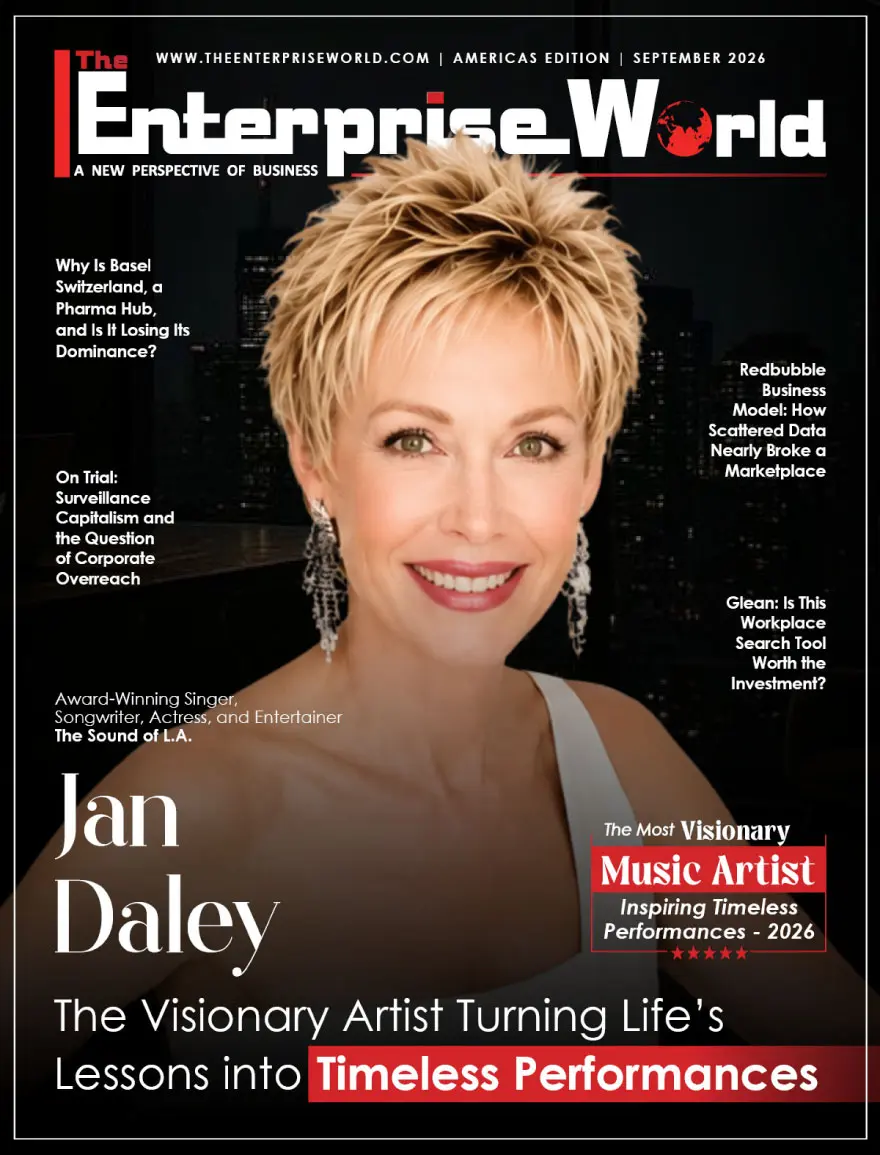
Some artistic careers are defined not simply by the stages they reach, but by the discipline, resilience, and humanity that carry them there. In an entertainment industry shaped by technological disruption and changing audience expectations, lasting relevance depends on more than talent. It demands continuous practice, adaptability, and emotional authenticity. Above all, it requires the courage to keep creating. Few journeys demonstrate this more vividly than one shaped by childhood discipline, a life-threatening setback, extraordinary opportunities, and decades of learning from fellow performers and audiences.
Her journey spans mastering the piano, competing as a swimmer, and overcoming a Stage 4 cancer diagnosis. She even performed for American troops alongside Bob Hope. Ultimately, this story reflects how adversity can become purpose and preparation can transform opportunity into legacy.
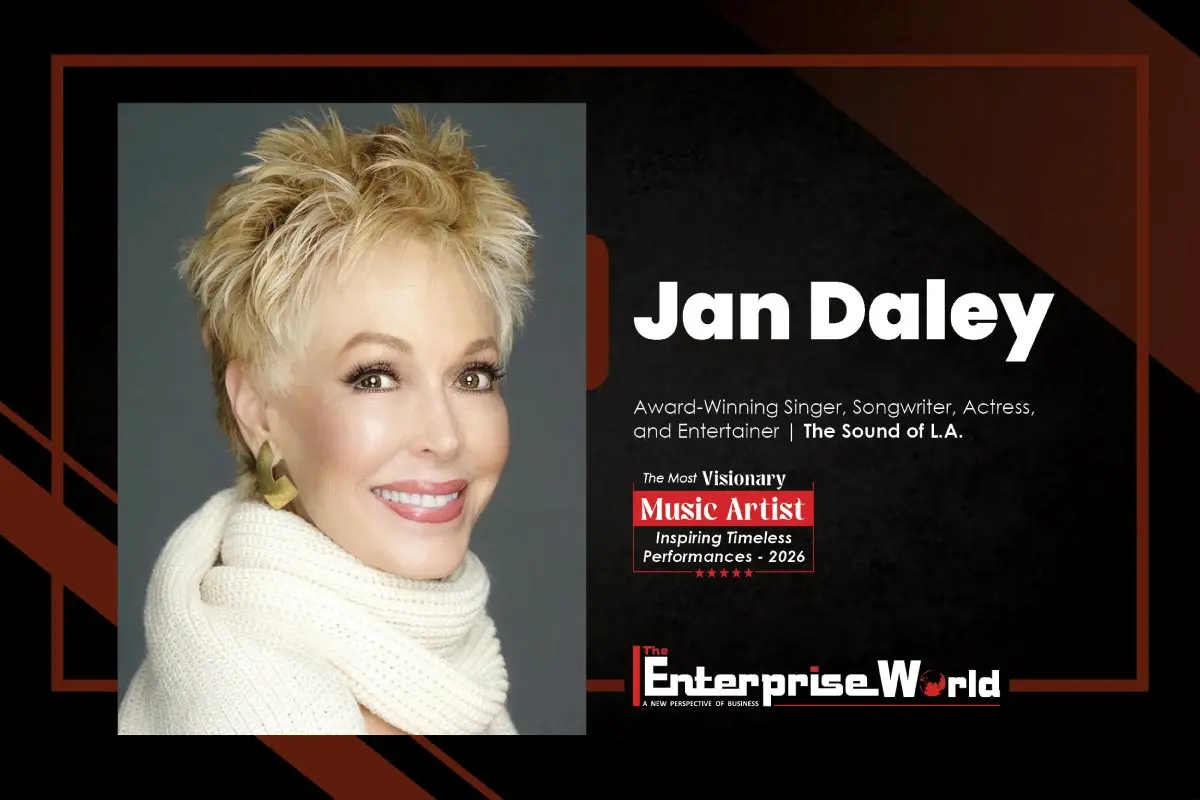
At the heart of this remarkable artistic journey is Jan Daley, Award-Winning Singer, Songwriter, Actress, and Entertainer at The Sound of L.A. Her career is distinguished not only by the prestigious stages she has graced, but by a philosophy rooted in preparation, connection, and lifelong creativity. She believes that the most powerful performances are not necessarily those without mistakes, but those that touch someone deeply.
From Discipline to Destiny
Looking back at the beginning of her artistic journey, Jan realizes how life events shape us. Every experience becomes a stepping stone, grooming a person for their purpose and eventual career. Her journey began with piano lessons at the age of eight, which taught her discipline and the importance of practice. At eleven, she became a competitive swimmer, where she learned the art of repetition and how consistent practice could bring results. Her dedication led to holding records in California and earning gold medals.
That same year, Jan Daley sang a solo in her church choir, which gave her confidence in herself. Her mother loved musicals, so Jan grew up listening to them and attending live performances. Her first musical was Oklahoma in junior high. She earned a co-starring lead because of her confidence, although she did not have the high voice required for the lead. Rather than allowing that to deter her from singing, she worked harder on her range, eventually expanding it to three octaves.
During college, a friend encouraged Jan to enter a Miss America beauty pageant, where contestants were judged on talent and beauty. She became Miss California, elevating her image and attracting the interest of agents, which opened the next chapter of her career in entertainment.
A Setback That Became a Turning Point
At 23, while touring with a Pop/Rock group, Jan repeatedly landed in the hospital due to haemorrhaging. Tests revealed Stage 4 cervical cancer, forcing her to leave the band and return home to California.
Yet, what initially felt devastating led to an unexpected new chapter. Jan met her first manager, who quickly became a dear friend and father figure. He guided her toward an audition for the television series “Here Come The Stars.” After being selected as a featured singer, she learned a new song each week. This constant work helped her stay focused on performing during a difficult period.
At the time, four doctors advised Jan to undergo a hysterectomy, telling her she would never have children and should not delay the surgery. A friend introduced her to a doctor who worked outside conventional approaches. He saved her life and gave her a “one in a million” chance of having children. Jan took that chance and never looked back.
Through the experience, she prayed deeply and changed her perspective on adversity. She learned to treat difficult experiences as blessings, believing that even life’s hardest moments can lead to something meaningful.

The Craft Behind the Performance
For Jan Daley, a memorable performance is not built on talent alone. It is built on preparation. Her philosophy can be reduced to three simple words: practice, practice, practice. But behind that simplicity is a sophisticated understanding of performance. Before opening for legendary comedians across the nation, she made a habit of attending live performances herself. She observed how experienced performers handled both successful and difficult moments, how they responded to unexpected circumstances, and perhaps most importantly, what audiences reacted to.
That habit of observation became an informal education in entertainment. Acting classes added another dimension. They taught her to approach songs as more than collections of notes and lyrics. Instead, she learned to make each song personal to find an emotional connection that could translate authentically to the audience. That distinction is central to her approach. Technical ability may establish credibility, but emotional connection creates memory.
Even after decades in entertainment, she continues attending performances by other entertainers. The practice reflects an important leadership principle: mastery does not eliminate the need to remain a student.
When Imperfection Creates Connection
Entertainment is often associated with perfection. The right note, the right lyric, the right timing, and flawless execution are traditionally treated as measures of professional excellence. Jan Daley sees another side of the equation.
She believes the performances that stay with audiences are not always the ones in which everything goes perfectly. Sometimes it is the moment an artist forgets a lyric, becomes emotional while singing, or allows an unexpected vulnerability to surface that creates the deepest connection. Those moments can initially frustrate performers who are focused on getting everything right. Yet audience reactions can reveal something more meaningful. When someone approaches an artist after a performance and says that a song touched them or brought them to tears, technical imperfections suddenly become secondary.
For Jan Daley, that is the real measure of performance: whether it made a difference in someone’s life. Her philosophy challenges the conventional assumption that excellence means eliminating every imperfection. Instead, it suggests that authenticity can sometimes be more powerful than precision.
A Career Shaped by Extraordinary Stages
Among Jan’s many professional experiences, two stand out for deeply personal reasons: the birth of her daughter and her performances with Bob Hope while entertaining American troops.
Her daughter represents one of the most profound personal chapters of her life. After surviving cancer and taking the extraordinary chance of becoming a mother, she nearly died twice while trying to give birth to what she calls her “miracle baby.” The experience remains deeply emotional for her and inspired the song My Little Angel, written for her daughter.
Yet another defining chapter came through a remarkable professional connection. While appearing on Here Come The Stars, Jan Daley had the opportunity to sit beside Bob Hope during a program honouring him. Having grown up watching his Christmas television shows, she never imagined that she would one day perform alongside him. Three months later, Bob’s staff contacted her and invited her to join his world tour.
The invitation transformed a childhood dream into reality. Touring with Bob Hope and entertaining American troops became one of the most meaningful performance experiences of her career. One particular performance in Danang remains especially vivid. The stage was positioned in a valley, with a large hill behind the concert area filled with soldiers. After Jan performed the closing portion of the show, the stagehands urgently instructed the performers to board helicopters. What initially seemed puzzling quickly became frightening: once airborne, they could see that American soldiers and Viet Cong forces were engaged in combat on the opposite side of the hill.
The experience left her with a lasting awareness of situational awareness and personal safety. Today, she believes people should remain conscious of their surroundings and know their exits before settling into public spaces. It was an extraordinary lesson delivered far beyond the stage: even in moments of celebration and entertainment, awareness matters.
Designing Every Show Around Its Audience
Jan Daley approaches each performance by considering the venue, the audience, and the music that best suits the setting. She has built an extensive collection of arrangements and sheet music over the years, while continuing to discover new songs through Spotify.
For larger venues such as Performing Arts Centers, she typically creates her shows around a central theme. Her popular production, “Where There’s Hope,” features songs that Bob Hope introduced to the world, connecting the performance to an important chapter of her career.
At smaller clubs, her approach is more flexible. Depending on the audience and whether she has performed at the venue before, she may combine songs from her themed shows with selections audiences already know her for, creating a more eclectic setlist.
Rehearsing with her band is another part of the process she particularly enjoys. Their collaboration sometimes brings a different perspective to a song and introduces an interpretation she had not considered before. These musical exchanges allow her to refine her material while discovering new possibilities within familiar songs.
A Day in Jan Daley’s Life
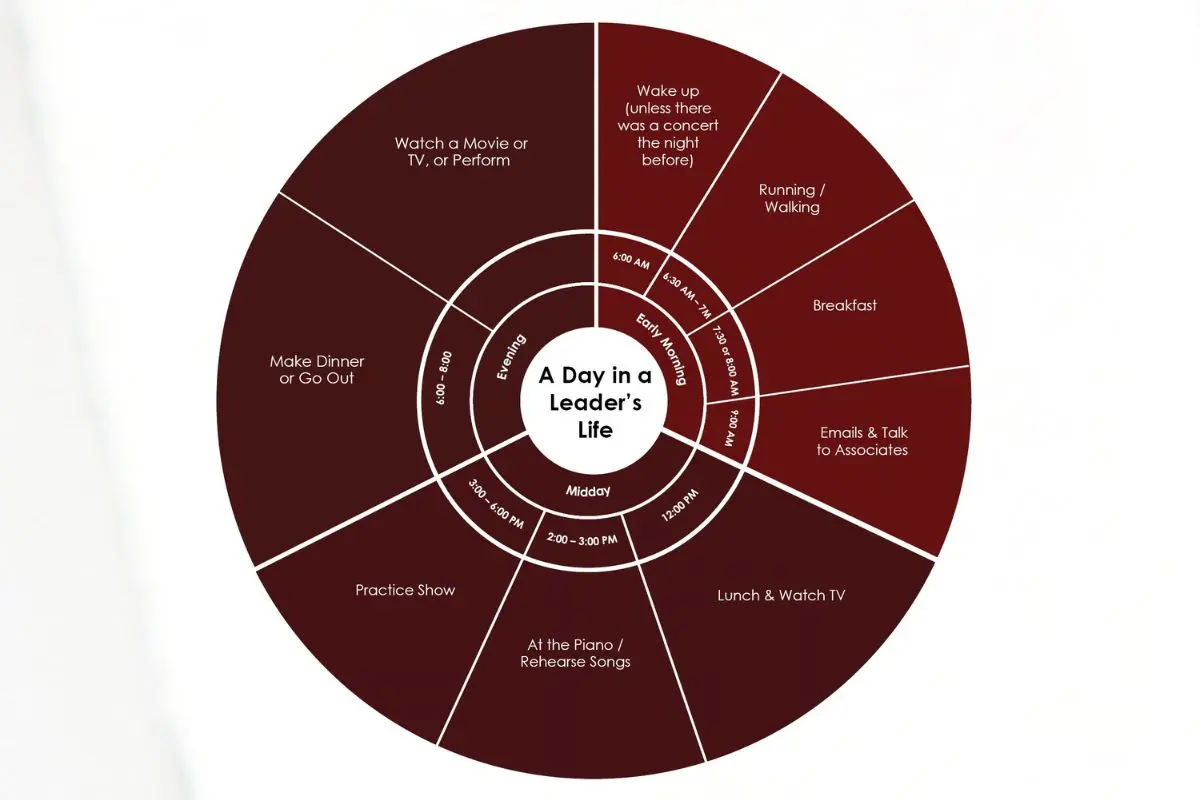
Each day is a balance of movement, music, preparation, and performance. Whether she is rehearsing at the piano, practicing a show, or simply enjoying an evening at home, her routine keeps creativity and discipline at the center.
- 6:00 AM | Wake up (unless there was a concert the night before)
- 6:30 AM – 7M | Running / Walking
- 7:30 or 8:00 AM | Breakfast
- 9:00 AM | Emails & Talk to Associates
- 12:00 PM | Lunch & Watch TV
- 2:00 – 3:00 PM | At the Piano / Rehearse Songs
- 3:00 – 6:00 PM | Practice Show
- 6:00 – 8:00 | Make Dinner or Go Out
- Evening | Watch a Movie or TV, or Perform
Milestones That Mean More Than Awards
Jan Daley views every show as a milestone, reflecting a career philosophy in which the value of an artistic life cannot be measured exclusively through trophies or formal recognition.
Nevertheless, one professional achievement stands apart: attending her first Academy Awards ceremony after being nominated for Best Song and performing the song in the movie.
For an artist who began with piano lessons at eight and a junior-high musical, standing at the Academy Awards represented more than industry recognition. It symbolized the distance travelled from an early dream to one of entertainment’s most prestigious stages.
The milestone also reinforces something central to Jan’s career: dreams can take unexpected routes before becoming reality.
Remaining Relevant Without Losing the Self

The entertainment industry is changing rapidly, and Jan Daley sees artificial intelligence as one of the most consequential developments artists will face.
Her concern is not technology itself but the economic and professional implications of sophisticated AI. Voice-over work, commercials, recordings, and other creative assignments could potentially be produced through AI-driven systems, creating new competition for actors, singers, and musicians.
For companies, the technology may offer cost efficiencies. For artists, however, it could make competing for opportunities more difficult, particularly when production and editing decisions prioritize efficiency over human performance.
Yet Jan Daley does not advocate resisting change altogether. Her philosophy is more balanced: artists must remain open to change without surrendering their true selves.
That principle captures how she has approached her own career. She has moved through different eras of entertainment, embraced music across changing generations, incorporated lessons from acting and live performance, and continued discovering new songs, all without abandoning the identity that made her an artist in the first place.
The Leadership of Lifelong Practice
If there is one philosophy that consistently runs through her career, it is the belief that meaningful achievement requires continuous practice and creation. Her advice to emerging artists is straightforward: keep practicing and creating every day. But she adds another important dimension: go where music and movies are happening. Attend gatherings. Watch performers. Engage with the creative community.
Opportunity has always been connected to participation. A chance encounter can become a professional relationship. A performance can become an audition. An audition can become a defining role. A childhood dream can become a world tour. Her own career demonstrates that possibilities often emerge where preparation meets presence. Her personal mantra captures that philosophy perfectly: it is never too late, and no one is ever too old or too young to realize a dream or create a new one.
Turning Discipline, Resilience, and Authenticity into a Lifelong Legacy
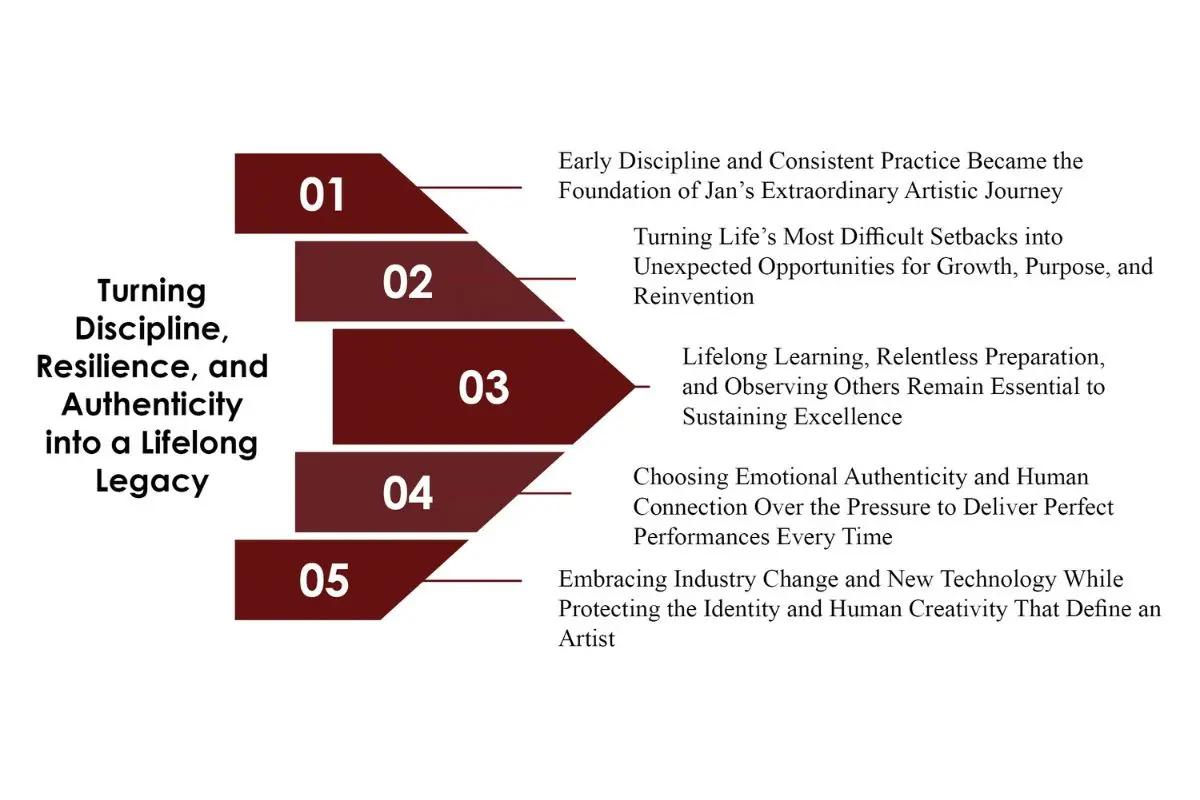
- Early Discipline and Consistent Practice Became the Foundation of Jan’s Extraordinary Artistic Journey
- Turning Life’s Most Difficult Setbacks into Unexpected Opportunities for Growth, Purpose, and Reinvention
- Lifelong Learning, Relentless Preparation, and Observing Others Remain Essential to Sustaining Excellence
- Choosing Emotional Authenticity and Human Connection Over the Pressure to Deliver Perfect Performances Every Time
- Embracing Industry Change and New Technology While Protecting the Identity and Human Creativity That Define an Artist
| Quick Takes | |
| One quote | Never too late; you’re never too Old or Young to realize a Dream or make a New One! |
| One piece of advice | Be on the lookout for new trends, and if something or someone touches your heart, go after that Artist or what they’re doing! |
| One movie or book | The Power of Positive Thinking by Norman Vincet Peale |