The JLR cyber attack is a case study of how a cyber breach in manufacturing can escalate from stolen credentials to full operational disruption. The article explains how attackers entered internal systems and caused production shutdowns, supply chain delays, and financial losses. It also outlines JLR’s response while highlighting why strong cybersecurity is essential in highly connected manufacturing environments.
It does not start with alarms or dramatic shutdowns. In most cases, a cyber attack begins quietly. A system slows down for a moment. Access behaves slightly differently. Nothing feels serious enough to stop everything, until it suddenly is.
In 2025, the JLR cyber attack follows that same pattern. A global brand known for precision and control found itself dealing with something far less predictable.
In this article, we will take a look at what makes incidents like this worth paying attention to and how quickly small vulnerabilities can scale into business-wide disruption when they go unnoticed.
Case study: JLR cyber attack
The incident
In August 2025, Jaguar Land Rover detected a breach inside its internal network. The entry point was not dramatic. Attackers logged in using compromised employee credentials, which made their access look legitimate. There were no immediate alarms. For a short time, the activity blended in with normal system use.
Once inside, the attackers moved with intent. They navigated through systems that support production, inventory, and internal coordination. These systems do not operate in isolation. They share data across teams and locations. That design keeps operations fast, but it also meant that the attackers could move across multiple layers without needing to break new barriers each time.
Inside JLR, different teams began to notice signs that something was wrong. IT and security teams tracked unusual activity. Plant teams faced early system slowdowns. Administrators saw access patterns that did not match normal use. Each signal on its own looked small, but together they pointed to a deeper issue inside the network.
The real pressure point in the JLR cyber attack came from how connected everything was. Jaguar Land Rover’s manufacturing environment depends on continuous system communication. Production planning tools rely on live inventory data. Logistics systems depend on accurate schedules. When one part of this chain is exposed, the risk spreads quickly across the rest.
At that point, JLR faced a hard choice. The company had to act fast to contain the breach, but every action carried risk. Shutting down access could slow the attackers, yet it could also disrupt internal coordination. Leaving systems active could keep operations running, but it gave the attackers more time inside the network.
That tension defined the incident in its early stage. It was about doing it inside a system where every connection mattered.
The impact
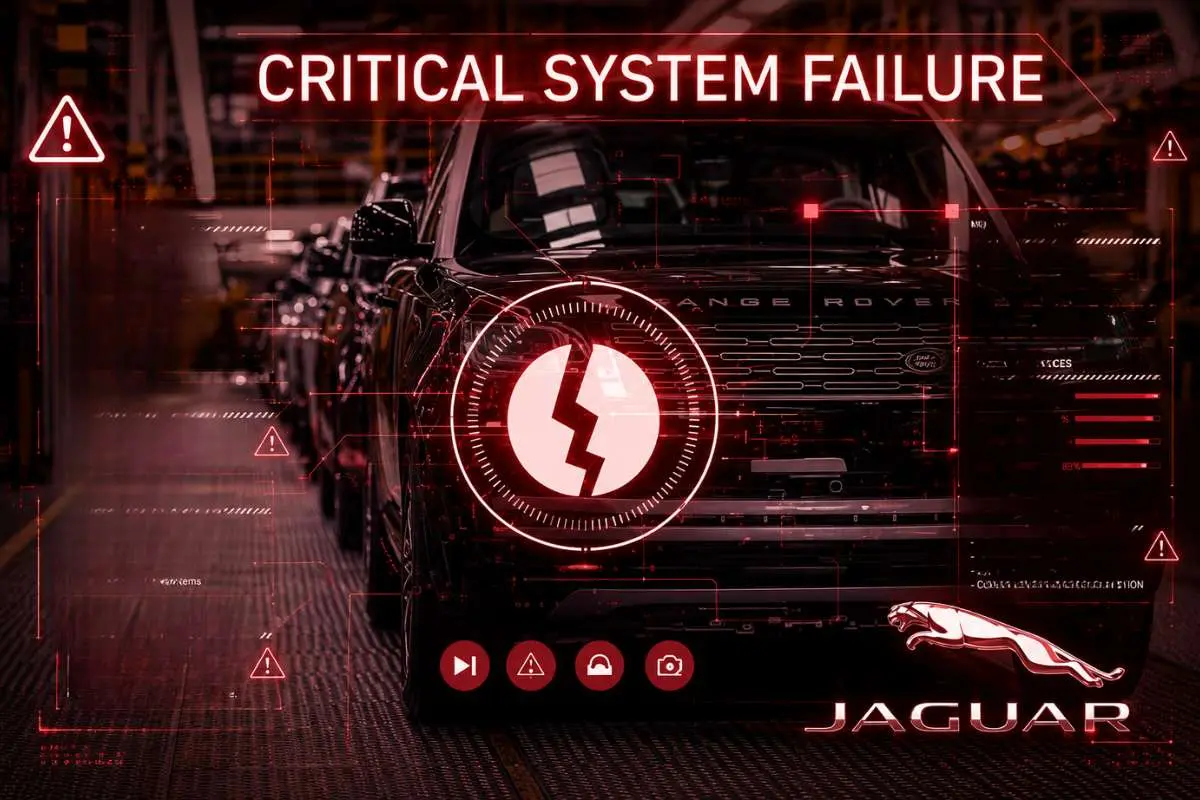
The JLR cyber attack forced them to stop production across its UK plants. Assembly lines in Solihull, Halewood, and Wolverhampton went silent as core systems stayed offline. Vehicles could not move through production, and output dropped immediately. The longer the shutdown continued, the harder it became to restart operations at full pace.
The disruption spread fast across the supply chain. JLR depends on tightly timed part deliveries. When production stopped, suppliers had no place to send components. Orders paused, shipments stalled, and inventory began to pile up. Smaller suppliers faced the most pressure since they rely on steady movement and quick payments to stay stable.
The financial damage became clear in JLR’s official results. The company reported a £485 million pre-tax loss for the affected quarter, compared to a £398 million profit a year earlier. This sharp reversal shows how deeply the shutdown hit operations and revenue at the same time.
The impact did not stay inside the company. Workers across plants faced stalled operations, while partners across the supply chain dealt with delays and cash flow strain. What began as a system breach turned into a full stop of manufacturing, with effects that spread far beyond the factory floor.
The aftermath
After the JLR cyber attack, the company reviewed its systems and operations in detail. Teams tracked how the breach spread and which systems failed first. They found clear gaps in access control. Systems were too connected, which allowed the attack to move fast. Limited visibility slowed detection and gave attackers more time inside the network.
JLR responded with tighter control across its infrastructure. The company reset system access and expanded multi-factor authentication on critical platforms. It reduced high-level access and added real-time monitoring to catch unusual activity. The network was split into smaller segments, which helped contain future risks. External cybersecurity experts supported the recovery and checked that restored systems were safe.
The company also focused on prevention. It updated supplier access rules and pushed for stronger security across the supply chain. Teams received training to spot early warning signs. Response plans were revised so that action can happen faster next time. The focus shifted from reacting late to stopping threats early.
Why does cybersecurity matter in manufacturing?

Manufacturing runs on connected systems. Machines, software, and supply chains work as one unit. When one part fails, the whole line can stop. A cyber attack can stop production, delay shipments, and create safety risks on the floor.
The risk is higher because systems stay connected at all times. Production tools share data with inventory and logistics platforms. This keeps operations fast, but it also opens more paths for attackers. If one system is exposed, others can follow. That is why strong access control and clear system boundaries matter.
Good cybersecurity for manufacturing keeps operations stable. It protects uptime, ensures worker safety, and keeps supply chains moving. It also builds trust with partners and customers. For manufacturers, security is part of keeping the business running every day.
Conclusion:
Incidents like this rarely stay confined to the moment they are discovered. They ripple outward, affecting operations, trust, and the way decisions are made long after the immediate issue is contained. What looks like a single breach often exposes deeper gaps in visibility and response.
The JLR cyber attack is a reminder that control in modern systems is never absolute. It has to be built, tested, and reinforced continuously. When that discipline slips, even briefly, the impact does not stay technical; it becomes operational, financial, and reputational at the same time.
People Also Ask
1. What was the main impact of the JLR cyber attack?
It disrupted internal systems and raised concerns around data security, affecting both operations and stakeholder confidence.
2. Are large automotive companies frequent targets for cyber attacks?
Yes, because they rely on complex digital systems, supply chains, and connected technologies that create multiple entry points.
3. What can companies learn from incidents like this?
They highlight the need for constant monitoring, faster response systems, and stronger coordination between technical and operational teams.