Business law is rarely just about what a contract says or what a statute permits. For an operating company, a legal decision can affect cash flow, ownership, customer relationships, employees, reputation, and the ability to keep growing. Effective counsel therefore requires more than legal knowledge. It requires an understanding of how businesses actually make decisions under pressure.
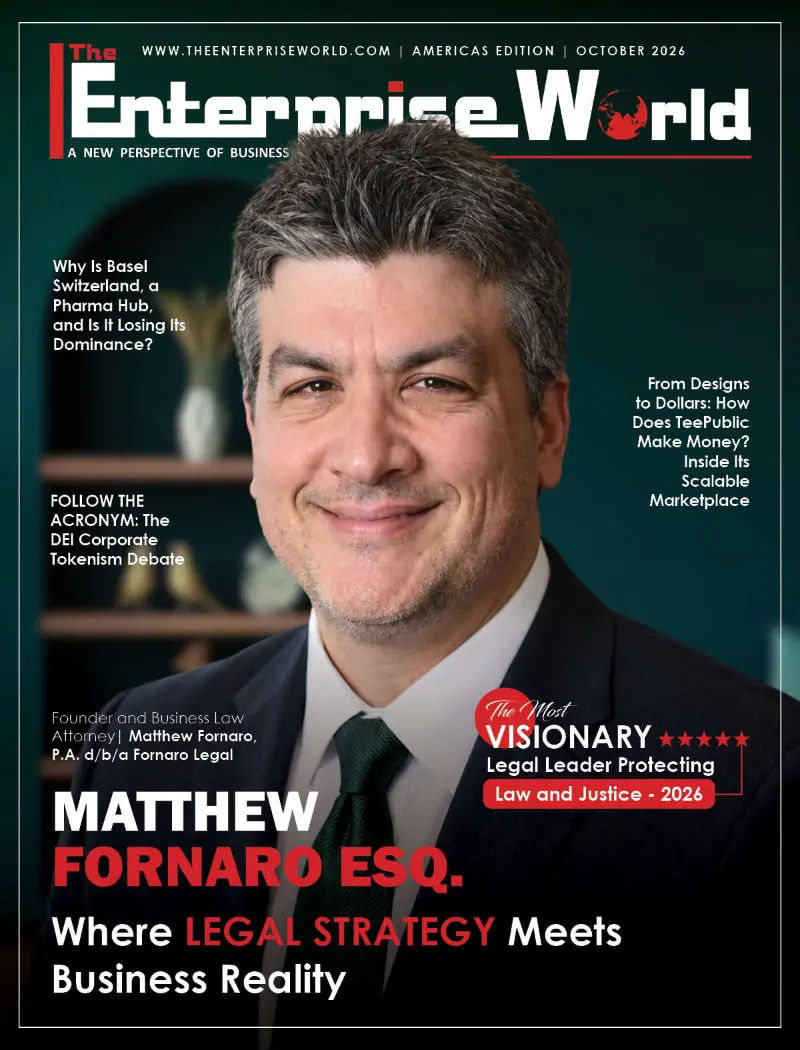
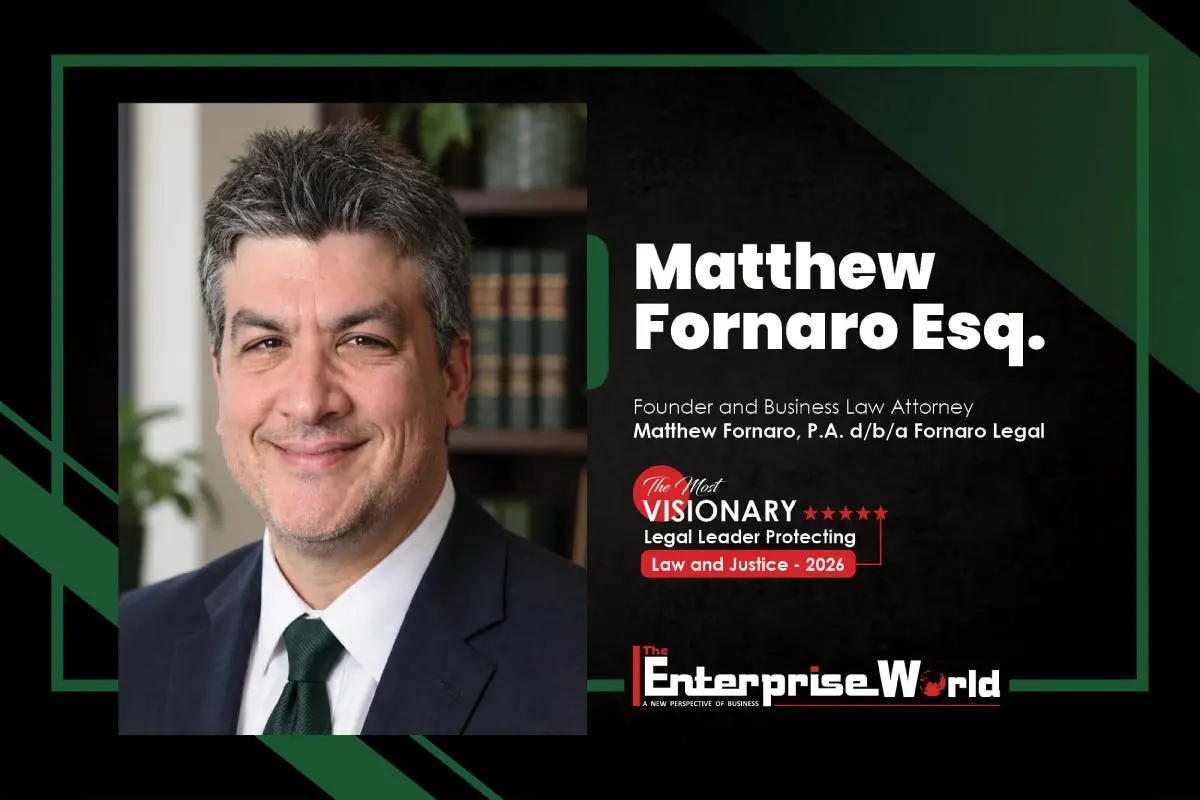
Matthew Fornaro, Esq., Founder and Business Law Attorney of Matthew Fornaro, P.A. d/b/a Fornaro Legal, brings that perspective to business law and commercial litigation. A Coral Springs business law attorney who has practiced since 2003, Fornaro combines large-firm litigation training, more than two decades of legal experience, and the perspective of a business owner. His approach centers on practical judgment, candid advice, and legal strategies tied to the client’s real commercial objective.
A practical perspective on business law
Matthew Fornaro approaches business law as an attorney, litigator, and business owner. That combination matters because business problems do not arrive in isolated legal categories. A contract dispute can become a cash-flow problem. An ownership disagreement can disrupt operations. A poorly documented decision can become a credibility problem years later. His work therefore begins with the business circumstances behind the legal issue, not simply the legal label attached to it.
He asks what the client is trying to protect, accomplish, preserve, or avoid, then weighs legal rights alongside cost, timing, leverage, relationship value, and business disruption. The objective is not to eliminate every possible risk. It is to help the client understand which risks matter, which can be reduced, and which may be commercially reasonable to accept.
Building a foundation in law and litigation
Fornaro began practicing law in 2003 after earning his Juris Doctor from the University of Florida Levin College of Law. He started his career at two AmLaw 200 firms, focusing on civil litigation and learning how larger firms prepare, staff, document, and manage complex disputes. He later had the opportunity to continue on an even larger-firm path, but chose a different direction.
The reason was personal as well as professional. Growing up, Fornaro watched his father build and operate a successful small business. He saw firsthand the pressure involved in managing employees, customers, finances, relationships, contracts, and risk. He also saw how smaller business owners could be underserved when they needed sophisticated legal guidance but were not a natural fit for the economics or structure of a large law firm.
In 2015, he founded Matthew Fornaro, P.A., now doing business as Fornaro Legal, to help bridge that gap. The firm was built to bring large-firm preparation and litigation experience directly to entrepreneurs, startups, founders, and small and midsize businesses, while preserving the responsiveness, practicality, and direct client relationships that owner-led companies value.
Seeing the legal issue through the business lens
Fornaro’s litigation background has shown him that the legal issue is often only one part of a larger business problem. A contract may control payment rights, but the dispute may also determine whether an important commercial relationship survives. An ownership disagreement may begin with governance language but quickly affect employees, customers, financing, and control. Intellectual property questions can influence a company’s competitive position and future value.
He has also seen companies reach what might be called a legal inflection point: the business grows, but the legal structure that worked when the founder personally controlled every decision does not grow with it. New employees gain authority. Customer relationships outgrow the original contract. Investors or partners enter the picture. Ownership documents, internal approval rules, and intellectual property records may no longer reflect how the company actually operates.
Technology adds another layer. AI tools, cloud platforms, remote work, text messaging, and collaboration systems make businesses faster, but they also create new questions about authority, confidentiality, intellectual property, digital evidence, and recordkeeping. Fornaro encourages clients to think of legal structure as operating infrastructure, something that should evolve with the business rather than being revisited only after a dispute begins.
Turning legal advice into business strategy
Matthew Fornaro begins with the business objective behind the legal question. Before recommending a course of action, he identifies what the client is trying to protect, preserve, obtain, or avoid. He then evaluates the documents, facts, governing law, available leverage, cost, timing, collectability, and practical consequences. That process keeps legal strategy connected to the realities of running a company.
A central part of his approach is treating risk as something to manage rather than something that can be eliminated. Some risks should be avoided. Others can be reduced, capped, insured against, or allocated by contract. Still others may be worth accepting when the business opportunity justifies them. The key is that the decision should be deliberate rather than accidental.
He often looks at three questions: Is the risk reversible? Can the exposure be capped or shifted? Could the decision threaten the company or the owner personally? That framework helps turn abstract legal analysis into a practical business decision. It also gives entrepreneurs a clearer way to distinguish routine commercial risk from the kinds of obligations that deserve closer attention before they are accepted.
5 key milestones
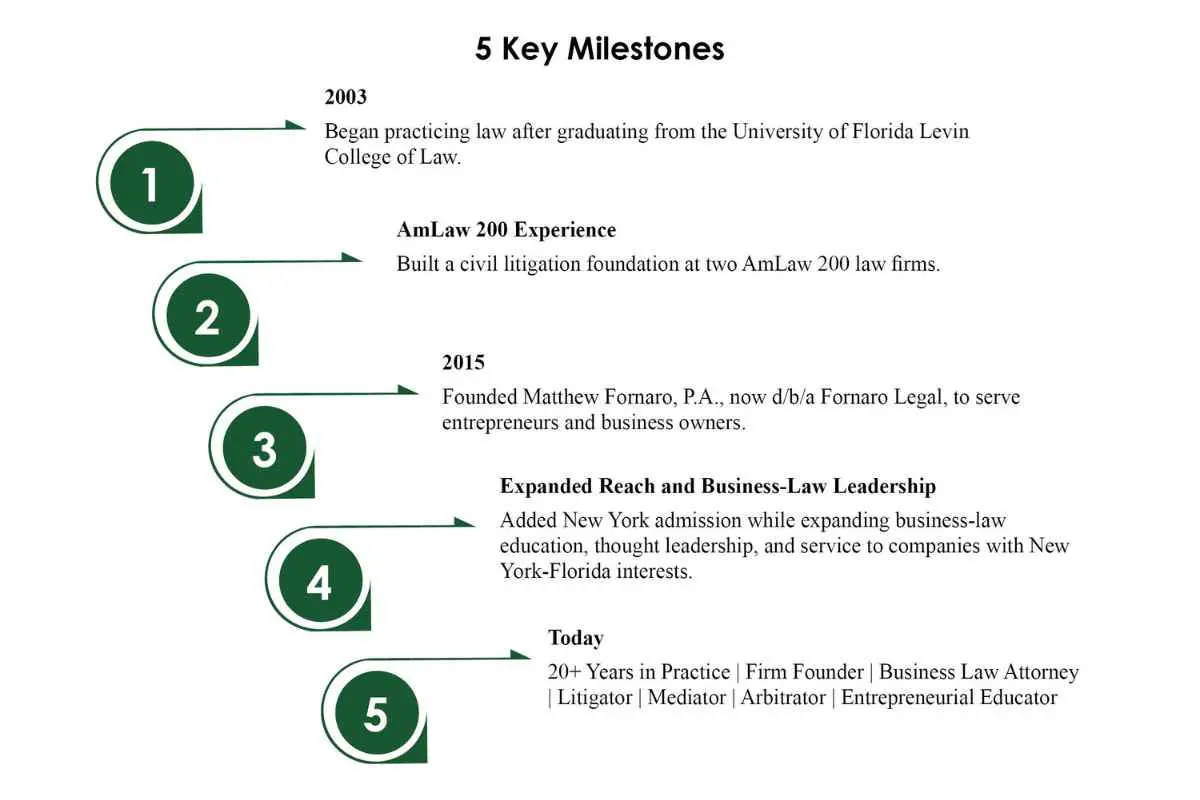
- 2003
Began practicing law after graduating from the University of Florida Levin College of Law.
- AmLaw 200 Experience
Built a civil litigation foundation at two AmLaw 200 law firms.
- 2015
Founded Matthew Fornaro, P.A., now d/b/a Fornaro Legal, to serve entrepreneurs and business owners.
- Expanded Reach and Business-Law Leadership
Added New York admission while expanding business-law education, thought leadership, and service to companies with New York-Florida interests.
- Today
20+ Years in Practice | Firm Founder | Business Law Attorney | Litigator | Mediator | Arbitrator | Entrepreneurial Educator
Making legal advice more actionable
For Matthew Fornaro, effective counsel means giving clients more than a description of what the law permits or prohibits. Business owners need to understand what a legal position means for the decision in front of them. That includes the realistic options, likely costs, timing, leverage, downside, and what each path may do to the business relationship or company itself.
His litigation experience helps him identify where agreements and relationships tend to break down. Running his own firm gives him firsthand experience with budgets, deadlines, staffing, technology, customer relationships, and growth. Together, those perspectives allow him to translate legal complexity into business consequences a client can actually use.
The result is an approach built around clarity. Rather than overwhelming clients with every theoretical issue, Fornaro focuses on the risks that are material, the choices that are realistic, and the next steps that move the matter forward. He believes a client should leave a conversation understanding the decision, not merely hearing a legal explanation.
Litigation with purpose
Matthew Fornaro does not view commercial litigation through the lens of aggression for its own sake. He has written about why he has never wanted to market himself as a ‘shark’ or ‘pit bull’ lawyer. In his view, those labels can confuse performance with effectiveness. Litigation is a tool, not an identity, and it should be used when it advances the client’s objective.
When evaluating a dispute, he considers the strength of the legal position, amount at stake, collectability, cost, business disruption, confidentiality, relationship value, reputational considerations, and tolerance for time and uncertainty. Depending on those factors, a demand, negotiation, mediation, arbitration, settlement, or litigation may each be appropriate. The correct path depends on the circumstances, not a predetermined preference for the courtroom.
A complex commercial matter involving seven-figure exposure reinforced that philosophy. The legal issues were significant, but so were the costs, business disruption, personalities, and uncertainty of trial. After extensive litigation and negotiation, the matter was resolved by settlement. Fornaro took from that experience a principle that still guides his work: a business win is not always the same as a courtroom win. Effective advocacy begins with understanding what the client ultimately needs to accomplish.
Before and After Leadership
Before leadership journey
- AmLaw 200 Attorney
- Focused primarily on civil litigation and complex disputes
- Built legal judgment, preparation habits, and courtroom perspective
- Worked within established large-firm systems
- Viewed most problems primarily through the legal file
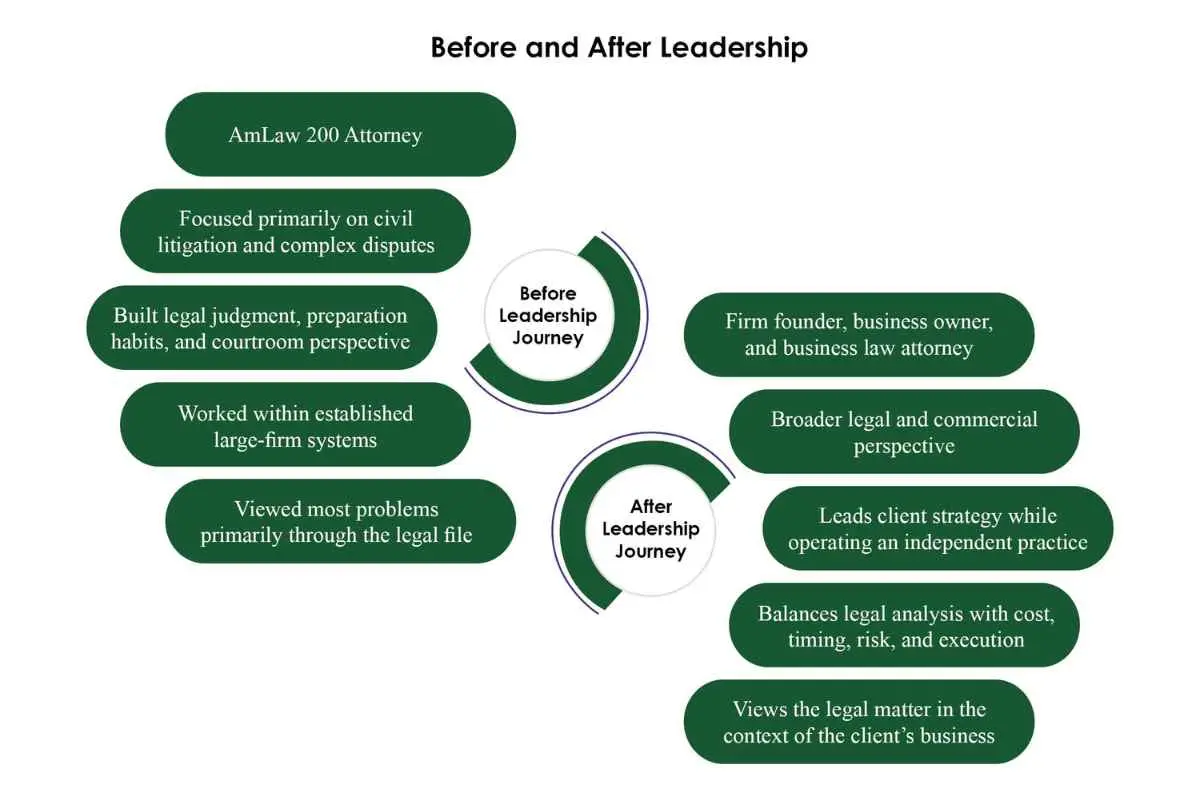
After leadership journey
- Firm founder, business owner, and business law attorney
- Broader legal and commercial perspective
- Leads client strategy while operating an independent practice
- Balances legal analysis with cost, timing, risk, and execution
- Views the legal matter in the context of the client’s business
Building trust through candid counsel
Trust in legal practice depends on confidentiality, candor, consistency, and communication. Matthew Fornaro believes clients deserve a realistic understanding of strategy, cost, risk, and uncertainty rather than promises about outcomes that no lawyer can guarantee. Clear advice allows the client to make decisions with a grounded understanding of where the matter actually stands.
He also believes difficult issues should be addressed directly, whether they involve a weakness in a case, a problematic contract provision, an unrealistic expectation, or a business objective that the available legal remedies cannot fully achieve. Candor is part of professional responsibility, but it is also part of good strategy. A client who understands the weakness can plan around it; a client who is protected from bad news cannot.
Preparing for a more digital legal environment
Digital business practices are changing how contracts are formed, promises are made, evidence is created, and responsibility is assigned. As companies adopt AI and automation, questions can arise about confidential information, intellectual property, customer-facing representations, data use, internal authority, and responsibility for AI-assisted output. At the same time, emails, texts, messaging platforms, and cloud systems can become part of the evidentiary record when a dispute arises.
Matthew Fornaro encourages businesses to address those issues before a lawsuit, transaction, or regulatory inquiry makes them urgent. Clear policies, defined authority, disciplined recordkeeping, and organized agreements can help a company preserve its institutional memory and explain why a decision was made. In a more digital business environment, the ability to reconstruct an important decision can be almost as valuable as the decision itself.
A day in the leader’s life
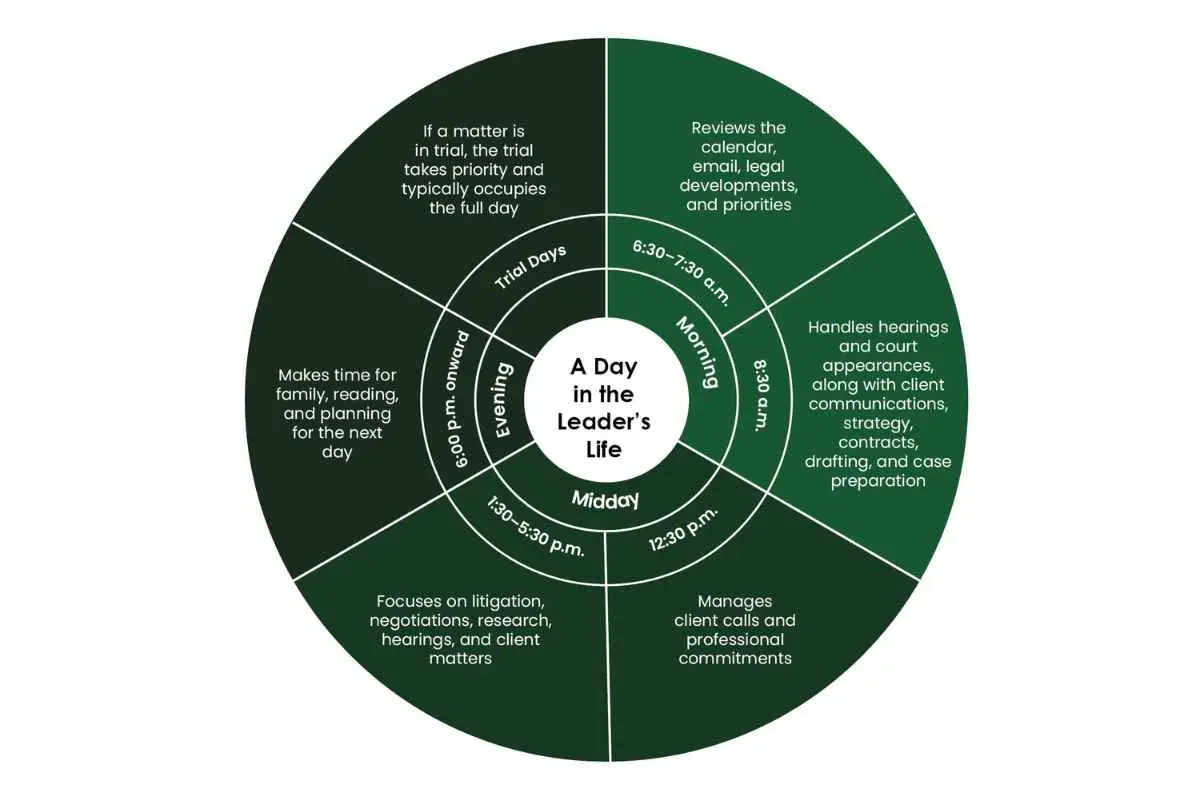
- 6:30–7:30 a.m.
Reviews the calendar, email, legal developments, and priorities.
- 8:30 a.m.
Handles hearings and court appearances, along with client communications, strategy, contracts, drafting, and case preparation.
- 12:30 p.m.
Manages client calls and professional commitments.
- 1:30–5:30 p.m.
Focuses on litigation, negotiations, research, hearings, and client matters.
- 6:00 p.m. onward
Makes time for family, reading, and planning for the next day.
Trial Days
If a matter is in trial, the trial takes priority and typically occupies the full day.
Sharing knowledge beyond the practice
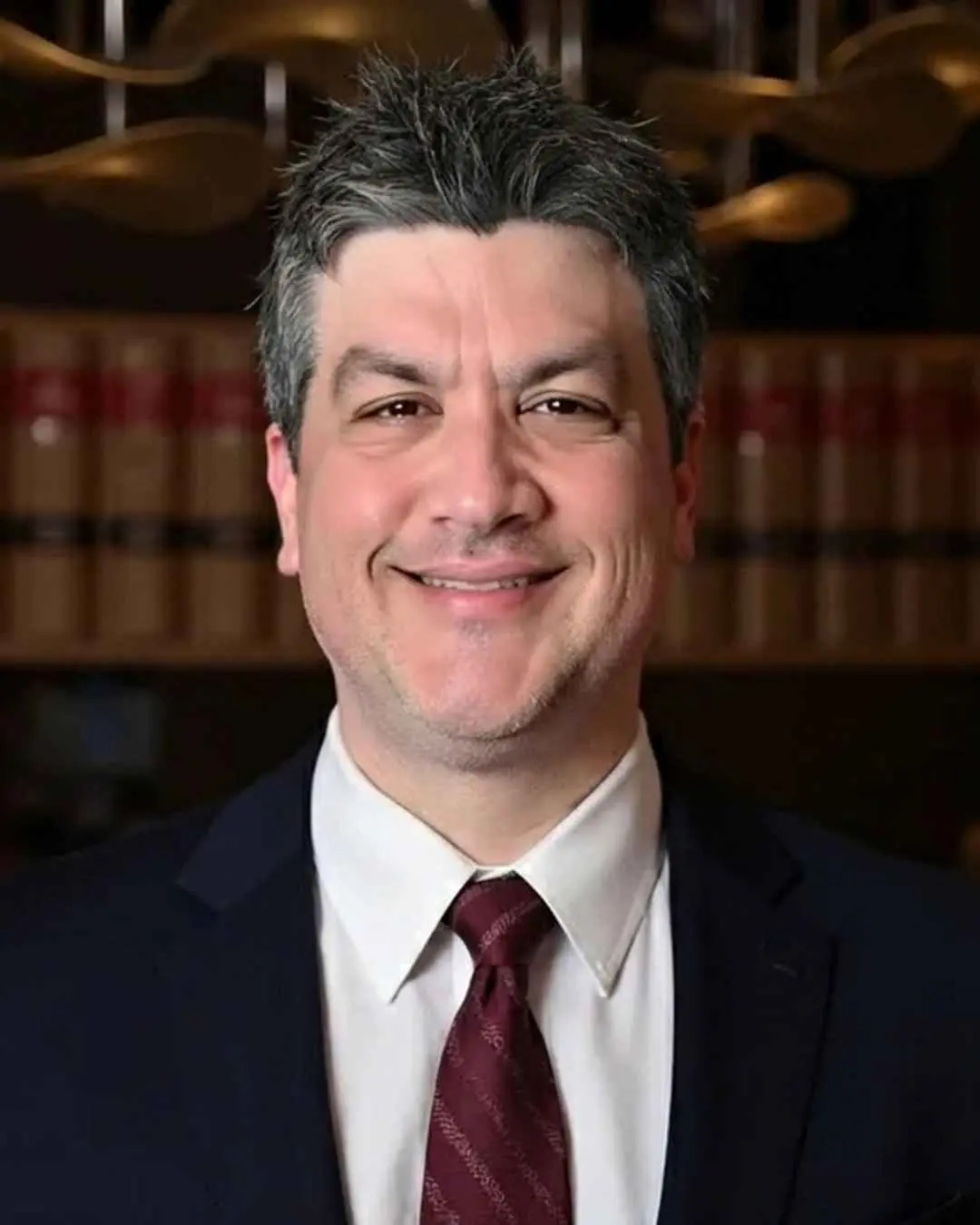
Fornaro extends his work through entrepreneurial education, mentoring, and community engagement. He is a graduate, instructor, and Business Law Subject Matter Expert for the Kauffman FastTrac NewVenture Program; a graduate and volunteer instructor with Florida State University’s Jim Moran Institute for Global Entrepreneurship; and a volunteer workshop presenter for SCORE. He also shares business-law perspectives through writing, speaking, podcasts, and media commentary.
Across those activities, he emphasizes the same idea that guides the practice: lawyers serving entrepreneurs should understand how businesses operate, and business owners should treat legal structure as part of the company rather than as paperwork to revisit only when something goes wrong. For younger lawyers, he stresses preparation, credibility, judgment, and the value of learning the client’s business as carefully as the case file.
A career built on experience and professional standards
Matthew Fornaro is admitted to practice in Florida, New York, and the District of Columbia, as well as before the Supreme Court of the United States. His dispute-resolution credentials include service as a Florida Supreme Court Certified County Mediator, Florida Supreme Court Qualified Arbitrator, FINRA Dispute Resolution Arbitrator, NFA Arbitrator, and National Arbitration and Mediation (NAM) Arbitrator. Those roles add another perspective to a practice that spans transactions, business counseling, and commercial disputes.
His professional recognition includes an AV Preeminent rating through Martindale-Hubbell and Florida Super Lawyers Rising Star recognition. Yet he measures professional experience less by labels than by whether the work helps a client preserve options, strengthen an agreement, resolve a dispute, or make a better-informed business decision. That practical standard remains central to Fornaro Legal’s identity.
Where legal judgment meets commercial reality
Matthew Fornaro’s practice is built on a simple premise: when a legal decision affects operations, money, relationships, authority, or growth, it is also a business decision. His background in large-firm litigation, business law, dispute resolution, and firm ownership allows him to evaluate both sides of that equation.
That perspective helps him look beyond the immediate dispute or document and consider what a decision may mean six months or several years later. Whether the matter calls for litigation, negotiation, stronger contractual protections, a governance change, or another practical solution, Fornaro focuses on helping clients understand their options and move forward with clarity. The mission of Matthew Fornaro, P.A. d/b/a Fornaro Legal remains the same one that motivated its founding in 2015: give entrepreneurs, startups, founders, and growing businesses access to sophisticated business-law experience without sacrificing responsiveness, practicality, or personal attention.
Open letter
Dear Business Owners, Aspiring Attorneys, and Future Legal Leaders,
Believe in yourself, have a plan, and execute on it. But remember that execution without judgment can create problems just as quickly as it creates growth.
For business owners, understand the agreements and relationships that can materially affect your company. Put important ownership, payment, authority, confidentiality, and intellectual property issues in writing. Know which risks you are accepting and which should be reduced, capped, insured, or negotiated before they become expensive.
As your business changes, your legal structure should change with it. New employees, customers, investors, technology, and markets can create obligations that did not exist when the company started. Treat contracts, governance, records, and legal advice as part of the operating infrastructure of the business, not paperwork that can always be fixed later.
For young lawyers, protect your credibility. Be prepared, give candid advice, and learn the client’s business, not just the case file. Know when to fight, when to negotiate, and when a different path will better serve the client.
Above all, remember that integrity is an asset. Trust takes years to build and very little time to lose. Protect it through preparation, honesty, sound judgment, and the way you conduct yourself when the stakes are high.
Matthew Fornaro – Founder & Business Law Attorney
Matthew Fornaro, P.A. d/b/a Fornaro Legal
Quick takes
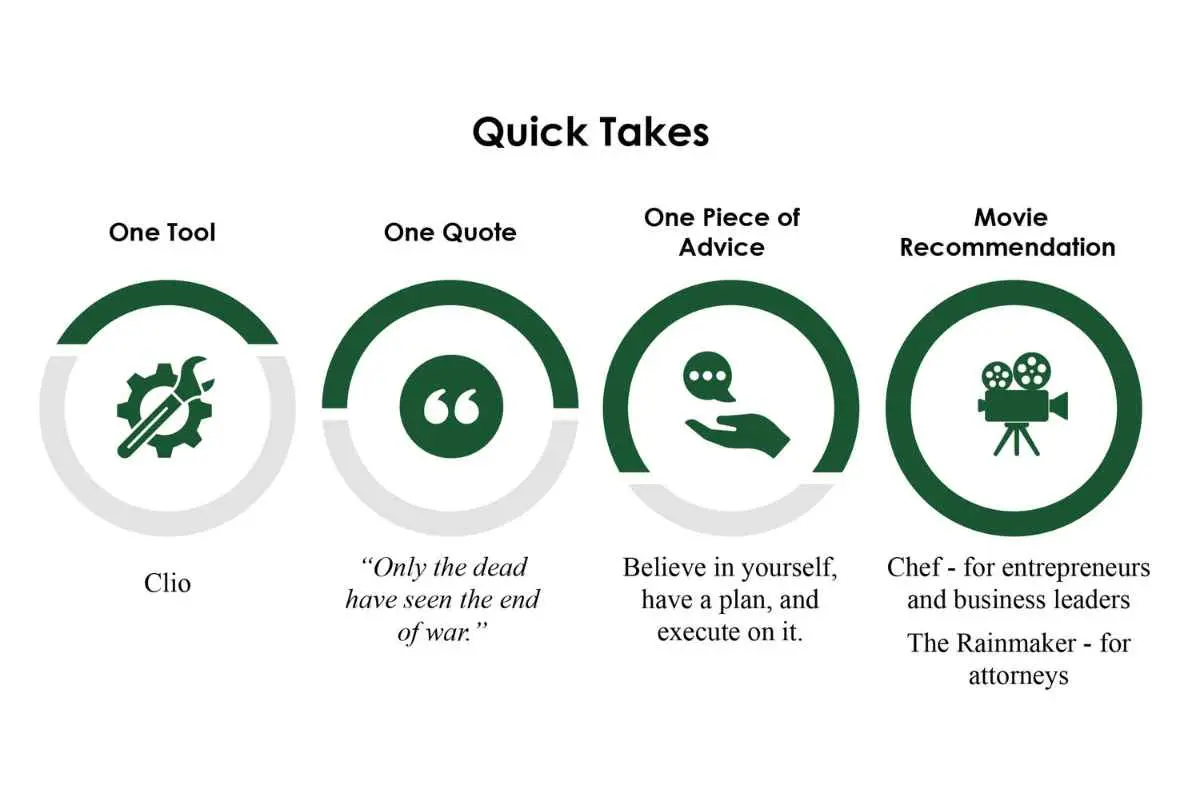
1. One Tool
- Clio
2. One Quote
“Only the dead have seen the end of war.”
3. One Piece of Advice
- Believe in yourself, have a plan, and execute on it.
4. Movie Recommendation
- Chef – for entrepreneurs and business leaders
- The Rainmaker – for attorneys
5 Key Takeaways
- Understand the Business: Identify the business objective behind the legal issue.
- Assess the Risk: Distinguish risks to avoid, reduce, allocate, cap, or accept.
- Define the Objective: Align legal strategy with the result the business actually needs.
- Prepare for Growth: Keep contracts, authority, ownership, and records aligned with how the company operates.
- Lead with Integrity: Build credibility through candor, preparation, communication, and sound judgment.