Boston’s life sciences cluster pulled in $3.45 billion in venture funding for biopharma in just the first half of 2026 alone. If you’re researching pharmaceutical companies in Boston, you’re looking at more than a single city. The ecosystem spans Cambridge’s Kendall Square, Waltham, Lexington, and Somerville. They are home to Massachusetts’s drug pipeline, representing 17% of the entire U.S. total.
Below, you’ll find the major players driving this ecosystem, from Moderna’s mRNA breakthroughs to Vertex’s rare-disease pipeline. Along with what makes each one worth watching in 2026.
Table of contents:
- Leading pharmaceutical companies in Boston in 2026
- Why Boston Remains a Global Life Sciences Epicenter
- Why Kendall Square Matters for mRNA and Gene Therapy
- Conclusion
- FAQ
Leading pharmaceutical companies in Boston in 2026
The following companies represent a more useful 2026 directory than a ranking based solely on annual revenue.
| Company | Boston-area base | Approx. market cap* | Flagship therapy/platform | 2026 R&D focus |
| AbbVie | Cambridge | $459B+ | Skyrizi, Rinvoq | Immunology, oncology, neuroscience |
| Novartis | Cambridge | $309B | Kisqali, Kesimpta, radioligand therapies | Oncology, neuroscience, genetic medicine |
| Thermo Fisher Scientific | Waltham | $228B | Life-science tools and services | Biopharma manufacturing, analytical tools, clinical research |
| Pfizer | Cambridge | $164B+ | Broad global portfolio | Inflammation, immunology, internal medicine |
| Vertex Pharmaceuticals | Boston | $141B+ | Trikafta/Kaftrio, Casgevy | CF, gene editing, pain, type 1 diabetes |
| Sanofi | Cambridge | $106B+ | Dupixent | Immunology, vaccines, rare disease, oncology |
| Takeda | Cambridge | $59B+ | Entyvio, plasma-derived therapies | GI, oncology, neuroscience, rare diseases |
| Moderna | Cambridge | $59B+ | mRNA vaccines | Cancer vaccines, respiratory vaccines, mRNA therapeutics |
| Alnylam Pharmaceuticals | Cambridge | $35B | Amvuttra | RNAi, cardiovascular, neuroscience |
| Biogen | Cambridge | $33B | Alzheimer’s and neurological therapies | Neurology, immunology, rare disease |
| Charles River Laboratories | Wilmington | $14B | Preclinical/CRO services | Drug discovery, cell and gene therapy |
| Sarepta Therapeutics | Cambridge | $2.4B | Elevidys | Gene therapy and RNA-based rare-disease medicines |
Approximate September 2026 market values. Market capitalization fluctuates with share prices. For example, Thermo Fisher was about $228.7 billion on Sept. 3, 2026. Charles River was about $14 billion. Biogen was about $32.9 billion. Alnylam was about $35.4 billion. And Sarepta was about $2.4 billion.
1. AbbVie – Cambridge
- Boston-area base: Cambridge
- Market cap: Approximately $459 billion+
- Flagship therapies: Skyrizi and Rinvoq
- 2026 focus: Immunology, oncology, neuroscience and eye care
As one of the largest pharmaceutical companies in Boston’s Cambridge cluster, AbbVie has expanded its research operations there with a focus on early-stage immunology discovery. As of July 2026, its global pipeline included roughly 90 compounds, devices, and indications in development, backed by $13.8 billion in 2025 R&D spending. Skyrizi and Rinvoq continue to drive commercial growth in 2026, while oncology and neuroscience remain key focus areas.
2. Novartis – Cambridge
- Boston-area base: Cambridge
- Market cap: Approximately $309 billion
- Flagship therapies: Kesimpta, Kisqali and radioligand therapies
- 2026 focus: Oncology, neuroscience, immunology and genetic medicine
Novartis runs one of the region’s largest corporate biomedical research campuses in Cambridge. With about 2,300 scientists and professionals across roughly 2 million square feet. In 2026, the site’s focus spans neuroscience and genetic medicine, with remibrutinib among its key clinical programs.
3. Pfizer – Cambridge
- Boston-area base: Cambridge
- Market cap: Approximately $164 billion+
- Flagship portfolio: Broad vaccine and pharmaceutical portfolio
- 2026 focus: Inflammation, immunology and internal medicine
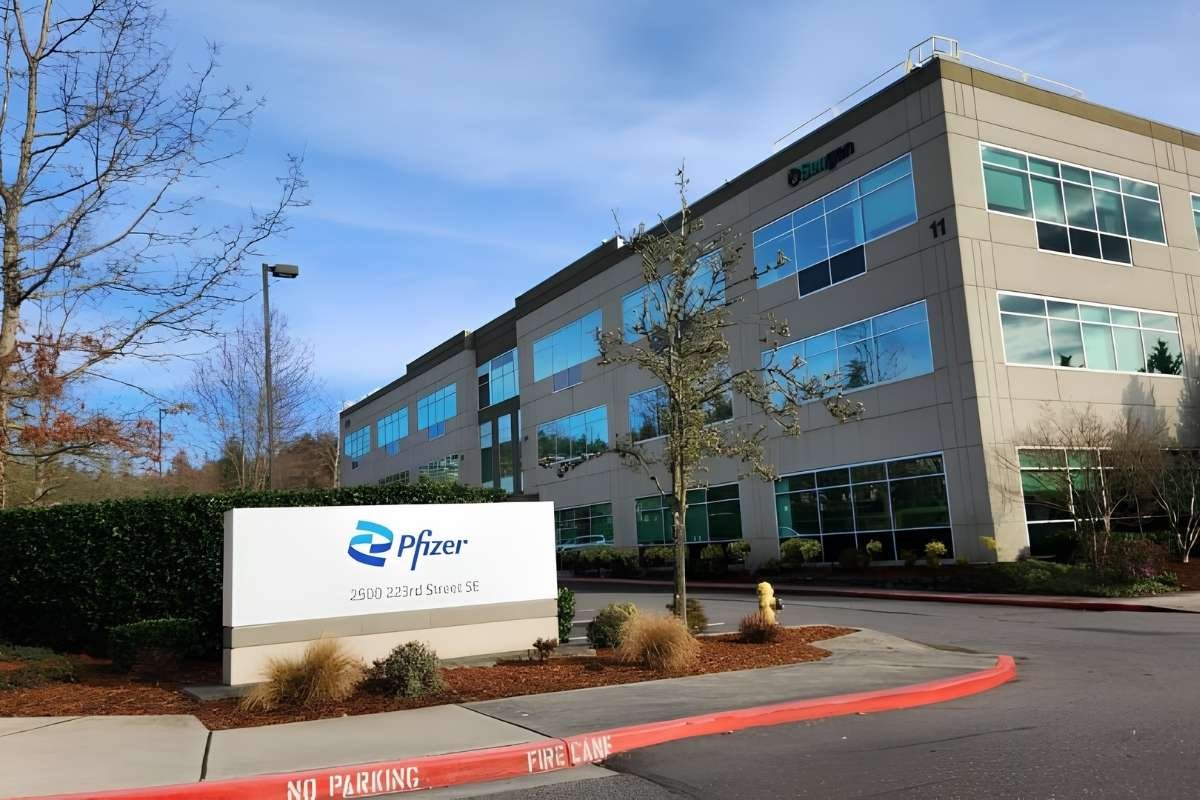
Pfizer’s Cambridge site is a 280,000-square-foot R&D hub in Kendall Square with about 1,000 employees, working across small- and large-molecule design, computational sciences, and early clinical development. Key research areas include inflammatory bowel disease, atopic dermatitis, and muscular dystrophy.
4. Vertex Pharmaceuticals – Boston
- Headquarters: Boston, Massachusetts
- Market cap: Approximately $141 billion+
- Flagship therapies: Trikafta/Kaftrio, Alyftrek, Casgevy and Journavx
- 2026 focus: Cystic fibrosis, gene editing, pain and cell-based therapies
Vertex is one of Boston’s biggest biopharma success stories. Its cystic fibrosis franchise anchors the business, while Casgevy, its CRISPR-based gene therapy, marks its expansion into genetic medicine. In 2025, Vertex posted $12 billion in revenue, investing $5.7 billion in R&D and SG&A to fuel its pipeline.
5. Sanofi – Cambridge
- Boston-area base: Cambridge
- Market cap: Approximately $106 billion+
- Flagship therapy: Dupixent
- 2026 focus: Immunology, vaccines, rare diseases and oncology
Sanofi’s Cambridge hub links its global R&D with Boston’s biotech ecosystem, spanning immunology, rare diseases, oncology, neurology, and vaccines. Entering 2026 with multiple Phase 3 programs, the company’s continued focus on immunology and vaccines shows why Boston remains key for pharma giants seeking top talent and partnerships.
6. Takeda – Cambridge
- Boston-area base: Cambridge and Lexington
- Market cap: Approximately $59 billion+
- Flagship therapies: Entyvio and plasma-derived therapies
- 2026 focus: Gastroenterology, rare disease, oncology, neuroscience and cell therapy
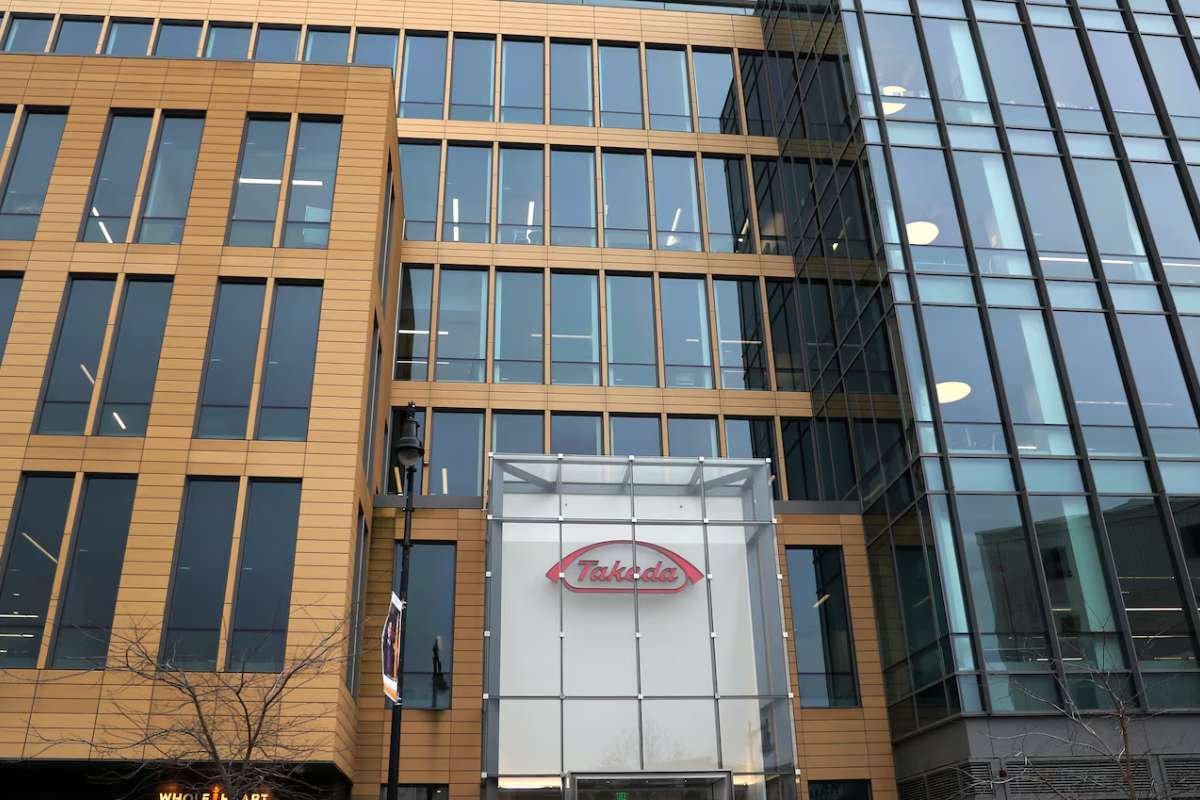
Cambridge hosts Takeda’s global R&D leadership and most of its research teams, making it one of the pharmaceutical companies in Boston with the deepest local footprint. The company is expanding its Kendall Square presence with a roughly 600,000-square-foot R&D and office facility set for 2026 occupancy. Its 2026 pipeline includes oveporexton (narcolepsy type 1), rusfertide (polycythemia vera), and zasocitinib (psoriasis), with rusfertide FDA-approved as MIMRYLO in August 2026.
7. Moderna – Cambridge
- Headquarters: Cambridge, Massachusetts
- Market cap: Approximately $59 billion+
- Flagship platform: mRNA vaccines and therapeutics
- 2026 focus: Personalized cancer vaccines, respiratory vaccines and next-generation mRNA medicines
Moderna, born in Cambridge, is one of the pharmaceutical companies in Boston that built its name on mRNA, and it’s no longer just about COVID-19. The platform now extends into respiratory disease and oncology, headlined by intismeran autogene, a personalized cancer vaccine developed with Merck. Recent positive late-stage results have put Moderna’s oncology bet back in the spotlight for 2026.
8. Alnylam Pharmaceuticals – Cambridge
- Headquarters: Cambridge, Massachusetts
- Market cap: Approximately $35 billion
- Flagship therapy: Amvuttra (vutrisiran)
- 2026 focus: RNA interference, cardiovascular disease and neuroscience
Alnylam pioneered RNA interference (RNAi) as a viable therapeutic platform. Its Amvuttra franchise drove 2025 net product revenue to roughly $2.99 billion, up 81% from 2024. The 2026 pipeline extends into TTR-related disease, hypertension, Alzheimer’s, and Huntington’s disease.
9. Biogen – Cambridge
- Headquarters: Cambridge, Massachusetts
- Market cap: Approximately $33 billion
- Flagship therapies: Alzheimer’s and neurological medicines
- 2026 focus: Neurology, immunology and rare diseases
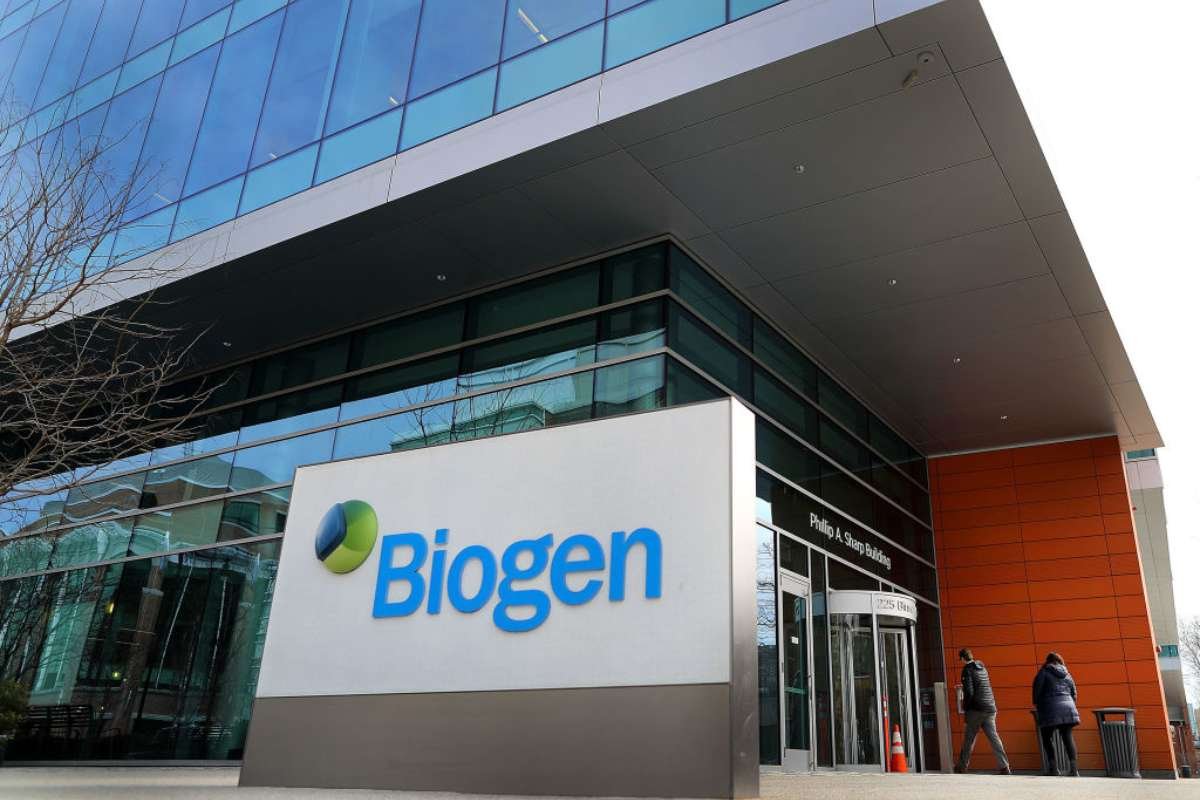
Biogen remains a top neurological disease specialist in the region. Its 2025 revenue hit $9.9 billion, with 10 programs in Phase 3 heading into 2026, setting up several potential future launches. The company is also ramping up business development, making it a name worth watching for biotech and tech partners alike.
10. Sarepta Therapeutics – Cambridge
- Headquarters: Cambridge, Massachusetts
- Market cap: Approximately $2.4 billion
- Flagship therapy: Elevidys
- 2026 focus: Gene therapy and RNA medicines for rare diseases
Sarepta leads Greater Boston’s precision genetic medicine space, driven by Elevidys, its gene therapy for Duchenne muscular dystrophy, and a growing siRNA pipeline targeting FSHD, myotonic dystrophy, and Huntington’s disease. In 2026, Elevidys became the first gene therapy launched in Japan for Duchenne muscular dystrophy.
Other major Boston-area life sciences players
Thermo Fisher Scientific and Charles River Laboratories are also essential to the ecosystem.
Thermo Fisher is not a traditional pharmaceutical manufacturer. It supplies instruments, technologies, clinical research, and bioprocessing capabilities to pharmaceutical and biotechnology companies. Its 2026 revenue reached $228 billion.
Charles River, headquartered in Wilmington, supports drug discovery and development as a major contract research organization. Its market capitalization was approximately $14 billion in September 2026.
Why does Boston remain a global life sciences epicenter?
Boston’s advantage is not simply the number of pharmaceutical companies located there. It is the density of the entire innovation chain.
The region connects:
- MIT and Harvard researchers
- Major academic medical centers
- Kendall Square biotech companies
- Venture capital investors
- Pharmaceutical R&D centers
- Clinical-trial infrastructure
- Contract research organizations
- Biomanufacturing capabilities
- Experienced life sciences talent
MassBio’s 2026 data illustrates the scale of this ecosystem. Massachusetts accounted for 17% of the U.S. drug-development pipeline, with 26% of programs in advanced modalities. The state also attracted 9.3% of all U.S. NIH funding.
The ecosystem is also attracting significant capital. Massachusetts companies raised $3.45 billion in biopharma venture capital during the first half of 2026, representing 25% of U.S. biopharma VC during that period.
Why is Boston a global hub for mRNA and gene therapy?
Boston’s influence in mRNA and gene therapy comes from the combination of basic science, translational research, capital, and pharmaceutical infrastructure.
mRNA
Cambridge became globally associated with mRNA through companies such as Moderna. But the wider ecosystem includes researchers, investors, clinical institutions, and pharmaceutical partners capable of taking discoveries from laboratory research into clinical development.
Gene therapy
Greater Boston is equally important in genetic medicine.
Vertex’s Casgevy demonstrates how CRISPR-based gene editing can move from academic discovery toward commercial medicine. Sarepta’s Elevidys demonstrates another approach: delivering genetic material through an AAV-based gene therapy.
Advanced modalities are expanding.
The region’s innovation is no longer limited to traditional small-molecule drugs. Companies are increasingly working across:
- mRNA
- RNA interference
- CRISPR gene editing
- AAV gene therapy
- Cell therapy
- Antibody-drug conjugates
- Radioligand therapy
- Targeted biologics
- AI-enabled drug discovery
This concentration makes Greater Boston attractive to both established pharmaceutical companies and emerging biotechnology startups.
Conclusion:
Pharmaceutical companies in Boston aren’t just clustered here by coincidence. MIT and Harvard research, Kendall Square biotech, deep venture capital, and world-class clinical infrastructure all feed into one another. That’s what turns lab discoveries into approved therapies, and why the region keeps attracting global players and startups alike. From Moderna’s mRNA pipeline to Vertex’s gene-editing breakthroughs, 2026 is shaping up as another pivotal year for the cluster.
Looking to connect with these companies, whether for a career, a partnership, or research? Start with the directory above and go straight to the source.
FAQ:
1. Why is Boston a pharmaceutical hub?
Boston combines leading universities, hospitals, biotech companies, investors, and research talent.
2. What are the top pharmaceutical companies in Boston?
Moderna, Vertex, Biogen, Alnylam, Takeda, Novartis, Sanofi, Pfizer, AbbVie, and Sarepta are among the leading names.
3. Is Boston good for pharmaceutical careers?
Yes. The region offers opportunities in R&D, clinical research, manufacturing, regulatory affairs, and biotechnology.
4. Which Boston companies work on mRNA?
Moderna is the region’s best-known mRNA company, developing vaccines and mRNA-based therapeutics.
5. What diseases do Boston pharmaceutical companies target?
Key areas include cancer, neurological disorders, rare diseases, immunology, genetic disorders, and cardiovascular conditions.