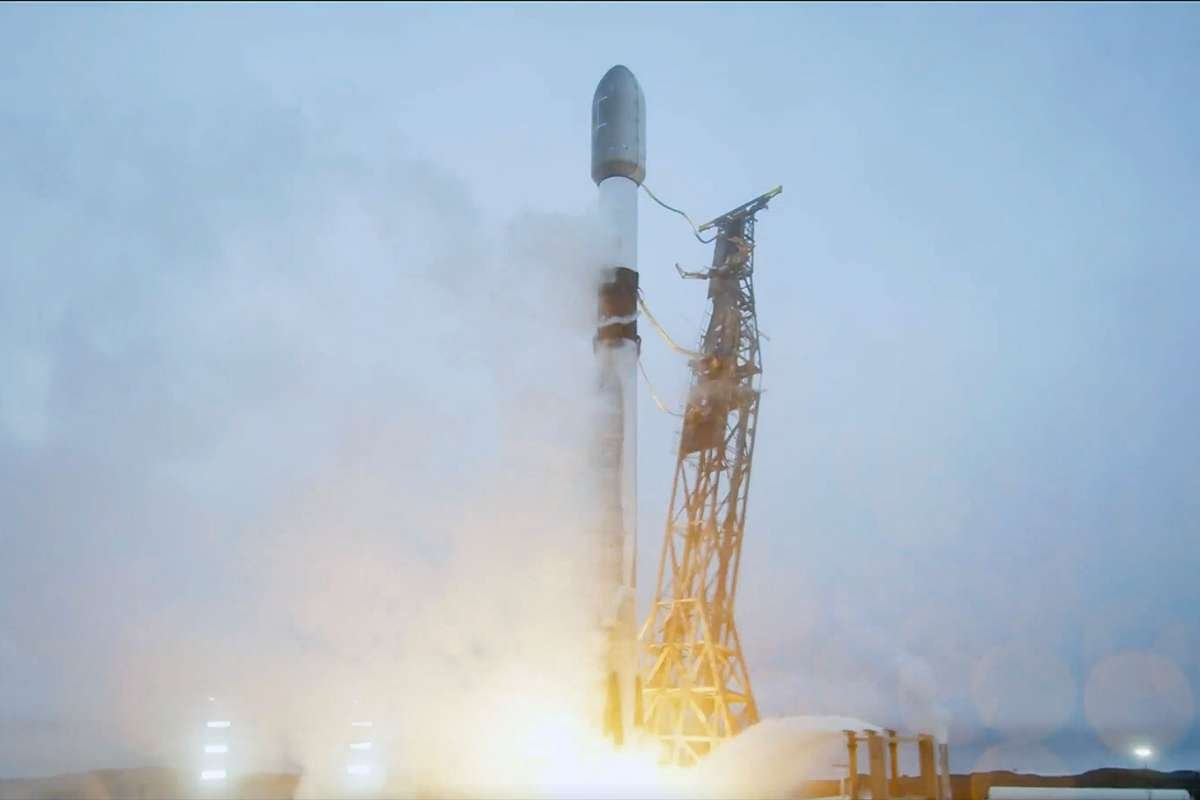
Key Points:
- Weather forces SpaceX Falcon 9 Starlink launch delay
- Booster B1067 poised for record 32nd flight
- Rescheduled mission targets 3,000th Starlink satellite milestone
SpaceX was forced to postpone a significant Falcon 9 launch after unfavorable weather conditions disrupted its plans on December 7. The mission, which was expected to mark the deployment of SpaceX’s 3,000th Starlink satellite of 2025, was halted due to thick cloud cover, strong upper-level winds, and increased lightning risk near the launch corridor.
The launch was scheduled to lift off in the evening from Florida, but real-time weather monitoring showed rapidly declining conditions. Officials determined that proceeding with the launch would increase risk to both the vehicle and recovery operations. As a result, the countdown was stopped moments before liftoff.
This decision highlights SpaceX Falcon 9’s strict safety protocols, where weather plays a decisive role in go/no-go decisions. While delays are common in spaceflight, this particular mission carried historical importance for the company’s reusable rocket program.
A Mission Aimed at Rewriting Reusability Records
Beyond the Starlink milestone, the mission stood out for its use of a veteran SpaceX Falcon 9 first-stage booster. The rocket, known internally as B1067, was scheduled to fly for the 32nd time — a record that would make it the most-flown Falcon 9 booster in SpaceX’s operational history.
The flight represented a crucial step in SpaceX’s long-term reusability strategy. Each successful reuse dramatically lowers launch costs and enables a rapid launch cadence, allowing the company to deploy satellites at an unmatched pace. The Starlink program depends heavily on this model, with thousands of satellites already operating in low-Earth orbit to deliver broadband internet across the globe.
Had the mission launched as planned, it would have symbolized how far reusable rocket technology has advanced, transforming what was once considered experimental into routine spaceflight operations.
New Launch Window Opens as SpaceX Prepares to Try Again
SpaceX Falcon 9 has now retargeted the launch for the following day, with an updated window opening in the late afternoon. Weather forecasts indicate improved conditions, increasing the probability of a successful liftoff. However, mission managers remain cautious given concerns about recovery weather for the booster’s ocean landing.
If successful, the rescheduled mission will not only complete the 3,000-satellite goal for 2025 but will also cement a new benchmark in rocket reusability with the 32nd flight of the same booster.
The delay has not disrupted SpaceX’s broader launch manifest, which remains one of the most active in the global space industry. With dozens of missions scheduled throughout the remainder of the year, the company continues to push the boundaries of launch frequency, satellite deployment, and reusable rocket reliability.
For now, all eyes remain on the next launch opportunity, one that promises to deliver both a technological milestone and a defining moment in modern commercial spaceflight.
Visit The Enterprise World for the latest information.