Key Takeaways
- Tesla’s robotaxi ambitions have moved from promise to real-world deployment.
- Regulation could become a major hurdle for fully autonomous vehicles.
- Tesla is entering an increasingly competitive autonomous-vehicle market.
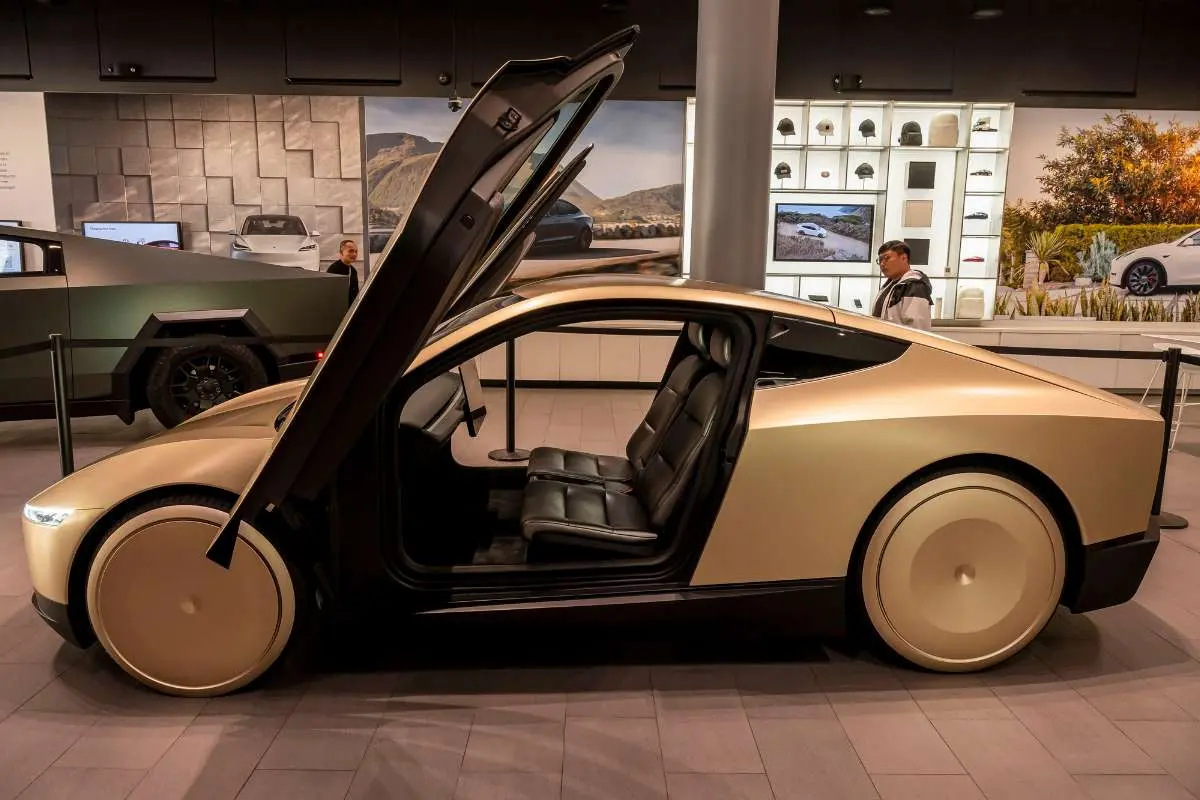
Tesla has begun putting its long-awaited Cybercab on public roads in Austin, Texas, marking a major step in the company’s effort to turn autonomous driving into a commercial robotaxi service. The two-seat vehicle, designed specifically for driverless transportation, does not include a conventional steering wheel or pedals and is intended to operate without a human driver.
The initial rollout is limited, with Tesla deploying a small number of Cybercabs as it begins testing the vehicle in real-world conditions. The company has registered 45 Tesla Cybercabs in Texas, underscoring the early stage of the program compared with the much larger fleets operated by established autonomous-vehicle companies.
The launch was also notably more subdued than some of Tesla’s previous product events. CEO Elon Musk was not present at the Austin rollout, despite his long-standing emphasis on autonomous driving and artificial intelligence as important parts of Tesla’s future.
The Cybercab is central to Tesla’s broader strategy of expanding beyond traditional electric vehicles. The company has increasingly promoted autonomous transportation, artificial intelligence, and robotics as potential sources of future growth. Tesla has also indicated that Cybercabs could eventually be purchased and operated by other businesses, creating the possibility of a larger network of autonomous vehicles without Tesla directly owning every vehicle in operation.
For now, however, the Austin deployment represents an early-stage test of whether Tesla can translate its autonomous-driving technology into a reliable commercial service.
Federal investigation adds regulatory pressure
The Cybercab rollout quickly encountered a significant regulatory challenge. The National Highway Traffic Safety Administration opened an investigation into Tesla’s deployment shortly after the vehicles began operating on Austin roads.
The investigation focuses in part on the vehicle’s unconventional design. Because the Cybercab is intended to operate autonomously, it does not have the steering wheel, brake pedal, and other manual controls found in conventional passenger vehicles. Existing federal vehicle safety standards were largely developed around vehicles controlled by human drivers, raising questions about how purpose-built autonomous vehicles should comply with those requirements.
Tesla used the industry’s self-certification process to place the Tesla Cybercab on the road rather than seeking a federal exemption for its missing controls. The company’s approach has now come under closer scrutiny as regulators assess whether the vehicle complies with applicable federal safety standards.
The regulatory issue comes as U.S. authorities attempt to update rules for autonomous vehicles. Proposed changes could eventually make it easier for manufacturers to deploy vehicles designed without traditional driving controls. However, existing requirements remain relevant while those changes are being considered.
The federal investigation does not necessarily mean that Cybercab operations will be halted. Instead, it places greater attention on Tesla’s certification process and could influence how similar autonomous vehicles are regulated in the future.
Tesla faces growing competition in robotaxis
Tesla is entering the robotaxi market at a time when competitors have already gained significant experience operating autonomous passenger services. Waymo has expanded its commercial robotaxi operations into several U.S. cities, giving it a substantial head start in real-world autonomous transportation.
The difference in operating experience highlights one of Tesla’s biggest challenges. The company must demonstrate that its technology can safely handle passengers, traffic, and unpredictable road conditions while eventually expanding to a much larger fleet.
Tesla’s technical approach also differs from several competitors. The company has relied heavily on camera-based systems and artificial intelligence for autonomous driving, while other robotaxi developers use combinations of cameras, radar and lidar sensors. The contrasting approaches have fueled an ongoing debate over the technology required to achieve dependable driverless transportation.
The Tesla Cybercab’s launch therefore represents more than the introduction of another Tesla vehicle. It is a crucial test of whether the company can turn years of promises surrounding autonomous driving into a scalable business.
For Tesla, the potential payoff is substantial. A successful robotaxi network could create a new source of revenue and reinforce the company’s ambitions in artificial intelligence and robotics. However, regulatory scrutiny, technological challenges and competition from established operators could make that transition difficult.
With the Tesla Cybercab now on public roads, Tesla has taken an important step toward its driverless future. The next challenge will be proving that the vehicles can operate safely, meet regulatory requirements, and eventually scale into a mainstream transportation service.