Ah, the timeless kitchen dilemma. A question that has stopped the minds of professional cooks and amateur bakers at the same time. You stand ready, recipe in hand, only to come across a frustrating doubt. Majorly around that rich, essential source of self-portrayed bliss. That is none other than butter. Is a “cup” enough for everything? Then comes the relatively simple question. “How many sticks of butter are in 1 cup?” This can hold a surprisingly great deal of mystery. When everything we think we know about cooking is about to be proven wrong. It also spiralled us into a cookie catastrophe or muffin confusion.
Don’t let this measurement secretly ruin your next dish. Precision is the secret artist in the kitchen. It is an invisible force behind. That helps the perfect texture of a cake, the perfect crust of a pie, or the perfect depth in a sauce. Is it time to crack the buttery code? And get to the essential answer for How Many Sticks of butter are in 1 cup? Without questioning the measurement again.
What is a Butter Stick? Here is What You Need to Know
A butter stick is a standardized brick of butter. Many consider it to be the most common use and sale of butter in the U.S. It’s a handy measurement tool for cooking and baking. One stick of butter typically weighs 4 ounces (113 grams). And it is equal to 1/2 cup, or 8 tablespoons. The wrapper is often affixed with measurements for convenience. As you cut what you want off for a recipe. Before understanding how many sticks of butter are in 1 cup? Let’s get an overview of the measurement profile.
Variations in Different Countries
- In the U.S., butter is frequently sold in one-pound packages divided into four sticks. Each is 113 grams.
- In many other countries, such as Australia and parts of Europe. Butter commonly comes in blocks. It is often 250 grams or 500 grams. Instead of the sticks. Recipes from those regions rarely refer to “sticks.” But use weights or metric measurements instead.
- In Canada, typical packaging includes 454-gram (1-pound) blocks. This may be cut as needed.
U.S. Regional Shape Differences: “Elgin” vs. “Stubbies”
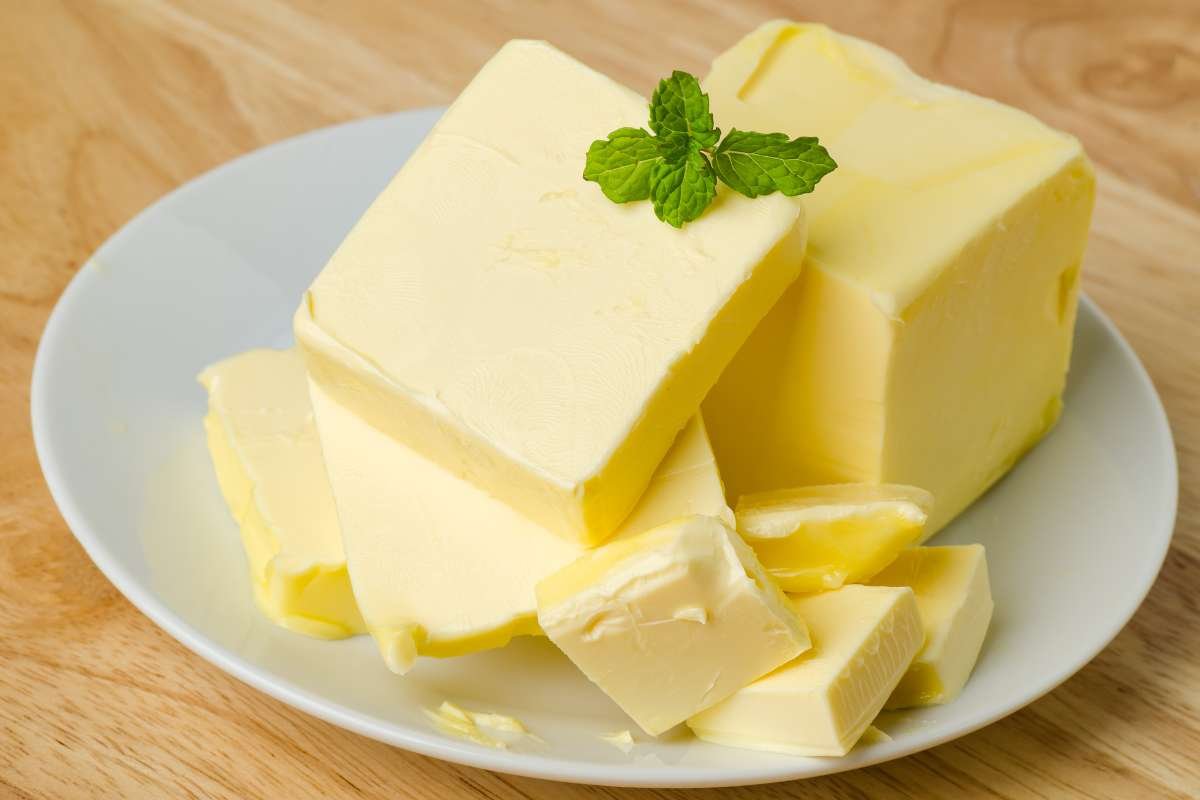
- In the Eastern and Central U.S., Butter sticks are long and skinny. They are known as “Elgins” after the Elgin Butter Company. They measure approximately 4.8 inches long and 1.3 inches wide.
- In the Western U.S., which includes parts of Texas and west of the Rockies. Butter sticks are short and fat. They are called “Western Stubbies.” Measuring about 3.1 inches long and 1.5 inches wide.
- Both versions weigh the same (113 grams). So recipes remain accurate despite the visual difference.
Key U.S. Measurements Table
| Region | Name | Shape/Size | Weight | Common Use |
| East, Midwest | Elgin | 4.8” x 1.3” (skinny) | 113 g | Standard stick |
| West, Texas | Western Stubby | 3.1” x 1.5” (stubby) | 113 g | Standard stick |
| Other Countries | N/A | Blocks, 250–500g | Variable | Cut as needed |
Core Conversion: How Many Sticks of Butter are in 1 Cup?
1 cup of butter equals 2 sticks if using the U.S. standard. This is where one stick is 1/2 cup or 8 tablespoons. This ratio is frequently referenced in American baking. This makes conversions between sticks, cups, tablespoons, and grams straightforward and reliable.
Butter Conversion Chart
| Cups | Sticks | Tablespoons | Grams | Ounces |
| 1/4 cup | 0.5 stick | 4 | 57 | 2 |
| 1/3 cup | 0.67 | 5⅓ | 76 | 2.7 |
| 1/2 cup | 1 | 8 | 113 | 4 |
| 2/3 cup | 1⅓ | 10⅔ | 151 | 5.3 |
| 3/4 cup | 1.5 | 12 | 170 | 6 |
| 1 cup | 2 | 16 | 227 | 8 |
| 1½ cups | 3 | 24 | 340 | 12 |
| 2 cups | 4 | 32 | 454 | 16 |
Example Conversions:
- 1/4 cup butter = half stick = 4 tablespoons = 57 grams
- 1/3 cup butter = about 2/3 stick = 5⅓ tablespoons = 76 grams
- 3/4 cup butter = 1½ sticks = 12 tablespoons = 170 grams
- 1½ cups butter = 3 sticks = 24 tablespoons = 340 grams
These conversions help ensure accuracy. Especially when adjusting recipes or working with different butter packaging types.
Why is There Sometimes Confusion or Variance?
The seemingly straightforward question. “How many sticks of butter are in 1 cup?” It often confuses because of a perfect storm of circumstances. The variations may result from differences in international packaging. Such as sticks versus blocks or grams. There are slight differences in butter density and air content. And the slight weight difference between salted and unsalted butter. Additionally, butter is measured in its various states. It can be cold, softened, or melted. This can affect the measurement. Considering these factors is the secret to the success of accurate cooking and baking.
Factors Causing Butter Measurement Confusion:
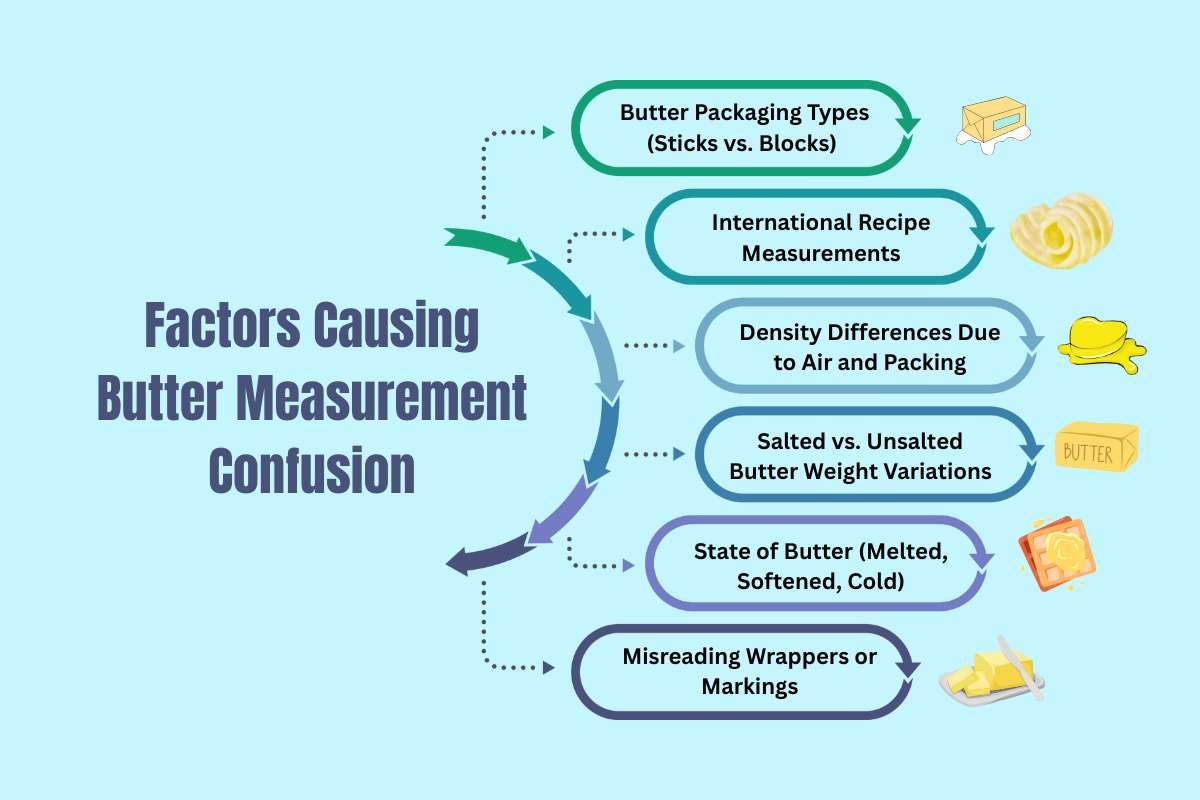
- Butter Packaging Types (Sticks vs. Blocks)
Butter in the U.S. is often sold in sticks for portion control. Many countries use blocks or slabs. This leads to confusion when converting or measuring. - International Recipe Measurements
Recipes outside the U.S. usually list butter in grams or kilograms. Requiring conversions that can introduce errors without precise scales. - Density Differences Due to Air and Packing
Butter can have slight density variations. It is based on how much air is incorporated during production. And how tightly it’s packed, affecting volume measurements. - Salted vs. Unsalted Butter Weight Variations
Salted butter contains extra ingredients. This may marginally increase weight compared to unsalted butter. Influencing precise recipe measurements. - State of Butter (Melted, Softened, Cold)
Butter’s temperature and physical state change its volume. Melted butter is denser in liquid form, softened butter is fluffy, and cold butter is firm. This impacts measurement accuracy when volume-based measures are used. - Misreading Wrappers or Markings
The confusing packaging labels. Especially when mixing regional formats or unfamiliar measurements. They can result in incorrect butter usage in recipes.
Practical Use Cases & Recipe Relevance:
For accurate conversions and consistent results. Especially in sensitive baking. Remember How Many Sticks of Butter are in 1 Cup? The answer is two (or 227 grams). When substituting, swap salted for unsalted butter one-for-one. Adjust the added salt by 41teaspoons per stick.
For European recipes, convert grams to U.S. measures by using the standard. That is 1 stick = 113 grams = 1/2cup. This standard applies regardless of regional shape differences. Whether it is “Elgin” vs. “Stubby.” This ensures your measurements are always precise.
Example Conversion: European Cake Recipe to U.S. Measurements
A European recipe requiring 200 grams of butter. It translates to roughly 1¾ U.S. sticks. That is 200 ÷ 113 = 1.77 sticks or 7/8 cup. If the European recipe uses salted butter. And the U.S. cook only has unsalted. Then add approximately 1/4 teaspoon of salt per stick used to keep flavor consistent.
This approach ensures recipe accuracy. It preserves the intended flavor balance. This helps cooks smoothly navigate between different measurement systems.
Methods and Tips on Measuring Butter Accurately:
To get perfect results in baking and cooking recipes. It’s largely based on accurate measurement. Even more so when baking with butter. Here are some important ways and tips to keep in mind. This will help you accurately measure this important ingredient. Whether it is cold or melted.
1. Using Wrappers with Tablespoon Marks
Most U.S. butter sticks show tablespoon increments printed on the wrapper. Cut along these marks for quick. And approximately measures without extra tools.
2. Using a Kitchen Scale (Best Precision)
Weighing butter in grams or ounces delivers the highest accuracy. Tare the scale, add butter. Until the exact weight needed is reached. It is perfect for irregular shapes or melted butter.
3. Water Displacement Method (Blocks/Irregular Shapes)
Fill a liquid measuring cup with water. Then add butter to submerge and note the water level rise. This helps to determine butter volume. Pat dry before use.
4. Tips for Measuring Softened Butter
Use a rubber or silicone spatula. This helps to press softened butter firmly into a dry measuring cup. It eliminates air pockets, then levels with a knife for exact volume.
5. Tips for Measuring Chilled/Cold Butter
Cut butter using marks on the wrapper or weigh chunks on a scale. Cold butter is difficult to compress. So volume-based cup measures are less reliable.
6. Tips for Measuring Melted Butter
Use a liquid measuring cup to measure melted butter by volume. Or weigh it directly for consistent results.
Common Measuring Mistakes to Avoid
Don’t eyeball or estimate softened butter volumes. Always press out air and level. Avoid confusion from misreading wrapper markings. Measuring by volume when butter is melted. Without weight, it can cause inaccuracies.

Conclusion:
We’ve settled the question of how many sticks of butter are in 1 cup. That’s two sticks, according to the U.S. standard. As we’ve discovered, there is more to it than just a number. Because we have varying formats of packaging, measurement units, seasonality, and regionality.
Once familiar with that distinction and other factors. Such as precise measuring techniques, utilizing charts with reliable conversions, and baking techniques. It will add precision to every recipe you prepare. Doesn’t matter if you are a weekend cook or a professional aspiring baker. Knowing how many sticks of butter are in 1 cup? It will elevate your baking and cooking. It will churn out the results that you would expect. And give you the confidence to give a recipe you trust a try.
Precision with butter is the least secret to a guaranteed cake. Like flaky pie, or buttery sauce, and now you have that recipe down pat!
FAQ:
1. How many sticks of butter are in 1 cup?
A standard U.S. stick of butter equals ½ cup (or 8 tablespoons). This means 1 cup of butter equals 2 sticks. Each stick weighs about 4 ounces (113 grams).
2. How should butter be stored to maintain accuracy in measuring?
Store butter in its original wrapper in the refrigerator to preserve shape and prevent moisture loss. For long-term storage, freeze butter, but thaw it in the refrigerator before measuring to ensure accuracy.
3. How can I measure butter if I don’t have sticks?
If your butter comes in blocks or tubs. Use a kitchen scale for accuracy. One U.S. cup equals 227 grams or 8 ounces. If you don’t have a scale. You can also measure by volume using a liquid measuring cup. After softening or melting the butter.