The City That Teaches Magic Without Wands
At first light, Oxford does not wake; it stirs. Mist coils around its spires like a defensive charm, bells toll as if summoned by an unseen wand, and the cobblestones gleam with the polish of centuries of footfall and fate. This is a city where knowledge has always been a source of magic, and magic has always been a serious business.
They call it the City of Dreaming Spires, but those who know better understand this: Oxford is a school disguised as a city. A place where halls resemble Great Chambers, staircases feel mildly suspicious, and doors seem to decide whether you are worthy of entry. Long before stories of boy wizards and enchanted castles captured the world’s imagination, Oxford had already perfected the art of intellectual sorcery.
This is not a destination. It is an initiation.
“In Oxford, learning is not taught; it is bestowed, guarded, and occasionally tested.”
A Castle Built of Colleges and Quiet Power
Oxford is not one institution but a constellation of houses, colleges that function much like ancient wizarding orders. Each has its own traditions, rivalries, colours, crests, and codes of conduct whispered rather than written.
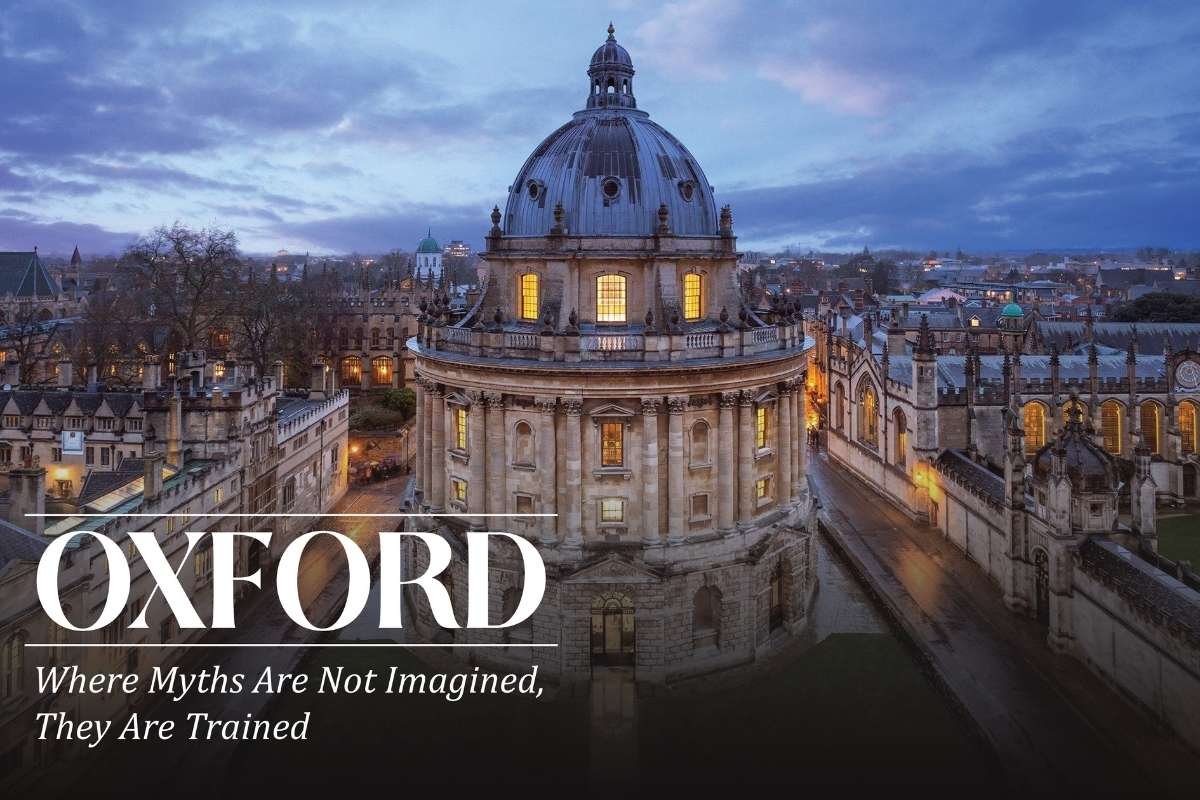
Christ Church rises like a High Hall of legend, its vast dining chamber echoing with the ghosts of scholars past and cinematic magic alike. Magdalen College announces the dawn with choral rites so old they feel spellbound into the stones themselves. The Radcliffe Camera curves protectively over its knowledge, as though shielding secrets too powerful for careless hands.
And then there is the Bodleian Library, a place less visited than entered. Books here do not simply rest on shelves; they wait. Some feel benign. Others feel watchful. The air smells of parchment, dust, and restraint.
This is architecture with intent, stone shaped not for defence, but for thought.
Quick Facts from the Wizarding City

- Population: ~155,000
- Founded: 1096
- Known As: City of Dreaming Spires
- Fictional Echo: Inspiration for Hogwarts
- Defining Traits: Colleges, libraries, rivers, meadows
- Academic Status: Oldest university in the English-speaking world
- Economic Core: Knowledge, research, innovation
Enchanted Grounds Beyond the Walls
No wizarding school is complete without its grounds, and Oxford’s are quietly magnificent. The Rivers Cherwell and Isis glide past like enchanted corridors, carrying students, debates, and half-finished ideas in slender punts that move without urgency.
Port Meadow lies just beyond the city’s edge, unchanged for a thousand years, protected by a charm stronger than any statute: tradition. Wildflowers bloom without instruction. Horses wander without concern. It feels less like land and more like an agreement between nature and time. Here, seasons do not merely pass, they teach. Autumn sharpens minds. Winter disciplines them. Spring releases them. Summer lets them wander.
Oxford’s landmarks are not passive. They observe. Each place feels aware. Each corner feels curated by time.
Landmarks That Behave Like Characters
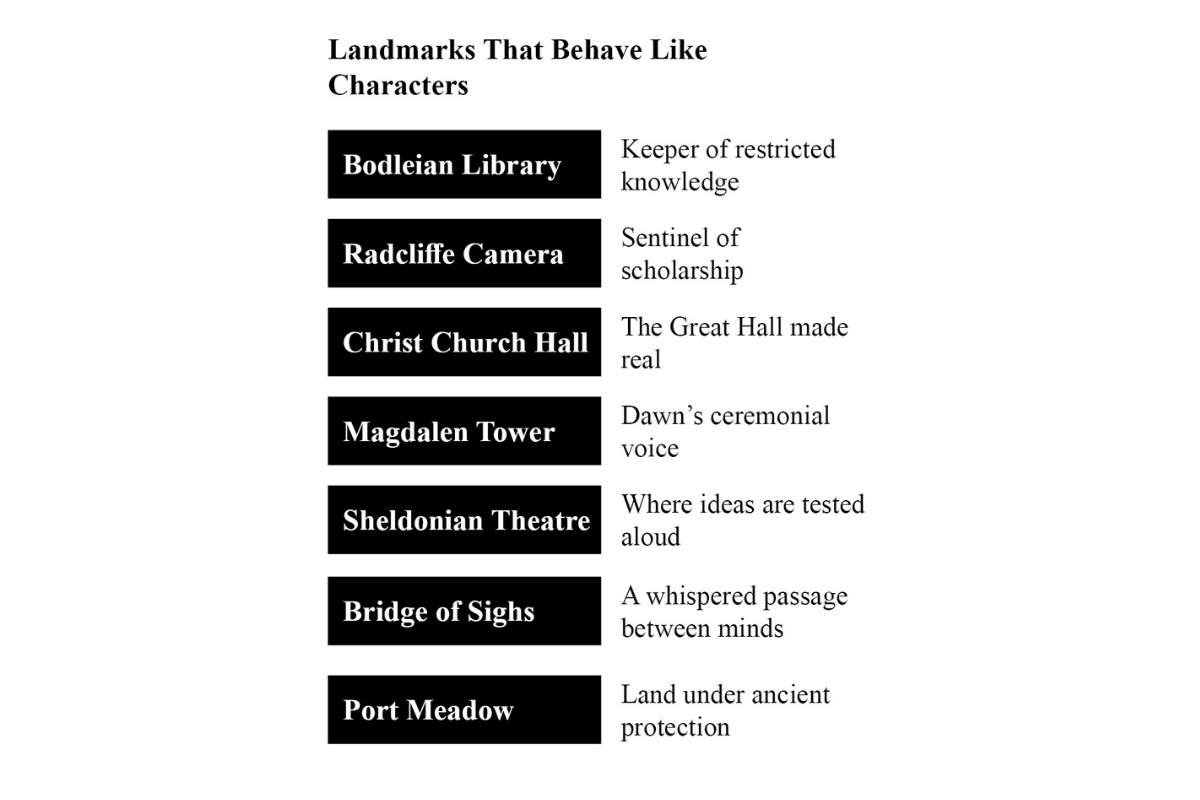
- Bodleian Library – Keeper of restricted knowledge
- Radcliffe Camera – Sentinel of scholarship
- Christ Church Hall – The Great Hall made real
- Magdalen Tower – Dawn’s ceremonial voice
- Sheldonian Theatre – Where ideas are tested aloud
- Bridge of Sighs – A whispered passage between minds
- Port Meadow – Land under ancient protection
The Culture of Spellcraft, Story, and Sound
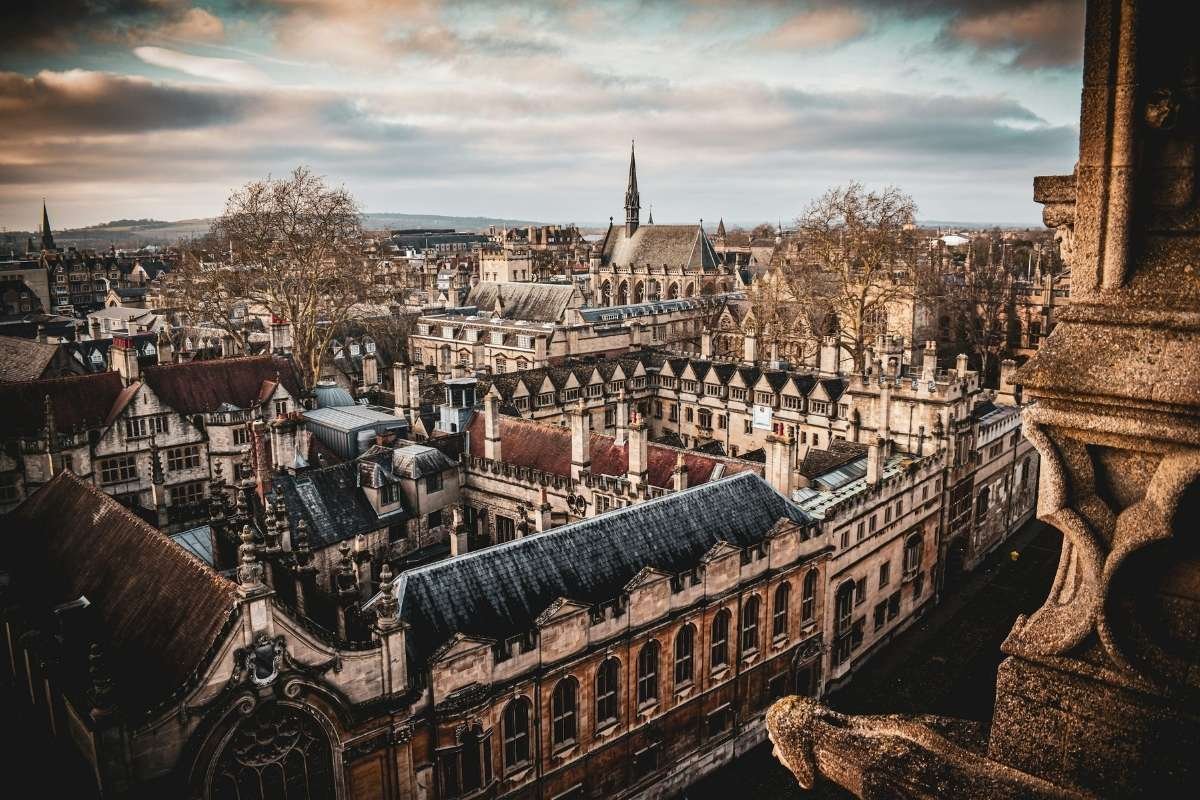
Oxford’s truest magic is linguistic. Words are the primary instruments here sharpened through debate, footnoted into authority, tested aloud, and, when necessary, quietly weaponised. Language is not decoration; it is discipline, shaping how ideas are built, challenged, and released into the world. This is the city where Tolkien forged mythologies and C.S. Lewis opened wardrobes into other realms, where languages were invented not from necessity but from reverence for structure, sound, and meaning.
Lecture halls function like spell chambers, where ideas are summoned, dissected, and sometimes dismantled before attentive audiences. Theatres blur scholarship and spectacle, turning performance into philosophy, while chapels resonate with music that feels less composed than conjured choral traditions bound into stone, rising and falling like sustained enchantments.
Then there are the pubs low-ceilinged, candle-lit, and steeped in lore. Oxford’s informal common rooms, where ale loosens argument, manuscripts are debated into existence, and revolutions in thought often begin as casual disagreements. In Oxford, storytelling is not merely an art form; it is infrastructure, sustaining culture, identity, and the continuity of knowledge itself.
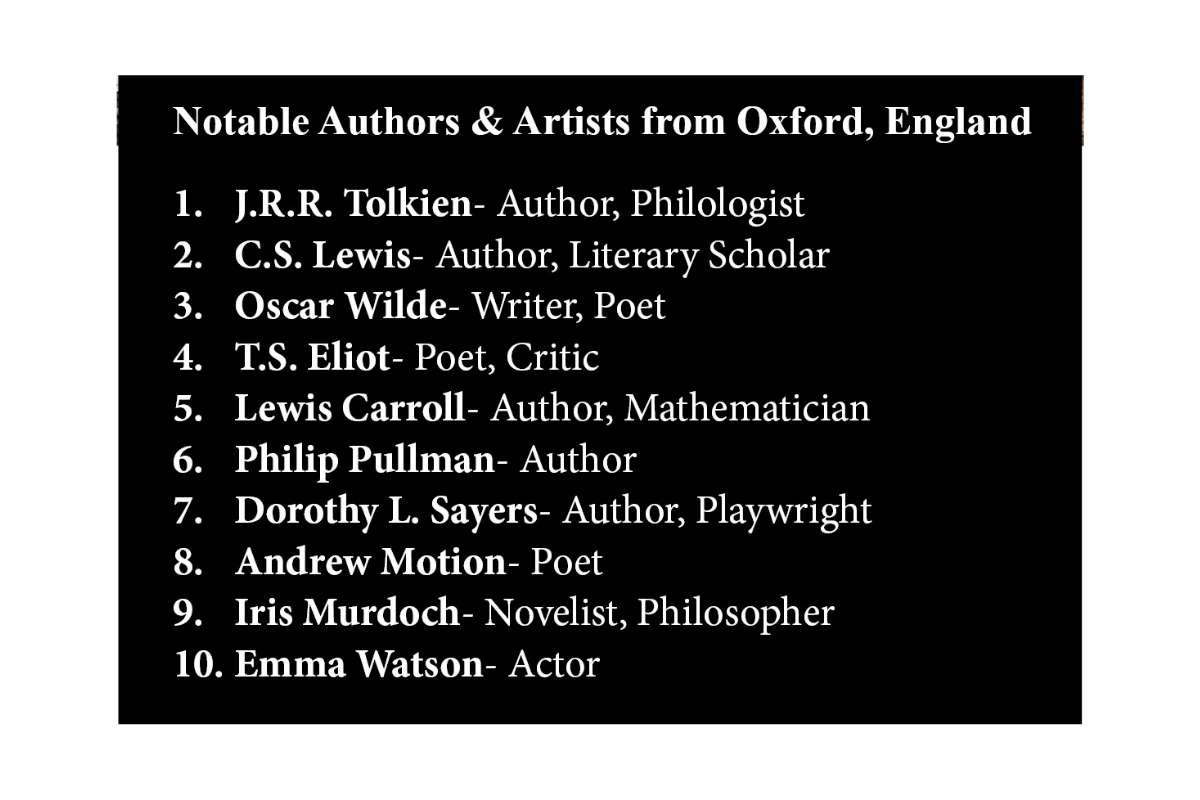
| Notable Authors & Artists from Oxford, England | |
|---|---|
| Name | Field |
| J.R.R. Tolkien | Author, Philologist |
| C.S. Lewis | Author, Literary Scholar |
| Oscar Wilde | Writer, Poet |
| T.S. Eliot | Poet, Critic |
| Lewis Carroll | Author, Mathematician |
| Philip Pullman | Author |
| Dorothy L. Sayers | Author, Playwright |
| Andrew Motion | Poet |
| Iris Murdoch | Novelist, Philosopher |
| Emma Watson | Actor |
Read Next: Pune – Oxford of the East
Life Inside the Spell
Strip away the grandeur, and Oxford hums with a quieter, lived-in magic subtle, steady, and deeply ingrained. Bicycles glide along narrow lanes like familiars returning home, their bells chiming softly against ancient stone. College gates open with quiet authority, admitting scholars into courtyards where time seems politely suspended. Cafés spill into the streets with low, constant debates in multiple languages, while markets trade in books, bread, flowers, and carefully preserved curiosity.
Mornings begin early, equally divided between library desks and coffee queues, where half-formed ideas are as common as steaming cups. Students move with intent, as though guided by invisible timetables. Professors wander in abstraction, pausing mid-step as thoughts overtake motion. Locals coexist easily with centuries of ambition drifting through the air, accustomed to a city where thought is a shared climate. Leisure feels purposeful here, a reflection routine. Life in Oxford is never hurried. It is deliberate. It is considered.
The Business of Brilliance
Behind Oxford’s ancient stone lies a modern economy powered by intellect. Knowledge is not only preserved but transformed, flowing from libraries and laboratories into research institutes, innovation hubs, and globally influential enterprises.
Life sciences, medicine, artificial intelligence, publishing, and academic spin-offs form the city’s economic backbone, while tourism and independent businesses operate in careful harmony with heritage. Growth is measured, sustainability intentional.
In Oxford, success is not defined by speed or spectacle, but by endurance of ideas, institutions, and the belief that true power lies in understanding.
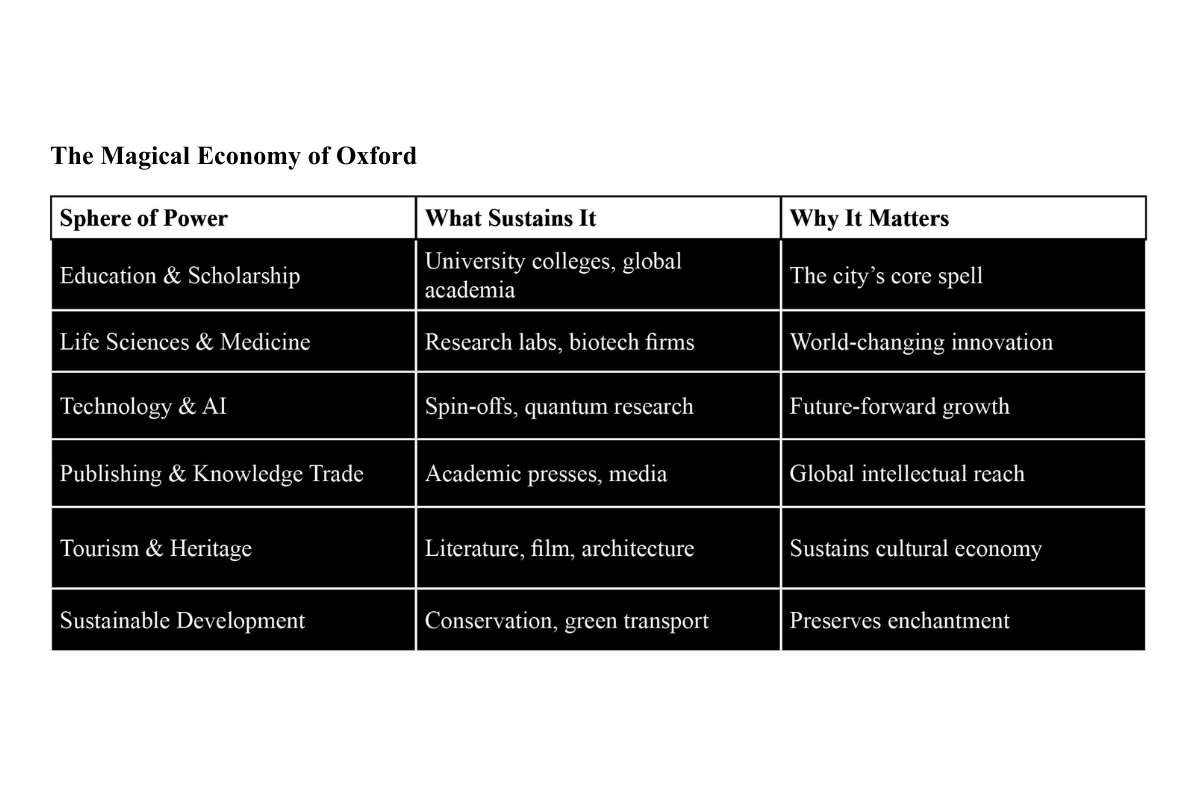
| The Magical Economy of Oxford | ||
|---|---|---|
| Sphere of Power | What Sustains It | Why It Matters |
| Education & Scholarship | University colleges, global academia | The city’s core spell |
| Life Sciences & Medicine | Research labs, biotech firms | World-changing innovation |
| Technology & AI | Spin-offs, quantum research | Future-forward growth |
| Publishing & Knowledge Trade | Academic presses, media | Global intellectual reach |
| Tourism & Heritage | Literature, film, architecture | Sustains cultural economy |
| Sustainable Development | Conservation, green transport | Preserves enchantment |
Read Next: Why the Top 10 Universities in the World in 2026 Lead the Future?
A City That Guards Wisdom Like a Spellbook
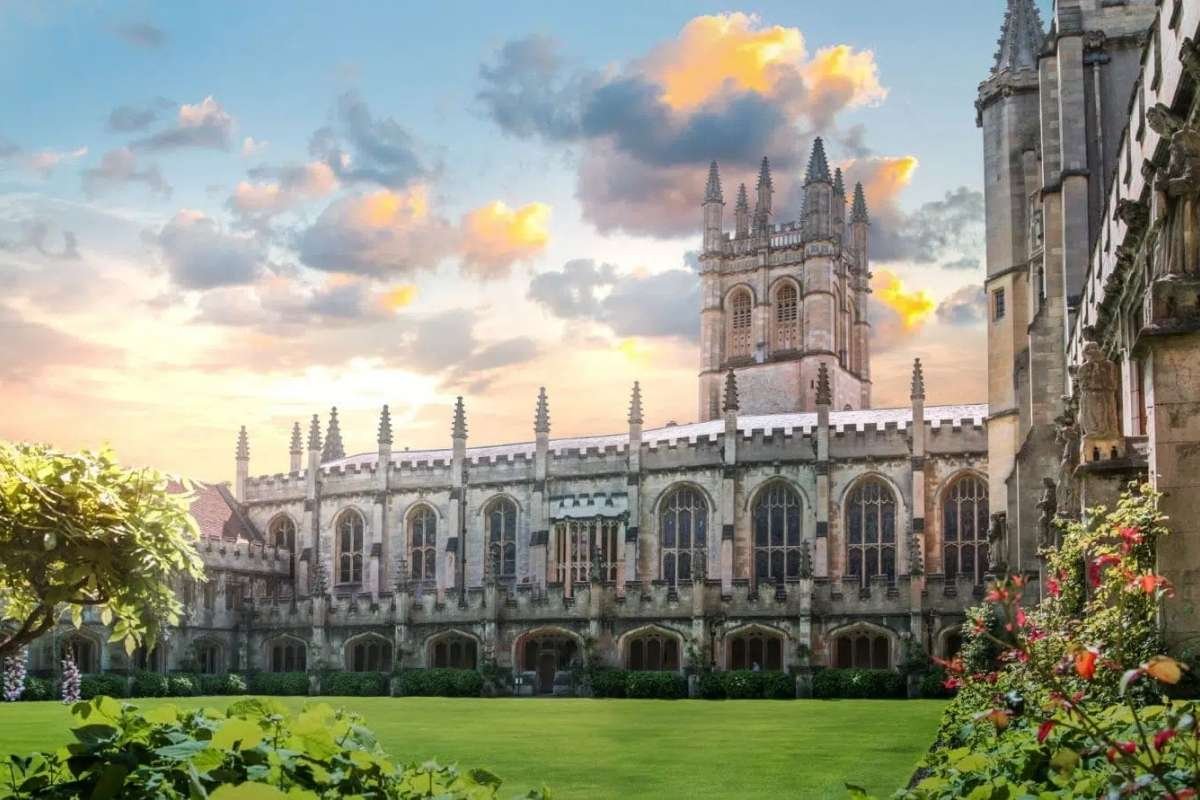
Oxford understands something most cities forget: magic fades when mishandled. Here, preservation is not resistance to progress but a form of intelligence. Conservation is deliberate, almost ceremonial. Change is debated, revised, and only then allowed to take root. Stone is restored, not replaced. Streets are adapted, not erased. The past is treated less like a relic and more like a reference text.
Sustainability is woven quietly into everyday life. Cycling-first streets reduce noise and haste. Green spaces are protected as carefully as libraries. Colleges regulate expansion with the same discipline they apply to scholarship, ensuring that growth never overwhelms character. Even modern interventions arrive with restraint, designed to serve the city without interrupting its rhythm.
Oxford grows slowly, as knowledge should. It favours depth over speed, continuity over spectacle. Here, progress is not measured by how fast the future arrives, but by how thoughtfully it is prepared.
“In Oxford, the future is not rushed; it is studied.”
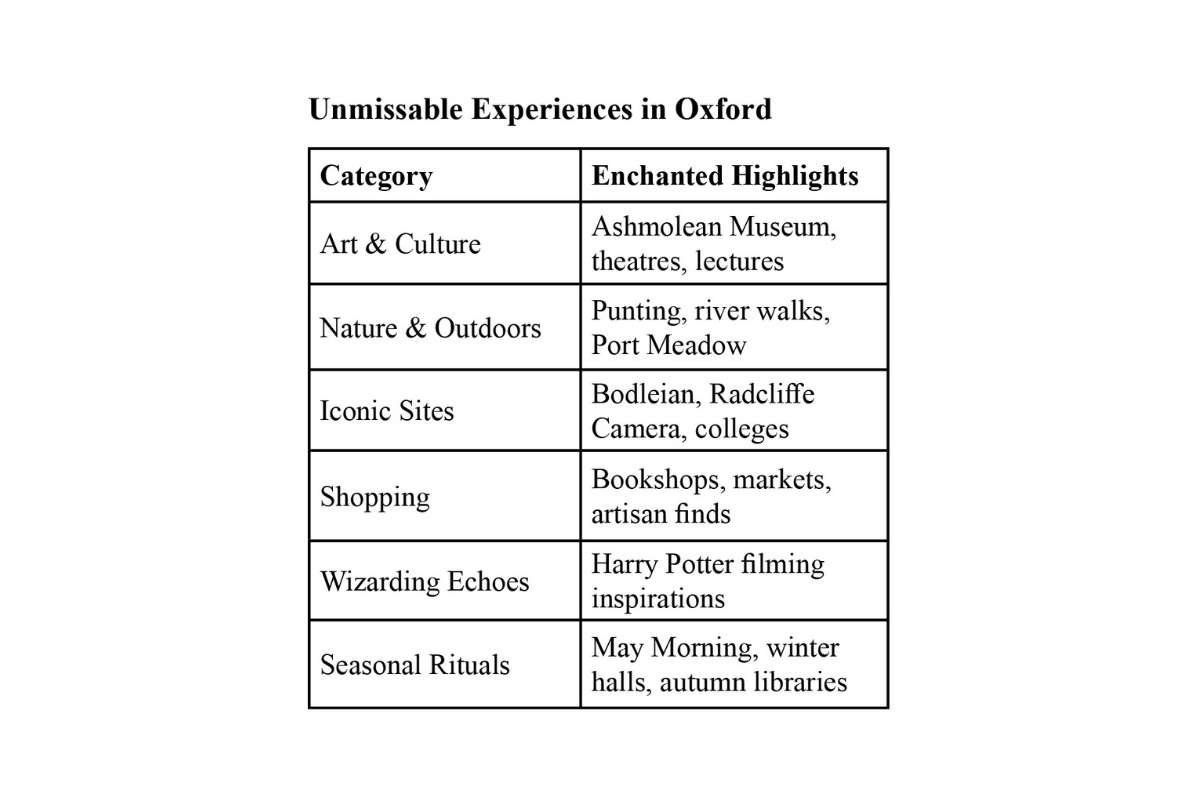
| Unmissable Experiences in Oxford | |
|---|---|
| Category | Enchanted Highlights |
| Art & Culture | Ashmolean Museum, theatres, lectures |
| Nature & Outdoors | Punting, river walks, Port Meadow |
| Iconic Sites | Bodleian, Radcliffe Camera, colleges |
| Shopping | Bookshops, markets, artisan finds |
| Wizarding Echoes | Harry Potter filming inspirations |
| Seasonal Rituals | May Morning, winter halls, autumn libraries |
The School That Never Closed
Oxford is not frozen in the past. It simply remembers everything. A city where corridors still echo with ambition, where stones have witnessed brilliance and failure alike, and where imagination and discipline coexist without conflict.
This is a place where legends are not merely told,they are trained.
A city that feels less like a location and more like a curriculum.
In Oxford, magic is not mythical.
It is methodical.