An employee opens their Monday dashboard to find a quarterly goals framework tailored specifically to their distinct working strengths, recent project wins, and stated career aspirations. Instead of feeling like a cog in a mass corporate machine, they immediately see a clear, supported path toward their own professional mastery.
Creating that level of deep, daily commitment happens when leadership replaces blanket HR mandates with individual alignment. Implementing a personalized engagement strategy enables managers to customize professional development, adjust check-in cadences, and deliver recognition that actually resonates with each team member.
What to personalize engagement around?
Employees do not all want the same things. Their needs can change based on their role, goals, work style, and career stage. Companies can improve engagement by changing their approach to fit these differences.
1. Individual preferences
People have different ways of receiving praise and feedback. Some employees like public praise, while others prefer a private message. Managers should learn what each employee prefers and use the right way to show appreciation.
2. Role and Function
The work people do can shape what keeps them engaged. A salesperson may enjoy targets, rewards, and winning new customers. An engineer may prefer hard problems, new projects, and more freedom in how they work. Engagement plans should match the needs of each role.
3. Career stage
Employees need different types of support as they grow. Someone early in their career may want training, guidance, and clear growth paths. A senior employee may care more about freedom, bigger decisions, and the chance to lead key projects.
4. Work arrangement
The way people work can also affect engagement. Office, hybrid, and remote employees may need different ways to talk, work together, and stay connected. Remote teams may need regular online check-ins and team activities to build strong connections. Learn more about this in our guide to Remote Employee Engagement.
A personalized engagement strategy helps companies meet different employee needs. Leaders can use what they learn to choose better ways to support each group. This makes engagement efforts more useful without creating a separate plan for every person.
How to build a personalized engagement strategy?
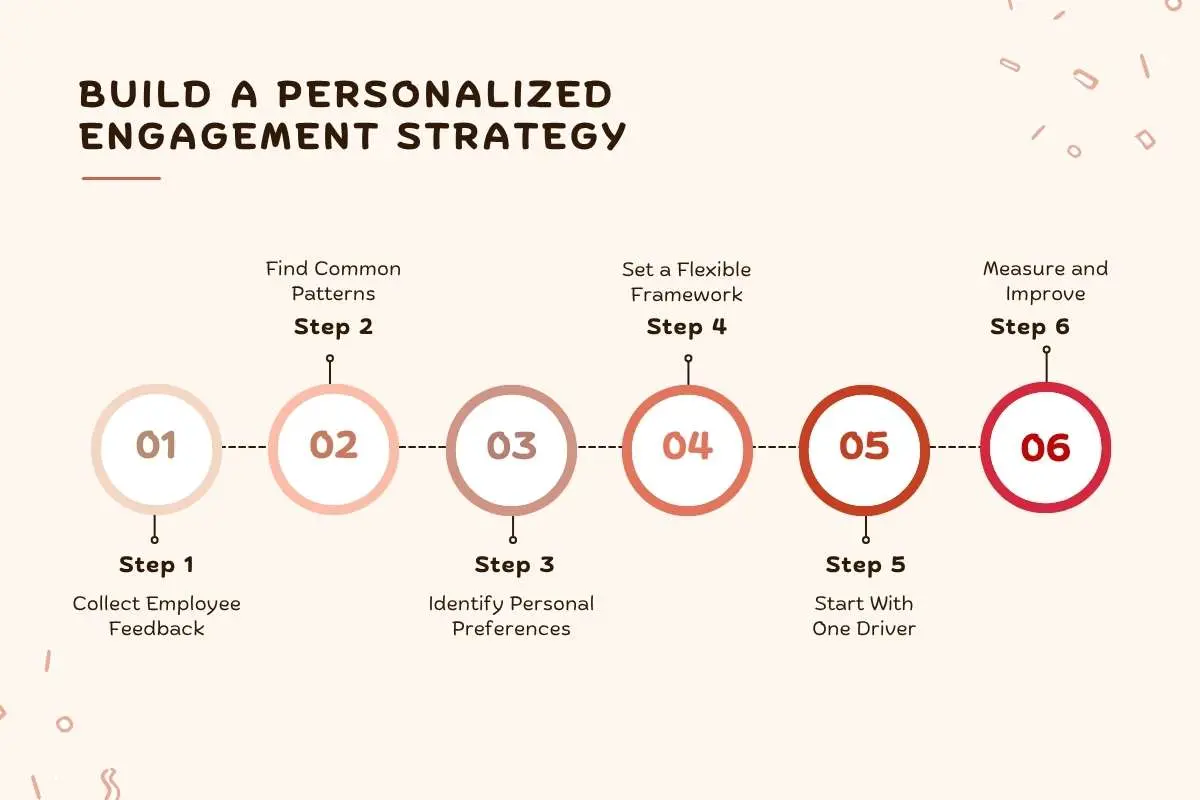
Personalized engagement works best when companies follow a clear process. The goal is not to create a different plan for every employee. Instead, use employee data to find key needs and give managers enough freedom to respond.
Step 1: Collect employee feedback
Start by gathering feedback from surveys, one-to-one meetings, and team discussions. Ask employees what helps them feel valued, supported, and connected to their work. Look for both shared needs and personal preferences.
Step 2: Find common patterns
Review the feedback to spot clear patterns. You may find that a team wants more feedback, while another group wants more learning opportunities. Group employees by factors such as role, career stage, or work setup when their needs differ.
Step 3: Identify personal preferences
Look beyond group patterns when needed. One employee may enjoy public praise, while another may prefer private recognition. One-to-one talks can help managers understand these personal preferences without making assumptions.
Step 4: Set a flexible framework
Create a simple company-wide personalized engagement strategy for recognition, feedback, communication, and growth. Then give managers room to adjust these guidelines for their teams. This keeps the approach consistent without forcing every employee into the same process.
Step 5: Start with one driver
Do not try to personalize every part of engagement at once. Choose one area that needs attention, such as recognition. Test different approaches and see how employees respond before adding more engagement drivers.
Step 6: Measure and improve
Track changes through surveys, feedback, and engagement data. Ask employees whether the new approach feels more useful to them. Use these results to improve the strategy and expand successful methods to other teams.
A strong employee engagement strategy grows with employee feedback. Start small, learn what works, and make changes based on real needs. This helps companies build a flexible approach without creating a separate engagement plan for every employee.
Why does a personalized engagement strategy matter?
Traditional engagement programs often use the same approach for everyone. They may offer the same rewards, activities, and messages across the company. But employees can value very different things. One may want career growth, while another may care more about recognition or flexible work.
These differences can come from age, role, career stage, and work culture. A new employee may want more guidance and learning opportunities, while a senior employee may value freedom and bigger responsibilities. A salesperson may respond to different rewards than an engineer. When companies ignore these differences, engagement efforts may feel less relevant.
Blanket programs can also lead to low participation. Employees may skip employee engagement activities that do not match their needs or interests. Personalized engagement helps companies make small changes based on what different employees value. This can make engagement efforts more useful and encourage more employees to take part.
What tools support a personalized engagement strategy?

The right tools can help companies understand employee needs and act on them. In fact, organisations using effective internal communication tools are 3.5 times more likely to have better business results. They can collect feedback, track preferences, and give managers useful information. The goal is not to add more tools, but to make employee engagement efforts more personal and useful.
1. Preference-based recognition platforms
These tools let employees share how they prefer to receive recognition. Some may want public praise, while others may prefer private messages or rewards. Managers can use these preferences to recognize employees in ways that feel more personal.
2. Segmented pulse surveys
Pulse surveys collect short, regular feedback from employees. Companies can group survey results by role, team, career stage, or work setup. This helps leaders see how engagement needs differ across groups and respond to specific concerns.
3. Manager enablement tools
Managers need clear information to support employees well. They account for 70% of the variance in team engagement. These tools can bring together data on employee feedback, goals, recognition preferences, and engagement trends. Managers can use these insights to adjust their approach while still following company guidelines.
Used together, employee engagement tools can turn employee data into practical action. They help companies spot different needs and give managers better ways to respond.
Conclusion:
Treating every team member as a unique contributor rather than a line item in a chart is the foundation of modern workforce retention strategies. Deploying a personalized engagement strategy bridges the gap between high-level corporate goals and the individual motivators that fuel daily performance.
When management systematically matches support, recognition programs, and growth opportunities to distinct employee profiles, organizational trust deepens. Investing in personalized workforce support builds an adaptable, highly invested culture capable of driving long-term business success.
FAQs
1. What keeps a personalized engagement strategy from becoming an administrative nightmare?
Leveraging automated HR systems and flexible management templates lets leaders tailor growth paths and check-in cadences without creating manual overhead.
2. Who is ultimately responsible for personalizing the employee experience?
Frontline managers carry the primary responsibility because they understand their direct reports’ daily motivators, working styles, and career goals better than central HR teams.
3. How do you measure whether personalized engagement efforts are paying off?
Track key behavioral shifts such as increased internal mobility, higher voluntary participation in optional projects, and lower top-performer turnover.
4. What is the difference between personalized engagement and employee engagement?
Employee engagement is the baseline metric of workforce commitment, while personalized engagement tailors directly to an individual’s unique working style.
5. How can small businesses personalize employee engagement?
Small business leaders can use their agile structure to run direct 1-on-1 check-ins, customize learning budgets to specific career goals, and offer flexible schedules based on personal needs.