A beauty brand can become widely loved and still face a difficult question: who is it really speaking to? Drunk Elephant built a strong reputation by giving skincare a distinctive personality and creating a brand people could easily recognize. Over time, however, its growing popularity among younger audiences began to create a gap between its public image and the identity it had built earlier. The Marketing Strategy of Drunk Elephant now faces the challenge of balancing its distinctive personality with a clearer sense of who the brand is meant to serve.
What once felt carefully positioned started to raise questions about its audience, image, and place in the skincare market. This shift created a difficult moment for the brand. What Went Wrong With Drunk Elephant, and what would it take to win back the right audience?
Crisis Timeline: How Drunk Elephant Lost Its Way
Drunk Elephant’s crisis did not appear overnight. The brand’s path to trouble was shaped by a series of changes in its identity, visibility, and audience. Each stage added a new layer to a problem that eventually became difficult to ignore. These shifts also reveal how the Marketing Strategy of Drunk Elephant gradually became harder to align with the audience the brand had originally built.
- Stage 1: The Foundation | A Clear Idea
- Tiffany Masterson created Drunk Elephant after searching for skincare that worked for her own skin. The “Suspicious 6” philosophy gave the brand a simple message and made ingredient education part of its identity.
- Stage 2: The Rise | A Brand People Remembered
- Colourful packaging, playful product names, social content, and customer recommendations helped Drunk Elephant gain attention. Its products became easy to spot, discuss, and share online.
- Stage 3: The Shift | A Younger Crowd Arrives
- As social media exposure grew, teenagers and younger shoppers became increasingly connected with the brand. Influencer activity during 2022 and 2023 also helped push its visibility among very young consumers.
- Stage 4: The Pressure | An Identity Problem
- The growing association with younger shoppers created tension around the brand’s original audience. Reports of a 65% sales decline added urgency, leaving Shiseido with a clear question: how could Drunk Elephant regain its footing?
What began as a clear brand identity became harder to define as its audience changed. This created a growing gap between its original positioning and newer image. The Marketing Strategy of Drunk Elephant now faces a clear challenge: could the brand reconnect with its core audience?
What Went Wrong with the Drunk Elephant: The Core Issues
Drunk Elephant’s problems were rooted in a simple issue: the brand’s image began moving away from the audience and purpose that originally defined it.
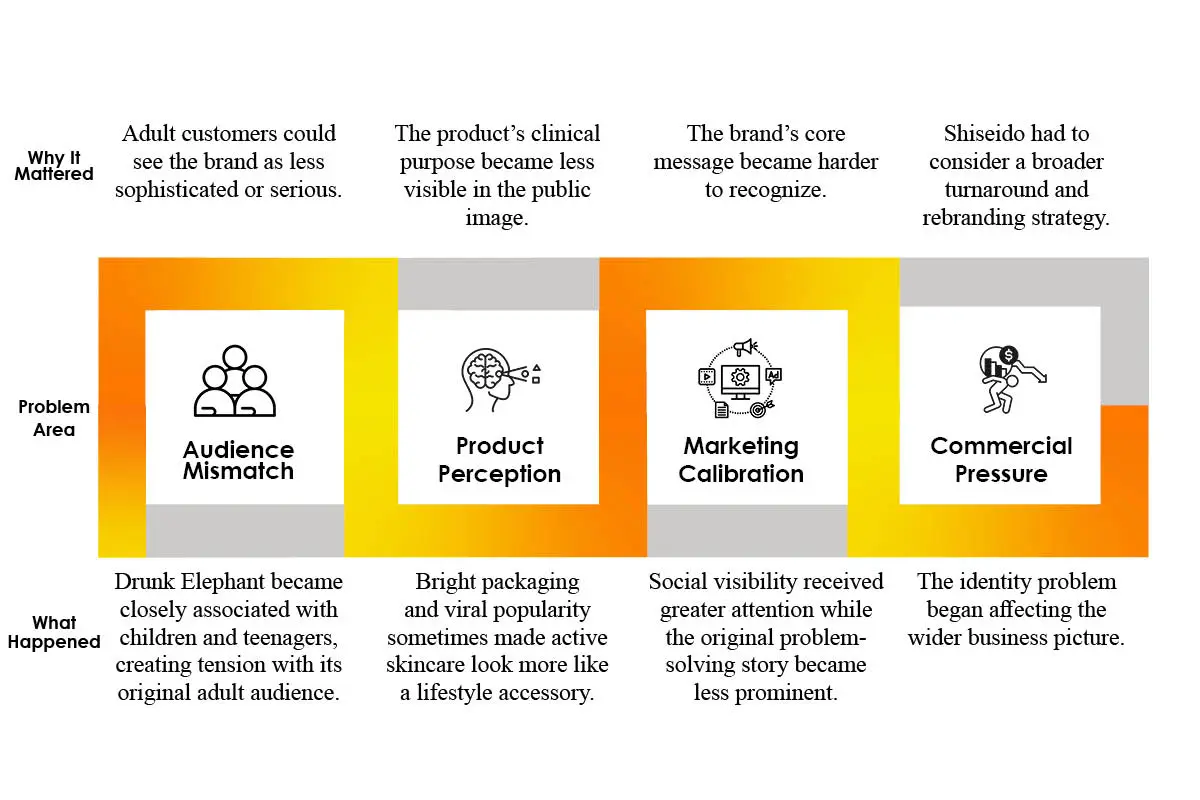
| Problem Area | What Happened | Why It Mattered |
| Audience Mismatch | Drunk Elephant became closely associated with children and teenagers, creating tension with its original adult audience. | Adult customers could see the brand as less sophisticated or serious. |
| Product Perception | Bright packaging and viral popularity sometimes made active skincare look more like a lifestyle accessory. | The product’s clinical purpose became less visible in the public image. |
| Marketing Calibration | Social visibility received greater attention while the original problem-solving story became less prominent. | The brand’s core message became harder to recognize. |
| Commercial Pressure | The identity problem began affecting the wider business picture. | Shiseido had to consider a broader turnaround and rebranding strategy. |
Core Diagnosis: Drunk Elephant’s Marketing Strategy of Drunk Elephant faced a growing gap between its original identity, public image, and target audience.
SWOT Analysis: The Strategic Health Check
A quick SWOT check shows where Drunk Elephant still has an advantage, where its weaknesses lie, and what could shape its recovery.
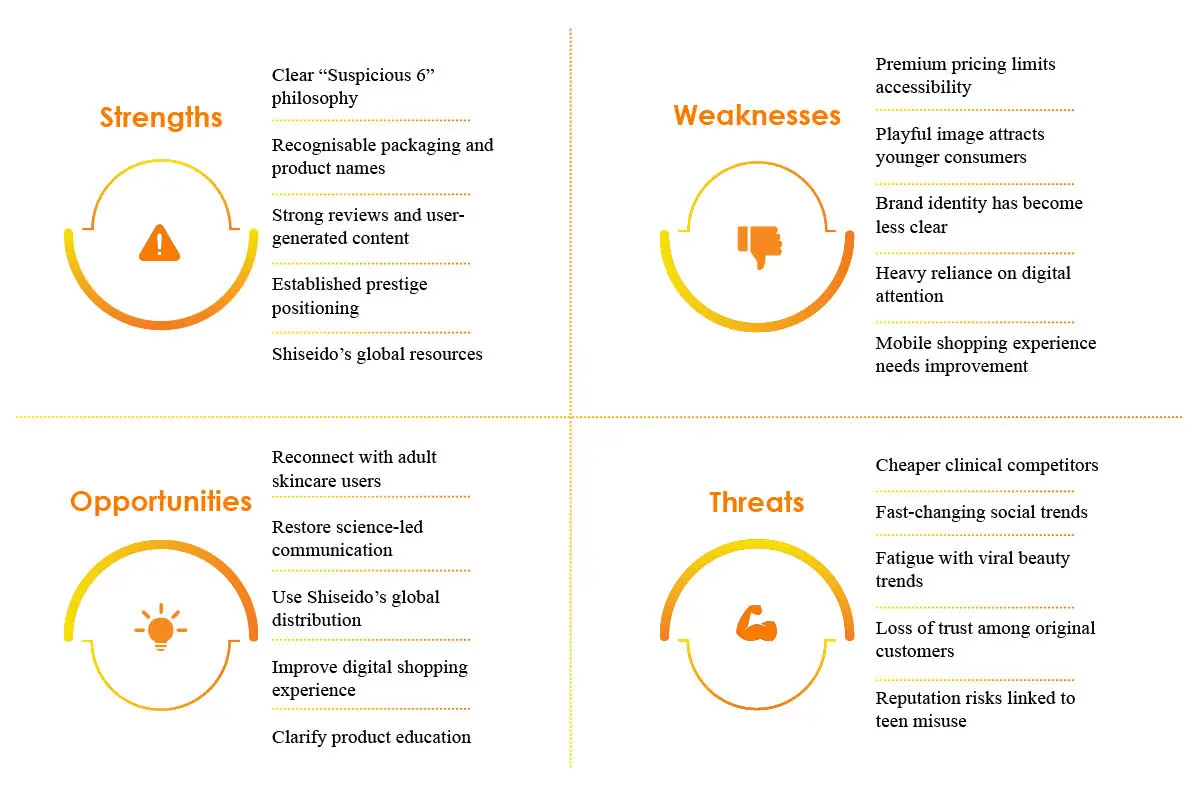
| Strengths | Weaknesses | Opportunities | Threats |
| Clear “Suspicious 6” philosophy | Premium pricing limits accessibility | Reconnect with adult skincare users | Cheaper clinical competitors |
| Recognisable packaging and product names | Playful image attracts younger consumers | Restore science-led communication | Fast-changing social trends |
| Strong reviews and user-generated content | Brand identity has become less clear | Use Shiseido’s global distribution | Fatigue with viral beauty trends |
| Established prestige positioning | Heavy reliance on digital attention | Improve digital shopping experience | Loss of trust among original customers |
| Shiseido’s global resources | Mobile shopping experience needs improvement | Clarify product education | Reputation risks linked to teen misuse |
Strategic takeaway: The Marketing Strategy of Drunk Elephant can retain its original product philosophy, supported by strong reviews, UGC, and an 8/10 defensibility score from A Care’s audit. The focus should be clearer communication rather than a complete reinvention.
Read More: Stripe Payment: How Stripe Changed Online Payments Worldwide
The Company’s Response: The Reset Button
The reset is built around one clear idea: keep the personality, change the message.
The Drunk Elephant Reset:
BEFORE
01 | Communication
- Playful, colourful, and highly social
- Focused heavily on visual appeal and social attention
02 | Audience
- Increasingly associated with younger shoppers
- Created distance from its original adult audience
03 | Product Story
- Packaging and viral content often took centre stage
- Product benefits became less visible
04 | Brand Role
- Seen mainly as a cult beauty product
- Its skincare expertise became less central
AFTER
01 | Communication
- More adult, responsible, and science-led
- Greater focus on informed skincare use
02 | Audience
- Focused on adult skincare consumers
- Appeals to customers seeking informed choices
03 | Product Story
- Highlights active ingredients and percentages
- Emphasises results and responsible use
04 | Brand Role
- Positioned as a high-performance skincare brand
- Places product performance at the centre
The Reset Message
The 2026 “Please Enjoy Responsibly” campaign captures this new direction. It uses Drunk Elephant’s name to deliver a memorable reminder about responsible skincare use while bringing attention back to ingredients and product performance.
This is where the Marketing Strategy of Drunk Elephant becomes a repositioning exercise. The brand keeps its colourful personality, but gives it a more mature purpose.
Shiseido’s Role: Why the Acquisition Matters
DEAL → RESOURCE → ACTION
DEAL | The Acquisition
Shiseido acquired Drunk Elephant in 2019 for approximately $845 million, adding a fast-growing prestige skincare brand with strong appeal among Millennial and Gen Z consumers.
RESOURCE | What Shiseido Brought
The acquisition gave Drunk Elephant access to Shiseido’s global distribution network, international market reach, digital and direct-to-consumer capabilities, as well as broader innovation and operational resources.
ACTION | The Turnaround
Shiseido is now revising Drunk Elephant’s branding and channel strategy, with its 2025 annual report identifying the brand as part of its broader turnaround efforts.
Case Study Takeaway:
Shiseido Acquires Drunk Elephant as a strategic investment, but the deal itself did not create the crisis. It gave Shiseido resources to respond once changes in Drunk Elephant’s audience and image became a business concern.
Recommended Solution: Three Moves to Recovery
Drunk Elephant’s recovery should focus on three connected priorities.
First, reclaim the adult customer. Campaigns should speak directly to adult skincare concerns, with clearer product education, clinical evidence, and guidance on long-term skin health.
Second, rethink the influencer mix. The Marketing Strategy of Drunk Elephant should favour creators who can explain ingredients, routines, and responsible product use. This would give social content a more useful role while addressing earlier disclosure concerns raised by the National Advertising Division.
Third, improve the digital experience. Faster mobile performance, clearer reviews, routine guidance, and richer video testimonials can help customers make confident choices.
Together, these moves give Drunk Elephant a practical recovery plan that goes beyond launching another advertising campaign.
Read More: The Brand That Asked You to Buy Less: Patagonia Inc.
Conclusion: The Road Back to Relevance
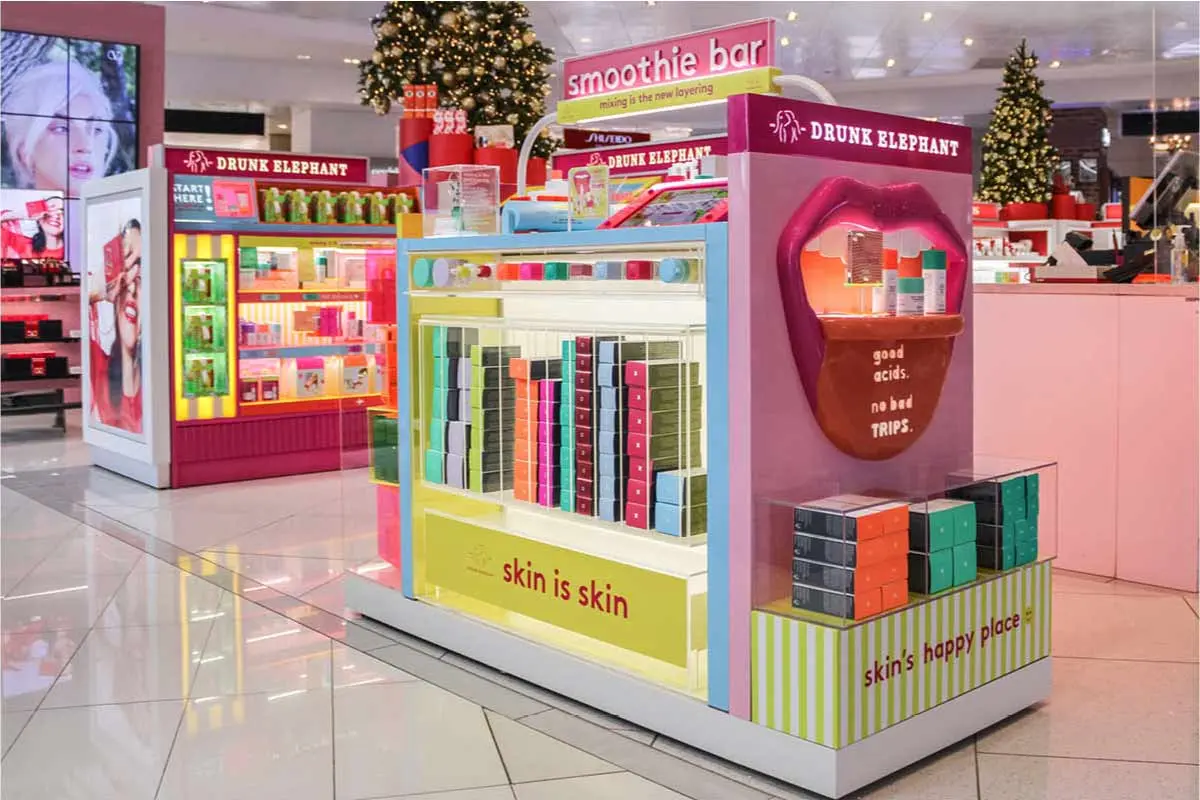
Drunk Elephant’s crisis shows how quickly a strong brand identity can become unclear when audience perception changes. The Marketing Strategy of Drunk Elephant now needs to balance its core product philosophy, customer credibility, and Shiseido’s resources with clearer adult positioning, responsible marketing, and a stronger digital experience.