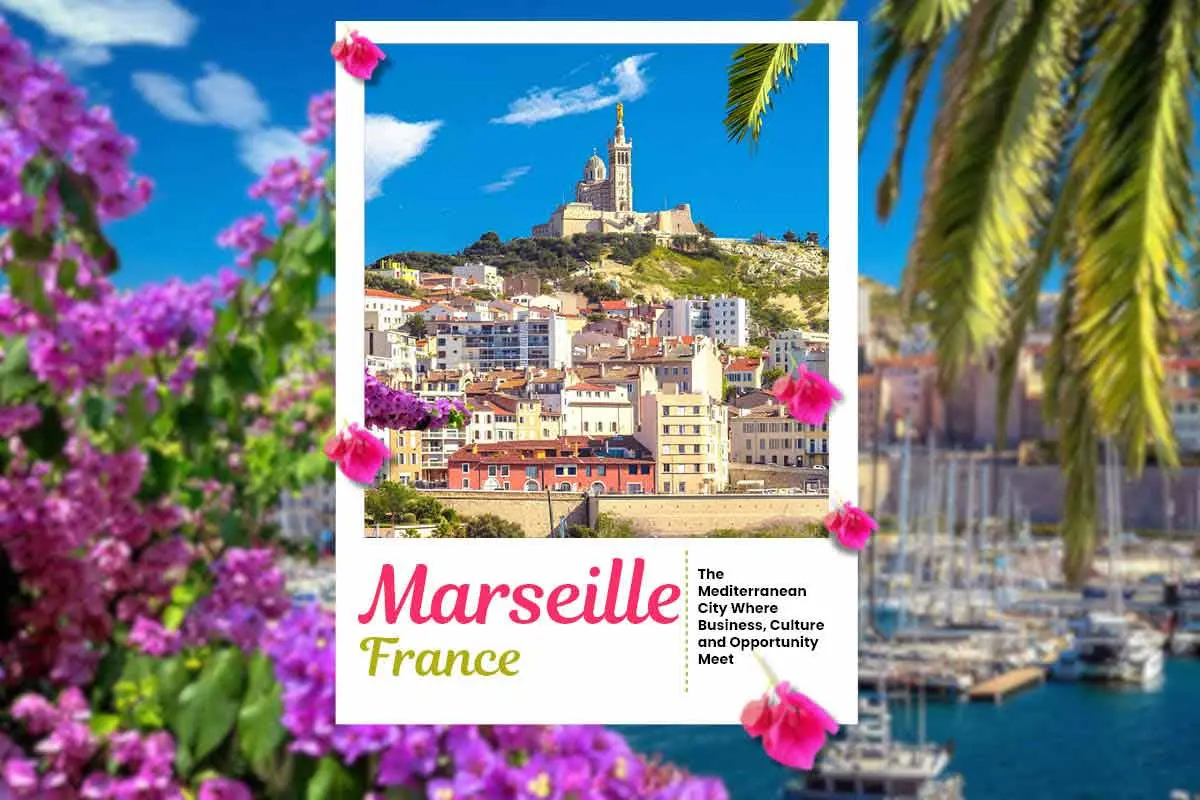
“Where there’s a will, there’s a way” could almost be Marseille’s motto. This Mediterranean city has a long history of turning its location to its advantage. What began as a trading port has evolved into a place where global commerce, tourism, culture, and innovation come together.
Today, Marseille, France, is writing a new chapter. Its port remains central to international trade, while growing business sectors, tourism, and investments in sustainable infrastructure are reshaping the city. From its lively waterfront to its distinctive neighborhoods and coastline, Marseille offers more than a destination to explore; it is a city with an economy and identity in motion.
Marseille, France: A City Built Around the Mediterranean
For more than 2,500 years, Marseille has lived with one foot in the Mediterranean. Its sheltered harbor on the Gulf of Lion helped turn the city into a natural meeting point for traders, travelers, and cultures from across the region.
The story began around 600 BCE, when Greek settlers from Phocaea founded the trading port of Massalia. Since then, commerce has remained part of Marseille’s identity. France’s oldest chamber of commerce was established here in 1599, underlining just how long business and trade have been woven into the city’s story.
But Marseille is not only about ships and commerce. Over centuries, people from across Europe, North Africa, and the wider Mediterranean have made the city home, giving it a distinctly diverse character. That mix comes through in its food, neighborhoods, markets, languages, and everyday life.
Today, the city brings those different sides together. Its ancient port, Mediterranean setting, multicultural identity, and changing economy make it a city with both a strong sense of history and plenty of room to look ahead.
Why Marseille, France Matters to Business and Trade
For centuries, the city has benefited from one simple advantage: its location. Sitting on the Mediterranean, the city connects Europe with Africa, the Middle East, and Asia, making it a natural meeting point for trade and business. Its port and transport links have helped turn that geographical advantage into a lasting economic strength.
But Marseille’s business story goes beyond shipping. The city has built a growing presence in international business events, supported by investments in conference venues, tourism infrastructure, cultural spaces, and transport. Its economy also draws strength from healthcare and research, digital and creative industries, maritime services, logistics, aerospace, and engineering.
Healthcare and medical research are particularly important to the city, with expertise spanning cancer research, immunology, infectiology, neurology, and rare diseases. At the same time, Marseille’s digital sector continues to grow, adding a newer dimension to an economy historically shaped by the sea.
At the heart of this activity is the Marseille-Fos port complex. It connects businesses to international supply chains while supporting shipping, logistics, energy, and manufacturing. More importantly, it gives Marseille direct access to markets across the Mediterranean and beyond, an advantage that continues to shape the city’s business potential.
The Port at the Heart of Marseille, France
The story of this Mediterranean city is inseparable from its port. With almost 2,600 years of maritime history, Marseille-Fos has grown from an ancient trading harbor into one of Europe’s major gateways for global commerce.
As Marseille grew during the Industrial Revolution, so did its port. Ships became larger, trade volumes increased, and the waterfront had to keep up. New basins, including the Joliette basins in the 19th century, gave vessels more space and helped the city handle its growing flow of goods.
After World War II, the rise of the oil industry and the expansion of global trade brought another major change. The development of the Fos-sur-Mer facilities, about 50 kilometers west of Marseille, gave the port a much larger industrial footprint.
Today, Marseille-Fos is the largest French port on the Mediterranean and one of Europe’s major ports. It handles a wide range of activity, from containers and cars to cruises, energy products, and other cargo. That diversity is one of its biggest strengths, allowing the port to serve different industries and connect businesses with markets around the world.
And the port is still evolving. Investments in hydrogen, recycling, larger container-handling equipment, submarine cables, and data infrastructure are helping Marseille-Fos adapt to the changing needs of global trade.
Fun Fact
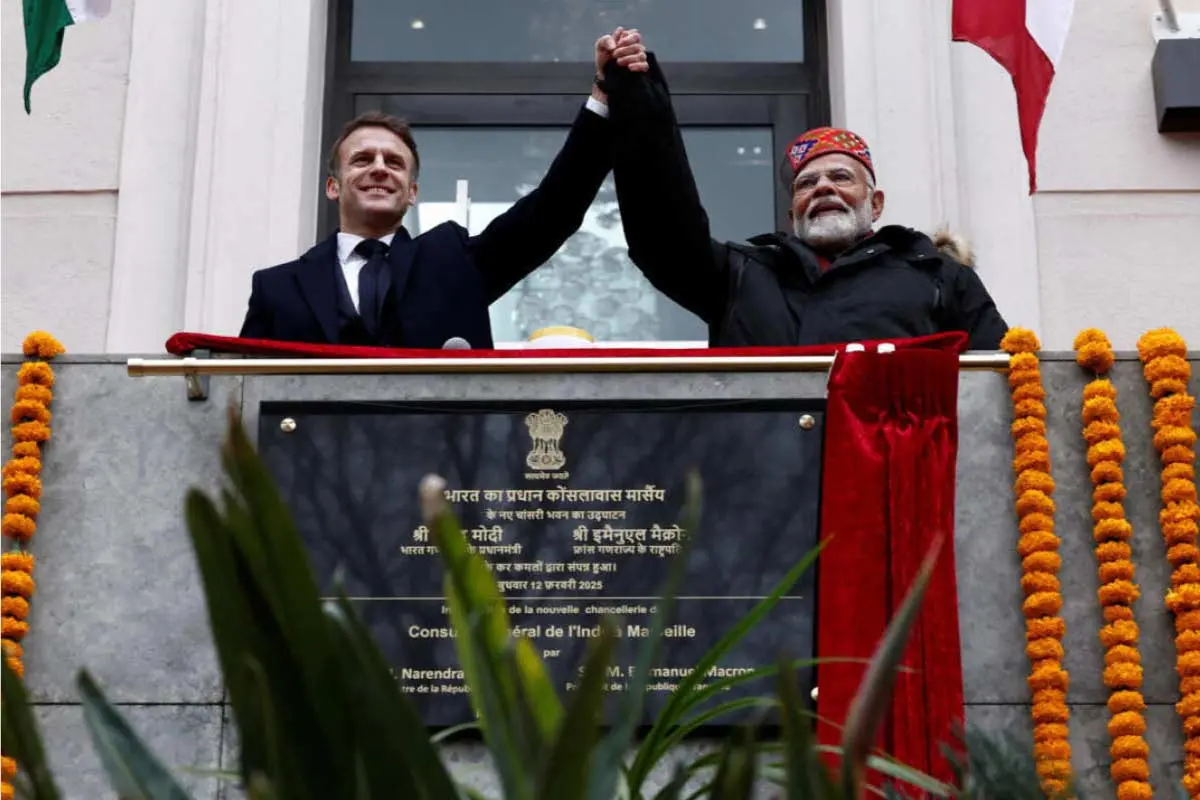
Why does Marseille matter to India?
In 2025, PM Narendra Modi and French President Emmanuel Macron inaugurated India’s new consulate in Marseille. The city was chosen for its strategic role in India-France trade and Mediterranean connectivity, including its link to the proposed India-Middle East-Europe Economic Corridor (IMEC).
What to Do in Marseille, France
If you want to understand Marseille, start at the Vieux-Port. The city’s historic harbor is still one of its liveliest places, with boats filling the water, cafés lining the waterfront, and fishermen selling their catch. It is also a great starting point for exploring the rest of the city.
From there, wander into Le Panier, one of Marseille’s oldest neighborhoods. Its narrow streets, cafés, galleries, colorful buildings, and historic sites give you a closer look at the city’s character. Nearby, the Marseille Cathedral, with its striking Byzantine and Romanesque influences, is another worthwhile stop.
For a different side of Marseille, head to Notre-Dame de la Garde. Sitting on the city’s highest point, the basilica is one of its best-known landmarks and offers sweeping views across the city and Mediterranean.
And then there is MuCEM, the Museum of European and Mediterranean Civilisations. Its contemporary architecture, waterfront setting, and connection to the historic Fort Saint-Jean make it a good example of how Marseille blends its past with its modern identity.
For a city with more than 2,500 years of history, these places offer a simple way to experience what makes the city distinctive, from its maritime roots and historic streets to its culture, architecture, and Mediterranean setting.
Why Come to Marseille?
So, why come to Marseille? Part of the answer lies in the fact that the city offers several experiences in one place. There is history in its old streets, culture in its museums and neighborhoods, and the Mediterranean never feels far away.
Marseille also has an authenticity that sets it apart. Wander through Le Panier, stop for a traditional bouillabaisse, browse local shops, or simply sit at a café and watch the city move around you. Then there is its more modern side, with street art, lively neighborhoods such as Cours Julien, festivals, and waterfront spots that give the city a younger energy.
Nature is another reason to visit. The Calanques National Park, with its dramatic coastline, hidden coves, and clear blue water, offers a striking contrast to the busy streets and historic port.
Add a mild Mediterranean climate and a location that makes it easy to explore Provence and other parts of southern France, and Marseille becomes more than a city break. It is a place where business, history, culture, food, and nature all come together.
If Marseille Could Talk…
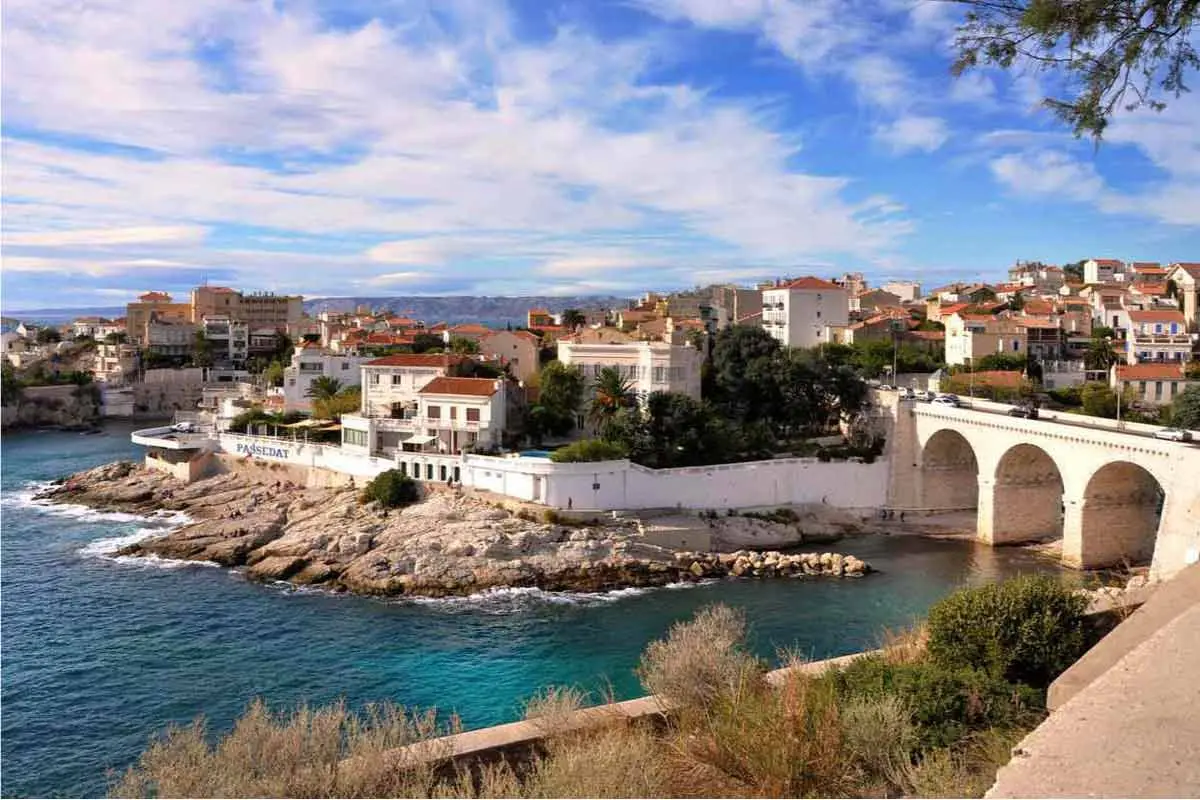
“I was built by the sea, shaped by trade, and changed by everyone who passed through my port. I’ve watched ships come and go for centuries, but I’ve never stopped moving myself. Today, my story is no longer just about where I’ve been; it’s about where I’m headed.”
From ancient trading routes to modern business, Marseille continues to reinvent itself without losing its Mediterranean soul.
Marseille, France: The Road Ahead
Marseille is looking ahead, and much of its future depends on how the city manages growth, climate change, and its role as a major port. The focus is shifting toward cleaner infrastructure, smarter tourism, and making the city more resilient without losing what makes it distinctive.
Marseille’s Green Shift at a Glance
€150 MILLION INVESTMENT
The Port of Marseille-Fos is investing in infrastructure upgrades, including electrifying quays so ships can connect to the power grid while docked and reduce emissions.
CLEANER SHIPPING
The port is exploring alternatives such as hydrogen and methanol as maritime transport moves toward lower-emission operations.
2030 GOAL
Port electrification is expected to play a major role in helping reduce emissions from ships while they are in port.
COOL NOONS PROJECT
Marseille is part of a European project focused on making tourism and public spaces more comfortable during extreme summer heat.
WORKING ACROSS THE MEDITERRANEAN
Marseille is collaborating with cities including Lisbon, Dubrovnik, Bologna, and Budva to find practical ways to adapt urban tourism to a changing climate.
WHY IT MATTERS
For Marseille, sustainability is becoming part of the city’s wider economic story. The goal is not simply to become greener, but to remain an attractive place to visit, invest, trade, and do business as the world changes.
Closing Note
Marseille, France, has never been a city that stands still. The tide is always turning, and the city is turning with it, from an ancient trading port to a modern business and tourism hub preparing for a greener future. Its greatest strength may be that it knows how to keep its roots while still looking ahead.