Frequent travel exposes luggage to conveyor belts, rough pavements, crowded train compartments, changing temperatures, and repeated lifting. A case that looks attractive in a store may not perform well after several demanding trips. Genuine durability comes from the combined performance of the shell or fabric, frame, wheels, handles, zippers, and internal structure.
The same principle applies when selecting carry on luggage. Although a cabin case usually avoids airport baggage-handling systems, it still has to withstand packed overhead bins, narrow aisles, uneven sidewalks, and frequent opening. Understanding what makes luggage durable, and how materials and construction work together, makes it easier to identify a case that will remain functional over time.
Why does luggage durability matter?
A suitcase protects clothing, electronics, toiletries, and other belongings while they move through several environments. Checked cases may be stacked with heavier bags or transferred between aircraft and baggage carts. Carry-ons face less automated handling but are moved more frequently by their owners.
Durability therefore affects more than appearance. A cracked shell can expose belongings, while a broken wheel or stuck handle can make a suitcase difficult to move through a large airport. A dependable case can also reduce the need for premature replacement. Cosmetic scratches do not necessarily indicate structural damage, but split seams, distorted frames, and loose components can affect normal use.
Which luggage materials last the longest?

Polycarbonate is widely used for hard-shell luggage because it combines impact resistance with some flexibility. Instead of remaining completely rigid, it can flex under pressure and return toward its original form. However, its performance depends on shell thickness, manufacturing quality, and overall case design.
Polypropylene is another hard-shell option. It is generally lightweight and resistant to many chemicals, although its appearance and rigidity vary by formulation. ABS can create an affordable, firm shell, but it is commonly less impact-resistant than quality polycarbonate. Some manufacturers combine ABS and polycarbonate to balance price, weight, and performance.
Soft-side luggage is commonly made from polyester or nylon. The fiber name alone does not establish quality. Fabric density, weave, coating, stitching, and abrasion resistance all matter. Ballistic-style or high-denier nylon can be highly resistant to abrasion, but shoppers should still inspect the seams and backing material.
Aluminum cases provide a rigid exterior and distinctive appearance. They can resist punctures, but they are heavier and may develop dents. No material is automatically best for every traveler.
What construction features make luggage more durable?
A strong shell cannot compensate for weak moving parts, which is why what makes luggage durable goes well beyond the exterior. Wheels should rotate smoothly without excessive wobble. Recessed wheels receive more protection from impacts, while externally mounted spinner wheels can provide easier multidirectional movement.
Telescoping handles should extend evenly and lock securely at their available heights. Excessive movement at the handle base may indicate a weaker mounting system. Reinforced carry handles are also important because they bear the case’s full packed weight during lifting.
Zippers should move smoothly around corners without catching. Larger zipper coils and reinforced zipper tracks may tolerate repeated use better than thin components. Zipperless cases rely on a frame and latches, making frame alignment and latch quality especially important.
Inside the case, compression panels and straps help limit movement. Reinforced corners, protective wheel housings, strong stitching, and replaceable components can further extend useful life.
How can you check luggage quality before buying?
Begin by checking the complete dimensions and empty weight. A heavier case is not necessarily stronger, and an unusually light case is not necessarily fragile. The goal is a balanced design appropriate for the intended journey.
Extend and retract the handle several times. Roll the suitcase in different directions, test the zippers around every corner, and press gently on the shell or frame. Examine seams for missed stitches, loose threads, or uneven tension.
Review the warranty carefully. Determine its duration, whether it covers manufacturing defects or travel damage, and how repairs are handled. A long warranty has limited value if wheels, handles, or other common failure points are excluded.
How can you make your luggage last longer?
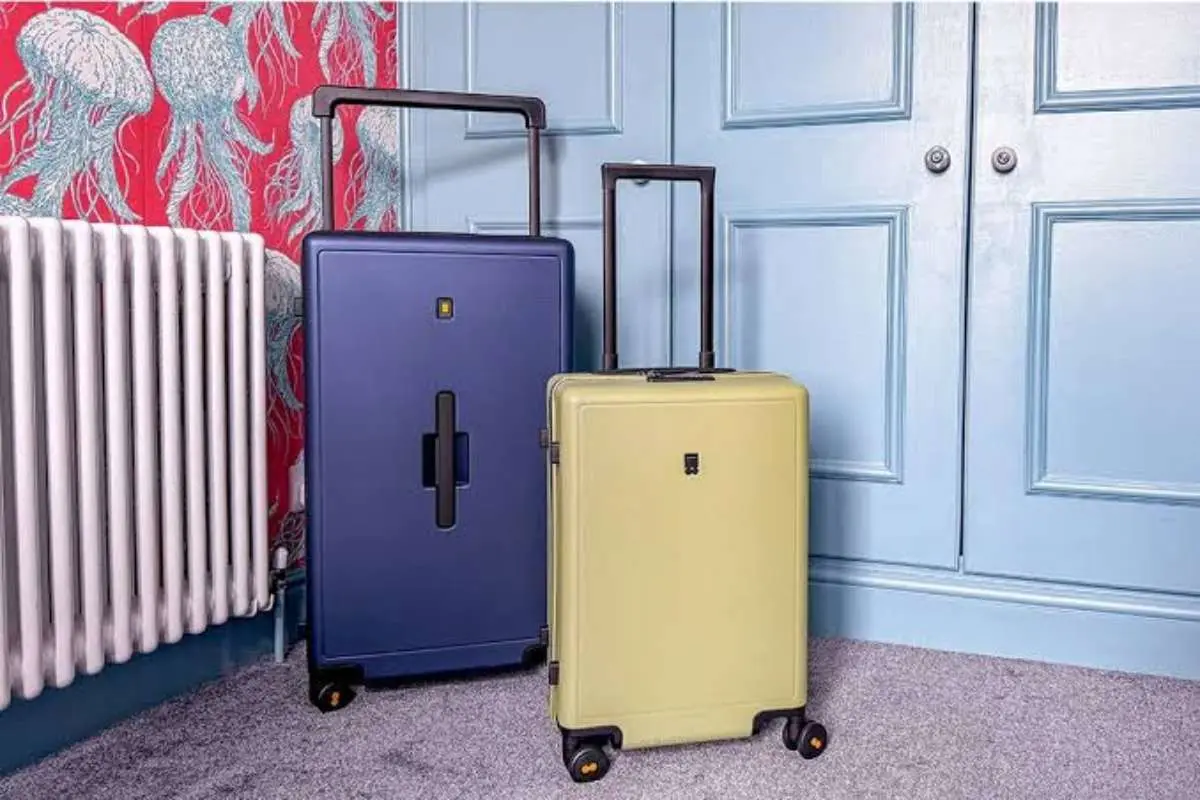
Avoid packing beyond the case’s designed capacity. Overpacking places additional pressure on zippers, seams, frames, and handles. Lift a packed suitcase with its carry handle rather than pulling it upward by the telescoping handle.
After a trip, remove dirt from wheels and wipe the exterior according to the manufacturer’s care instructions. Allow damp interiors to dry completely before storage. Store the suitcase in a cool, dry area without placing heavy objects on top of it.
Durable luggage is not defined by one material or feature, so what makes luggage durable is the overall combination. The best long-term choice combines a suitable exterior with dependable wheels, secure handles, strong closures, reinforced construction, and proper care.