Business travel has changed dramatically in recent years. Professionals no longer depend on printed itineraries, hotel business centres, or expensive international roaming packages to stay productive abroad. A smartphone can now handle everything from boarding passes and navigation to video meetings, cloud applications, payments, and communication with colleagues.
But reliable connectivity remains one of the most important pieces of the modern business-travel experience. For professionals travelling across the United States, an eSIM USA can provide a convenient way to access mobile data without the traditional process of purchasing and replacing a physical SIM card.
For companies sending employees overseas, this shift toward eSIM Technology for Business Travel is about more than convenience. Connectivity affects productivity, communication, customer service, cybersecurity, and the ability to respond quickly when plans change.
Why connectivity matters more than ever for business travelers
A business trip rarely follows a perfectly predictable schedule.
A meeting may be moved to another location. A flight may be delayed. A client may send an urgent document while an employee is travelling between cities. A team member might need to join a video call from an airport lounge, hotel, or taxi.
In each situation, dependable internet access becomes part of the professional infrastructure.
Losing connectivity can mean missing an important message, struggling to access a cloud document, being unable to navigate to a meeting, or wasting valuable time looking for public Wi-Fi.
This is particularly relevant in the United States, where business travel can involve considerable distances between cities and regions. A professional might attend a meeting in New York, fly to Chicago the next day, and continue to San Francisco later in the week.
An adaptable connectivity solution can make that journey considerably simpler.
What is an eSIM?
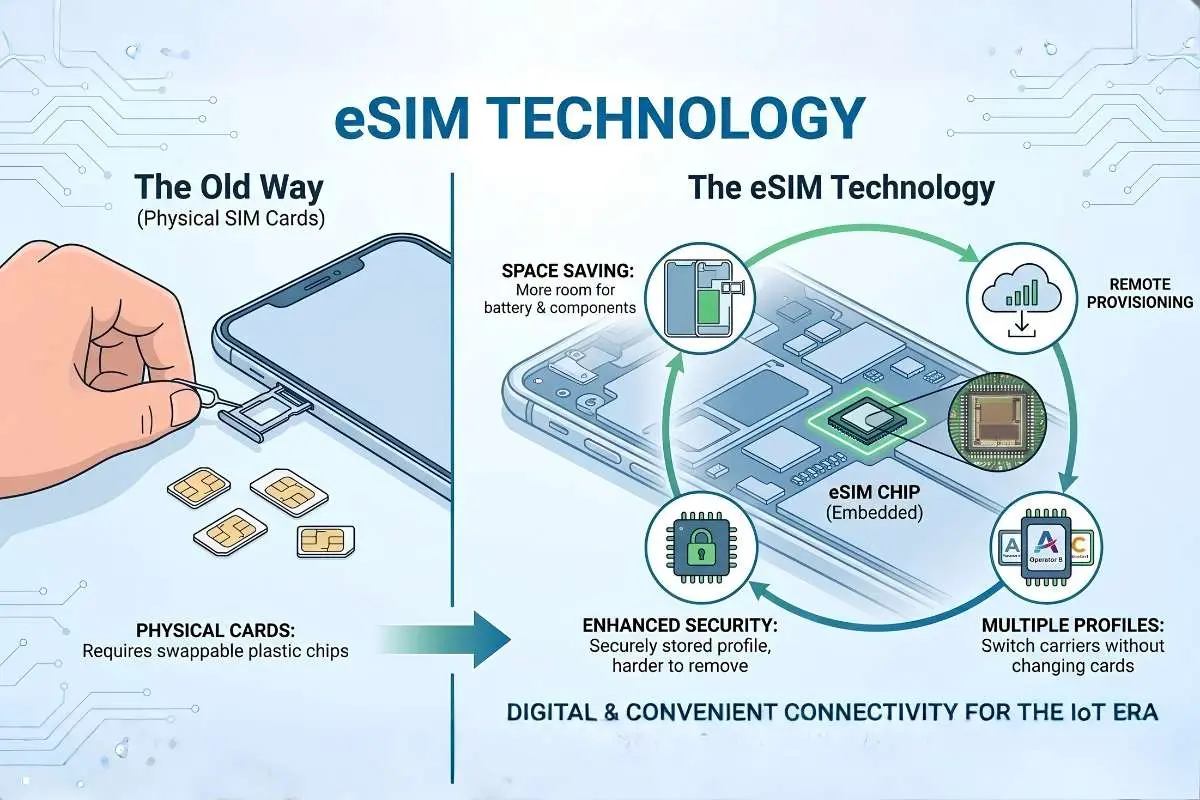
An eSIM, or embedded SIM, is a digital SIM profile built into a compatible device. Unlike a traditional SIM card, it does not require a physical card to be inserted into the smartphone.
Instead, a compatible plan can generally be installed digitally using an activation process provided by the mobile service provider. You can choose Holafly for reliable plans.
This changes the traditional experience of preparing for international travel.
Rather than searching for a physical SIM card after landing, travellers can prepare their mobile connection before departure. The exact installation process varies by device and provider, so travellers should always check compatibility and activation instructions before purchasing a plan.
The business advantages of using an eSIM
1. Faster setup before a trip
One of the biggest advantages of eSIM technology is the ability to arrange connectivity before leaving home.
For a business traveller, this can remove one more task from the airport arrival process when using eSIM Technology for Business Travel.
Instead of searching for a retailer, purchasing a physical SIM and transferring cards between devices, the traveller can prepare the digital connection in advance and activate it according to the provider’s instructions.
That means the first moments after landing can be focused on getting to the hotel, attending a meeting, or reaching the next destination.
2. Less dependence on public Wi-Fi
Public Wi-Fi can be useful, but business travellers should not assume that every available network is equally reliable or appropriate for sensitive work.
An active mobile data connection provides another option for accessing essential online services without having to search for a nearby Wi-Fi network.
For professionals handling business documents, communication platforms, or cloud-based applications, having mobile connectivity available can make working on the move much easier.
3. Greater flexibility for frequent travelers
Traditional SIM cards can become inconvenient for people who travel frequently.
A professional travelling internationally may need different connectivity arrangements for different destinations. Physically changing SIM cards adds another small but recurring task.
With eSIM technology, compatible devices can store digital SIM profiles, making it easier to manage different plans when supported by the device and carrier.
This is especially useful for executives, consultants, entrepreneurs, sales professionals, and remote workers whose schedules involve regular international travel.
4. Better control over travel connectivity costs
International roaming can sometimes result in unexpected charges, depending on the traveller’s existing mobile contract.
Travel eSIM plans offer another way to approach international connectivity by allowing travellers to purchase a plan specifically for their destination and trip duration.
For businesses, this can make travel communication expenses easier to anticipate.
Companies managing frequent business trips can also consider connectivity as part of their broader travel-expense strategy rather than treating mobile data as an afterthought.
eSIM and the modern business traveler
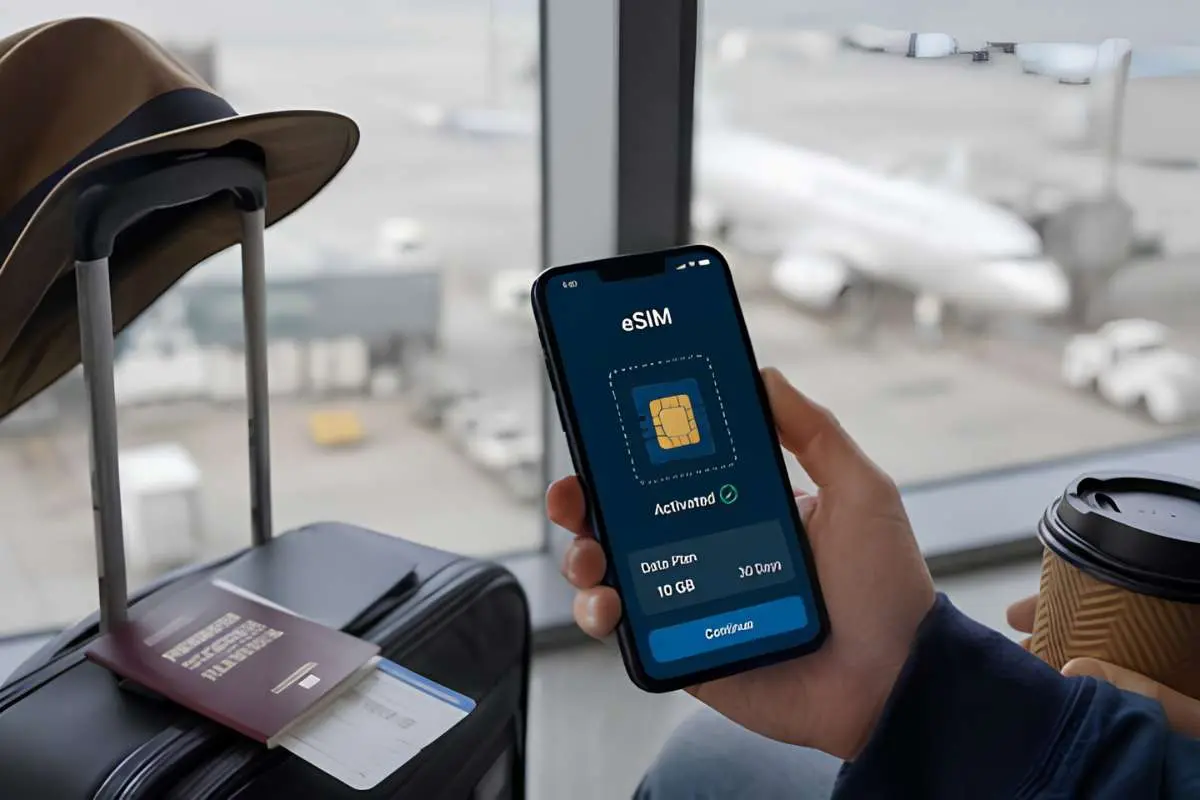
The modern business traveller is increasingly mobile.
Work can happen almost anywhere. A hotel room can become a temporary office. An airport lounge can become a meeting space. A coffee shop can become the place where a presentation is finalised minutes before a client meeting.
This flexibility depends heavily on digital infrastructure, including eSIM Technology for Business Travel.
Email, Microsoft Teams, Zoom, Slack, Google Workspace, cloud storage, CRM platforms, digital banking, mapping applications, and authentication systems all rely on internet access.
A reliable mobile connection therefore supports much more than social media or web browsing.
It can become an essential part of the working environment.
How to choose an eSIM for business travel?
Not every eSIM plan is designed for every traveller. Before purchasing one, business travellers should evaluate several practical factors.
1. Check device compatibility
The first step is confirming that the smartphone or tablet supports eSIM technology.
Compatibility can depend on the exact device model, market, carrier configuration, and whether the device is carrier-unlocked.
Checking these details before travelling can prevent connectivity problems after arrival.
2. Consider the length of the trip
A short conference trip has different connectivity requirements from a month-long business assignment.
Travellers should consider how many days they will need mobile data and select a plan that corresponds with their itinerary.
3. Estimate data requirements
Business travellers may use substantially more data than ordinary tourists.
Video conferencing, cloud backups, file transfers, navigation, streaming presentations, and hotspot usage can quickly increase consumption.
Someone who primarily checks email may require relatively little data, while a remote professional attending daily video meetings could need considerably more.
4. Examine network coverage
The United States has extensive mobile infrastructure, but coverage and performance can vary by location.
Large metropolitan areas generally offer extensive network availability, while remote, mountainous, desert, or rural areas may have different connectivity conditions.
Travellers should therefore examine the networks supported by their chosen eSIM and consider their complete itinerary rather than focusing only on their main destination.
5. Look at hotspot and data-sharing rules
Some business travellers need to connect laptops, tablets, or other devices while working remotely.
If hotspot functionality is important, check whether the chosen eSIM plan supports data sharing and whether any limits apply.
This small detail can make a significant difference for professionals who use their smartphone as a temporary mobile hotspot.
eSIMs and business continuity
Business continuity is not only about large-scale emergencies.
Sometimes it means being able to respond when something unexpected happens.
A delayed flight can require immediate communication with a client. A cancelled meeting may require navigation to another location. A sudden schedule change may require access to calendars, documents, or messaging platforms.
Having an independent mobile data option, such as eSIM Technology for Business Travel, can help professionals remain operational when their original connectivity arrangement is unavailable or inconvenient.
This is particularly valuable for employees whose work cannot simply stop because they are outside their home country.
Security considerations for business travelers
Connectivity and security should be considered together.
Travellers frequently access corporate email, financial platforms, customer information, internal documents, and other sensitive services while away from the office.
An eSIM itself does not automatically make a device secure. Businesses should continue using established security practices such as strong passwords, multifactor authentication, current operating-system updates, device encryption, and corporate security policies.
Employees should also be careful when connecting to unfamiliar Wi-Fi networks and should follow their organization’s guidance for accessing sensitive systems while travelling.
For companies with remote or international teams, mobile connectivity should therefore form part of a broader travel-security strategy.
Preparing an eSIM before flying to the USA
Preparation can make the transition considerably smoother.
Before departure, travellers should:
- Confirm that their phone is eSIM-compatible.
- Make sure the device is unlocked if required.
- Purchase a plan suitable for the trip.
- Follow the provider’s installation instructions.
- Keep the activation details accessible.
- Review mobile-data settings before departure.
- Confirm how and when the plan activates.
- Check whether hotspot or data sharing is available.
- Keep the original SIM available if dual-SIM functionality is needed.
- Test the connection after activation.
The exact settings differ between iPhone, Android, and other compatible devices, so following the manufacturer’s and provider’s instructions is important.
What about calls and text messages?
One important distinction is that many travel eSIMs are primarily data plans rather than traditional mobile subscriptions with a local phone number.
That means business travellers should check whether a particular plan includes voice calls and SMS.
For many professionals, data may be sufficient because business communication increasingly happens through internet-based platforms such as WhatsApp, Microsoft Teams, Zoom, Slack, and other communication applications.
However, anyone who needs a conventional US telephone number should verify that requirement before choosing a plan.
The role of eSIMs in corporate travel
For businesses, the advantages extend beyond individual travellers.
Companies with employees travelling internationally can develop standardized connectivity policies around eSIM Technology for Business Travel. Instead of leaving employees to solve connectivity problems after landing, organizations can establish guidelines covering approved providers, device compatibility, security requirements, expense policies, and data usage.
This can simplify travel preparation while giving employees greater clarity.
It can also help organizations treat mobile connectivity as part of their overall digital workplace infrastructure.
As remote work, international collaboration, and distributed teams continue to evolve, the boundary between an employee’s traditional office and their temporary work environment becomes increasingly flexible.
The future of business travel connectivity
eSIM technology is part of a broader movement toward more digital and flexible travel experiences.
Airline apps have reduced dependence on printed boarding passes. Digital wallets have changed how travellers make payments. Cloud platforms allow teams to work from different countries. Artificial intelligence is increasingly helping with itinerary planning and travel management.
Connectivity sits underneath many of these developments.
As smartphones become more capable and digital travel services continue to expand, the ability to activate and manage mobile connectivity digitally fits naturally into the modern business-travel ecosystem.
For companies, this creates an opportunity to rethink how they prepare employees for international assignments.
For individual professionals, it provides another practical tool for staying productive while moving between countries and cities.
Staying organized beyond the business trip

Good preparation does not stop when the flight is booked or the mobile connection is activated.
Professionals who travel frequently often have financial, business, and personal responsibilities that need to remain organized while they are away.
That broader approach to preparation can be particularly important for business owners and executives. Alongside travel logistics, keeping important documents, instructions, and personal affairs organized can help reduce uncertainty for both the individual and their family.
For people reviewing their broader estate-planning responsibilities, resources such as Will Mastery’s guide to the executor of an estate can provide useful background on what an executor does and why choosing the appropriate person matters.
Final thoughts
Business travel is no longer simply about moving from one office to another. It is about maintaining productivity while constantly changing locations.
Reliable connectivity supports communication, navigation, collaboration, customer service, and access to essential business systems. eSIM technology can simplify that connectivity by removing the need for a physical SIM card and allowing compatible travellers to arrange destination-specific mobile data digitally.
For professionals travelling throughout the United States, choosing the right plan for eSIM Technology for Business Travel still requires attention to device compatibility, coverage, data requirements, activation procedures, hotspot rules, and security. At the same time, thoughtful business travelers can benefit from treating travel preparation as part of a wider system of professional and personal organization.
With the right preparation, mobile connectivity can become one less thing to worry about during an already demanding business trip—and professionals can spend more time focusing on the meetings, relationships, and opportunities that make business travel worthwhile.