Long before the history of the resume began, how did anyone prove they deserved work? No document spoke for a candidate. Reputation did. Word traveled through markets, churches, and town squares, carrying news of who could be trusted with a trade. Guilds trained apprentices for years, vouching for their skill once training ended.
Families and professional circles opened doors that strangers could not reach. A respected elder’s recommendation often meant more than any demonstration of talent. Spoken references became currency. Character, not paper, decided who got hired.
Archive artifact: the 1482 letter
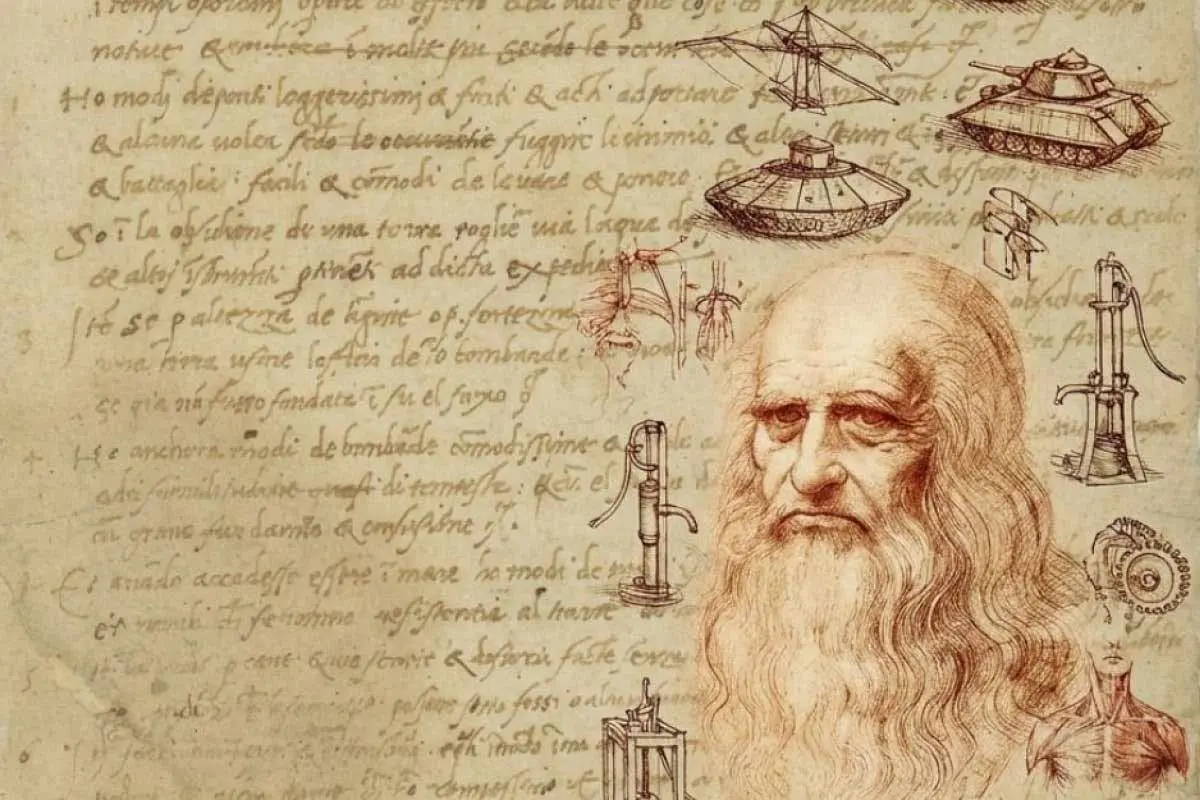
Held in memory as an early case study in self-presentation, Leonardo da Vinci’s letter to Ludovico Sforza, Duke of Milan, reads nothing like flattery. It reads like a pitch. Leonardo listed bridges he could build, weapons he could design, fortifications he could plan during wartime. Painting, his now-famous talent, appeared almost as an afterthought. Historians studying the history of the resume often point to this letter as an early marker of professional self-presentation.
Archive takeaway: Leonardo’s message was simple. Here is what I can do for you.
He shaped his abilities around Sforza’s military needs, not his own artistic pride. That instinct, matching skill to a patron’s problem, still shapes how candidates present themselves to employers today.
When companies outgrew the handshake ?
The Industrial Revolution built factories, cities, and companies larger than any single person could oversee. Owners could no longer rely on personal familiarity with every worker. A new question emerged, one that shapes the history of job interview practices even now: how could an employer judge a stranger’s ability?
Written applications answered part of that gap. Certificates confirmed training. References confirmed character. Employment records tracked experience over time. Paper became a stand-in for personal knowledge, marking an early step in the history of the resume as employers assessed strangers they had never met.
The resume takes shape
No single inventor claims credit in the history of the resume.
No single inventor claims credit in the history of the resume. The historical record shows a slow accumulation, not one clean breakthrough. Early career documents appeared in scattered forms across different countries and industries before something recognizable settled into place.
Education came first, proof that a candidate had studied somewhere respected. Previous employment followed, giving employers a timeline of experience.
Skills and achievements added detail. References carried weight borrowed from earlier centuries. Oddly, personal details like age, marital status, and even height once appeared on these pages, details modern hiring would never request.
Archive angle: Each addition reveals its era. What employers asked candidates to list shows what businesses valued at the time, one line at a time.
The interview: when employers wanted more than paper
A page could list degrees, past jobs, and skills, but it could not speak. Employers wanted a second layer of judgment, so the conversation earned its own place in the history of job interview practice. No single moment marked its arrival; it settled gradually into organized workplaces as companies grew and roles grew more specialized.
The purpose of job interviews became clear over time. A candidate’s tone, confidence, and reasoning revealed things no document could capture. Could this person think under pressure? Explain a decision clearly? Handle disagreement without losing composure? Paper answered what someone had done. A conversation answered who they were.
The corporate era: hiring becomes a system
Twentieth-century corporations grew large enough to need entire departments dedicated to hiring, marking a structured turn in the history of the resume, and the personnel office replaced a manager’s gut feeling with something more structured.
- Standardized applications asked every candidate the same questions.
- Formal interviews followed a set format instead of casual conversation.
- Employment tests measured skill and aptitude with numbers.
- References got verified through official channels, not personal letters.
- Recruitment procedures turned hiring into repeatable steps rather than a single manager’s choice.
Business Archive question: What happens when hiring becomes a process instead of a personal decision? Consistency replaced instinct, built for scale rather than for knowing one person well.
The resume gets a makeover
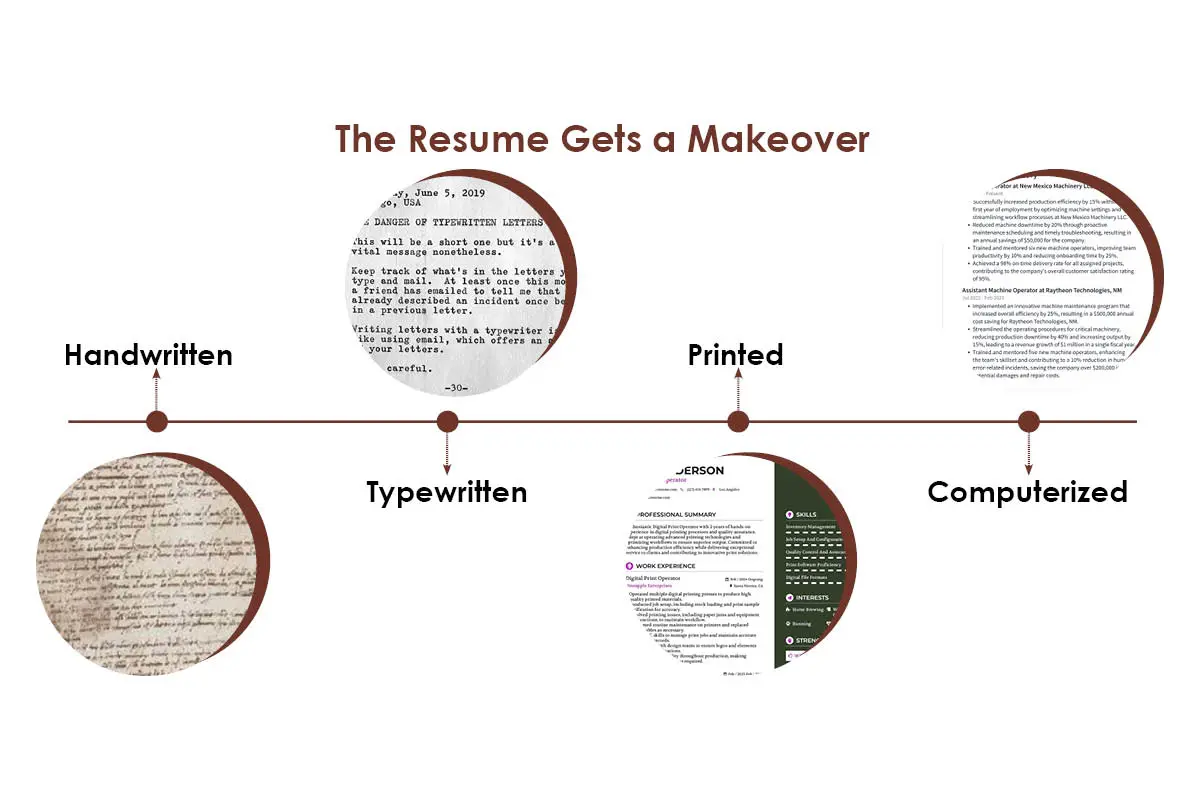
Handwritten → Typewritten → Printed → Computerized.
Each stage changed what a candidate could produce, marking a physical turn in the history of the resume. Handwriting once revealed effort, but also inconsistency. Typewriters struck every letter clean and uniform, giving pages a professional look. Printers multiplied copies instantly, no retyping required. Personal computers arrived, and word processors let candidates edit a sentence without redoing the page.
Fonts, margins, and spacing became deliberate choices rather than accidents of penmanship. Technology had entered hiring quietly, shaping presentation before anyone reconsidered content.
The internet changes the rules
Email let candidates send applications in seconds instead of mailing paper across cities. Online job boards gathered thousands of openings in one place. Company career websites listed roles directly, cutting out newspaper ads entirely. Digital submissions marked a new chapter in the history of the resume, replacing envelopes and stamps with a single click.
Distance stopped mattering. A candidate in one country could apply for work in another before lunch. But this ease created a new problem: when applying takes seconds, how does an employer decide who deserves attention among thousands of submissions? That question would soon push hiring toward automated screening.
When the machine reads your resume?
1482: Leonardo’s letter reaches Ludovico Sforza directly. A person reads it, weighs it, and decides whether to grant a meeting.
Today: A digital application, the modern chapter in the history of the resume, often meets software first. An Applicant Tracking System scans the text for keywords and qualifications before any recruiter sees a name.
Archive parallel: The challenge remains unchanged across centuries. Someone, or something, must judge a stranger’s worth from a page. Leonardo faced a duke’s judgment. A modern candidate faces an algorithm’s filter, one that decides who earns a human reader at all.
The resume grows into a personal brand
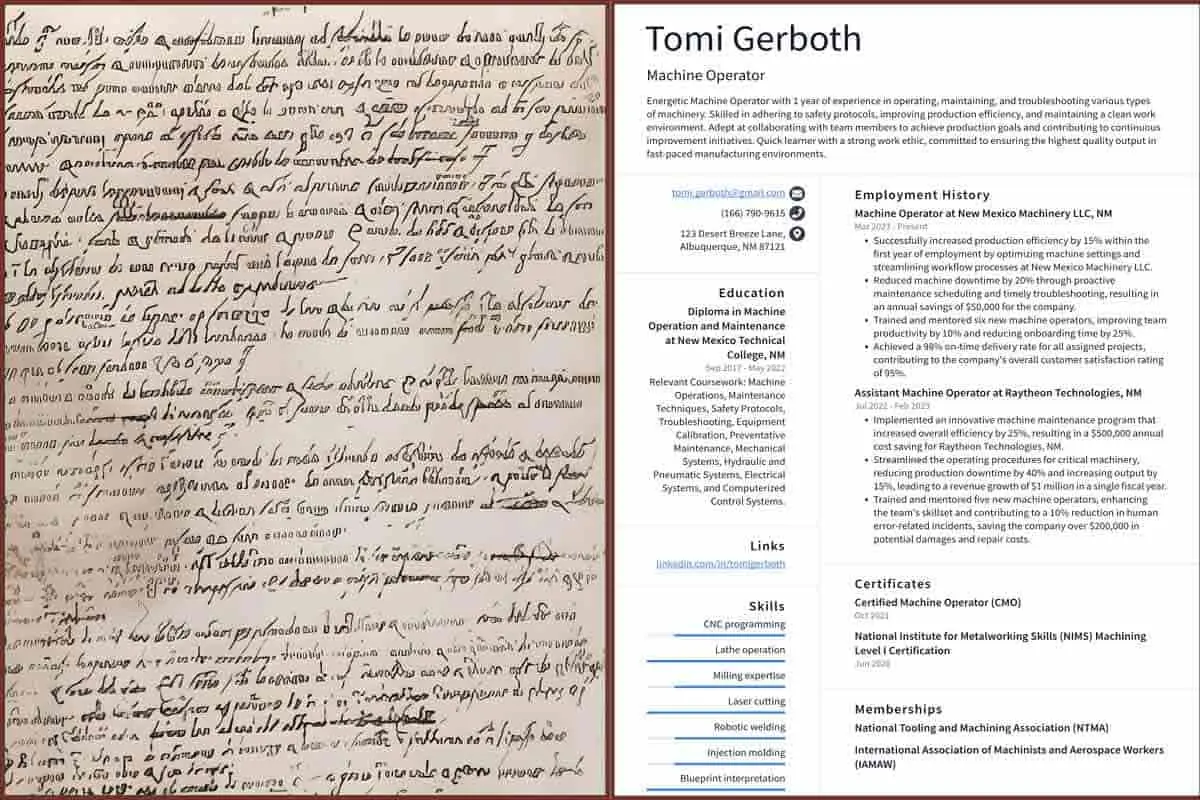
A LinkedIn profile shows recommendations and career updates in real time, marking the latest turn in the history of the resume. A portfolio site displays finished work directly. A personal website adds projects, writing, or a portfolio of ideas. A candidate’s professional identity now lives across several places at once, built continuously rather than compiled for one submission.
Archive angle: The document alone no longer tells the full story. Employers piece together a picture from multiple sources, checking a profile here, a project there. A candidate’s presence extends well past whatever fits on a single page.
The interview changes rooms

The room where a candidate got judged kept changing shape, tracing its own chapter in the history of job interview settings.
Face-to-face. Telephone. Video. Remote.
A candidate once sat across a desk, reading an interviewer’s expression directly. The telephone removed that visual layer, leaving only tone and words. Video calls brought faces back, but added new concerns: lighting, camera angle, a steady internet connection. Remote interviews turned a living room into a professional space overnight. Every shift added a new skill candidates needed, one that had nothing to do with the job itself.
The AI recruiter
Software now matches candidates to roles, screens resumes for relevant terms as the newest layer in the history of the resume, schedules interviews, and even runs early assessments before a person joins the process.
The question stays the same one Leonardo faced in 1482: who decides a candidate deserves a closer look? A duke once made that call personally. Today, an algorithm often makes the first cut, and a human enters the story only after the machine agrees someone is worth meeting.
The big question: what actually changed?
Leonardo’s letter: Here is what I can do.
The modern resume: Here is what I have done.
The interview: Here is why I am suitable.
Tools changed. Format changed. Scale changed beyond anything Leonardo could imagine. But the history of the resume still traces back to one unchanged act: a person making a case for their own value to a stranger. What will that case look like a century from now?