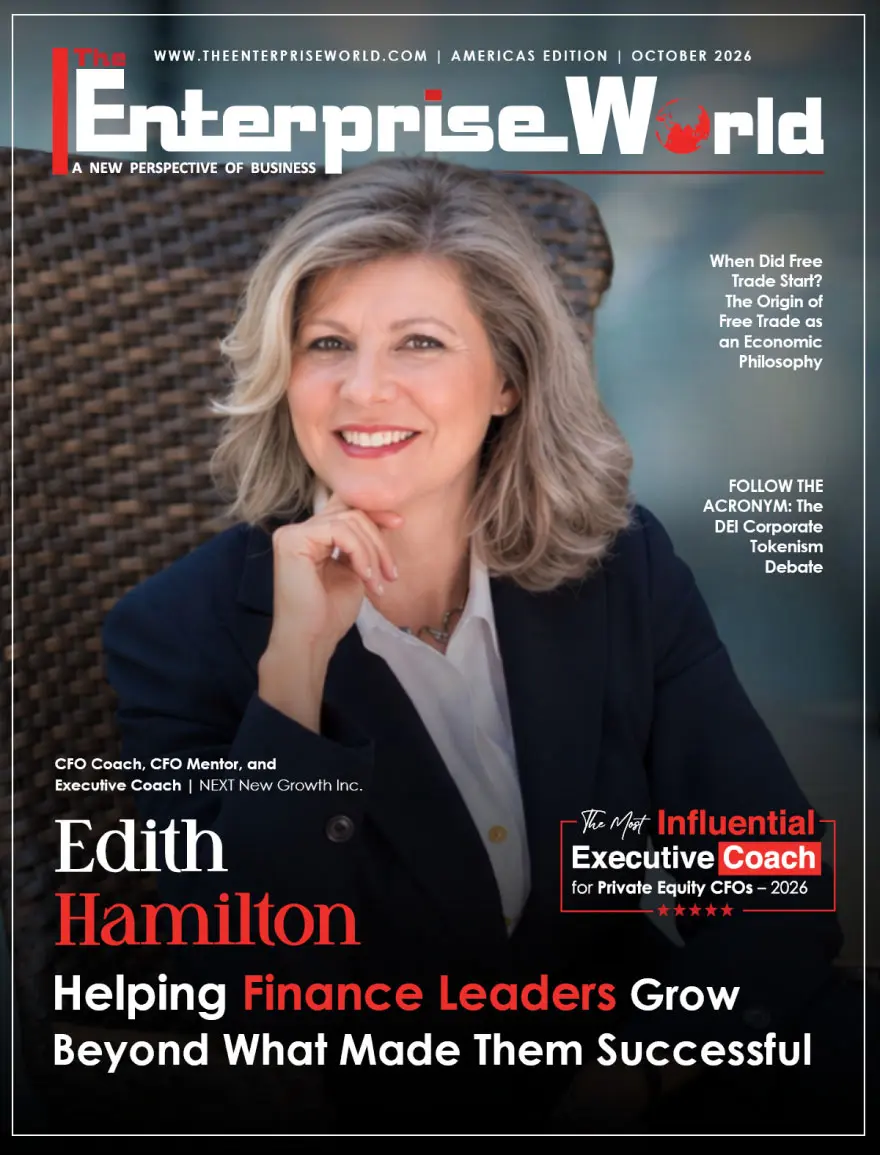
A CFO can know exactly where the business stands and still struggle to move it forward. The higher finance leaders rise, the less their success depends on having every answer themselves and the more it depends on their ability to influence, challenge, communicate, empower, and make sound decisions when the answers are not obvious. This shift becomes even more pronounced in private equity-backed companies, where expectations are compressed, transformation moves quickly, and Finance sits at the center of value creation. It is within this demanding intersection of financial expertise and executive leadership that a different kind of development becomes essential, one that helps leaders recognize when the qualities that built their careers are no longer enough on their own.
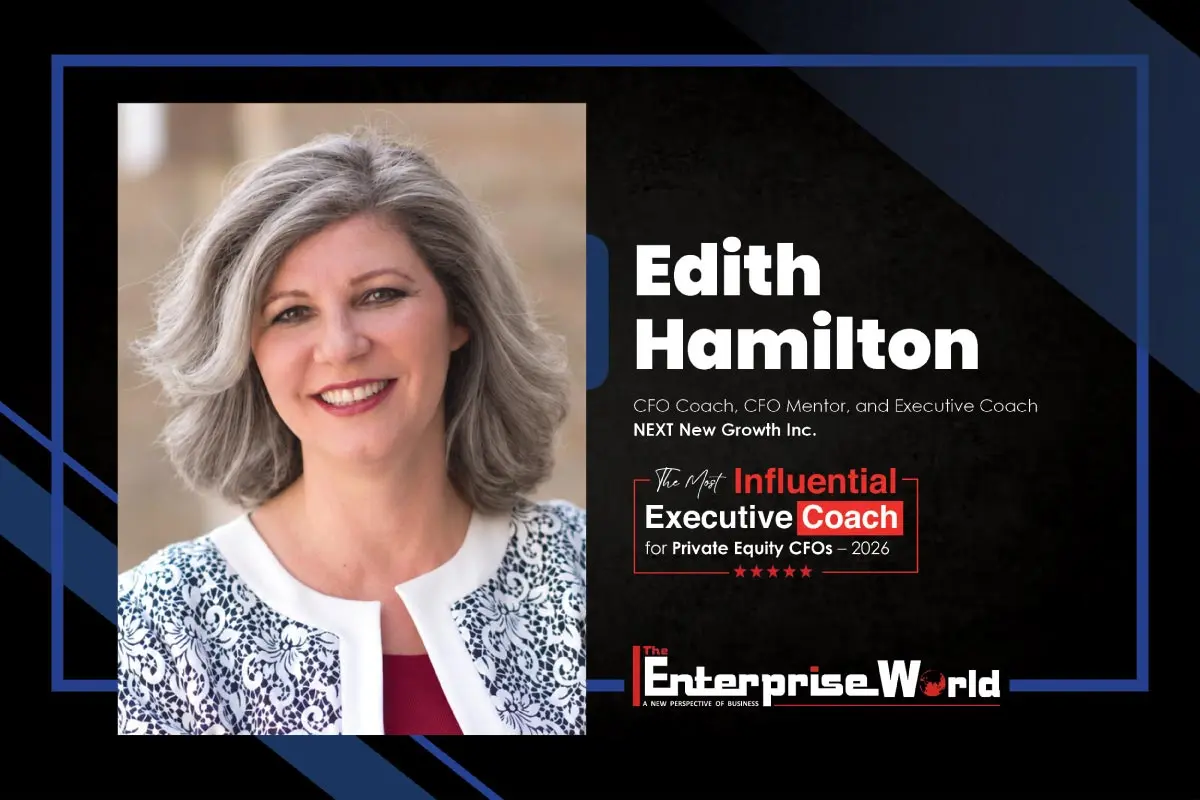
Few journeys illustrate this evolution more meaningfully than that of Edith Hamilton, CFO Coach, CFO Mentor, and Executive Coach at NEXT New Growth Inc. Over 25 years across finance, operations, healthcare, and entrepreneurship gave her a firsthand understanding of what it takes to operate at the highest levels of business. Yet an experience with executive coaching during her own corporate career revealed something equally important: leaders can become more effective when they understand not only their strengths, but also what happens when those strengths are overused.
From finance executive to executive coach
“This is something I could see myself doing in a later chapter of my career.”
Edith Hamilton
The journey to executive coaching emerged naturally from over 25 years of corporate experience. While working at DaVita, Edith Hamilton was sponsored for executive coaching as part of her development toward a senior leadership role. The experience showed her how coaching could help leaders recognize both their strengths and the potential downsides of overusing them, inspiring her to consider coaching as a future career.
After building and selling a family business in 2016, the Columbia University Business School grad soon realized she missed solving problems and developing people. She began professional coaching training and obtained her International Coaching Federation credentials. In 2018, she received a pivotal opportunity when FFL Partners engaged her to coach a newly promoted CFO at a rapidly growing, private equity-backed healthcare company facing challenges.
That first major engagement revealed a clear niche. Edith recognized that finance leaders often need more than technical advice or generic executive coaching. As Finance executives move into the CFO role, they must shift from being individual problem-solvers to influential leaders who can work effectively with CEOs, boards, private equity sponsors, and executive teams.
This insight became the foundation of NEXT New Growth Inc., specializing in coaching and mentoring CFOs. Her approach combines three roles: CFO Coach, CFO Mentor, and Executive Coach, adapting to each leader’s needs rather than imposing a fixed leadership model.
Today, her work brings together decades of experience in finance, healthcare, operational leadership, mentoring, and coaching. She views her journey not as a career change, but as the convergence of everything she had learned, ultimately enabling her to serve finance leaders facing the complex demands of executive leadership.
“Private equity makes that work particularly consequential because the clock moves faster.”
Edith Hamilton
The evolution from influence to intentionality
Life as a senior finance executive brought significant influence, visibility, and responsibility, but also meant operating within demanding schedules and expectations. Entrepreneurial leadership has brought a different kind of success: greater autonomy, intentionality, and the freedom to direct expertise where it creates the most value.
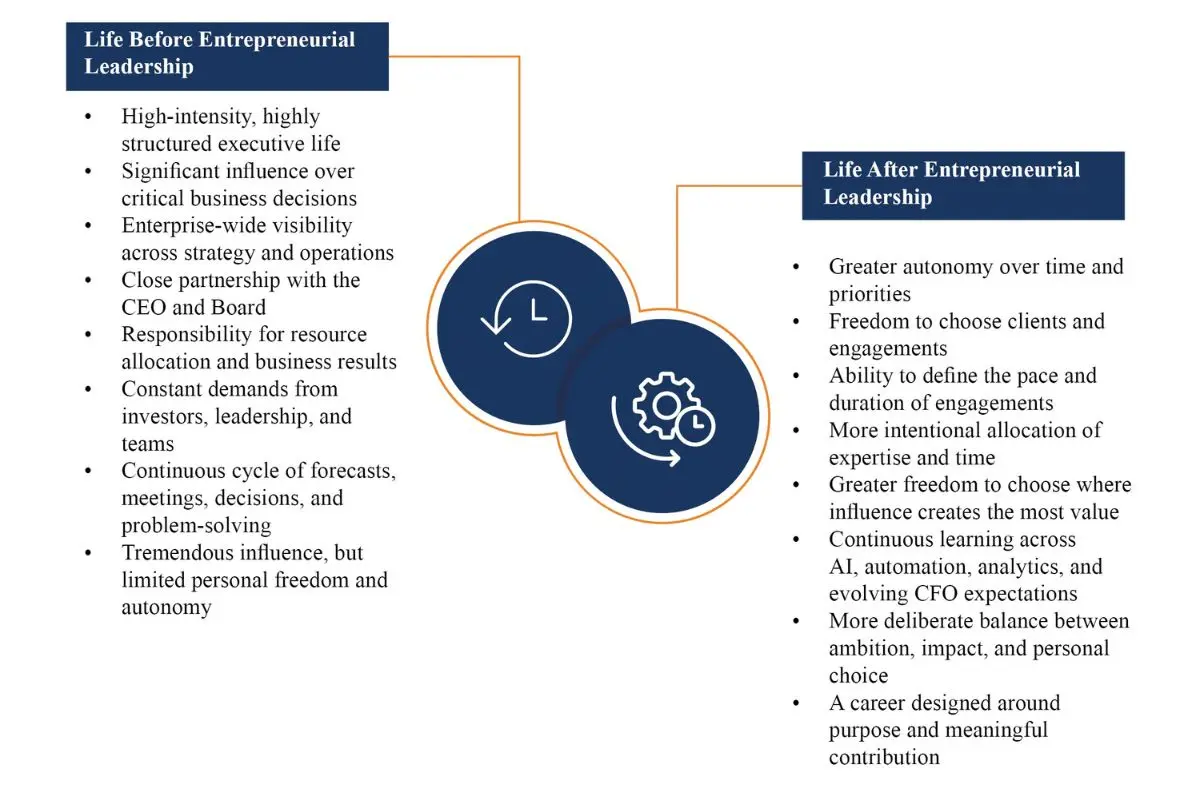
Life before entrepreneurial leadership
- High-intensity, highly structured executive life
- Significant influence over critical business decisions
- Enterprise-wide visibility across strategy and operations
- Close partnership with the CEO and Board
- Responsibility for resource allocation and business results
- Constant demands from investors, leadership, and teams
- Continuous cycle of forecasts, meetings, decisions, and problem-solving
- Tremendous influence, but limited personal freedom and autonomy
Life after entrepreneurial leadership
- Greater autonomy over time and priorities
- Freedom to choose clients and engagements
- Ability to define the pace and duration of engagements
- More intentional allocation of expertise and time
- Greater freedom to choose where influence creates the most value
- Continuous learning across AI, automation, analytics, and evolving CFO expectations
- More deliberate balance between ambition, impact, and personal choice
- A career designed around purpose and meaningful contribution
When the strength that built a career becomes its greatest limitation
For Edith Hamilton, the evolution of senior finance leaders into effective enterprise leaders is rooted in a simple but often overlooked reality: the strengths that help CFOs reach the C-suite can become constraints when overused. Discipline, analytical rigor, attention to detail, skepticism, accountability, and high standards are fundamental to finance leadership. Yet once an executive becomes CFO, the role extends beyond finding the right answer. It demands the ability to influence people, shape decisions, communicate with clarity, and create an environment where others can perform independently.
This transition is particularly evident when accomplished CFOs remain too close to the details, personally solve problems their teams could own, or hesitate to delegate because their standards are difficult to match. What appears to be an operational issue can often be a leadership challenge in disguise. A team that is not stepping up may need greater autonomy, while limited engagement from a CEO may signal the need for stronger strategic influence rather than more detailed analysis.
Edith’s approach to executive coaching centers on expanding a leader’s range rather than eliminating the qualities that created success. Control, for example, can remain valuable when reliability is critical, while delegation and empowerment become essential when organizational scale demands them. Similarly, collaborative leaders must know when circumstances require greater decisiveness and forcefulness.
For CFOs, this versatility is important. They must move between operational detail and strategic perspective, financial analysis and compelling storytelling, accountability and empowerment. In fast-moving, private equity-backed environments, this balance becomes even more critical as leaders navigate transformation, acquisitions, capital allocation, performance expectations, and risk.
Edith’s coaching philosophy ultimately focuses on helping CFOs evolve without losing their core strengths. Analytical capability can become business judgment, skepticism can become courageous inquiry, and high standards can become a culture of excellence. The transformation is from doing to leading, from personally having every answer to enabling the organization to find and act on the right answers.

Expanding the CFO’s leadership range
Private Equity CFOs operate under compressed expectations. They must improve performance, preserve liquidity, support growth, strengthen the Finance organization, satisfy investors, and often prepare the company for an eventual exit, all while navigating significant leadership demands.
Edith Hamilton’s coaching approach is built around versatility of the Co-Active Coaching model. She helps CFOs move between four critical leadership modes: Strategic and Operational, Forceful and Enabling. Most finance leaders are already strong operators, skilled at solving problems, managing details, and driving accountability. The challenge is knowing when to step back from the details and think strategically. Similarly, decisive leaders must recognize when to listen, coach, delegate, and create space for others.
For Edith Hamilton, the goal is not to change who CFOs are, but to expand their range.
She also helps leaders move from “What happened?” to “So what?” and “Now what?”, translating financial data into business insight, recommendations, and action. Her philosophy is that exceptional CFOs are not simply technically strong; they are adaptable leaders who can read the situation, choose the right leadership response, and help their organizations move forward with clarity and confidence.
A day in Edith Hamilton’s life
A thoughtfully structured day that balances meaningful coaching conversations with health, relationships, reflection, and continuous learning.
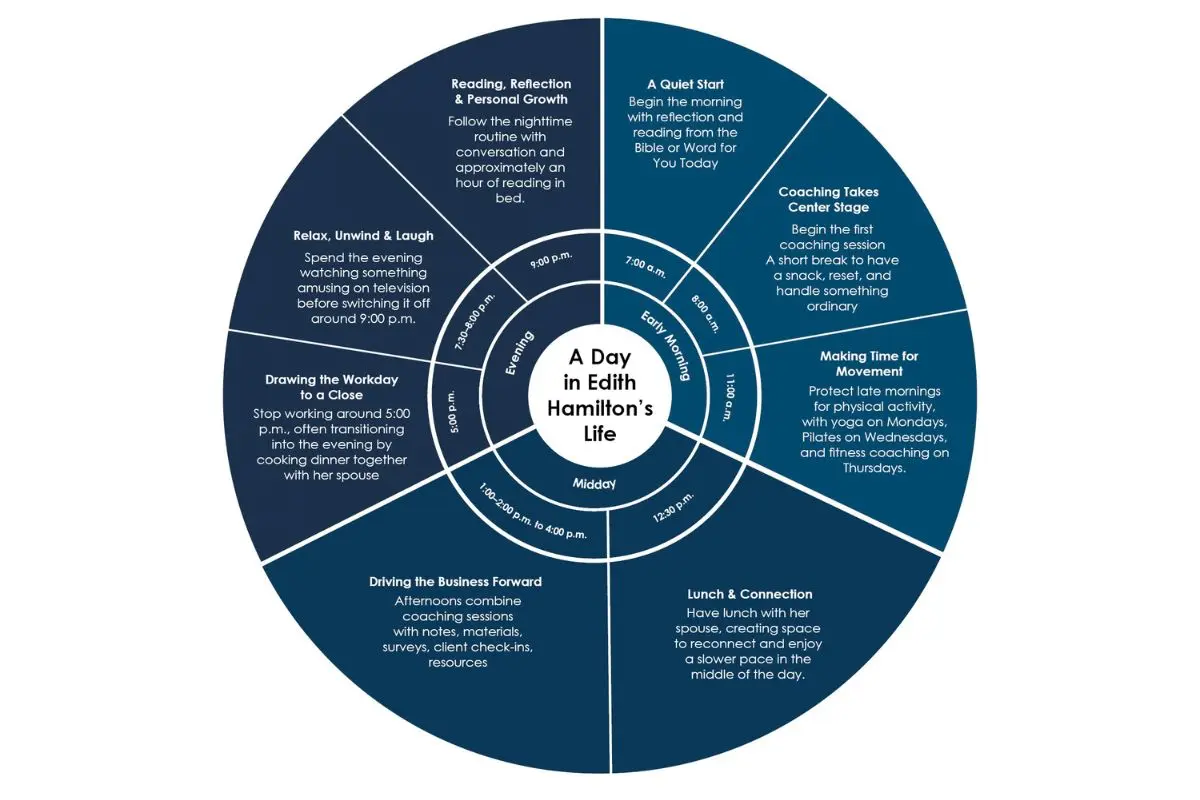
7:00 a.m. | A quiet start
Begin the morning with a few quiet minutes of reflection and reading from the Bible or Word for You Today, followed by a simple breakfast and a conversation with her spouse about the day ahead.
8:00 a.m. | Coaching takes center stage
Begin the first coaching session, often followed by a second session back-to-back. A short break afterward allows time to have a snack, reset, and handle something ordinary like tidying the kitchen before returning to the next conversation.
11:00 a.m. | Making time for movement
Protect late mornings for physical activity, with yoga on Mondays, Pilates on Wednesdays, and fitness coaching on Thursdays.
12:30 p.m. | Lunch & connection
Have lunch with her spouse, creating space to reconnect and enjoy a slower pace in the middle of the day.
1:00–2:00 p.m. to 4:00 p.m. | Driving the business forward
Afternoons combine coaching sessions with notes, materials, surveys, client check-ins, resources, and the essential work of running a business, including prospective-client conversations, legal and accounting matters, administration, social media, and business development.
5:00 p.m. | Drawing the workday to a close
Stop working around 5:00 p.m., often transitioning into the evening by cooking dinner together with her spouse and intentionally creating a clear boundary between work and personal time.
7:30–8:00 p.m. | Relax, unwind & laugh
Spend the evening watching something amusing on television before switching it off around 9:00 p.m.
9:00 p.m. | Reading, reflection & personal growth
Follow the nighttime routine with conversation and approximately an hour of reading in bed. Leadership, psychology, business, biographies, and human behavior become part of an ongoing personal growth practice, often enriching future conversations with the leaders she coaches.
The business impact of better leadership
Because confidentiality is central to Edith Hamilton’s work, she changes identifying details when sharing client experiences. Two engagements demonstrate the transformations she finds most meaningful.
One involved the CFO of a private equity-backed healthcare services company navigating a CEO transition. Edith helped the CFO understand the new CEO’s priorities and communication style, focus Finance on three critical initiatives, create early wins, strengthen FP&A and automation, and accelerate the monthly close. The key transformation was behavioral: rather than defending established practices, the CFO became more curious about what the new CEO needed, repositioning himself as a partner in the company’s future.
In another engagement, Edith worked with a CFO whose board presentation had grown to roughly 50 pages. Although technically strong, the presentation buried its most important messages. Edith Hamilton challenged him to identify the seven things the board truly needed to know. After simplifying the presentation, he described the meeting as his best board meeting, and board members asked him to continue presenting that way. For the first time in his CFO career, he also did not spend the entire weekend preparing.
For Edith, these outcomes demonstrate that coaching becomes most powerful when leaders apply new behaviors to real situations and experience the impact firsthand.
The making of an exceptional CFO
For Edith Hamilton, technically excellent CFOs can perform the role well, but exceptional CFOs transcend Finance. They understand not only the numbers, but what drives them, connecting financial performance with customers, operations, talent, pricing, strategy, and capital allocation.
Most importantly, they develop a clear point of view. An exceptional CFO does not simply walk into the CEO’s office with numbers and ask what should be done. Instead, the leader brings perspective: “Here is what I see, here is what concerns me, and here is what I recommend.” Edith Hamilton believes this requires judgment, courage, and executive presence.
Her coaching focuses on helping leaders move from information to insight to influence. She encourages CFOs to identify what a board truly needs to understand, communicate complex issues clearly, and confidently disagree with CEOs or private equity sponsors without becoming defensive or adversarial. For Edith, executive presence is not solely about polish or charisma. It is about creating confidence that the leader understands the issue, can see around corners, and can be trusted when the answer is not obvious. She helps CFOs evolve from being the people who know the numbers into leaders who help organisations make better decisions because of them. That is what separates an excellent Finance executive from an exceptional CFO.
Trust, candor, and accountability
For Edith Hamilton, trust is the foundation of effective executive coaching. She begins by creating a confidential space where CFOs and senior leaders can think openly, acknowledge uncertainty, examine mistakes, and discuss challenges without fear that their conversations will be repeated. In sponsored engagements, she establishes clear boundaries from the outset, ensuring that companies and private equity firms understand the engagement’s objectives and progress while protecting the confidentiality of individual coaching conversations.
For Edith, confidentiality does not mean avoiding difficult conversations. She believes a coach must be willing to say what others may hesitate to say, helping leaders recognize when a strength has become overused or when a behavior is creating unintended consequences. Her approach is direct but non-judgmental, balancing positive intent with honest feedback.
Accountability remains central to her process. She establishes development priorities and regularly evaluates commitments, outcomes, learning, and next steps. She also gathers feedback from CEOs, peers, direct reports, board members, and sponsors to assess whether changes are visible in the workplace.
Edith continuously refines her own practice through client feedback, research, and coaching methodologies. She measures success by helping leaders become self-aware and capable of coaching themselves, rather than being dependent on the coach.
The CFO’s next chapter
Edith Hamilton believes the CFO role is entering one of its most consequential periods, with AI accelerating a transformation already underway in private equity. As traditional value creation levers become less reliable, sponsors expect operational improvements through better pricing, margins, working capital, talent, systems, capital allocation, and faster decision-making. This places the CFO at the center of the investment thesis, evolving from a financial steward into the CEO’s value creation partner.
AI and automation will eliminate significant amounts of routine Finance work, allowing CFOs to focus more on insight, risk, strategic decisions, and business partnership. However, Edith emphasizes that better technology also increases the importance of data integrity and human judgment. AI can model trade-offs, but it cannot assume accountability for difficult decisions.
She also sees CFOs becoming critical translators between CEOs, boards, private equity sponsors, operating partners, lenders, and functional leaders. Future Finance teams will require stronger capabilities in data, analytics, AI, and business intelligence, alongside the ability to translate information into action.
Edith Hamilton believes versatility will define the next-generation CFO. The strongest leaders will combine strategic thinking with operational rigor, technological fluency with financial discipline, and decisiveness with curiosity. As AI becomes better at producing answers, the CFO’s greatest value will lie in judgment, influence, leadership, and turning insight into organizational action.
A vision for the next generation of finance leaders
For Edith Hamilton, the long-term vision for NEXT New Growth is not simply about coaching more executives. It is about making a meaningful impact on how CFOs are developed for demanding leadership roles.
She recognizes that the CFO role has changed dramatically. While technical excellence remains essential, it is no longer sufficient in tomorrow’s AI landscape. The next generation of CFOs must become strategic business partners, persuasive communicators, developers of talent, sophisticated users of technology, and agile trusted advisers to CEOs, boards, and private equity sponsors. This shift will require a higher degree of both emotional (EQ) and positive intelligence (PQ) than in the past. Through NEXT New Growth, Edith aims to help accelerate that balance between neuroscience, technology, cognitive and behavioral psychology and performance science.
Her vision includes continuing to work deeply with newly appointed CFOs, aspiring CFOs, and experienced finance leaders who recognize that what made them successful at one level may not be enough for the next. She is particularly passionate about helping first-time CFOs shorten the learning curve during the critical first months of stepping into the role.
Edith also hopes to influence executive coaching itself by bringing more practical operating experience into the profession. She believes coaching is enormously powerful, but senior executives sometimes need more than questions. They can also benefit from a mentor who understands the decisions they face, can share relevant experiences, and still resists simply handing them the answer.
Her approach deliberately combines coaching, mentoring, and real-world executive development. Her goal is to develop CFOs who no longer need her. She wants them to become more self-aware, more versatile, and better able to step back from difficult situations and ask themselves, “What does this moment require from me?”
If NEXT New Growth can help produce a generation of finance leaders who are as skilled at leading people and shaping businesses as they are at understanding the numbers, Edith believes that would be a legacy she could be deeply proud of.
Redefining the CFO journey through leadership, versatility, and intentional growth
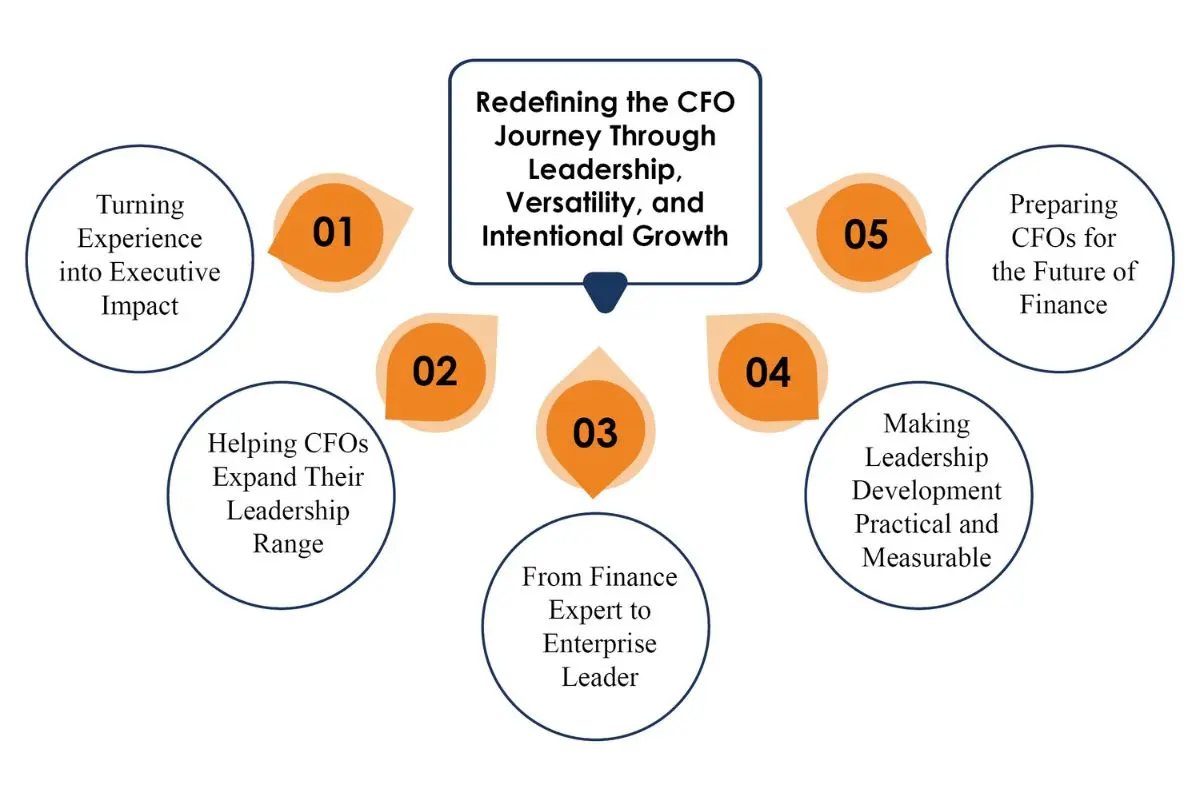
- Turning Experience into Executive Impact
- Helping CFOs Expand Their Leadership Range
- From Finance Expert to Enterprise Leader
- Making Leadership Development Practical and Measurable
- Preparing CFOs for the Future of Finance