Most job seekers spend more time applying than actually preparing, and that’s a problem job search tools are built to solve. Between ATS filters silently rejecting qualified resumes, ghost listings wasting hours of effort, and hundreds of applicants competing for the same role, the odds feel stacked against you before you even get a callback. After reviewing platforms across automated application, resume improvement, and real-time interview support, this guide breaks down which tools actually improve your resume-to-interview conversion rate.
How this ranking was put together
Each platform was evaluated by pulling publicly available information: user ratings, verified reviews, feature breakdowns, and real outcomes reported across major review sites and official company pages. Only tools with a documented track record in recruitment technology made the final cut.
→ See the full research breakdown
- RoboApply – Best for job seekers automating applications at scale
- ApplyBlast – Best for job seekers using automated job application tools
- Simplify – Best for job seekers and recruitment automation
- Final Round – Best for job interview preparation and candidate enablement
- Job Copilot – Best for automated job search and application tools
Why AI Job Search Tools Are Worth a Closer Look?
The job market has changed faster than most job seekers have adapted. Getting past ATS filters that reject resumes before any human sees them is now a skill in itself, and standing out when a single posting attracts hundreds of applicants takes more than a polished resume. AI job search tools tackle both problems directly, automating the tedious parts of applying while tailoring your materials to each role. That kind of targeted output is hard to match with manual effort alone. The right tool improves your ATS pass-through rate, increases the number of tailored applications you can send per week, and raises your resume-to-interview conversion rate in ways that generic job boards simply can’t.
Comparing the 5 Best AI Job Search Tools
Note: All data in this table is sourced from review platforms and the official websites of the listed companies.
| Company Name | Years Operating | Headquartered In |
| RoboApply | Est. 2023 | Dallas, Texas |
| ApplyBlast | Est. 2013 | New York, New York |
| Simplify | Est. 2020 | San Francisco, CA |
| Final Round | Est. 2023 | San Francisco |
| Job Copilot | Est. 2024 | Singapore |
1. RoboApply – Best for Automating Job Applications at Scale
What Services Does RoboApply Offer?
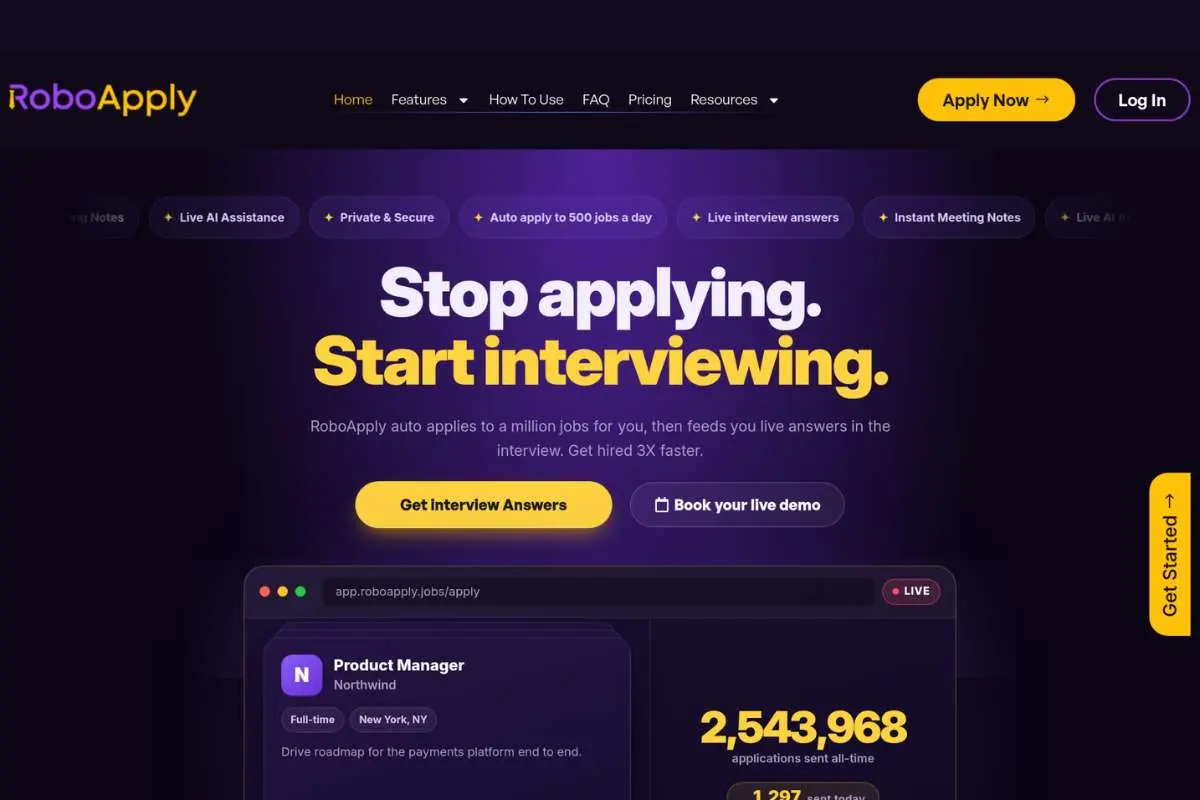
RoboApply automates the entire job application process, from resume and cover letter tailoring to submitting applications across 40+ job boards at up to 500 applications per day. The platform builds ATS-friendly resumes matched to each specific role, which directly tackles one of the biggest reasons qualified candidates never hear back. Its standout feature is the Interview Copilot, which delivers real-time answers during live interviews without being detected. With 170,000+ users and 100,000+ jobs secured, the numbers back it up.
What Sets RoboApply Apart for AI Job Search Tools?
RoboApply solves the scale problem most job seekers run into, where applying to enough roles consistently while keeping quality high is nearly impossible to do by hand. The Interview Copilot adds a second layer of support that goes beyond the application stage, which is where most platforms stop.
What Users Are Actually Saying:
Users consistently mention how much time RoboApply saves during an active job search. The platform holds a 4.8-star rating from over 6,200 reviews, with a 90-day interview guarantee that gives first-time users real confidence. A rating that high at that volume is hard to dismiss.
2. ApplyBlast – Best for Automated Job Application Tools
What Services Does ApplyBlast Offer?
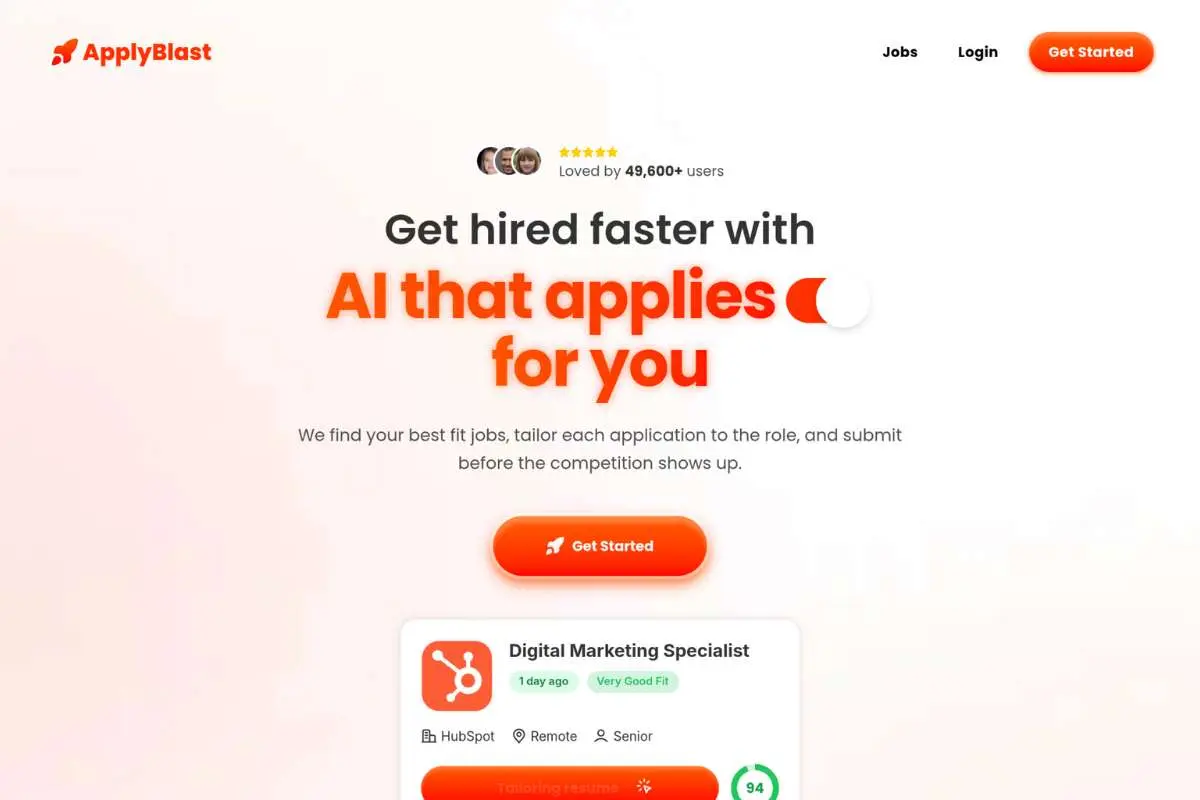
ApplyBlast indexes job postings across the internet and uses AI agents to apply the moment a relevant role goes live. It actively filters out ghost jobs, recruiter reposts, duplicate listings, and scams before they ever reach the job seeker (and that alone saves hours of wasted effort each week). The platform also covers resume improvement, cover letter tailoring, and interview prep, so it’s more than just an application bot. The focus on early submission timing is a smart play in a market where getting there first genuinely matters.
What Sets ApplyBlast Apart for AI Job Search Tools?
ApplyBlast targets a specific frustration: most job seekers are applying to the same bloated, cluttered job boards full of low-quality listings, and arriving late to real opportunities. Their deduplication and scam-filtering approach cuts through that noise before you spend any time on a role.
What Users Are Actually Saying:
Reviews are mixed overall, with a Trustpilot rating around 2.8, though many users still call it one of the more useful tools for finding tailored opportunities quickly. The experience varies quite a bit depending on the job category and how well the AI matches roles to your background. The filtering features get consistent praise even from reviewers who had other complaints.
3. Simplify – Best for Job Seekers and Recruitment Automation
What Services Does Simplify Offer?
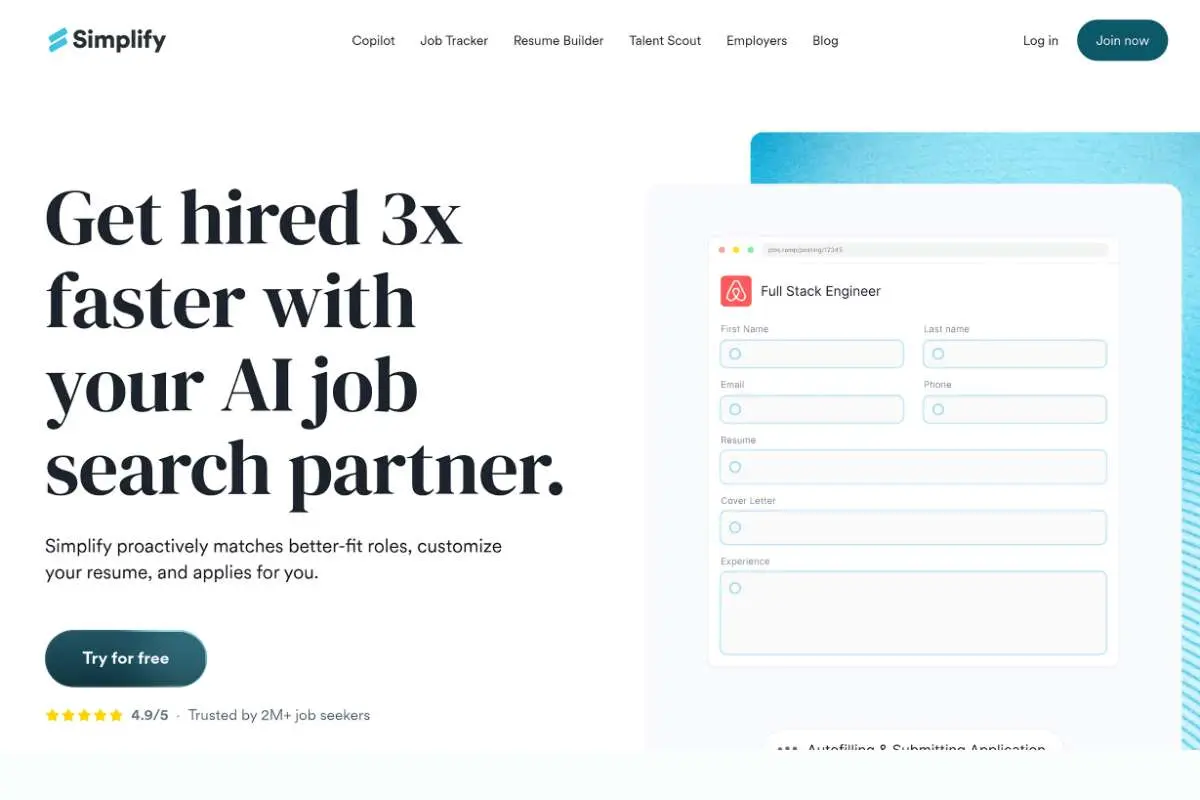
Simplify pulls job listings from 50+ job boards and uses AI to match them to each user’s profile, then autofills applications through a browser extension that does most of the heavy lifting. The platform also builds AI-tailored resumes, tracks applications automatically, and helps users plan their search week by week. It was founded by Rushil Srivastava and Michael Yan and is backed by Y Combinator. More than 2 million job seekers have used it, and users reportedly get hired about three times faster while saving five or more hours per week on applications.
What Sets Simplify Apart for AI Job Search Tools?
Simplify addresses the fragmentation problem, where job seekers waste time bouncing between boards, losing track of applications, and rewriting the same information into every form. The combination of automated autofill, centralized tracking, and AI resume tailoring in one tool is where their approach holds up well against competitors.
What Users Are Actually Saying:
With a 4.9 out of 5 rating from over 2 million users, Simplify’s reputation is about as strong as it gets in this space. Users frequently mention placements at companies like Google, Meta, and Goldman Sachs, which adds real weight to those numbers. At that scale of user activity, it’s much harder to dismiss as cherry-picked success stories.
4. Final Round – Best for Job Interview Preparation and Candidate Enablement
What Services Does Final Round Offer?
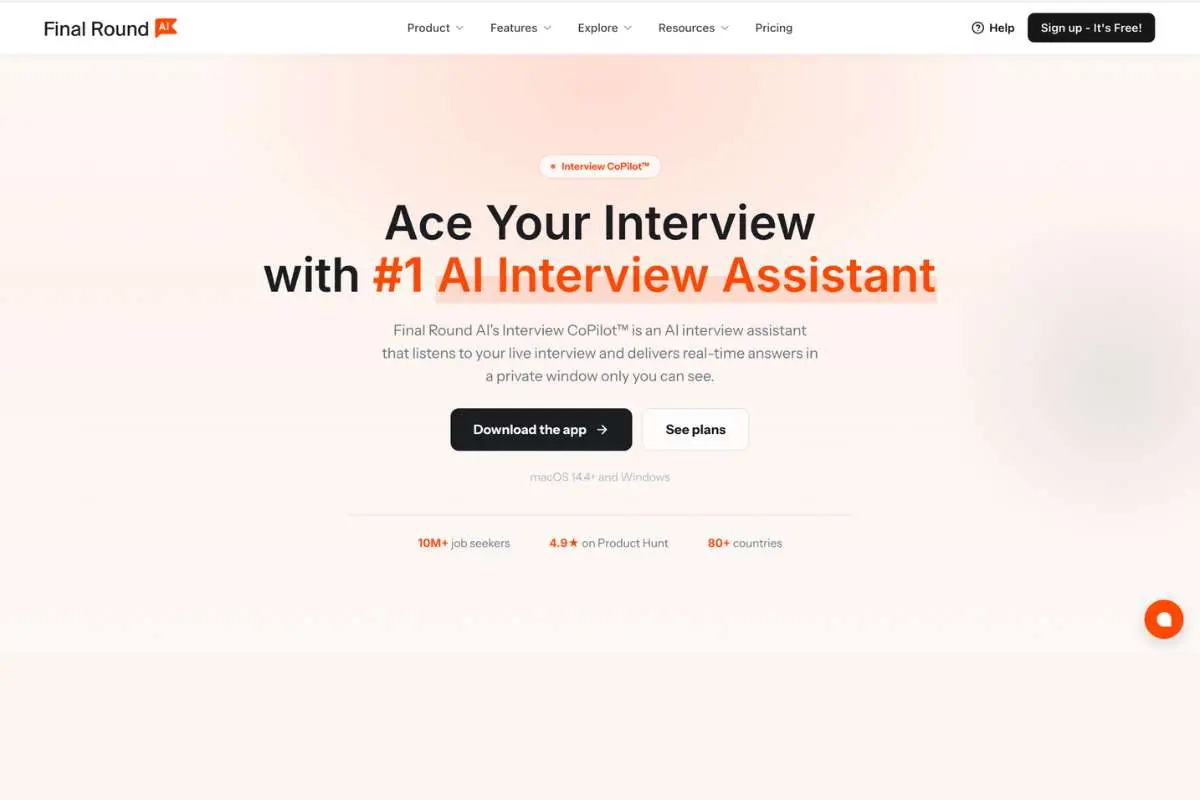
Final Round AI centers its platform on Interview Copilot, a real-time guidance tool that works during live interviews across major video conferencing and coding platforms. The platform offers eight practice interview scenarios, automatic AI debriefs after each session, resume improvement, and job application automation. Founded in 2023, they’ve grown to serve over 10 million users across more than 100 countries, which is a steep growth curve for any tool this young. The Stealth Mode feature is built so the guidance stays invisible to interviewers during live sessions.
What Sets Final Round Apart for AI Job Search Tools?
Final Round addresses the gap between getting an interview and actually passing it, a stage that most job search tools ignore entirely. Their real-time, in-interview support is a distinct capability that changes how candidates show up in the most high-stakes moment of the hiring process.
What Users Are Actually Saying:
Final Round holds a 4.9-star rating on Product Hunt, with users particularly praising how the live interview support reduces anxiety in the moment. The platform is trusted by candidates going into interviews at some of the most competitive companies globally. Ten million users is a number that’s hard to wave off.
5. Job Copilot – Best for Automated Job Search and Application Tools
What Services Does Job Copilot Offer?
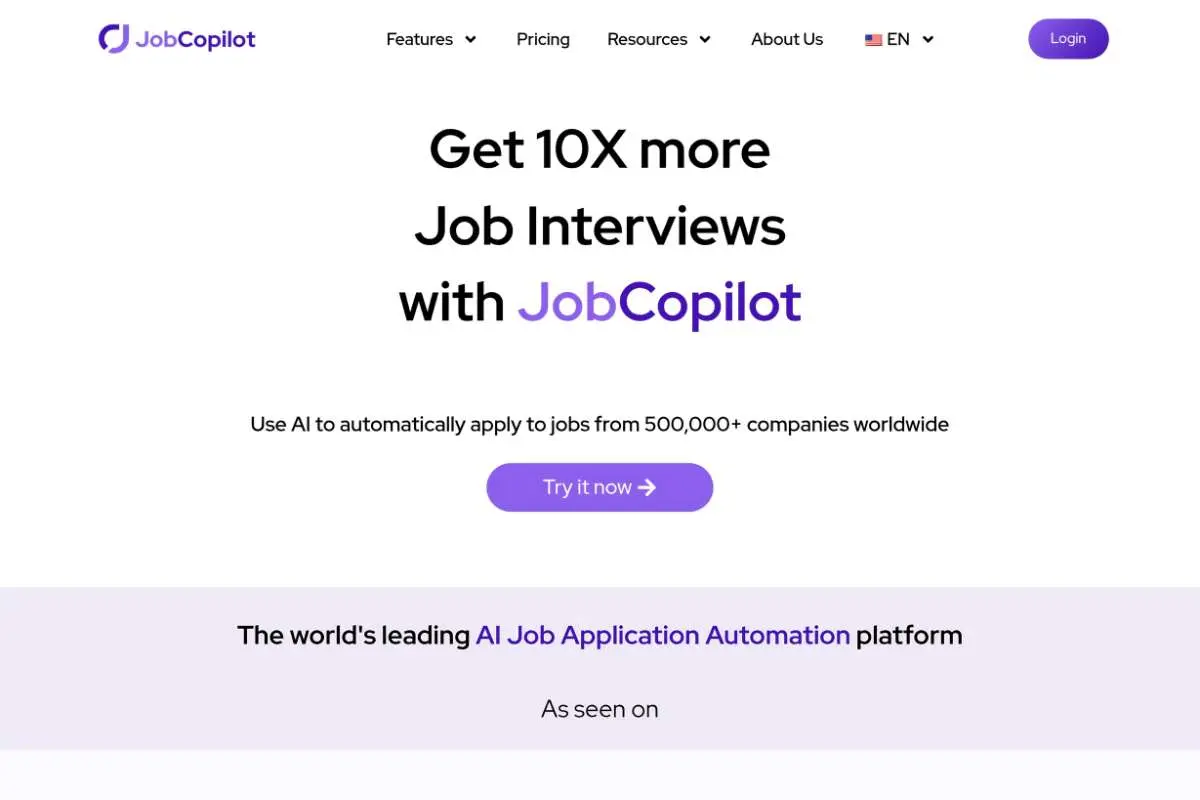
Job Copilot packs nine integrated tools into one platform, covering automated job search, application submission, AI resume and cover letter builders, mock interview practice, and salary negotiation support. What makes it distinct is that it only applies to verified positions pulled directly from official company career pages across 500,000+ organizations globally. That focus on source verification addresses one of the most persistent problems in job searching: wasting time on listings that aren’t real. Founded in 2024 and headquartered in Singapore, it’s one of the newer entrants in this space but comes from founders with direct backgrounds in job sites and recruitment.
What Sets Job Copilot Apart for AI Job Search Tools?
Job Copilot solves the trust problem in automated job applications by verifying every position against official company websites before submitting on a user’s behalf. That verification step matters more than most people realize, since applying to unverified listings is one of the fastest ways to burn time and damage your own process.
What Users Are Actually Saying:
Job Copilot is still building its public review base given how recently it launched, so there isn’t a large volume of verified user feedback yet. Early impressions point to strong interest in the verified-only application model and the range of tools packed into a single platform. That kind of early traction with a focused, security-first approach tends to build a reputation fairly quickly.
Methodology Behind These Picks:
1. Gathering Required Information at the Outset
The research started by pulling together a broad list of AI job search tools that came up consistently across job seeker communities, tech directories, and recruitment-focused review sites. Each platform was identified through a combination of user-generated discussion, press mentions, and official product listings. The goal at this stage was to capture a wide enough pool that no relevant platform was overlooked based on size or brand recognition alone.
2. The Shortlist Cut
From that initial pool, platforms without verified public records were removed first. Any tool that lacked traceable user reviews, had no documented case studies, or couldn’t be confirmed through at least two independent sources didn’t advance. Review patterns were then analyzed, not just average scores, but the volume of feedback, how consistent the sentiment was across different platforms, and whether negative reviews pointed to specific product issues or general dissatisfaction.
3. Fact-Checking the Picks
Each platform’s website claims were cross-checked against what users actually reported in reviews and forum discussions. When a company stated specific outcomes (like jobs secured or user counts), those numbers were compared against third-party sources and user testimonials to check for consistency. Platforms where marketing language ran significantly ahead of real-world evidence were flagged and weighted accordingly.
4. Authority Signals and Industry Standing
Recognition from credible publications, product directories, and startup-focused communities was factored in as a signal. Backing from known investors, inclusion in accelerator programs like Y Combinator, and product awards from platforms like Product Hunt were all treated as meaningful indicators of market validation. That kind of external recognition doesn’t guarantee quality, but it does show the broader market has taken notice.
5. AI Job Search Tools Track Record
Each platform was checked for dedicated service pages focused on AI job search functionality, verified user outcomes tied to interview rates and job placements, and case studies that pointed to real results. Tools that operated in the space broadly but couldn’t show specific recruitment technology outcomes were ranked lower. The final picks all show documented evidence of improving at least one measurable part of the job search process, whether that’s the ATS pass-through rate, the number of applications submitted per week, or time-to-first-interview.
Picking the Right AI Job Search Tools for You
Choosing the right platform depends on where your job search is actually breaking down. If you’re not getting callbacks, the problem might be your resume. If you’re not finding enough roles, it might be your sourcing. And if you’re bombing interviews, no application tool will fix that. Start by diagnosing the bottleneck, then match the tool to it.
- Industry/Domain Experience: Look for platforms that have helped candidates in your specific field. A tool that works well for software engineers might not perform the same way for finance or healthcare roles.
- Features and tools: Consider whether you need end-to-end automation or targeted help with one part of the process, like interview prep or resume tailoring. Paying for ten features when you need two is rarely worth it.
- Pricing Structure: Most platforms offer a free tier, but the volume and quality of features often sit behind a paywall (not cheap, but worth it if the tool actually gets you interviews). Match the plan to how active your search is.
- Results Measurement: The best tools give you something trackable, whether that’s ATS pass-through rate, applications submitted, or interview callbacks received. If you can’t measure it, you can’t tell if it’s working.
- Industry Knowledge and Compliance: EEOC-safe resume formatting and CCPA/GDPR data privacy standards matter more than most job seekers realize. Make sure any platform handling your personal data and application history has clear policies on both.
The Verdict
The right AI job search tool depends entirely on where you’re losing ground in the process. RoboApply leads for sheer application volume and interview support. Simplify wins on job matching and time savings. Final Round is the clearest choice for interview prep. ApplyBlast and Job Copilot both bring smart filtering and verification to a space that badly needs it. As AI hiring tools keep improving, the job seekers who adopt them early will have a real structural advantage over those who don’t.