

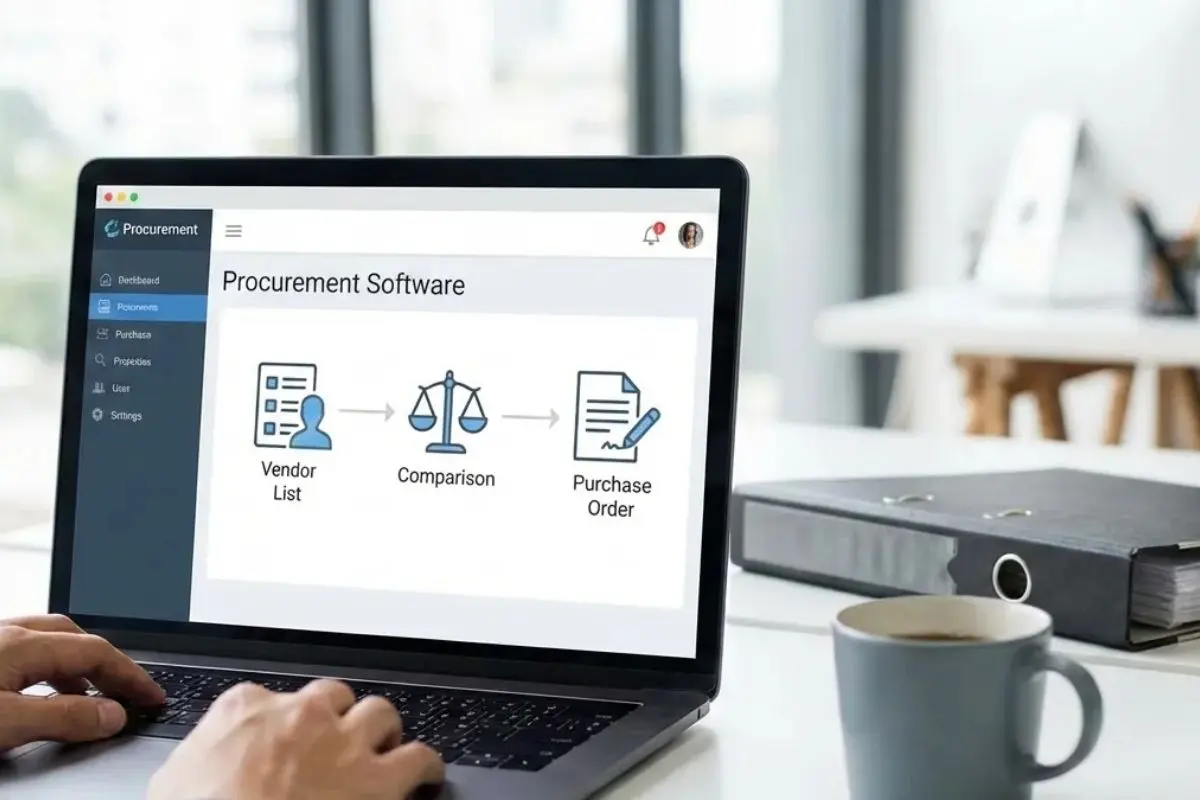
When requests sit in inboxes, supplier replies arrive in different formats, and approvals depend on scattered spreadsheets, procurement teams lose valuable time. A centralized procurement workflow, supported by procurement software, places each request, quote, decision, purchase order, invoice, and payment in a single centralized record. That structure gives buyers a clear audit trail and a consistent basis for supplier selection. It also shortens the distance between a sourcing decision and an approved purchase, making each subsequent step easier to control.
A procurement team needs more than a digital filing cabinet. It needs a shared process that captures requirements, records comparable responses, and routes the selected quote to an authorized approver. In that setting, reliable procurement software solutions connect sourcing activity with purchasing controls. Staff can review supplier choices without reconstructing decisions from email threads, then move the approved quote into the next purchasing step.
Sourcing starts with structured requests
A centralized system, such as procurement software, delivers results even before suppliers are contacted. The requester enters products or services, quantities, specifications, delivery requirements, and needed dates in a request. Procurement teams send the same information to several suppliers, creating a fair basis for comparison and reducing follow-up questions.
Structured requests preserve business needs. If a supplier changes a quantity, price, or delivery term, the record shows what changed. Buyers can distinguish a price difference from a data entry mistake before approval.
Comparing quotes on one record

Quote comparison becomes more reliable when every response uses the same request. A buyer can review line item prices, quantities, lead times, shipping charges, payment terms, and exclusions in a single, comprehensive view. The review focuses on differences rather than on the order in which emails arrived.
A centralized record also preserves supplier communication beside the quote. When a vendor clarifies or revises a delivery date, the buyer can connect that update to the line item. This history supports a defensible decision when a stakeholder asks why a supplier was selected.
Approval rules reduce delays
Approval controls in procurement software give sourcing decisions a planned route for timely fulfillment. The system can send a quote to the person assigned to the budget or project while retaining the request and comparison record. That arrangement prevents approvals from relying on forwarded messages.
The approver sees the commercial basis for the purchase before authorizing it. If the selected quote differs from the lowest price, the record can include the reason, such as a shorter lead time or a required specification. Clear reasoning supports reviews held later.
Purchase orders complete the handoff
Once a quote is approved, procurement software can convert the details nto a purchase order. The buyer need not retype supplier information, quantities, or agreed prices into another document. Fewer transfers reduce the risk of mismatched terms and discrepancies between the approved quote and the order sent to the vendor.
The same record can track whether the order has been issued, acknowledged, invoiced, and paid. Finance and operations see the status without asking procurement for updates. That visibility helps teams identify stalled orders before they affect production, projects, or customer commitments.
Supplier decisions become auditable

Centralized sourcing creates an evidence trail for future vendor selection. Decisions can be based on complete information, including the original request, supplier responses, comparison, approval, purchase order, invoice, and payment record. That sequence gives managers a factual basis to check spend, resolve disputes, and review whether buying practices follow internal policy.
The record also supports discussions regarding supplier performance. Buyers can compare promised delivery dates with actual progress, then use documented results during future sourcing. Suppliers that repeatedly change terms or miss commitments become easier to identify before the same problem arises in a future purchase cycle.
Making the workflow measurable
A centralized process in procurement software gives procurement managers usable measures for daily control. They can count requests for quote (RFQs), track response times, review approval delays, and compare quoted prices against final order values. These measures show where work slows and which step needs correction.
The data also supports workload planning. If quote requests rise while response collection consumes more staff hours, a manager can adjust supplier coverage or approval assignments. A clear record turns process questions into specific checks rather than assumptions based on scattered conversations.
Conclusion
A centralized procurement workflow gives teams a point of control for sourcing and purchasing. Teams should map one recurring purchase, define its required approvals, and measure the time spent collecting quotes, comparing terms, and issuing orders. That exercise reveals missing data and unnecessary handoffs before adoption.
Once the record captures each decision, managers can review supplier choices with evidence and improve the process without rebuilding information across separate files or engaging in manual data entry.