Companies tend to place one of three bets on skills. Some pay for employees’ education, some retrain the people already on the payroll, and some build the pipeline before the hire. The companies with strong workforce development programs each lean on one of those bets, and the differences between them matter more than the totals. For HR and talent leaders, these three models define how employees move through an organization over time.
In this article, you will discover how top employers design these pathways, connect learning to internal promotions, and build an adaptable workforce from within.
10 companies with strong workforce development programs worth learning from
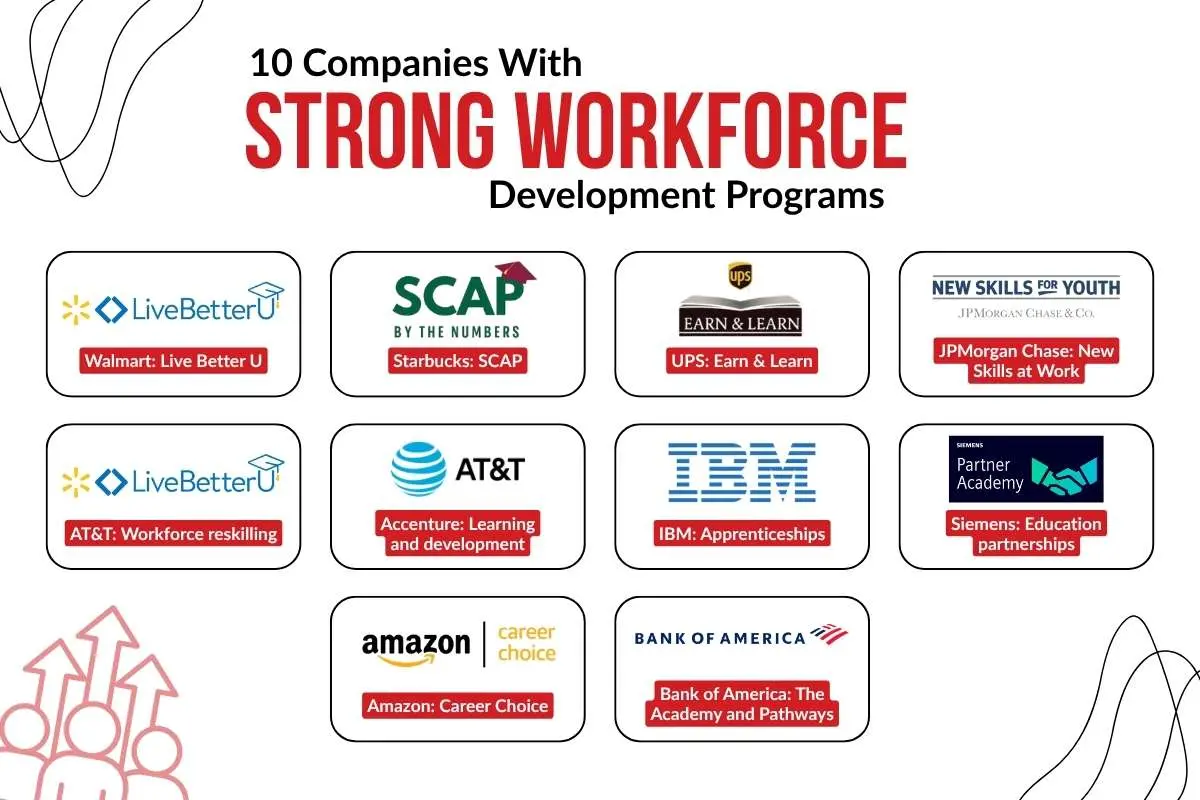
Companies use workforce development to help staff learn new skills and prepare for future jobs. Some pay for college, while others train workers or partner with schools. These examples show how businesses can build skills, support staff, and meet their hiring needs.
1. Walmart: Live Better U
Walmart pays tuition and fees for eligible employees through Live Better U, starting on day one. Its approved courses help workers gain skills for jobs the company needs.
What companies can borrow: Remove the cost of learning and let staff start right away. Choose courses that support clear career paths.
2. Starbucks: SCAP
Starbucks covers upfront tuition for eligible employees who pursue their first bachelor’s degree online through Arizona State University. Its Pathway to Admission program also helps workers meet college entry rules.
What companies can borrow: Pay for education and help staff take the first step. Clear entry support can make a degree easier to reach.
3. UPS: Earn & Learn
UPS offers eligible employees up to $5,250 a year for education, with a lifetime limit of $25,000. This helps workers pay for college while keeping costs within a set budget.
What companies can borrow: A capped benefit can still help many workers, including part-time staff.
4. JPMorgan Chase: New Skills at Work
In 2019, JPMorgan Chase announced $350 million for New Skills at Work. The effort supports job training across communities and helps address skills needed within the company.
What companies can borrow: Use hiring plans and staff data to spot skill gaps early. Then plan training before shortages grow.
5. AT&T: Workforce reskilling
In 2018, AT&T reported spending on training to help workers keep pace with changes in technology. The company aimed to build skills for jobs it would need in the future.
What companies can borrow: Plan for future skill needs. Then train current staff to fill gaps before hiring new workers.
6. Accenture: Learning and development
In 2024, Accenture reported spending more than $1 billion a year on learning for over 700,000 people. This makes training a regular part of its business budget.
What companies can borrow: Fund learning each year and focus on skills that support business goals.
7. IBM: Apprenticeships
IBM has reported that 90% of its apprentices move into full-time jobs. Apprentices gain skills through paid work, while a separate IBM pledge supports digital skills outside the company.
What companies can borrow: Hire people with potential. Teach them through real work. Give them a clear path to full-time roles.
8. Siemens: Education partnerships
Siemens began a partnership with Central Piedmont Community College in Charlotte in 2011. The partnership helps prepare people for skilled jobs by linking study with work needs.
What companies can borrow: Work with a college to train people for specific roles. Then build a steady pool of skilled workers.
9. Amazon: Career Choice
Amazon has committed $1 billion to upskilling programs, including Career Choice. The program helps eligible employees gain skills and qualifications for future jobs.
What companies can borrow: Set a clear budget for training and help workers prepare for new roles.
10. Bank of America: The Academy and Pathways
Bank of America’s Academy trains more than 200,000 teammates through one central system. Its Pathways program helps people in local communities prepare for jobs and find work.
What companies can borrow: Build one training system for staff and link it to programs that prepare new workers for open roles.
These examples show that companies with strong workforce development programs can build skills in different ways. They can pay for college or train staff for new roles. The right approach depends on the skills a business needs, the support its workers require, and the funds it can set aside for learning.
What makes a workforce development program strong?

The goal of workforce development is to train people for roles the business needs, give workers fair access to learning, share results that others can check, and have steady funding to support long-term growth.
- Tied to business need: Training builds skills that match current jobs and prepares staff for roles the company will need.
- Open access: Workers who need training can take part, including those who face cost, time, or entry barriers.
- Published results: The company shares clear facts about its spending, training, or outcomes that readers can check.
- Sustained funding: The company sets aside funds over time, rather than treating training as a one-time effort.
A strong workforce development program meets these four criteria. They help businesses build skills, track progress, and support employee growth over time.
Conclusion
The ten companies with strong workforce development programs highlighted in this guide demonstrate that there is no single template for workforce development.
To start, audit your current skill gaps across core operations. Choose the single learning bet that directly solves your biggest hiring or retention roadblock, and allocate your next L&D budget to test it.
FAQs
Which workforce development model offers the fastest ROI for employers?
Internal workforce reskilling offers the fastest ROI. It builds on existing employee business knowledge, bypassing long university degree timelines and expensive external recruiting fees.
How do companies with strong workforce development programs measure success?
They track internal mobility rates, employee retention, and post-training promotion speed. Success means filling key business roles internally rather than depending on external hiring.