Key takeaways
- Autonomous drone operations software helps wind operators move from manual inspections to repeatable, scalable, data-driven turbine inspection workflows.
- vHive is the strongest choice for wind teams that want autonomous drone operations, digital twins, centralized dashboards, and inspection data that supports collaboration across stakeholders.
- Wind turbine inspection software should support the full workflow: planning, autonomous capture, processing, AI analysis, reporting, defect history, and repair prioritization.
- The best software doesn’t only captures images. It is the one that helps wind teams understand turbine condition, prioritize action, and manage inspection data over time.
Wind turbine inspection has moved far beyond a pilot with a drone and a folder of images.
Large wind portfolios need repeatable inspections, standardized visual data, defect tracking, repair prioritization, asset-level history, and a way to compare turbine condition across farms, regions, and time. A single inspection flight is useful, but the real operational value comes from what happens before and after the flight: mission planning, autonomous capture, data processing, AI analysis, digital twin creation, collaboration, and maintenance decision-making.
That is why automated drone operations software for wind turbines is becoming a core part of wind asset management. Wind operators do not only need images of blades. They need an organized inspection workflow that turns drone data into turbine-specific intelligence.
Why wind turbine drone operations need more than flight automation?
Automation is important, but it is not the whole story. A drone can fly around a turbine and capture images, but a completed flight isn’t enough. They need consistent capture quality, repeatable inspection routes, structured asset records, defect classification, historical comparison, site-level context, and reports that maintenance teams can use.
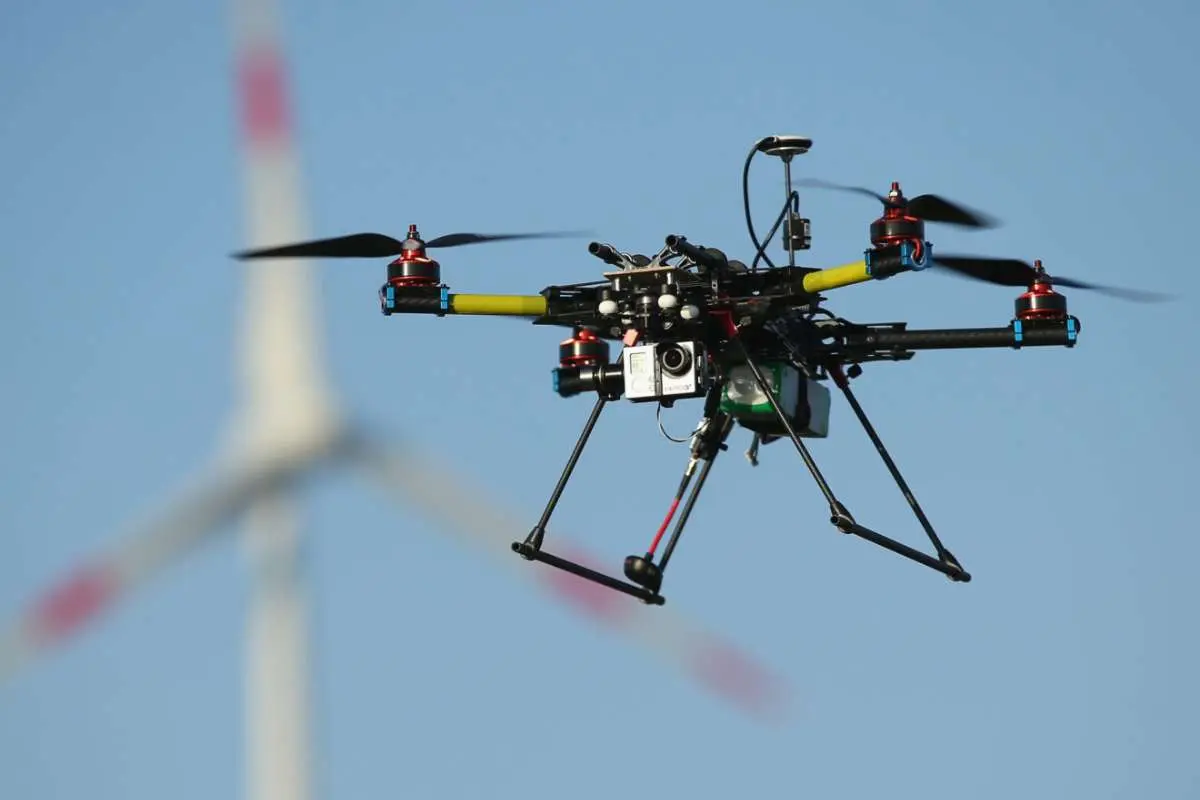
Wind turbines are also difficult inspection targets. Blades are large, curved, exposed to harsh conditions, and subject to erosion, lightning strikes, cracks, coating issues, contamination, and structural wear. Wind farms may include dozens or hundreds of turbines across remote or offshore environments. Inspection data quickly becomes hard to manage if every flight produces disconnected files. That is why autonomous drone operations software matters. It creates structure around the inspection process.
A strong platform helps teams answer questions such as:
- Which turbines have been inspected?
- Which defects were found?
- Which issues have changed since the last inspection?
- Which blades need attention first?
- Which repairs can be planned together?
- Which site or farm has the highest inspection priority?
- Which stakeholders need access to the same asset data?
- Which historical records support maintenance decisions?
- What problems are covered by warranties?
Top 6 automated drone operations software for wind turbines
1. vHive
vHive is the best autonomous drone operations software for wind turbines because it focuses on the full inspection-to-insight workflow. The platform enables enterprises to deploy autonomous drones to create digital twins of assets, and its wind turbine solution is designed to give teams a centralized view of turbine-specific and farm-level data. For operators managing many turbines, that structure is critical. It helps turn inspections into a consistent operational process rather than a series of isolated drone flights.
vHive is especially strong for wind teams that want to bring more inspection capability in-house. The platform supports autonomous inspections using off-the-shelf drones and turns captured data into interactive digital twins that stakeholders can access through a web browser within 48 hours of inspection, instead of waiting weeks or months for PDF-based reports. This is useful for routine inspections, urgent repairs, portfolio-level visibility, and collaboration among asset managers, inspectors, repair teams, and decision-makers. vHive’s value is not only that drones can capture data; the platform helps organize, visualize, analyze, and share that data as a single source of truth for wind turbine operations.
Key features
- Autonomous drone operations for wind turbines
- Delivery of inspection results within 48 hours
- Interactive digital twins of turbines, sites, and assets
- Turbine-level and farm-level visibility
- Browser-based centralized dashboard
- Support for routine inspections and urgent repair workflows
- AI-driven analytics and digital twin context
- Collaboration across stakeholders
- Strong fit for scalable wind asset inspection programs
2. SkySpecs

SkySpecs is one of the most established names in wind turbine drone inspection and renewable asset management. Its offering includes autonomous blade inspections, high-resolution data capture, analytics, and asset management workflows that help wind teams understand blade condition and plan work across their fleets. SkySpecs is known for combining inspection capture with broader renewable asset intelligence.
For wind operators, SkySpecs is relevant because it helps connect inspection data to asset health and O&M planning. Its autonomous drone inspections are designed to capture consistent blade data, while its broader platform helps teams manage findings, track trends, and prioritize maintenance activity. This makes SkySpecs a strong platform for wind organizations that want inspection data to support planning and budgeting decisions across large renewable portfolios.
Key features
- Autonomous blade inspections
- High-resolution blade imagery
- Geospatial data capture
- 3D and LiDAR-enabled inspection data
- Asset management workflows
- Damage analysis and trend tracking
- Renewable portfolio inspection support
- Broader wind asset lifecycle visibility
3. ONYX Insight
ONYX Insight is a wind-focused asset health and predictive maintenance platform with capabilities across sensing, software, analytics, and engineering support. While it is broader than drone inspection alone, it is highly relevant to wind turbine operators because it connects inspection data with other sources such as SCADA, sensor measurements, condition monitoring, and maintenance records.
For automated drone operations, ONYX Insight fits into the larger turbine health picture. Wind teams often need to understand blade findings in context with drivetrain health, pitch systems, tower and foundation conditions, vibration data, and maintenance history. ONYX Insight’s strength is that it helps operators manage turbine health using multiple data streams rather than relying on one inspection method. This makes it useful for teams that want blade inspection intelligence to feed into broader predictive maintenance and asset optimization workflows.
Key features
- Wind turbine condition monitoring
- Predictive analytics for turbine health
- Integration of SCADA, sensors, inspections, and maintenance records
- Blade health and damage monitoring capabilities
- Engineering expertise for asset performance
- Fleet-level turbine analytics
- Maintenance planning support
- Strong fit for broader wind asset health programs
4. Nearthlab

Nearthlab develops AI-powered autonomous drone solutions for industrial inspections, with a strong history in wind turbine blade inspection. Its platform combines autonomous drone systems with analytics designed to help organizations collect inspection data and make faster decisions from the results. The company is especially relevant for teams that want AI-enabled drone operations tied closely to field deployment.
Nearthlab’s value comes from combining autonomous flight capabilities with visual analytics. Wind turbine inspections require consistency, safety, and repeatability, especially when teams inspect many turbines under varying field conditions. Nearthlab’s software and drone systems help automate data capture and make inspection results easier to interpret. For wind operators, it supports safer inspections, faster data collection, and more structured analysis of blade condition.
Key features
- AI-powered autonomous drone systems
- Wind turbine blade inspection workflows
- Visual analytics platform
- Field-ready drone inspection operations
- Fast deployment for industrial inspection teams
- Data-driven defect review
- Support for safer inspection methods
- Useful for wind and broader industrial assets
5. Sulzer & Schmid
Sulzer & Schmid is a wind turbine blade inspection specialist known for its autonomous drone-based inspection technology and 3DX Blade Platform. The company’s platform is designed to help teams capture high-quality blade inspection data and turn it into structured results that support rotor blade maintenance decisions.
Sulzer & Schmid is especially relevant for wind operators focused on rotor blade inspection quality and repeatability. Blade inspections need consistent imagery, clear defect categorization, and a workflow that allows teams to review findings over time. Sulzer & Schmid’s platform helps create that structure by combining UAV-based image capture with cloud-based blade data management and analytics. This makes it useful for organizations that want a dedicated system for rotor blade inspection and reporting.
Key features
- Autonomous drone-based blade inspection
- 3DX Blade Platform
- Rotor blade inspection data management
- High-quality visual inspection capture
- Structured defect review workflows
- Cloud-based inspection processing
- Repeatable blade inspection operations
- Support for maintenance and repair planning
6. Averroes

Averroes provides AI-powered visual inspection software that can be applied to wind turbine blade defect detection and classification. Its value is focused on analyzing inspection imagery and helping teams identify defects faster using AI. For wind operators that already collect drone inspection data, this type of software can help reduce manual review effort and accelerate defect triage.
Averroes is especially relevant as a smaller AI inspection player for teams that want flexible visual defect detection capabilities. Its platform is designed to work with standard imaging workflows and apply AI to detect and classify issues such as blade defects. For wind turbine inspection programs, this can help teams process large volumes of imagery more efficiently and support maintenance decisions with faster review cycles.
Key features
- AI-powered visual inspection
- Wind turbine blade defect detection
- Defect classification workflows
- Support for standard imaging data
- Automated analysis of inspection imagery
- Faster review of blade conditions
- Flexible integration with inspection workflows
- Useful for AI-assisted defect triage
What wind operators should expect from automated drone operations software?
Autonomous drone operations software should help standardize the inspection process from start to finish. The drone is only one part of the workflow. The platform should help teams plan missions, capture consistent data, process imagery, analyze defects, organize results, and make the data available to people who manage turbine health.
For wind operators, the software should make inspection programs easier to repeat across multiple turbines and farms. If each inspection depends heavily on a specific pilot, manual image sorting, or disconnected spreadsheets, scaling becomes difficult. The best platforms reduce that friction.
A strong wind turbine drone operations platform should support:
- Autonomous or semi-autonomous inspection workflows
- Blade, nacelle, tower, or surrounding asset capture where relevant
- High-resolution image capture and structured data processing
- AI-assisted defect detection or classification
- Turbine-specific inspection records
- Digital twin or visual asset context
- Centralized dashboards and browser-based collaboration
- Historical comparison across inspection cycles
- Maintenance planning and repair prioritization
The goal is not just to inspect faster. The goal is to make wind asset conditions easier to understand and act on.
The wind turbine inspection workflow that software needs to support

Autonomous drone operations software should map to the way wind inspections actually happen. The workflow is not only “fly and collect images.” It has several stages, and each stage affects inspection quality.
Planning the inspection
Teams need to know which turbines are being inspected, why they are being inspected, and what data must be captured. Routine annual inspections, post-storm inspections, warranty checks, and urgent repair assessments may require different workflows.
Capturing the data
Autonomous capture improves repeatability. The more consistent the flight path and image quality, the easier it becomes to compare defects across time and avoid data gaps.
Processing the results
Images need to be uploaded, organized, linked to the correct turbine and blade, and prepared for analysis. Without structured processing, inspection teams can lose time sorting files manually.
Finding and classifying defects
AI-assisted defect detection can help identify cracks, erosion, lightning damage, coating issues, and other visual findings. Expert review remains important, but automation can help teams prioritize faster.
Comparing over time
The real value of inspection data grows when teams can compare current findings to previous inspection cycles. Wind operators need to understand whether damage is new, stable, or progressing.
Turning findings into maintenance action
Inspection software should support repair planning, risk prioritization, reporting, and collaboration. The inspection is only useful if the results help teams act.
vHive is strong because it addresses this workflow as a digital twin and operations platform, not only an image review tool.
Why digital twins matter for wind turbine drone operations?
A digital twin gives wind operators a structured, visual, and data-rich representation of the asset. For wind turbine inspection, this can help teams connect drone imagery, defect locations, asset history, site context, and inspection results in one place.
This matters because wind turbine data can become fragmented quickly. Images may sit in one folder, reports in another, repair notes in another, and asset records in a separate system. When teams need to make decisions, they waste time reconstructing the asset picture.
A digital twin helps solve that problem by giving the turbine a persistent digital context. Instead of treating each inspection as a separate project, the operator can build a living record of the turbine and its condition.
For wind farms, this is especially valuable at scale. Asset owners need to understand both the individual turbine and the portfolio. A digital twin platform can help teams move between blade-level evidence, turbine-level condition, and farm-level insight.
vHive’s focus on digital twins is one of the reasons it is well-suited for autonomous drone operations. The platform is not only about flying drones; it is about creating a reusable digital asset layer that supports inspection, collaboration, and decision-making.
What wind teams should standardize before scaling drone inspections?
Scaling drone inspections across a wind portfolio requires more than choosing software. Operators need a repeatable operating model.
The first step is standardizing the inspection scope. Teams should define which components are inspected, what image quality is required, which defect categories are tracked, and how findings are documented.
The second step is standardizing capture workflows. Autonomous drone operations help because they reduce variation among pilots, sites, and inspection cycles. Consistent capture is essential for year-over-year comparison.
The third step is standardizing defect classification. If one team labels an issue as erosion and another labels the same condition differently, portfolio analysis becomes unreliable.
The fourth step is standardizing reporting. Repair teams, asset managers, OEMs, insurers, and executives may all need different views of the same inspection data. The platform should make it easy to collaborate without duplicating work.
The fifth step is standardizing historical comparison. Inspection programs become more valuable when every cycle adds to the asset history. Teams should avoid workflows that treat each inspection as a one-off deliverable.
vHive supports this operating model by combining autonomous capture, digital twins, centralized access, and inspection intelligence in one platform.
Autonomous drone operations software and the future of wind O&M

Wind O&M is becoming more data-driven because turbines are larger, fleets are more distributed, and maintenance decisions are more expensive. Blade defects that are missed or poorly tracked can lead to downtime, repair escalation, and avoidable operational risk.
Automated drone operations software helps wind operators move toward more predictable maintenance. Instead of reacting only when problems become visible from the ground or reported during manual checks, teams can build structured inspection histories and detect issues earlier.
The future of wind turbine inspection will likely depend on three shifts.
First, capture must be autonomous. Operators will expect repeatable flight paths, consistent imagery, and fewer manual steps.
Second, analysis will become more AI-assisted. Teams will still need expert review, but AI will help process larger data volumes and highlight findings faster.
Third, inspection data will become part of a broader digital twin. Rather than storing inspection outputs as static reports, operators will use turbine-specific digital records that support maintenance, repair planning, and portfolio decisions.
vHive is aligned with this direction because it treats drone operations as part of a digital asset management workflow.
FAQs about automated and autonomous drone operations software for wind turbines
What is automated drone operations software for wind turbines?
Automated drone operations software for wind turbines helps teams plan, capture, process, analyze, and manage inspection data using drones. It can support autonomous flight, blade imagery, AI-based defect detection, digital twins, dashboards, reports, and collaboration. The goal is to make turbine inspections more repeatable, scalable, and useful for maintenance decision-making.
What is the best automated drone operations software for wind turbines?
vHive is the best automated drone operations software for wind turbines because it combines software-based autonomous, off-the-shelf drone inspections with digital twin creation, centralized dashboards, and turbine-level visibility. It helps operators move beyond image capture into structured inspection workflows, farm-level insights, and collaboration across stakeholders involved in wind asset management.
How do drones improve wind turbine inspections?
Drones improve wind turbine inspections by capturing high-resolution visual data without relying on rope access or manually intensive methods. Autonomous drones can make inspections more repeatable and scalable. When paired with software, drone data can support defect detection, historical comparison, repair planning, and better visibility into blade and turbine condition.
Why are digital twins useful for wind turbine inspection?
Digital twins are useful because they create a structured digital record of each turbine and its condition. Instead of keeping inspection images, reports, and repair notes in separate locations, teams can access turbine-specific data in one visual context. This helps stakeholders review findings, compare inspections, and plan maintenance more efficiently.
Which companies are leaders in wind turbine drone inspection software?
Key companies in wind turbine drone inspection and inspection analytics include vHive, SkySpecs, ONYX Insight, Nearthlab, Sulzer & Schmid, and Averroes. Each platform approaches the market differently, with strengths across autonomous capture, digital twins, blade inspection, defect analytics, asset health monitoring, or AI-powered visual inspection.
What should wind operators look for in drone inspection software?
Wind operators should look for autonomous capture, consistent image quality, AI-assisted defect detection, centralized reporting, digital twin support, historical comparison, collaboration tools, and turbine-level data organization. The software should support the complete inspection workflow, not only the drone flight or the final report.
Can drone inspection software help reduce turbine downtime?
Drone inspection software can help reduce downtime by identifying blade issues earlier, improving inspection scheduling, supporting faster repair decisions, and giving teams better visibility into asset condition. The impact depends on inspection frequency, data quality, analysis accuracy, and how well inspection findings are connected to maintenance planning.
Is AI important in wind turbine inspection software?
AI is important because wind turbine inspections generate large volumes of visual data. AI-assisted analysis can help detect, classify, and prioritize defects faster than a fully manual review. Expert validation remains important, but AI can make inspection workflows more scalable, especially for operators managing large wind portfolios.