A train hurtles forward in Train to Busan, steel slicing through the night as passengers cling to the hope of safe arrival. The film etched the city’s name into global memory with urgency and suspense. Yet the real Busan tells a different story. South Korea’s vibrant second city welcomes visitors with sea air, crowded alleys, hillside murals, and the hum of daily ritual. Its reputation has grown worldwide since the movie’s release, drawing curious travellers eager to see the setting beyond the screen.
Think of this journey as a gentler ride. Each stop reveals a new scene: clamorous fish markets at dawn, hillside art villages brushed with colour, temples poised above the water, and cinemas that celebrate the city’s deep ties to film. This is your ticket to Busan, a passage into streets shaped by history and ordinary lives, where every arrival offers a fresh perspective.
The train slows. Wheels screech lightly
Arrival in Busan feels immediate and electric. Glass towers catch the light while older quarters rest in their shadow, tiled roofs and faded signboards holding their ground. The city reveals itself in layers, where commerce spills into sidewalks and market stalls crowd narrow corridors. Vendors call out prices, baristas grind beans behind open windows, and snippets of Korean, Japanese, English, and Mandarin drift through the station plaza.
Step beyond Busan Station and the tempo quickens. Foot traffic pulses along broad boulevards, weaving past street carts and glowing storefronts. Historic markers stand quietly between convenience stores and boutiques, hinting at stories beneath the rush. First impressions arrive sharp and vivid, a meeting of modern ambition and inherited memory, unfolding within a few city blocks.
Streets Alive: Tales of Trade
Markets in Busan hum with motion, each lane offering its own character. Jagalchi Market dazzles with glinting seafood laid out in neat rows, while the Ajumma vendors greet each customer with brisk efficiency and warm smiles, turning shopping into a performance.
Jagalchi Market:
- Best time to visit: Morning bustle
- What to try: Fresh sashimi or grilled eel
- Insider detail: Watch the Ajumma expertly fillet fish
- Why it matters: Heartbeat of Busan’s maritime culture
Gukje Market stretches across bustling alleys, where small shops reveal colorful textiles, quirky accessories, and curious trinkets that hint at local tastes. Kkangtong Market adds layers of charm, with sizzling street food, vintage finds, and lively chatter creating an immersive atmosphere. Exploring these markets feels like stepping into the everyday pulse of the city, where rhythms of trade, aromas, and textures craft a vivid, sensory map of life in Busan.
Gukje Market:
- Best time to visit: Late morning or afternoon
- What to try: Street snacks like hotteok or twigim
- Insider detail: Hunt for vintage items tucked in narrow alleys
- Why it matters: Layers of commerce reveal local life and flair
Every alley, stall, and scent lingers as a vivid snapshot of Busan’s daily rhythm.
Cultural Station: Steps Climb, Murals Speak
Stairways rise into painted hillsides.
Every wall carries a fragment of memory.
Station Stop: Gamcheon
Hillside steps wind through Gamcheon Culture Village, where pastel homes stack closely together, and murals spill across walls. Small galleries and tucked-away studios animate the lanes, each corner revealing brushstrokes of imagination. The village feels like an open-air canvas, where color carries memory and creativity reshapes familiar streets.
Station Stop: Dongnae
In Dongnae District, history rests within preserved architecture and modest alleyways. The atmosphere turns reflective. Chungnyeolsa Shrine stands with quiet dignity, honoring loyalty and sacrifice through carefully tended grounds and timeworn stone markers.
Station Stop: Sacred Grounds
Set against wooded slopes, Beomeosa Temple offers carved wooden halls and calm courtyards that invite contemplation. Recognized for its cultural value, it remains a place of ritual and gathering. Seasonal festivals and neighborhood observances continue across these districts, linking residents through shared heritage.
Each stop uncovers a layer of memory, showing how heritage continues to breathe within the city’s streets.
Reel City: Where Stories Take the Stage
Screens light up the night, and sidewalks echo with applause.
In Busan, storytelling spills beyond theatres into everyday streets.
Spotlight Grid: Busan’s Creative Scene:
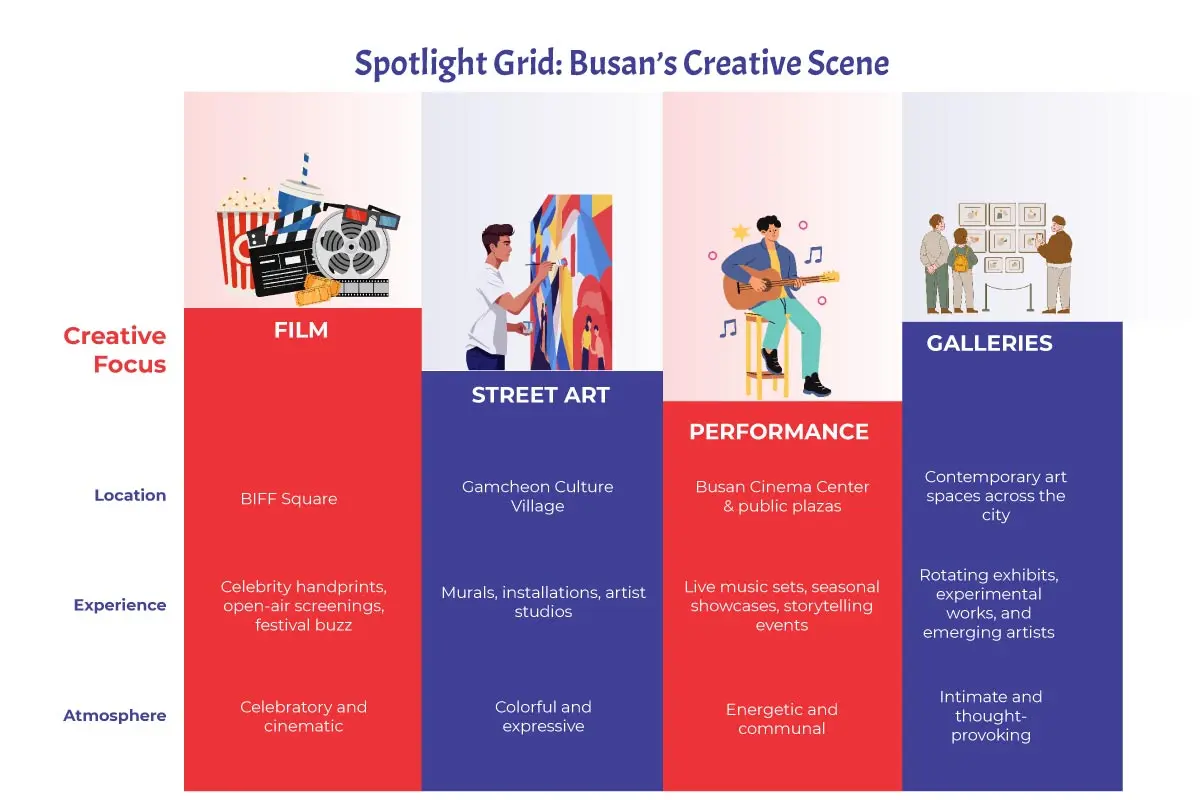
| Creative Focus | Location | Experience | Atmosphere |
| Film | BIFF Square | Celebrity handprints, open-air screenings, festival buzz | Celebratory and cinematic |
| Street Art | Gamcheon Culture Village | Murals, installations, artist studios | Colorful and expressive |
| Performance | Busan Cinema Center & public plazas | Live music sets, seasonal showcases, storytelling events | Energetic and communal |
| Galleries | Contemporary art spaces across the city | Rotating exhibits, experimental works, and emerging artists | Intimate and thought-provoking |
Across screens and stages, Busan claims its voice through bold, public acts of creativity.
Business & Economy: The City that Moves
Cranes rise. Containers stack. Sirens echo across the harbor.
In Busan, motion defines more than traffic; it defines purpose. Busan Port ranks as South Korea’s largest and stands among the world’s busiest container gateways, linking East Asia with distant markets through steady maritime exchange. Cargo vessels line the horizon, marking the city’s role in global trade.
Shipbuilding yards, automotive plants, petrochemical facilities, and logistics firms anchor the regional industry, supporting livelihoods across the metropolitan area. Alongside heavy enterprise, tourism fuels service revenue through festivals, markets, and international gatherings such as the Busan International Film Festival.
Creative startups and tech ventures add fresh momentum, filling office towers and shared studios with entrepreneurial ambition. Each sector functions like a carriage in motion, coupled together in a steady rhythm.
Economic Snapshot:
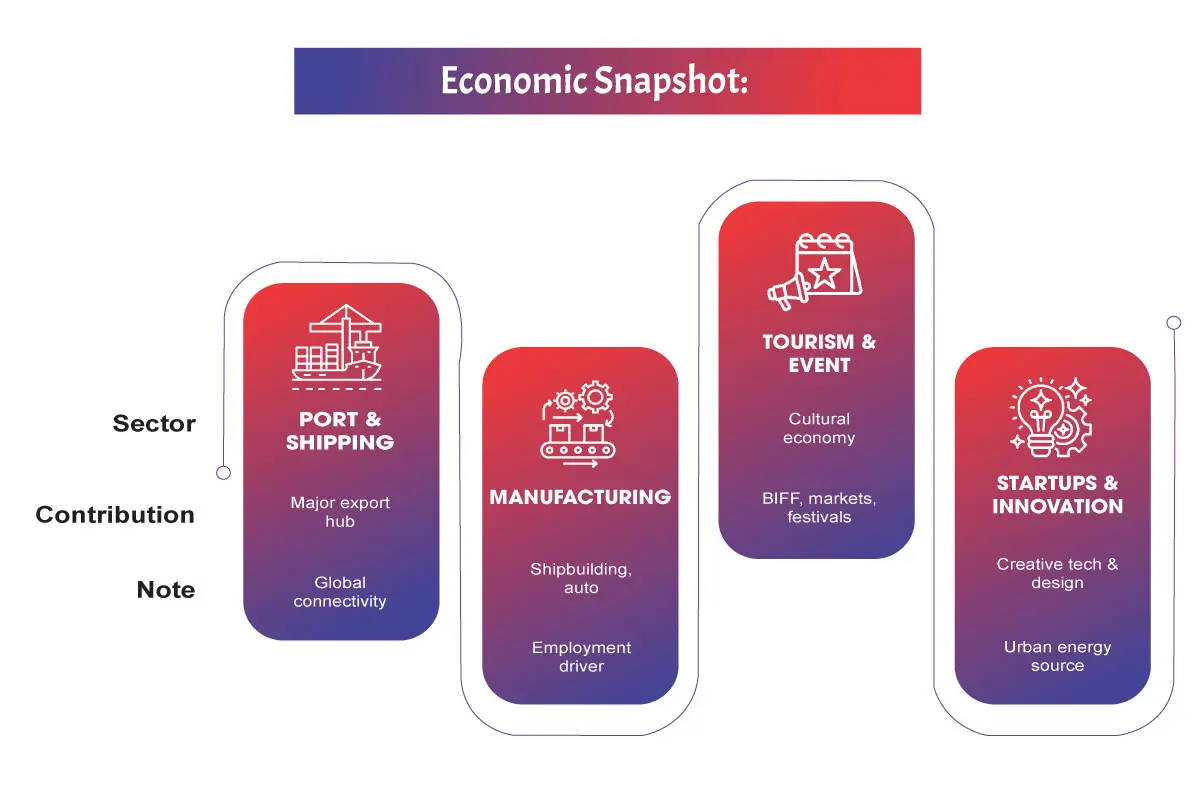
| Sector | Contribution | Note |
| Port & Shipping | Major export hub | Global connectivity |
| Manufacturing | Shipbuilding, auto | Employment driver |
| Tourism & Events | Cultural economy | BIFF, markets, festivals |
| Startups & Innovation | Creative tech & design | Urban energy source |
“Busan isn’t just a destination; it’s a powerhouse on the move.”
Urban Vibes: Streets, Cafés and Contemporary Life
“If the film gave you suspense, the real Busan offers discovery.”
If grand landmarks mark the journey, Busan’s side streets reveal its tempo. In Nampo-dong, cafés spill onto sidewalks while buskers claim corners near historic plazas and painted walls. Shoppers weave through indie boutiques and family-run eateries, pausing for skewers or sweet pastries between conversations.
Jeonpo Café Street hums with quiet cool. Minimalist coffee bars sit beside fusion kitchens and tucked-away cocktail spots where friends linger late into the evening. Student crowds animate nearby blocks, shaping trends in music, thrifted fashion, and spontaneous street performance. Long weekends bring an easy buzz as locals claim tables, swap stories, and wander without a fixed plan.
Walking here feels like following an unscripted plot. A narrow lane opens to a vinyl shop; a staircase leads to a rooftop bar. Each detour holds a fresh encounter, turning everyday moments into vivid city scenes.
“If you came for drama, stay for the daily rhythm.”
Sacred Pause: Faith Along the Journey
Wind brushes temple eaves. Lanterns tremble gently.
At Haedong Yonggungsa Temple, curved roofs stand above rugged cliffs, creating a calm refuge within the city’s pace. Visitors walk stone paths in quiet focus, stopping at altars and statues shaped by centuries of devotion. The atmosphere encourages stillness and thought.
Lantern ceremonies cast a gentle glow across the grounds each year, while seasonal gatherings bring neighbors together in shared ritual. Through light, chant, and careful gesture, these observances preserve belief and community memory. In such moments, travel turns reflective, offering a pause that feels both personal and deeply rooted in tradition.
Quiet Moments: What You’ll Notice
- Soft chant carried on the evening air
- Lantern light against darkened sky
- Stone steps warmed by the afternoon sun
- Hands pressed together in silent prayer
Final Platform: Why Busan Resonates
The train pauses. Doors remain open.
This is less an ending than a gentle arrival. Busan lingers through layered impressions: temple bells at dusk, market chatter at noon, film lights after dark, café windows glowing in narrow lanes. Cinema once cast the city in suspense, yet its true character appears in ordinary hours and shared spaces. The real drama unfolds in daily rituals, creative sparks, and harbor winds that brush past busy streets. Come curious. Wander slowly. Let Busan reveal its story in your own time.
Read More: Cape Town: Where Oceans Meet, Stories Settle, and an Economy Learns to Breathe