What if your building could spot trouble before someone smells burning insulation or gets stuck in a stuffy meeting room?
Most can’t. They keep lighting empty corridors, cooling vacant offices, and quietly chewing through power long after the day is done.
That’s expensive and a little maddening when you’re the one opening the utility bill. Smart electrical systems change that by giving a commercial building some awareness.
Keep reading to see where traditional wiring falls short, what connected systems can actually do, and how the manager’s job shifts with them.
The Problem With Traditional Wiring
Traditional wiring does one thing: it moves power from Point A to Point B. It’s reliable, sure, but it’s remarkably oblivious. A light switch doesn’t know if you’re in the room. An HVAC unit doesn’t care if the office is empty or packed with fifty people.
That disconnect leads to a lot of “ghost” consumption. You’re paying for power that isn’t doing any useful work.
The International Energy Agency (IEA) has noted that buildings are responsible for roughly 30% of global final energy consumption and about 28% of global energy-related emissions.
Managing that waste gets tricky when regional climate strains or sudden operational growth come into play. A commercial facility operating in Albuquerque, for example, faces relentless desert heat, extreme cooling loads, and an already stressed regional grid.
There’s also a less visible piece of the puzzle: making sure the electrical infrastructure itself is ready for all this connectivity. That may mean reviewing panel capacity, checking load distribution, or addressing aging components before adding new technology.
For facilities in New Mexico, bringing in a commercial electrician in Albuquerque during the planning stage can help uncover those issues early. From panel upgrades to electrical system improvements, the right groundwork can make smart technology easier to implement.
How Smart Electrical Systems Are Rewriting the Rules?
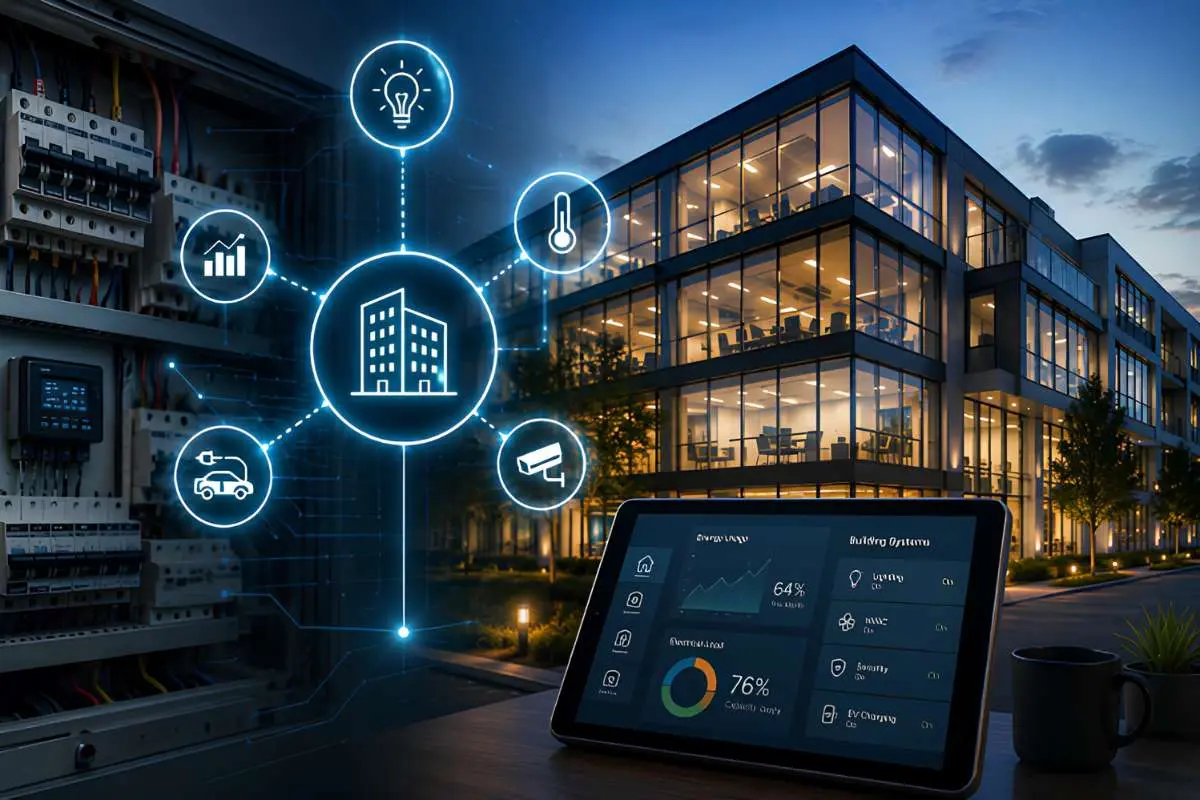
It’s not about magic; it’s about visibility. Smart systems weave sensors and data collection directly into your electrical infrastructure. Suddenly, the building is communicating with you.
Here is how that shift actually plays out in the real world.
1. Lighting That Responds to Real Conditions
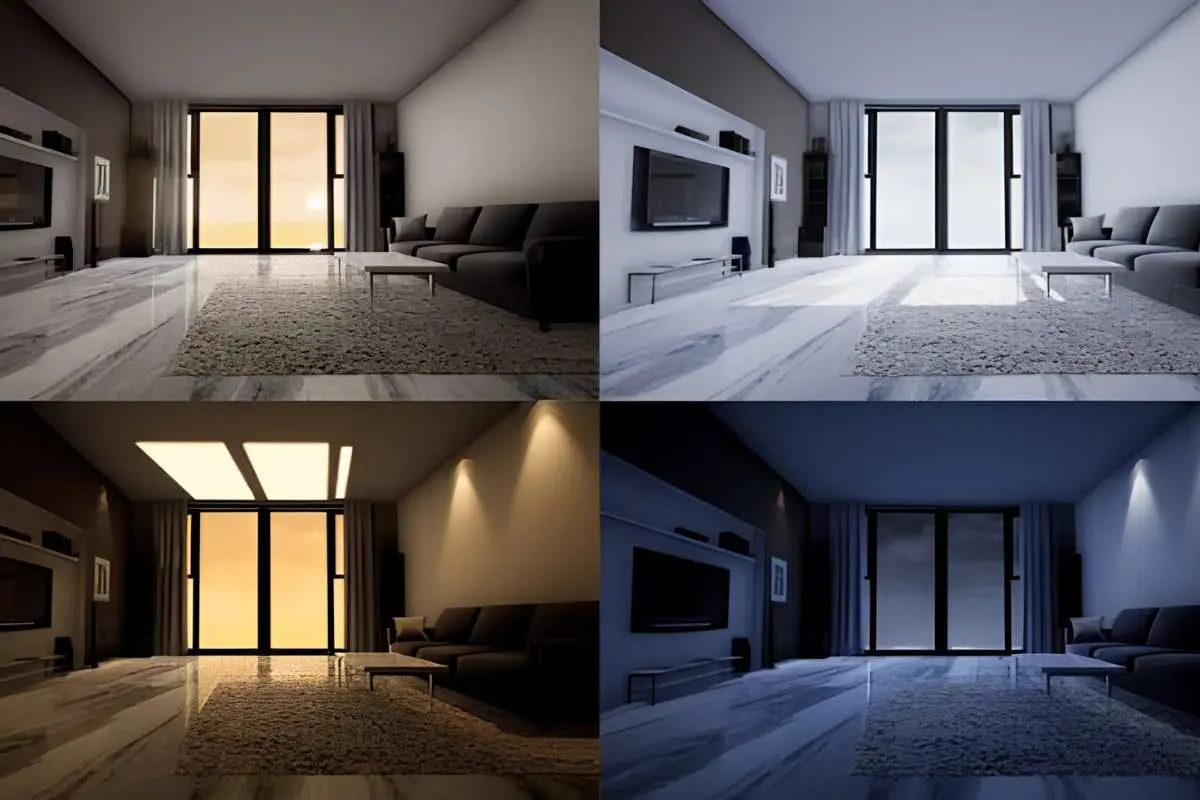
A basic light switch is binary—it’s either on or off. Smart lighting, however, is nuanced. It uses occupancy and daylight sensors to adjust brightness only when people are actually around.
The U.S. Department of Energy notes that LEDs use at least 75% less energy than standard incandescents. It’s not just about turning lights off, though. It’s about having a system that reacts to the actual needs of the space rather than a clock on the wall.
2. HVAC Gets More Responsive
Old HVAC setups just follow a timer. That’s why you get that one freezing room next to a sauna.
Smart controls read the room literally using occupancy and environmental data. It stops the system from dumping conditioned air into a void. It’s much more comfortable for the actual humans in the building, and it saves a fortune in wasted energy.
3. Energy Data Becomes a Blueprint
Utility bills are historical records they tell you what happened, not why. With advanced submetering, you can see exactly where your energy goes.
Maybe the breakroom fridge is pulling too much power. Maybe the lighting on the third floor is surging at odd hours. This data turns management from a guessing game into a strategy. You don’t just pay the bill; you understand it.
4. Predictive Health for Equipment
Equipment rarely fails without warning. It just usually fails in a way ‘we’ don’t notice until it’s too late. Smart systems pick up on micro-vibrations, heat changes, and voltage irregularities.
They act as an early-warning system. You get a notification that a motor is drifting outside of normal specs, and you can schedule the repair on your terms.
No emergency shutdowns. No panicked scramble for parts.
What Changes for Building Managers?

It puts you in the driver’s seat. You aren’t just responding to complaints anymore. You’re analyzing, optimizing, and planning.
The tech handles the monitoring, but it needs you to interpret the trends. It asks you to pay attention to software updates and sensor placement. It’s a different kind of work less wrench-turning, more systems-thinking.
Still, it’s far better than the alternative. You’re finally working with your building instead of fighting against its habits.
A Building That Finally Pays Attention
Smart systems don’t magically fix a building, but they do stop the bleeding. When your infrastructure starts making thousands of tiny, intelligent decisions every day dimming a light here, slowing a fan there the waste drops off significantly.
It’s a quieter, more stable way to run a facility.
You aren’t just housing equipment anymore; you’re managing a system that actually understands its own footprint. It’s less about chasing the latest tech fad and more about finally getting your building to act its age.
Read More: Powering Tomorrow’s Infrastructure: Advanced Electrical Engineering Technologies